
 by
by Benefits Packages in the UK: How to Design Employee Offers That Actually Keep People Staying
25 Jan, 2026Why do so many UK companies spend thousands on hiring only to watch employees leave within a year? It’s not the salary. It’s the benefits package-or lack of one. In 2025, 68% of UK workers said they’d take a 10% pay cut for a better benefits package. That’s not a trend. That’s a reset in what people expect from work.
What UK Employees Really Want in 2026
Forget the old checklist: private healthcare, pension contributions, and annual leave. Those are table stakes now. The real differentiators are flexibility, mental health support, and financial security that actually works in daily life.
A 2025 survey by the CIPD found that UK employees ranked ‘flexible working’ as the #1 benefit-higher than bonuses or gym memberships. But it’s not just about working from home. It’s about control. Can you leave at 3 p.m. to take your kid to the dentist? Can you take a three-day mental health break without asking permission? Can you shift your hours to match your energy, not your manager’s schedule?
Financial wellbeing is the silent crisis. Nearly 40% of UK workers say they’re living paycheck to paycheck, even with full-time jobs. A benefits package that includes free financial coaching, access to emergency savings programs, or student loan repayment support isn’t a perk-it’s a lifeline. Companies like Nationwide and Unilever now offer £500 annual grants for employees to pay down debt. The result? 32% lower turnover in those teams.
How to Build a Benefits Package That Doesn’t Feel Like a Brochure
Too many HR teams design benefits by copying competitors. They add a yoga class, a £500 wellness stipend, and call it a day. But if no one uses it, it’s just noise.
Start by asking your team. Not a generic survey. One-on-one chats. Ask: ‘What’s one thing that would make your life easier at work?’ You’ll hear things like:
- ‘I need help with childcare costs on weekends.’
- ‘My partner’s mental health therapy isn’t covered.’
- ‘I’m paying £1,200 a year in travel costs-can I get a subsidy?’
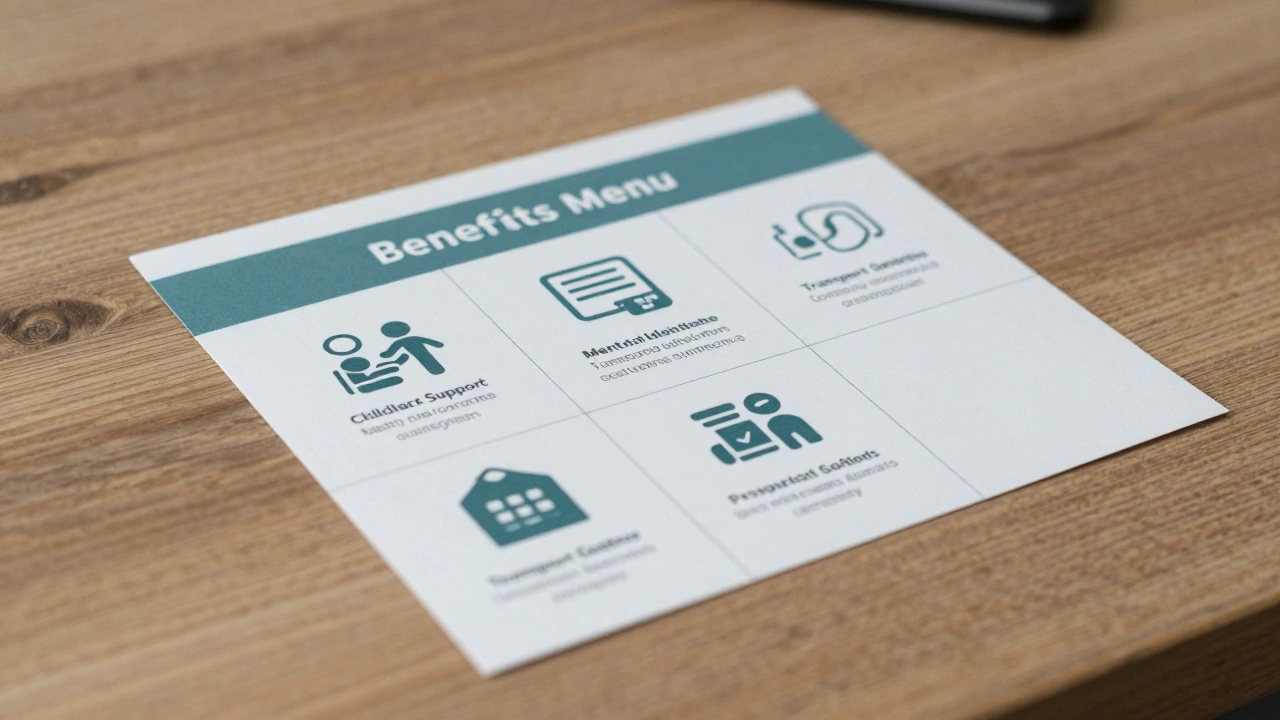
Then build around those real needs. Instead of a one-size-fits-all package, offer a ‘benefits menu.’ Employees choose from a set of options up to a £2,500 annual budget. Options might include:
- £1,000 toward childcare or eldercare
- £800 for mental health sessions (beyond NHS limits)
- £500 for public transport or EV charging
- £300 for professional certifications
- £400 for home office upgrades
This isn’t theoretical. A tech startup in Bristol rolled this out in 2024. Within six months, 78% of staff used at least one benefit they selected. Retention jumped 27%.
Benefits That Save Money-Yes, Really
Some HR leaders think better benefits mean higher costs. The opposite is true. Poor benefits cost more in turnover, recruitment, and lost productivity.
Replacing a mid-level employee in the UK costs an average of £45,000. That’s salary, advertising, interviews, onboarding, and lost output. If you lose three people a year, you’re spending £135,000 just to replace them.
Compare that to a £1,500 per employee annual benefits budget. Even if 80% use it, that’s £120,000 for 80 employees. You’re saving £15,000-and keeping institutional knowledge, team morale, and client trust intact.
Plus, benefits that reduce stress lower absenteeism. A company in Leeds introduced a ‘no-meeting Wednesdays’ policy and added 30 minutes of paid quiet time daily. Sick days dropped by 41% in nine months.
What’s Missing From Most UK Packages
There are three big gaps in most UK benefits packages:
- Support for carers-One in five UK workers cares for an elderly or disabled relative. Few companies offer paid carer’s leave beyond statutory minimums.
- Financial resilience tools-Most pensions are passive. What about tools that help people understand their state pension, plan for retirement gaps, or avoid high-interest debt?
- Community connection-Employees want to feel part of something. Companies that offer paid volunteer days or match charitable donations see stronger loyalty.
One manufacturing firm in Manchester started offering two paid days per year for employees to volunteer with local charities. They didn’t just boost morale-they got 37 new applicants in the next hiring cycle who specifically mentioned the program in their cover letters.
Legal Limits and Tax Tricks You Can’t Ignore
UK law sets hard boundaries. You can’t offer cash in lieu of statutory holiday. Pension auto-enrolment is mandatory for employees over 22 earning more than £10,000. But there’s room to stretch within the rules.
Salary sacrifice schemes are powerful. If you offer a bike-to-work scheme or childcare vouchers through salary sacrifice, employees save on income tax and National Insurance. The company saves too-on employer NI contributions.
For example: An employee earning £35,000 who sacrifices £2,000 for childcare vouchers saves £400 in tax. The employer saves £276 in NI. That’s £676 in savings for a benefit that costs the company nothing extra.
Don’t try to dodge the rules. But do use them smartly. Talk to a payroll specialist. The savings add up fast.

Don’t Just Offer Benefits-Tell the Story
Benefits mean nothing if no one knows they exist. A 2025 study found that 52% of UK employees couldn’t name more than two benefits their company offered.
Stop sending PDFs. Start telling stories. Share real examples:
- ‘Sarah used her £800 wellness budget to see a therapist twice a month. She says it’s the reason she’s still here.’
- ‘James used his £500 learning grant to get certified in data analysis. He’s now leading our new reporting team.’
Put these in your onboarding, your Slack channel, your monthly newsletter. Make benefits visible, relatable, and human.
What Happens When You Get It Right
In 2025, a mid-sized insurance firm in Reading redesigned its benefits package around flexibility, mental health, and financial support. They cut their turnover rate from 22% to 9% in 18 months. Recruitment time dropped from 58 days to 29. Employee satisfaction scores jumped from 6.1 to 8.4 on a 10-point scale.
They didn’t raise salaries. They didn’t hire a PR firm. They just listened-and built something real.
Benefits aren’t about what you give. They’re about what you say: ‘We see you. We care about your life outside work. We want you to stay.’
That’s the package that sticks.
What are the legal minimum benefits in the UK?
By law, UK employees must receive at least 28 days of paid holiday (including bank holidays), statutory sick pay, automatic enrollment into a workplace pension if eligible, and a written statement of employment terms. Employers must also provide a safe working environment and pay at least the National Living Wage. These are the floor-not the target.
Can I offer cash instead of benefits like gym memberships?
Yes, but it’s usually a bad idea. Cash payments are fully taxable and don’t offer the same tax savings as salary sacrifice schemes. Employees also tend to spend cash on bills, not wellbeing. Instead, offer a flexible benefits budget they can use for approved items like fitness classes, mental health apps, or childcare-that way, it’s still a benefit with tax advantages.
How do I know if my benefits package is competitive?
Check industry benchmarks from CIPD or Mercer. But more importantly, ask your team. If you’re losing people to competitors who offer the same salary but better flexibility or mental health support, your package isn’t competitive-it’s outdated. Look at what people are leaving for, not just what other companies are offering.
Are benefits packages more important than salary for retention?
In the UK, yes-for most roles. A 2025 survey showed that 71% of employees would stay at a company with a slightly lower salary if benefits were strong. Salary opens the door, but benefits keep people in the room. Flexibility, mental health support, and financial wellbeing matter more than a 5% raise.
How often should I update my benefits package?
Review it every 12 to 18 months. The world changes fast. Post-pandemic, remote work became a must-have. Now, financial stress and caregiving are top concerns. What worked in 2023 may feel irrelevant in 2026. Talk to your people annually. Use exit interviews. Track usage data. Don’t wait for turnover to spike before you act.