 by
by Certificate of Incorporation in the UK: What It Is and What It Means for Your Company
30 Dec, 2025When you start a limited company in the UK, the first real proof that your business exists as a legal person isn’t your business plan, your logo, or even your bank account. It’s the certificate of incorporation. This single document, issued by Companies House, turns your idea into a company with rights, responsibilities, and legal standing. Without it, you’re just running a business under your own name - not a separate legal entity.
What Exactly Is a Certificate of Incorporation?
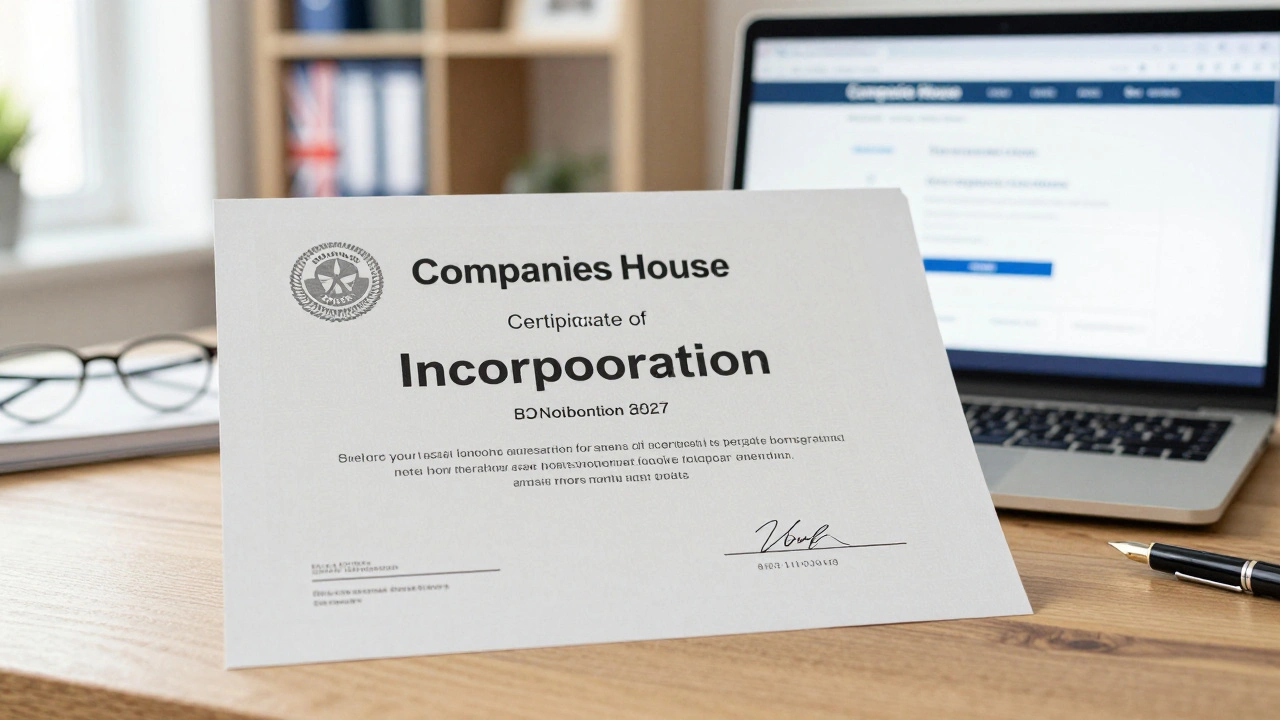
The certificate of incorporation is an official document that confirms your company has been legally registered in the UK. Think of it like a birth certificate for your business. It doesn’t list your products, your employees, or your revenue. Instead, it proves your company exists under UK law.
It includes basic but critical details:
- The company’s full legal name
- The registration number (a unique 8-digit identifier)
- The date of incorporation
- The type of company (e.g., private limited by shares)
- The registered office address
- The name of the registrar (Companies House)
This document is issued automatically once your application is approved. If you register online through Companies House, you’ll get a PDF version within minutes. If you file by post, it can take up to 8-10 working days.
Once you have this certificate, your company becomes a separate legal entity. That means it can own property, sign contracts, sue or be sued - all in its own name, not yours.
Why Does Legal Separation Matter?
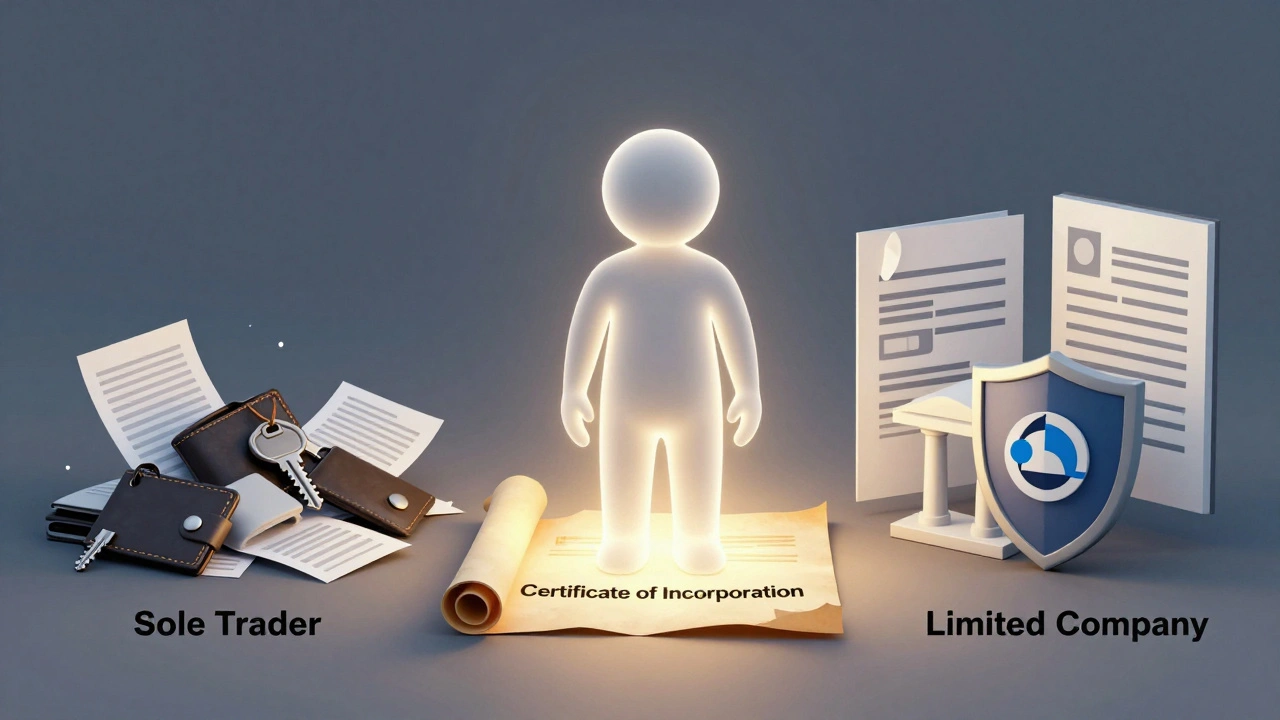
Many new business owners don’t realize how powerful legal separation is. When you form a limited company, your personal assets and your company’s assets are no longer the same thing.
Let’s say your company takes on a £50,000 loan and can’t repay it. If you’re a sole trader, the lender can come after your house, your car, your savings. But if you’re a limited company, the lender can only go after the company’s assets - unless you personally guaranteed the loan.
This protection is called limited liability. It’s the main reason most entrepreneurs choose to incorporate. The certificate of incorporation is the legal proof that this protection is active.
It also affects taxes. A limited company pays Corporation Tax on its profits - not Income Tax like a sole trader. Your salary and dividends come out of the company’s profits, not the other way around. The certificate of incorporation is the starting point for all of this.
How Do You Get One?
You don’t apply for the certificate of incorporation separately. You get it automatically when you successfully register your company with Companies House.
Here’s what you need to submit:
- A company name that isn’t already taken and doesn’t violate naming rules
- A registered office address in the UK (can’t be a PO box)
- At least one director (must be over 16, not disqualified)
- At least one shareholder (can be the same person as the director)
- A statement of capital and initial shareholdings
- People with significant control (PSC) details - anyone owning more than 25% or controlling the company
- The Memorandum and Articles of Association
You can do this yourself online for £12. Or you can use a formation agent - many charge £50-£100, but they handle the paperwork for you.
Once submitted, Companies House checks your application. If everything’s correct, they issue the certificate. You’ll receive it by email (if you applied online) or by post.
What Happens After You Receive It?
Getting the certificate isn’t the finish line - it’s the starting line.
Here’s what you need to do next:
- Open a dedicated business bank account. Banks will ask for the certificate of incorporation to verify your company’s existence.
- Register for Corporation Tax with HMRC within three months of starting business activities. Failure to do so can result in penalties.
- Set up a statutory record book. You must keep records of directors, shareholders, and meetings - even if you’re the only person involved.
- File your first confirmation statement with Companies House every 12 months. This updates your company’s details.
- Start keeping financial records. You’ll need them for your annual accounts and tax return.
Some people think the certificate is just a piece of paper to hang on the wall. It’s not. It’s the foundation of your legal obligations as a company.
Can You Use It to Prove Your Business Is Legit?
Yes. The certificate of incorporation is often the first document clients, suppliers, or investors ask for.
When you’re bidding for a government contract, you’ll need to show you’re a registered company. When you sign a lease for office space, landlords will want proof you’re not just a sole trader. Even when applying for business credit, lenders require it.
You can download a certified copy from Companies House for £15 if you need an official version. The original PDF you received is legally valid, but some organizations prefer the certified version.
It’s also used to verify your company’s status. Anyone can look up your company on the Companies House public register using your registration number. The certificate confirms that the information there is accurate.
What If You Lose It?
Don’t panic. You don’t need the original to operate. As long as your company is active on the Companies House register, you’re still incorporated.
You can request a replacement certificate at any time. Go to the Companies House website, search for your company by name or number, and order a certified copy. It costs £15 and arrives in 4-8 working days.
You can also get a digital version instantly if you have access to the Companies House WebFiling service or use a formation agent who keeps copies for you.
But here’s the thing: you should never rely on one copy. Always save a PDF, print a hard copy, and store it with your other important business documents. Treat it like your passport or property deed.
What Doesn’t the Certificate Do?
It’s easy to assume the certificate gives you everything you need to run a business. It doesn’t.
It doesn’t give you:
- A VAT number - you have to apply for that separately if your turnover exceeds £90,000
- A business license - some industries (like food, childcare, or financial services) require specific permits
- Professional insurance - you still need public liability, employers’ liability, or professional indemnity insurance
- Trademarks - your company name isn’t automatically protected. You must register your brand separately with the UK Intellectual Property Office
Many new business owners think the certificate of incorporation is a magic wand. It’s not. It’s the first step - not the whole journey.
What Happens If You Never Get One?
If you’re operating as a business but never incorporated, you’re a sole trader. That’s legal - but it comes with risks.
You’re personally liable for all debts. You pay Income Tax and National Insurance on your profits. You can’t claim certain tax deductions available to limited companies. And you can’t raise investment from venture capital or angel investors - they won’t touch a business without limited liability structure.
Some people stay sole traders to avoid paperwork. But if you’re making more than £30,000 a year, the tax savings from incorporating often outweigh the cost of compliance.
The certificate of incorporation isn’t just a formality. It’s a strategic choice that changes how your business operates, grows, and survives.
Final Thought: It’s Not About the Paper - It’s About the Protection
The certificate of incorporation looks like a simple piece of paper. But what it represents is powerful: your business is no longer an extension of you. It’s a separate legal person. That changes everything - your liability, your tax burden, your credibility, and your ability to scale.
If you’re serious about building a business that lasts, this isn’t optional. It’s the foundation. Get it. Keep it. Use it. And don’t treat it like a trophy. Treat it like your legal armor.
Is the certificate of incorporation the same as a business license?
No. The certificate of incorporation confirms your company is legally registered with Companies House. A business license is issued by local authorities or industry regulators and allows you to operate in certain sectors - like food service, construction, or financial advice. You may need both.
Can a foreigner incorporate a UK company?
Yes. You don’t need to be a UK resident to form a limited company. But you must have a UK registered office address. You also need at least one director who can be based anywhere in the world. Many non-residents use formation agents who provide a registered office and nominee director services.
How long does a certificate of incorporation last?
It lasts as long as your company exists. Once issued, it doesn’t expire. But if your company is dissolved or struck off the register, the certificate becomes invalid. You can always request a certified copy from Companies House while your company is active.
Can I change my company name after getting the certificate?
Yes. You can change your company name by filing Form NM01 with Companies House and paying a £10 fee. Once approved, you’ll get a new certificate of incorporation showing the new name. Your old certificate becomes invalid for official use, but you don’t need to destroy it.
Do I need to display the certificate anywhere?
No, you’re not legally required to display it publicly. But you must keep it in your statutory records and make it available if requested by shareholders or Companies House. Many businesses display it in their office for credibility - but it’s optional.