
 by
by Change Management for UK Organisations: A Practical Guide to Leading Transformation
17 Aug, 2026Most change initiatives in the UK fail not because of bad strategy, but because people don’t buy in. You can have the best digital roadmap or restructuring plan, but if your team feels ignored or confused, the project stalls. Change management is the discipline that bridges the gap between what leadership wants and what employees actually do. It’s about managing the human side of transition-resistance, fear, uncertainty-to ensure new ways of working stick.
For UK organisations specifically, the context adds layers. We operate within a framework of strong labour rights, diverse workforce expectations, and a cultural emphasis on consensus over command. Ignoring these nuances leads to friction. This guide breaks down how to lead transformation effectively in this specific environment, moving beyond theory into actionable steps that respect both business goals and employee well-being.
Key Takeaways
- Change management is distinct from project management; it focuses on people adoption rather than task completion.
- UK legal frameworks like the Employment Rights Act 1996 require formal consultation processes for significant changes.
- Resistance is often a signal of unmet needs or poor communication, not just stubbornness.
- Effective leaders use "soft" skills (empathy, active listening) alongside hard strategic tools.
- Sustaining change requires reinforcing new behaviors through incentives and culture, not just initial training.
Understanding the UK Context: Why It Matters
Leading change in the UK isn't just about applying a global template. The British workplace has distinct characteristics that influence how transformation is received. First, there is a high value placed on Employee Consultation is a legal and cultural requirement where staff are informed and asked for feedback before major decisions are finalized. Under the Trade Union and Labour Relations (Consolidation) Act 1992, employers must consult with representatives when making collective redundancies or significant contract changes. Skipping this step doesn't just risk industrial action; it signals disrespect, which kills trust instantly.
Secondly, the UK workforce is increasingly hybrid. Post-pandemic, remote work is the norm for many sectors. This means change managers can't rely on face-to-face town halls alone. Digital communication channels become critical touchpoints. If your change strategy assumes everyone is in the office, you’re already behind. The central entity here is Organisational Transformation is the process of shifting an organization's structure, processes, or culture to achieve strategic goals. In the UK, this transformation must be inclusive of distributed teams to avoid siloing information.
The Core Framework: ADKAR Model Adapted for UK Teams
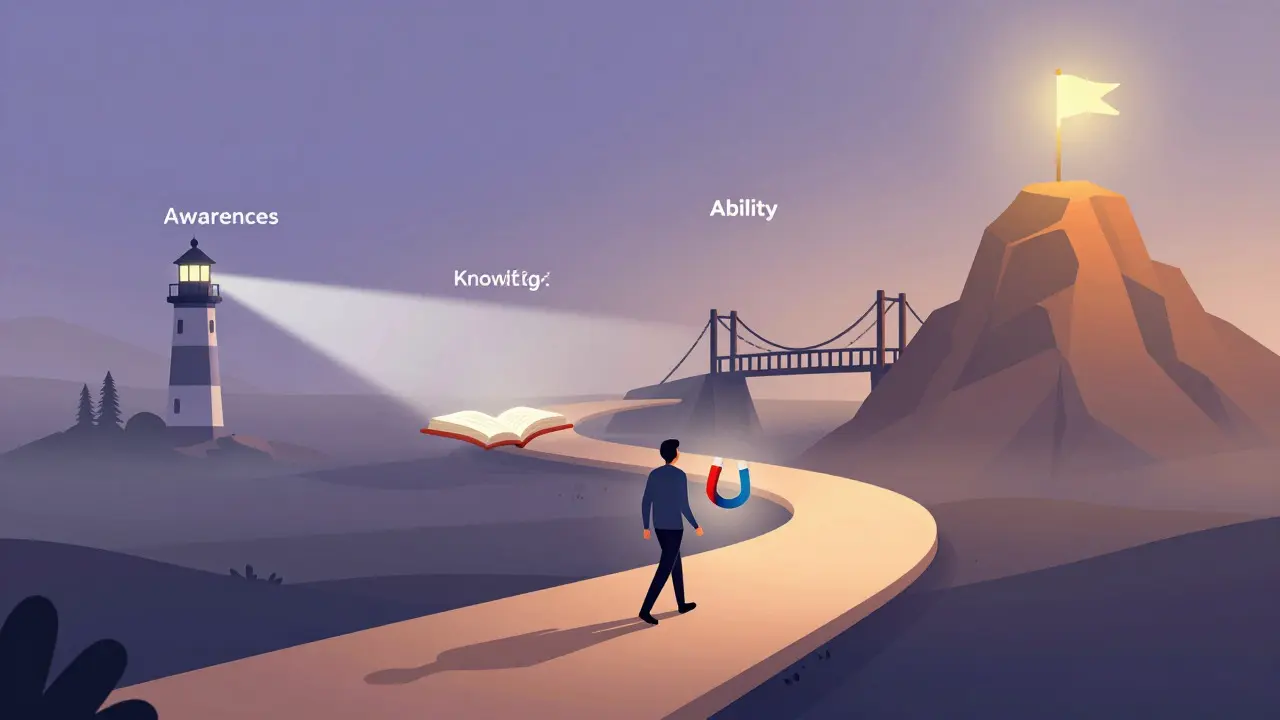
While there are many models, the ADKAR model remains one of the most practical for individual-level change. It stands for Awareness, Desire, Knowledge, Ability, and Reinforcement. For UK organisations, each stage has specific implications.
- Awareness: Why is the change happening? In the UK, transparency is key. Don't hide the financial pressures or competitive threats. Explain the 'why' clearly. If you're moving to cloud infrastructure, explain how it reduces downtime for customers. Vague reasons breed rumors.
- Desire: Do they want to change? This is the hardest part. Use WIIFM (What's In It For Me). Show how the change benefits the individual-perhaps by reducing manual admin tasks or offering new skill development opportunities. Avoid purely top-down mandates.
- Knowledge: How will they do it? Provide clear training. But remember, knowledge without practice is useless. Pair every training session with a real-world application task.
- Ability: Can they do it? This is about support. Are there resources? Is the technology working? Remove barriers. If the new software crashes, no amount of training will help.
- Reinforcement: Will they keep doing it? This is where most projects fail. Celebrate early wins. Update performance metrics to reflect new behaviors. If old habits are still rewarded, the change won't stick.
Navigating Resistance: It’s Not Personal
Resistance is inevitable. When you ask a team to switch from email-based workflows to a collaborative platform like Microsoft Teams or Slack, some will resist. They might say, "We've always done it this way." This isn't malice; it's comfort seeking. Humans are wired for routine.
To handle this, identify the source of resistance. Is it fear of job loss? Fear of incompetence? Or simply fatigue from previous failed changes? In the UK, "change fatigue" is a real phenomenon. Many employees have been through restructurings in the last five years. Acknowledge this. Say, "We know this is another big shift, and we appreciate your patience." Then, be specific about what stays the same. Stability in some areas helps people accept change in others.
Engage skeptics early. Find out who the informal leaders are-the person everyone asks for advice. If they’re on board, the group follows. If they’re against it, they’ll quietly undermine the effort. Bring them into the planning phase. Ask for their input. People support what they help create.
Communication Strategies That Work
Communication is the lifeblood of change management. But more communication isn't always better. Clarity is. Here is a simple comparison of effective vs. ineffective communication styles in the UK context:
| Approach | Characteristics | Risk | Best For |
|---|---|---|---|
| Top-Down Announcement | One-way broadcast from CEO/C-Suite | Lack of buy-in, rumor mill starts | Crisis situations only |
| Two-Way Dialogue | Town halls with Q&A, feedback loops | Time-consuming, requires skilled moderators | Cultural shifts, long-term transformations |
| Peer-to-Peer Advocacy | Champions explaining benefits to colleagues | Inconsistent messaging if champions aren't trained | Day-to-day operational changes |
Notice that top-down announcements are risky. In the UK, employees expect to be heard. Use a mix of approaches. Start with a senior leader video to show commitment. Follow up with departmental meetings for specifics. End with peer champions who can answer day-to-day questions. This multi-layered approach ensures the message reaches everyone at their comfort level.
The Role of Leadership Culture
You cannot separate change management from leadership culture. If your leaders are closed-off, bureaucratic, or dismissive, no amount of training will fix the problem. Leaders need to model the behavior they want to see. If you're asking for agility, stop approving every minor expense. If you're asking for transparency, share bad news quickly.
Consider the concept of Psychological Safety is a shared belief that the team is safe for interpersonal risk-taking. In a psychologically safe environment, employees feel comfortable admitting mistakes, asking questions, and suggesting improvements. This is crucial during transformation. If people are afraid to speak up, problems get hidden until they explode. Leaders should actively invite dissent. Ask, "What am I missing?" and mean it.

Measuring Success Beyond KPIs
How do you know if change management is working? Traditional KPIs like revenue or cost savings are lagging indicators. By the time you see them, the change is either done or failed. You need leading indicators. Track things like:
- Adoption Rates: Percentage of users actively using the new system after 30 days.
- Pulse Survey Scores: Regular short surveys asking about confidence in the change.
- Attrition Rates: Sudden spikes in resignations during a change period are a red flag.
- Support Ticket Volume: High volumes indicate confusion or lack of ability.
If adoption rates drop after the initial launch, dig in. Is it technical issues? Or is it behavioral inertia? Adjust your reinforcement strategies accordingly. Maybe you need more hands-on coaching, or perhaps you need to adjust the user interface based on feedback.
Common Pitfalls to Avoid
Even experienced leaders make mistakes. Here are the most common ones in UK organisations:
- Underestimating the Timeline: Change takes longer than you think. Budget extra time for resistance and learning curves.
- Ignoring Legal Compliance: Always check with HR or legal counsel regarding consultation duties. Non-compliance can lead to costly tribunal claims.
- One-Size-Fits-All Training: Different roles need different levels of detail. Sales teams care about customer impact; IT teams care about integration. Tailor your content.
- Losing Momentum: After the initial excitement fades, silence sets in. Keep the momentum going with regular updates, even if the news is just "we're on track."
Next Steps for Your Organisation
Start small. Pick one manageable change initiative. Apply the ADKAR model rigorously. Listen to your team. Be transparent. And remember, change management is not a one-time event; it's a continuous capability. As your organisation evolves, so will your need to manage transitions. Build the muscle now, and future transformations will be smoother.
If you're facing a specific challenge, whether it's a merger, a new tech stack, or a cultural reset, focus on the people first. The technology and processes will follow. The humans are the variable that makes or breaks the outcome.
What is the difference between change management and project management?
Project management focuses on delivering a specific scope, schedule, and budget. Change management focuses on ensuring that the people involved adopt the new ways of working. A project can be delivered on time but still fail if employees don't use the new system or process. They are complementary disciplines, not interchangeable.
Do I need to consult employees for every change in the UK?
Not every change. Formal statutory consultation is required for collective redundancies (20+ employees) and certain contract changes. However, best practice suggests consulting on any significant change that affects daily workflows, as it builds trust and reduces resistance. For minor tweaks, simple information sharing may suffice.
How long does it take for change to stick?
There is no fixed timeline, but research suggests that habit formation takes anywhere from 18 to 254 days, with an average of around 66 days. For organisational change, allow at least 3-6 months for full adoption and stabilization. Anything shorter is likely to result in regression to old habits.
Who should lead the change management effort?
Ideally, a dedicated change manager or lead works closely with line managers. Line managers are crucial because they are the ones who coach their teams daily. Senior leadership must sponsor the change to provide authority and resources, but the ground-level work is done by middle management and change specialists.
What if my team is resistant to digital transformation?
First, validate their concerns. Often, resistance stems from fear of obsolescence or lack of confidence. Provide targeted training focused on ease of use. Highlight quick wins where the new tool saves time immediately. Involve resistant employees in testing the system so they feel ownership. Patience and empathy are key.