
 by
by Community-Led Growth in the UK: Turning Customers into a Marketing Engine
17 Aug, 2026Most UK brands are still burning cash on paid ads while their best marketers sit in their customers' living rooms. You know who they are. The person on your support line who writes detailed guides for other users. The founder of the Slack group that answers questions faster than your help desk. They aren't employees, but they are doing the heavy lifting of community-led growth. If you haven't started leveraging them yet, you're leaving money on the table and missing out on the most authentic marketing channel available in 2026.
Community-led growth (CLG) isn't just about hosting a forum or running a Discord server. It's a strategic shift where the product itself creates the conditions for users to connect, share, and advocate. In the UK market, where trust is low and skepticism toward traditional advertising is high, this approach hits differently. People buy from people they know. They trust peer recommendations over polished brand campaigns. This article breaks down how to build that engine, specifically for UK businesses navigating the current digital landscape.
Why the UK Market Is Primed for Community-First Strategies
The UK consumer behaves differently than their American counterparts. There is a distinct cultural preference for understatement and skepticism towards overt sales pitches. A survey by the Consumer Research Company indicated that over 70% of British consumers trust online reviews and peer advice more than corporate advertising. This makes the 'voice of the customer' infinitely more powerful than the 'voice of the brand.'
Furthermore, the UK has one of the highest rates of social media penetration in Europe. Platforms like LinkedIn, Reddit, and niche Facebook groups are not just hangouts; they are decision-making hubs. When a SaaS company or a D2C brand builds a genuine community, they tap into these existing trust networks. You aren't creating new demand from scratch; you are activating latent demand through social proof.
- Trust Deficit: UK audiences are wary of 'hype.' Peer validation cuts through the noise.
- Digital Density: High internet usage means communities form quickly around specific interests or products.
- Value Orientation: UK consumers value utility and honest communication over flashy branding.
The Core Mechanics of Community-Led Growth
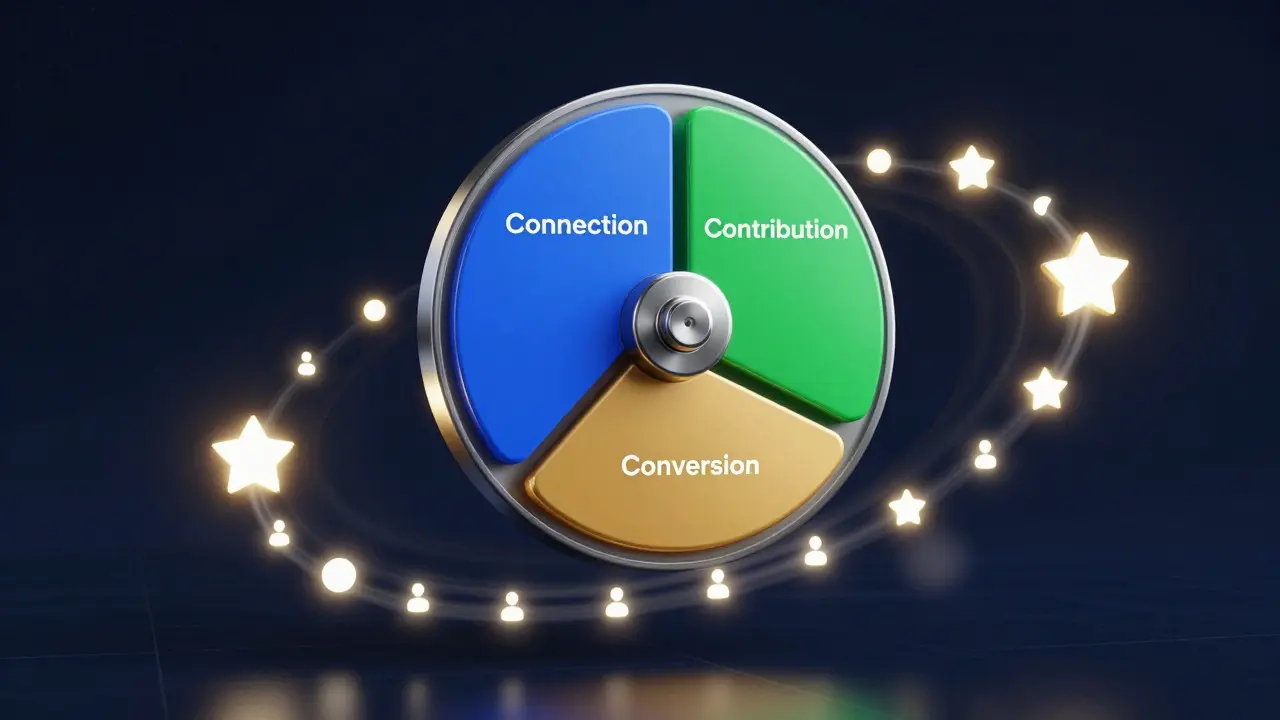
To turn customers into a marketing engine, you need to understand the three pillars of CLG: Connection, Contribution, and Conversion. Most brands fail because they focus only on Connection (building the space) and ignore Contribution (getting value out of it).
- Connection: Creating a space where users can meet. This could be a private app community, a public subreddit, or a dedicated Discord channel. The key is accessibility. If joining requires a credit card or a long signup process, you lose momentum.
- Contribution: Encouraging users to share knowledge, feedback, or creative works. This is where the magic happens. When User A helps User B solve a problem, User A becomes an authority. User B feels supported. Both become loyal advocates.
- Conversion: Using that goodwill to drive revenue. This isn't about hard selling inside the community. It's about making the product easier to buy, refer, or upgrade when the user is ready.
Think of the community as a flywheel. The harder it spins, the less energy you need to push it. Initially, you have to do most of the work. But as members start talking to each other, the cost of acquisition drops, and lifetime value rises.
Building the Foundation: Tools and Structure
You don't need expensive software to start. However, having the right structure prevents chaos. For UK businesses, GDPR compliance is non-negotiable. Any community platform you choose must handle data privacy correctly, especially if you plan to use community data for marketing segmentation.
Here is a practical stack for mid-sized UK companies:
| Component | Purpose | Key Consideration for UK Market |
|---|---|---|
| Host Platform | Central hub for discussions | Must support GDPR-compliant data storage (EU/UK servers preferred) |
| Moderation Tool | Manage spam and off-topic posts | Automated tagging to identify power users for outreach |
| Integration Layer | Connect community activity to CRM | Sync engagement scores to Salesforce or HubSpot for lead scoring |
| Event System | Host webinars or AMAs | Schedule events during UK business hours (9am-5pm GMT) |
A critical mistake many make is treating the community as a silo. If your community insights don't feed back into your product roadmap or sales enablement, it’s just a chat room. Integrate your community management tools with your CRM. When a user posts a helpful guide, tag them in your system. When they hit a certain engagement threshold, flag them as a 'Champion' for your sales team to contact personally.
Identifying and Empowering Your Champions
Not every member will become an advocate. You need to identify the top 10%-the ones who ask questions, answer others, and stay active. These are your 'Champions.' In the UK context, these individuals often hold significant influence within their professional or hobbyist circles.
How do you spot them? Look for patterns:
- High frequency of helpful replies.
- Initiating threads on complex topics.
- Long tenure in the community (over 6 months).
- Positive sentiment in their interactions.
Once identified, empower them. Give them early access to new features. Invite them to advisory boards. Offer exclusive perks that aren't monetary but status-based, like a 'Founding Member' badge or a direct line to the CEO. In the UK, recognition and respect are often more valuable than small cash incentives. Make them feel like insiders, not just customers.
Measuring Success: Beyond Vanity Metrics
If you measure community success by 'number of members,' you will fail. That’s a vanity metric. You need to track metrics that correlate with revenue and retention.
- Community-Assisted Revenue: Track deals where a community member was referenced in the discovery phase. Even if they didn't close the deal, their content influenced the buyer.
- Net Promoter Score (NPS) Delta: Compare the NPS of active community members vs. passive customers. Active members should score significantly higher.
- Time to Value (TTV): Do community members onboard faster? If they find answers in the community before contacting support, their TTV drops, leading to higher satisfaction.
- Referral Rate: Monitor how many new signups come via referral links shared within the community.
For a UK B2B SaaS company, for example, a 10% increase in community-assisted revenue can offset the entire cost of the community team. The math is simple: lower CAC (Customer Acquisition Cost) plus higher LTV (Lifetime Value) equals sustainable growth.

Common Pitfalls and How to Avoid Them
Even with the best intentions, CLG initiatives can stall. Here are the most common traps UK businesses fall into:
- The 'Zombie' Community: Launching a platform and then ignoring it. If there is no human interaction, users leave. Assign a dedicated community manager whose sole job is to spark conversation, not just moderate.
- Over-Moderation: Killing organic voice with strict rules. Let people argue. Let them be imperfect. Authenticity drives trust. Only step in for toxicity or off-brand behavior.
- Lack of Feedback Loop: Users post ideas, and nothing happens. Close the loop. If a user suggests a feature and it gets built, announce it publicly. Credit the user. This reinforces the idea that their voice matters.
- Ignoring Offline Events: The UK has a strong culture of networking. Host local meetups in London, Manchester, or Birmingham. Face-to-face connections create deeper loyalty than digital ones.
Remember, community is a marathon, not a sprint. It takes 6-12 months to see significant ROI. Stay consistent. Keep showing up. The compounding effects of trust and advocacy will eventually outweigh the initial investment.
Frequently Asked Questions
What is the difference between community-led growth and social media marketing?
Social media marketing is typically broadcast-based, where the brand talks to an audience. Community-led growth is dialogic, where the audience talks to each other, and the brand facilitates those conversations. In CLG, the value comes from peer-to-peer interaction, not just brand-to-consumer messaging.
Do I need a large budget to start a community?
No. You can start with free or low-cost tools like Discord, Slack, or even a dedicated section on your website. The biggest investment is time, not money. Dedicate at least 10-15 hours per week to active participation and moderation to get traction.
How do I handle negative feedback in my community?
Don't hide it. Negative feedback, when handled well, builds trust. Respond publicly, acknowledge the issue, and provide a timeline for resolution. Show that you listen. In the UK market, transparency is highly valued. Hiding problems makes them look bigger.
Which platforms are best for UK B2B communities?
LinkedIn Groups and dedicated B2B platforms like Circle.so or Discourse work well. For technical products, GitHub Discussions or Stack Overflow-style forums are effective. The key is meeting your users where they already spend time professionally.
How long does it take to see ROI from community-led growth?
Expect 6-12 months for measurable impact on revenue. The first 3 months are about building habit and engagement. Months 4-6 show improved retention and support deflection. By month 9-12, you should see clear contributions to new customer acquisition through referrals and word-of-mouth.