 by
by Conflict Management for UK Leaders: Practical Ways to Resolve Team Disputes
8 Dec, 2025Team conflict isn’t a sign of failure-it’s a sign that people care. But in UK workplaces, where politeness often masks tension, unresolved disputes quietly eat away at productivity, morale, and retention. Leaders who ignore conflict don’t avoid problems-they delay them. The real question isn’t whether conflict will happen, but whether your team has the tools and trust to handle it well.
Why UK Teams Struggle with Conflict
In the UK, there’s a cultural bias toward avoiding direct confrontation. Phrases like “I’m fine” or “Let’s just move on” are common, even when people are frustrated. This isn’t just about being polite-it’s rooted in a long-standing workplace norm that values harmony over honesty. But when issues like unclear roles, missed deadlines, or personality clashes go unaddressed, they fester. A 2024 CIPD survey found that 68% of UK managers admitted to avoiding difficult conversations, and 41% of employees said unresolved conflict was the main reason they felt disengaged.
What makes this worse is that many leaders were never trained to handle conflict. They were promoted for technical skill, not emotional intelligence. So when two team members stop speaking to each other, or a quiet resentment builds over resource allocation, leaders often freeze. They hope it’ll resolve itself. It rarely does.
What Conflict Looks Like in Real Teams
Conflict isn’t always shouting matches. In fact, the most damaging types are silent. Here’s what you might see in a UK team:
- One person consistently misses meetings but never apologizes-others cover for them.
- A senior employee dismisses ideas from junior staff in meetings, then acts surprised when no one speaks up.
- Two colleagues exchange cold emails instead of talking face-to-face.
- Team members start avoiding lunch together. The vibe changes. No one says why.
These aren’t personality issues. They’re systemic. When roles aren’t clear, feedback isn’t given constructively, or accountability is uneven, conflict becomes inevitable. The problem isn’t the people-it’s the environment you’ve allowed to form.
Four Steps to Resolve Team Disputes (No Fluff)
Here’s how to step in, not as a mediator, but as a leader who sets the tone.
- Call it what it is. Don’t say, “Let’s have a chat.” Say, “I’ve noticed tension between you two over the last month, and it’s affecting the project. I want to understand what’s going on.” Naming the issue removes the ambiguity that lets resentment grow.
- Meet individually first. Talk to each person alone. Ask: “What’s been frustrating you?” and “What do you need from the other person to feel supported?” Don’t take sides. Just listen. Write down what they say. People need to feel heard before they’re ready to hear others.
- Bring them together-with structure. Set a time, a neutral space, and an agenda. Start by sharing what you heard from each person, neutrally: “John, you said you felt your input was ignored in planning. Sarah, you mentioned you were overwhelmed and didn’t know how to ask for help.” Then ask: “What’s one thing you can both agree to change?” Focus on behavior, not character. No “You always…” statements.
- Agree on a follow-up. Don’t end the meeting with a handshake and hope. Set a check-in in two weeks. “Let’s see if the new process is working. If not, we’ll adjust.” Accountability matters more than resolution.
This isn’t therapy. It’s management. You’re not fixing emotions-you’re fixing processes.

Common Mistakes UK Leaders Make
Even well-intentioned leaders mess this up. Here are the top three mistakes I’ve seen in UK teams:
- Waiting for “the right moment.” There is no perfect time. The longer you wait, the harder it gets. A dispute that takes 15 minutes to address today can take 15 hours to undo in three months.
- Trying to be friends with everyone. You can be kind without being popular. If you avoid conflict to keep peace, you’re teaching your team that silence is safer than honesty.
- Blaming culture. Saying “It’s just how we do things here” is an excuse, not an explanation. Culture is shaped by what leaders tolerate. If you don’t act, you’re approving the behavior.
What Works: Real Examples from UK Teams
In a Manchester-based tech firm, two senior developers were sabotaging each other’s code reviews. One called the other’s work “amateur,” the other refused to review anything from the first. The manager didn’t call a team meeting. She scheduled one-on-ones, then brought them together with a simple rule: “No criticism without a suggestion.” They created a shared checklist for code reviews. Three weeks later, their output improved by 30%. No one quit. No one yelled.
In a London nonprofit, a team leader noticed low energy after a restructure. People were polite but distant. She started a monthly “Feedback Friday”-15 minutes where anyone could share one thing they appreciated and one thing they wanted to improve. No names. No judgment. Just structure. Within two months, 87% of staff said they felt more heard.
These aren’t magic tricks. They’re simple, repeatable actions.

Building a Conflict-Resilient Team Culture
Prevention beats resolution every time. Here’s how to build a team where conflict doesn’t feel dangerous:
- Normalize feedback. Make it part of weekly check-ins: “What’s one thing I could do better?”
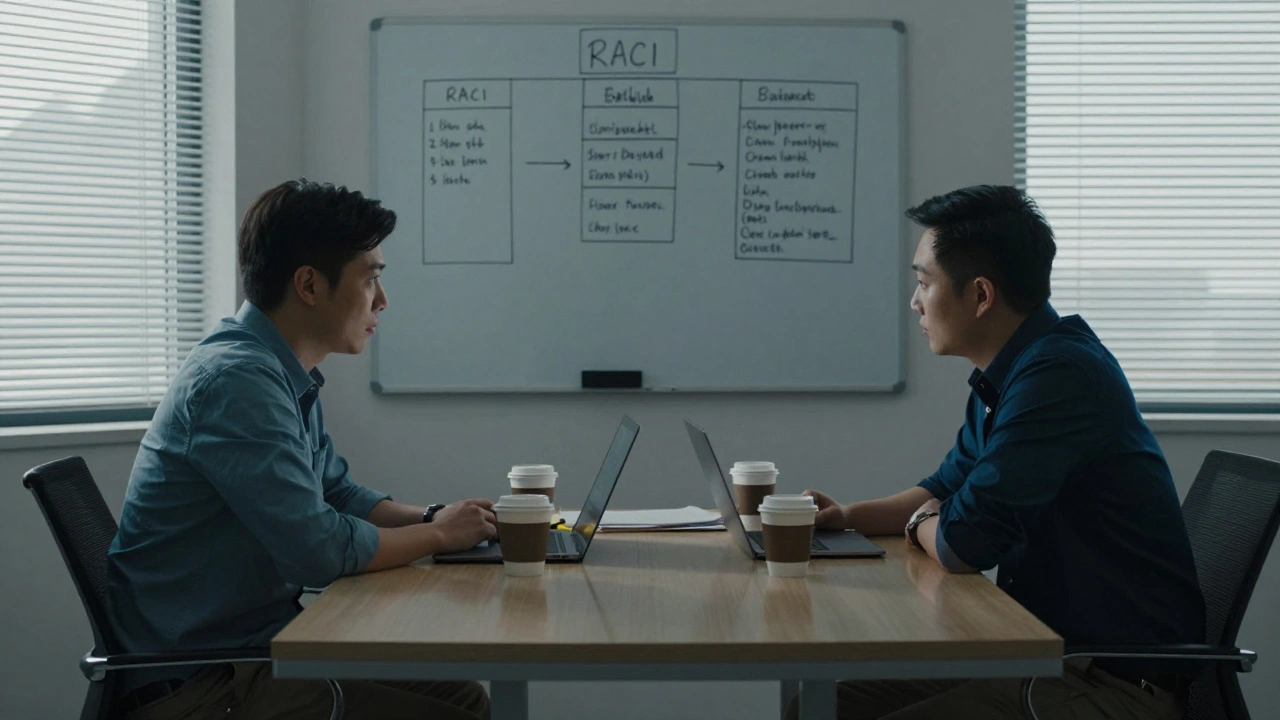
- Define roles clearly. Use RACI charts (Responsible, Accountable, Consulted, Informed) for every project. Ambiguity is the root of 70% of team disputes.
- Train everyone, not just managers. Offer a 90-minute workshop on giving and receiving feedback. Don’t assume people know how.
- Lead by example. If you make a mistake, say so. If you’re frustrated, say it calmly. Your team watches you more than any policy.
Conflict isn’t the enemy. Poor leadership is.
When to Bring in HR-or When Not To
HR isn’t a fire extinguisher. Don’t wait until the team is burning to call them. Bring HR in when:
- There’s a pattern of bullying or discrimination.
- Someone is being targeted based on gender, race, age, or disability.
- The conflict involves legal or compliance risks.
But if it’s just two people who don’t get along? That’s your job as a leader. HR can support, but they shouldn’t solve it for you. If you outsource every disagreement, your team learns to depend on you to fix things-not to solve problems themselves.
Final Thought: Conflict Is a Leadership Test
Great leaders aren’t the ones who keep the peace. They’re the ones who know how to turn tension into progress. Conflict reveals what’s broken in your team’s structure, communication, or trust. Fix that, and you don’t just resolve a dispute-you build a stronger team.
Start small. Pick one unresolved tension this week. Talk to each person. Bring them together. Set a next step. That’s all it takes to begin.
What’s the most common cause of team conflict in UK workplaces?
The most common cause is unclear roles and responsibilities. When people aren’t sure who’s supposed to do what, they either step on each other’s toes or assume someone else is handling it. A 2024 CIPD report found that 62% of UK teams with high conflict levels lacked documented role definitions.
Should I mediate conflict myself or let HR handle it?
Handle it yourself unless there’s a legal, safety, or discrimination issue. HR is there for escalation, not routine conflict. If you always rely on HR, your team stops learning how to resolve issues independently. Your job as a leader is to build that capability.
How do I talk to someone who denies there’s a problem?
Focus on observable behavior, not intent. Say: “I’ve noticed that when we discuss deadlines, you often say nothing and then miss them.” Avoid “You never…” or “You always…”-those trigger defensiveness. Instead, ask: “What’s getting in the way of meeting deadlines?” Let them explain. Listen. Don’t argue.
Can personality differences cause lasting team conflict?
Not if you manage the environment. Personality differences are normal. The problem isn’t that someone is introverted or blunt-it’s that your team has no norms for how to communicate across those differences. Build clear feedback rules, meeting structures, and communication channels. That’s what reduces friction, not forcing people to be alike.
Is remote work making conflict worse in UK teams?
Yes, but not because of the technology. Remote work removes casual interactions-the watercooler chats, the quick hallway talks-that help people read each other’s moods. Without those, misunderstandings pile up. The fix isn’t more Zoom calls. It’s structured check-ins and explicit communication norms. For example: “If a message isn’t replied to in 24 hours, assume it’s urgent and call.”