
 by
by Contract Management in UK Operations: How to Manage Service Levels and Supplier Risk Effectively
14 Dec, 2025Managing contracts in UK operations isn’t just about signing documents and filing them away. It’s about keeping the lights on, deliveries on time, and your business from getting hit by a supplier failure you never saw coming. If you’re running operations in the UK - whether you’re handling logistics, IT services, cleaning contracts, or manufacturing parts - your contracts are your lifelines. And if those lifelines aren’t monitored, they’ll snap when you need them most.
Why UK Contract Management Is Different
The UK has strict procurement rules, especially for public sector contracts, but even private companies face rising pressure to prove they’re managing risk properly. The 2023 Public Contract Regulations updated how suppliers are evaluated, and the Financial Conduct Authority now expects firms to show clear oversight of third-party risks. If you’re using a vendor in Manchester, Glasgow, or Birmingham, you can’t assume their performance matches your expectations just because they’ve been around for years.
Real-world example: A UK healthcare provider relied on a single IT support vendor for 7 years. No formal SLA review. No backup plan. When the vendor’s lead technician quit and the team collapsed, systems went down for 11 days. The provider lost £2.3 million in cancelled appointments and regulatory fines. That wasn’t bad luck - it was poor contract management.
What Service Levels Really Mean (And How to Measure Them)
Service Level Agreements (SLAs) are not just fancy terms in a contract. They’re measurable promises. Too many companies write SLAs like this: “Supplier will provide high-quality support.” That’s meaningless. You need numbers.
Good SLAs include:
- Response time: “Critical issues resolved within 4 hours, 95% of the time.”
- Uptime: “System availability of 99.5% monthly, excluding scheduled maintenance.”
- Resolution time: “80% of tickets closed within 24 hours.”
- Penalties: “1.5% of monthly fee paid per hour of downtime beyond agreed threshold.”
These aren’t theoretical. A 2024 survey by the Chartered Institute of Procurement & Supply found that companies with clearly defined SLAs reduced supplier-related disruptions by 62% compared to those with vague terms. The key is tracking - not just having the SLA, but checking it every month. Use dashboards. Set alerts. Make it visible to your operations team.
Supplier Risk Isn’t Just About Finances
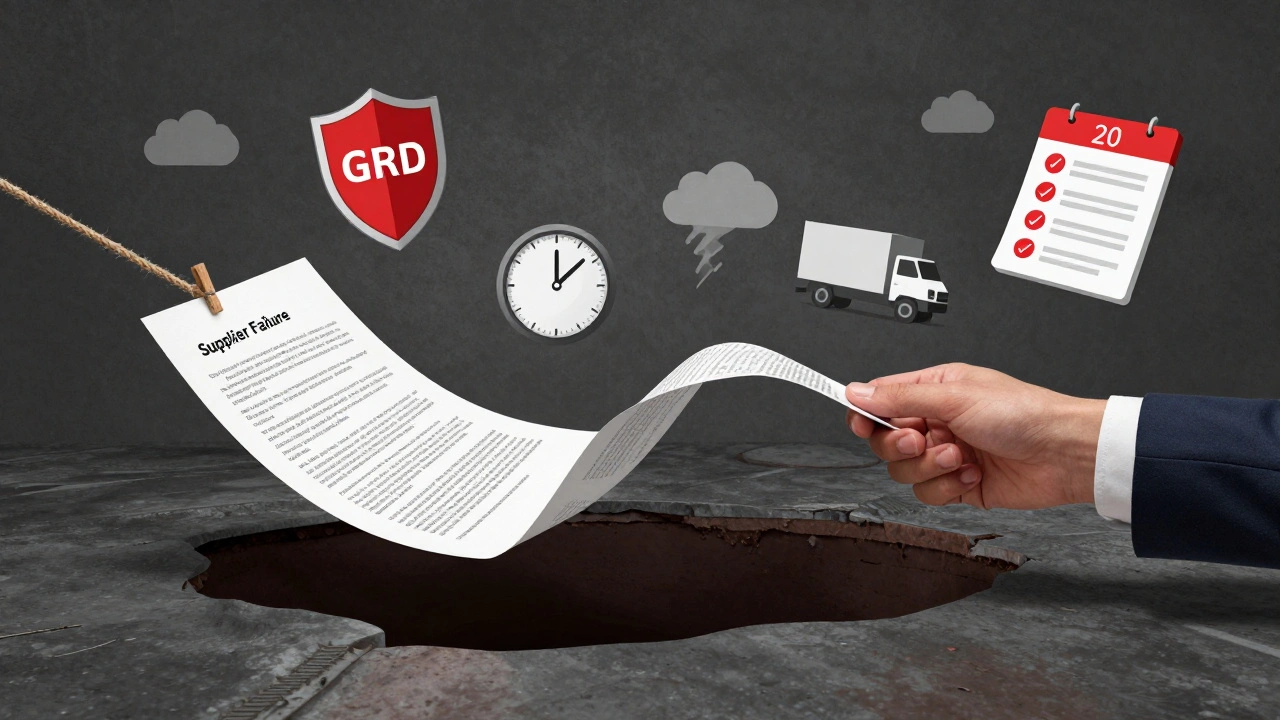
Most people think supplier risk means “will they go bust?” That’s only part of it. In the UK, risks include:
- Geopolitical exposure: A supplier using components from Ukraine or Russia may face sudden supply chain shocks.
- Regulatory non-compliance: GDPR, Modern Slavery Act, or environmental reporting failures can land your company in legal trouble too.
- Reputation damage: If your cleaning contractor is caught violating workplace safety rules, your brand takes the hit.
- Single point of failure: One vendor handling 80% of your IT support? That’s a risk waiting to happen.
One logistics firm in Leeds had three major suppliers. One was a small firm in Wales that handled 60% of their last-mile deliveries. When a storm knocked out their fleet for two weeks, the company lost £1.2 million in customer refunds and loyalty. They hadn’t asked for a contingency plan because the supplier had “always been reliable.” Reliability isn’t a substitute for planning.
How to Build a Supplier Risk Scorecard
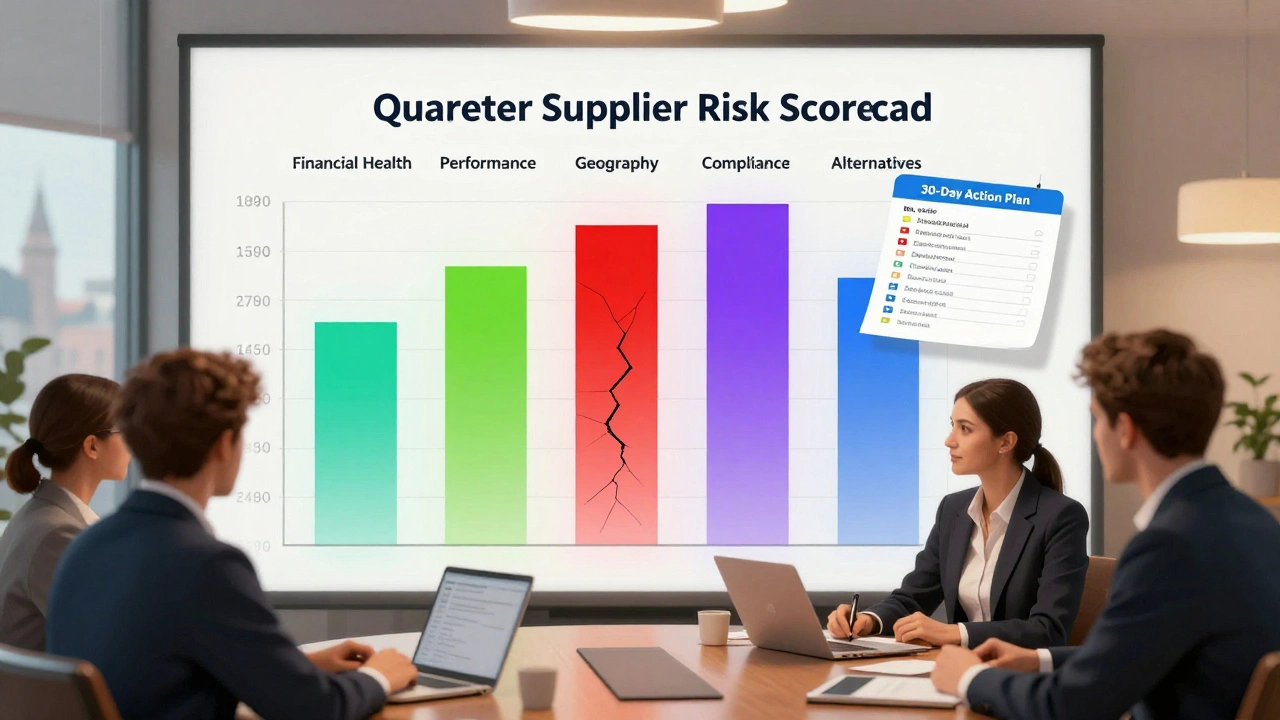
You don’t need a team of auditors to track risk. Start simple. Create a risk scorecard with five categories, rated 1-5:
- Financial health: Check annual reports, credit ratings, or use free tools like Companies House for filings.
- Performance history: How often did they miss SLAs last quarter? How many complaints?
- Geographic concentration: Are they based in one city? Do they rely on one port or rail line?
- Compliance record: Any fines from HMRC, HSE, or ICO in the past 24 months?
- Alternatives: Could you switch within 30 days if needed? Do you have a backup vendor on file?
Add the scores. Anything above 15? That’s a red flag. Above 20? Start preparing an exit strategy. Review this scorecard quarterly. Don’t wait for a crisis to update it.
Contract Reviews Are Not Annual Formalities
Many companies treat contract reviews like a box-ticking exercise. “We meet once a year. We send an email. Done.” That’s not management - that’s negligence.
Effective contract reviews include:
- Comparing actual performance against SLAs - not just the vendor’s self-report.
- Checking if market prices have changed - are you overpaying?
- Asking the vendor: “What’s changed on your end?” - staff turnover, tech upgrades, new regulations.
- Updating clauses for new laws - like the UK’s Corporate Transparency Act or updated data sharing rules.
A manufacturing company in Sheffield cut costs by 18% in one year just by renegotiating a maintenance contract after realizing the vendor had doubled their staffing but kept the same fee. They never asked. They just assumed.
Technology Can Help - But Only If You Use It Right
There are tools out there: SAP Ariba, Oracle Contract Lifecycle Management, even simpler platforms like Concord or DocuSign CLM. But buying software won’t fix poor processes.
The real win comes when you:
- Link your contract system to your finance software so payments auto-trigger only if SLAs are met.
- Set up automated alerts when a supplier misses a KPI.
- Store all communication, change requests, and performance data in one place - not scattered across emails and spreadsheets.
A UK retail chain used a basic contract tool to track 400+ vendor agreements. They automated SLA alerts and found 12 vendors consistently underperforming - but hadn’t been penalized because no one was checking. After enforcing penalties, their average service level improved by 31% in six months.
What Happens When You Ignore This?
Ignoring contract management doesn’t mean you’ll fail tomorrow. It means you’ll wake up one day with:
- A £500,000 fine for GDPR violations caused by a third-party data processor.
- A 3-week delay because your packaging supplier couldn’t get raw materials due to a port strike - and you had no backup.
- A board meeting where someone asks, “Why didn’t we know this vendor was under investigation?”
These aren’t hypotheticals. In 2024, the UK’s Competition and Markets Authority fined five companies for failing to manage third-party compliance risks. The average penalty: £1.8 million.
Start Now - Not When Something Breaks
You don’t need a perfect system. You need a system that works.
Here’s your 30-day action plan:
- Pick one high-risk contract - the one with the highest spend or most critical function.
- Write down the current SLAs. Are they measurable?
- Check the supplier’s Companies House record for recent filings or legal issues.
- Ask your team: “When was the last time we reviewed this contract?” If it’s been over a year, schedule a review next week.
- Create a simple risk scorecard (use the five categories above) and rate the supplier.
Do this for one contract. Then do it for the next. Within six months, you’ll have control over your supply chain - not the other way around.
Final Thought: Contracts Are Living Documents
A contract isn’t a one-time signature. It’s a relationship - and like any relationship, it needs attention. If you treat contracts like paperwork, you’ll get paperwork problems. If you treat them like operational assets, you’ll build resilience, save money, and avoid disasters before they happen.
What’s the difference between an SLA and a KPI?
An SLA (Service Level Agreement) is a formal promise in a contract that defines expected performance, including consequences if it’s not met. A KPI (Key Performance Indicator) is a metric used to track performance over time. SLAs often include KPIs - like uptime or response time - but KPIs can exist outside contracts too. For example, your internal team might track KPIs for delivery speed, but only the vendor’s SLA legally binds them to meet those numbers.
How often should I review supplier contracts in the UK?
At minimum, review contracts annually. But for high-risk or high-value suppliers - like IT providers, logistics firms, or regulated service vendors - review every 6 months. If there’s been a major change - like a new law, a supplier merger, or a service failure - review immediately. Don’t wait for the anniversary date.
Can I penalize a supplier for missing SLAs in the UK?
Yes - if it’s written into the contract. UK contract law supports liquidated damages clauses as long as they’re reasonable and not punitive. For example, charging 1% of monthly fees per day of downtime is common and enforceable. But charging £10,000 for a 2-hour delay? That’s likely unenforceable. Always make penalties proportional and clearly defined.
Do I need a lawyer to manage contracts in the UK?
You don’t need one for every contract, but you should have legal input when drafting or renewing high-value or high-risk agreements - especially those involving data, compliance, or international elements. For routine contracts, use templates and checklists. For complex ones, involve legal early - not after the contract is signed.
What’s the biggest mistake companies make with UK supplier contracts?
Assuming that a long-standing relationship means low risk. Many UK businesses keep working with suppliers for years without reviewing performance, pricing, or compliance. That’s how you end up with outdated contracts, hidden costs, and surprise liabilities. Relationships matter - but trust should be earned, not assumed.