 by
by CRM Segmentation for UK Businesses: Build Better Lists Using Customer Behaviour and Value
6 Jan, 2026Most UK businesses think they know their customers. But if your CRM just stores names, emails, and past purchases, you’re leaving money on the table. The real power isn’t in having more data-it’s in sorting it the right way. CRM segmentation by behaviour and value turns scattered contacts into targeted, high-converting lists. And it’s not just for big companies. Even small UK businesses using tools like HubSpot, Salesforce, or Zoho are seeing 3x higher open rates and 50% more repeat sales when they segment properly.
Why Behaviour and Value Matter More Than Demographics
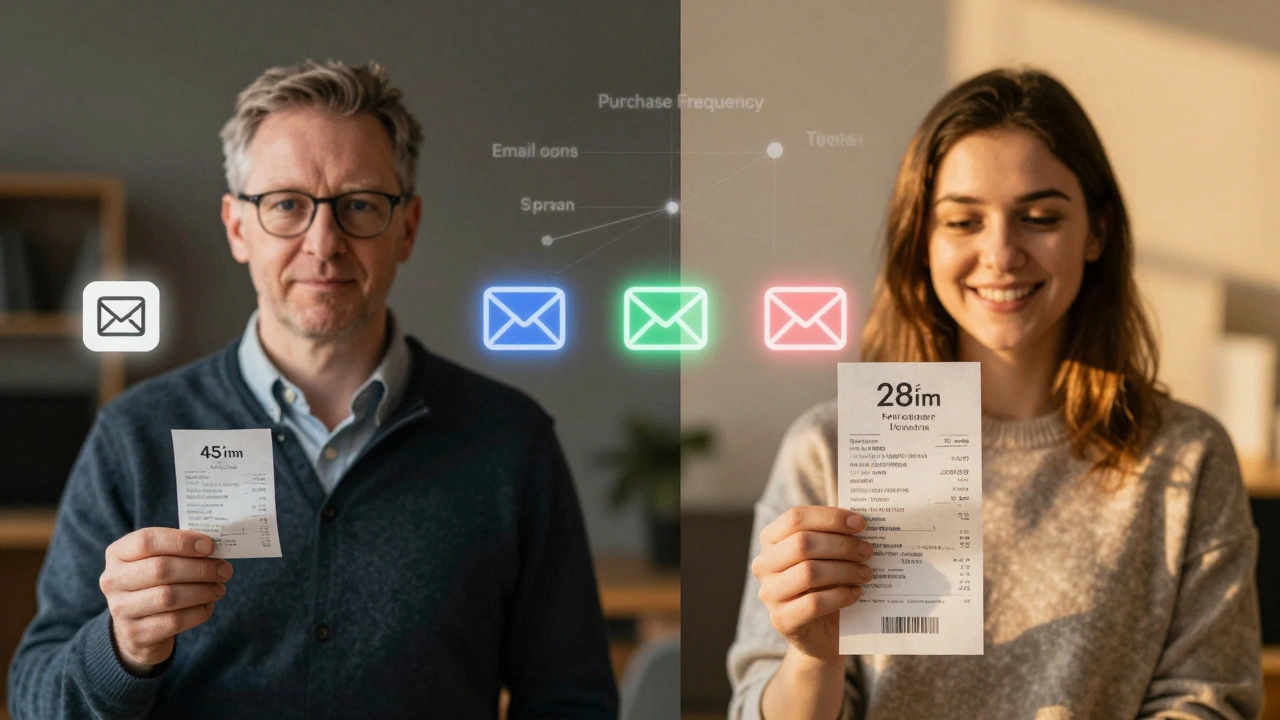
Age, location, job title-these are the easy filters. But they don’t tell you if someone will buy again. A 45-year-old accountant in Manchester might spend £500 a year. A 28-year-old freelancer in Bristol might spend £2,000-but only once. Which one is more valuable? The answer isn’t obvious until you look at behaviour.
Behavioural data answers: When did they last buy? How often? What did they click on? Did they abandon a cart? Did they open your last three emails? Value data answers: How much have they spent total? What’s their average order value? Do they buy high-margin products?
One UK SaaS company found that customers who opened at least two emails in a month were 7x more likely to upgrade. But those who bought once and never opened another email? They had a 92% churn rate. Demographics won’t tell you that. Only behaviour will.
How to Build Your First Behaviour-Based Segments
You don’t need a team of data scientists. Start with what your CRM already tracks. Here are five simple, high-impact segments to build right away:
- Active Buyers (Last 30 days) - These are your warm leads. Send them exclusive upgrade offers or cross-sell related products.
- At-Risk Customers (No purchase in 90+ days) - Trigger a re-engagement email with a discount or case study showing how others got more value.
- Cart Abandoners (Viewed product but didn’t buy) - Use a three-day email sequence: reminder → social proof → limited-time offer.
- High-Engagement Readers (Opened 3+ emails in 60 days) - These people trust you. Invite them to webinars, beta tests, or referral programs.
- One-Time Buyers (Only one purchase, no follow-up engagement) - Don’t ignore them. They’re your easiest upsell opportunity. Send them a ‘How to get more from your purchase’ guide.
These segments don’t require complex rules. Most CRMs let you build them with drag-and-drop filters. In HubSpot, for example, you can set up ‘Last purchase date is older than 90 days’ in under two minutes.
Value Segmentation: Spot Your Real Profit Engines
Not all customers are created equal. In fact, 20% of customers often generate 80% of profits. But you need to calculate value correctly.
Start with this formula: Total Customer Value = (Average Order Value × Purchase Frequency) - Support Costs. Support costs matter. A customer who buys £1,000 worth of products but calls support 12 times a year might be costing you money.
Here’s how three UK businesses broke it down:
| Segment | Average Order Value | Purchase Frequency (per year) | Support Tickets (per year) | Net Value |
|---|---|---|---|---|
| High-Value Loyals | £420 | 4.2 | 0.8 | £1,720 |
| Mid-Tier Buyers | £180 | 2.1 | 2.3 | £320 |
| Discount Seekers | £95 | 1.3 | 5.1 | £-120 |
Notice the Discount Seekers? They’re spending money, but they’re costing you £120 per customer annually. That’s not a customer-it’s a liability. You can still market to them, but don’t treat them like your top tier. Put them in a separate email stream with lower-margin offers.
Combining Behaviour + Value: The 4-Group Framework
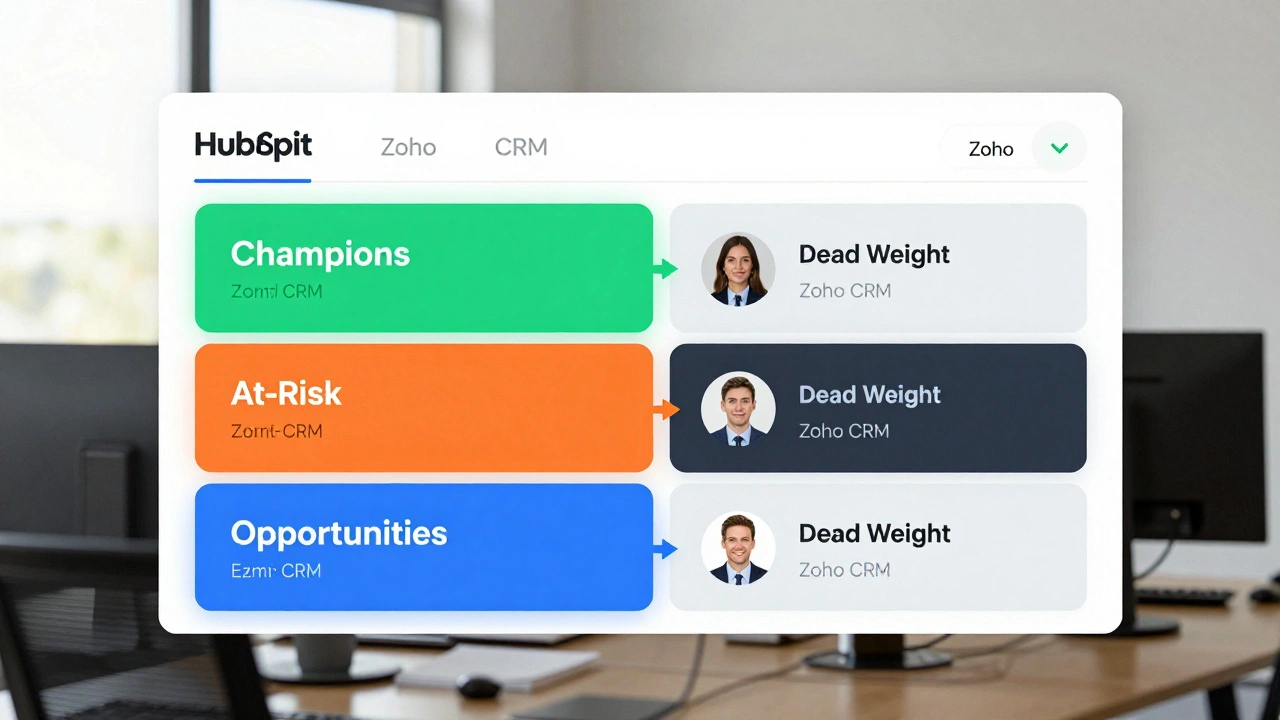
The magic happens when you layer behaviour on top of value. You end up with four clear customer groups:
- Champions - High value + frequent activity. They buy often, open emails, refer others. Reward them. Give early access, VIP support, or loyalty perks.
- At-Risk - High value but fading activity. They used to buy monthly. Now it’s every six months. Re-engage fast with personalised offers.
- Opportunities - Low value but high engagement. They read everything, click every link. They’re curious. Nurture them with educational content and low-pressure upsells.
- Dead Weight - Low value + low engagement. They opened one email in 2023. Stop wasting time. Don’t send them promotions. Maybe just a yearly thank-you note.
This framework came from a London-based B2B supplier. After applying it, they reduced email volume by 40%-but increased revenue by 27%. Why? Because they stopped talking to people who wouldn’t listen.
Tools That Make This Easy (No Coding Needed)
You don’t need a custom-built system. Here’s what works for UK small and mid-sized businesses in 2026:
- HubSpot - Best for marketing automation. Use ‘Lifecycle Stage’ and ‘Revenue’ filters to auto-segment.
- Salesforce Sales Cloud - Strong for tracking lifetime value and purchase history. Use Einstein Analytics for predictions.
- Zoho CRM - Affordable and great for simple segmentation. Use the ‘Customer Value Score’ module.
- Mailchimp - If you’re just starting, use their ‘Customer Behaviour’ tags. They track opens, clicks, and purchases.
All of these tools let you export segments as CSV or sync them directly to your email platform. No IT team required.
Common Mistakes UK Businesses Make
Even smart teams mess this up. Here are the top three errors:
- Segmenting by demographics only - ‘Women aged 30-45 in London’ sounds precise, but it’s useless if they’ve never bought from you.
- Forgetting to update segments - A customer who was active last quarter might be silent now. Set up monthly reviews.
- Using the same message for all segments - Sending a 20% off coupon to your Champions feels insulting. They don’t need discounts. They need recognition.
One Manchester retailer sent a holiday promo to everyone. The discount seekers redeemed it. The Champions ignored it. The at-risk customers opened it-but didn’t buy. Result? A £15,000 discount spend with zero profit lift. They fixed it by segmenting. Next year, they gave Champions a free gift. At-risk customers got a personal video from the owner. Revenue jumped 34%.
Next Steps: Your 7-Day Segmentation Plan
Start small. Don’t try to fix everything at once.
- Day 1 - Export your top 1,000 customers from your CRM.
- Day 2 - Add columns for ‘Last Purchase Date’, ‘Total Spent’, ‘Email Opens (last 60 days)’.
- Day 3 - Sort by total spent. Identify your top 20%.
- Day 4 - Filter for those who opened at least two emails in the last 30 days.
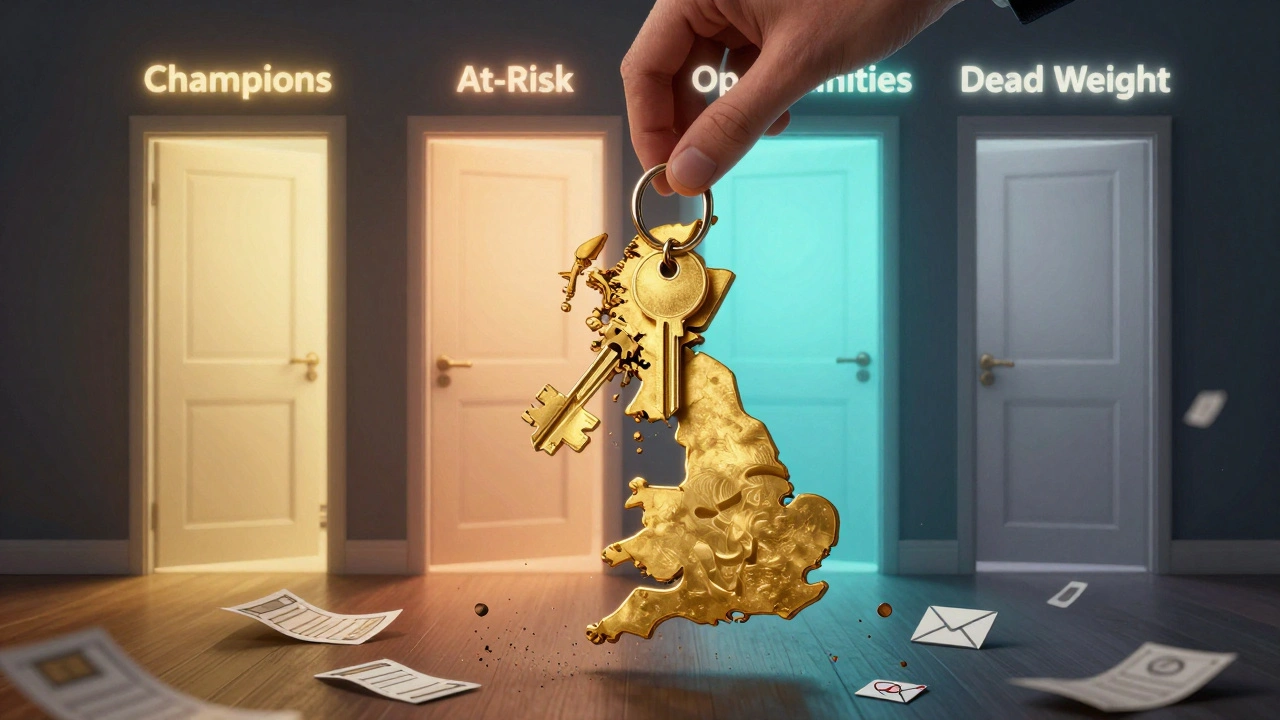
- Day 5 - Create four groups: Champions, At-Risk, Opportunities, Dead Weight.
- Day 6 - Draft one email for each group. Keep it short. Focus on value, not promotion.
- Day 7 - Send them. Track opens, clicks, and sales. Adjust next month.
That’s it. No consultants. No expensive software. Just clean data and smarter messaging.
Frequently Asked Questions
How often should I update my CRM segments?
Update them every 30 to 60 days. Customer behaviour changes fast. If you wait longer, your segments become outdated. Set a recurring calendar event-don’t rely on memory. Even small businesses see better results with monthly reviews.
Can I do this without a CRM?
You can, but it’s messy. Spreadsheets work for under 500 contacts. Beyond that, you’ll waste hours manually sorting. Free tools like Mailchimp or HubSpot’s free tier let you tag customers by behaviour without coding. If you’re serious about growth, invest in a basic CRM. It pays for itself in the first quarter.
What if my customers don’t open emails?
Then you’re not speaking to the right people. Look at your list. Are you emailing people who never bought? That’s the problem. Focus only on those who’ve interacted with you in the last 12 months. For the rest, pause. Re-engage only if they show signs of interest-like visiting your website again.
How do I track customer value if I sell both online and in-store?
Link your POS system to your CRM. Most modern systems like Square, Shopify, or Lightspeed sync purchase data automatically. If you can’t integrate, manually add in-store sales to each customer profile once a week. It takes 10 minutes. The payoff? You stop guessing who your best customers are.
Should I segment B2B customers the same way?
Yes-but adjust the metrics. Instead of ‘Average Order Value’, use ‘Annual Contract Value’. Instead of ‘Email Opens’, track ‘Meeting Bookings’ or ‘Content Downloads’. The same logic applies: find who engages, who spends, and who doesn’t. Then tailor your outreach.
What Comes Next?
Once your segments are running, the next step is automation. Set up triggers: if someone abandons a cart, send an email. If they hit £1,000 in lifetime spend, add them to a VIP list. If they haven’t bought in 90 days, send a ‘We miss you’ message.
Don’t stop at email. Use these segments in your ads. Run Facebook ads only to your Champions. Retarget At-Risk customers with testimonials from people like them. Your marketing budget will stretch further because you’re not shouting into the void.
CRM segmentation isn’t about technology. It’s about respect. When you stop treating all customers the same, you stop wasting time, money, and energy. And your best customers? They’ll notice. They’ll stay longer. And they’ll tell others.