
 by
by Customer Education in the UK: How Training and Content Drive Loyalty
17 Aug, 2026Imagine buying a high-end espresso machine that comes with a 40-page manual you never read. You struggle to get the perfect shot, feel frustrated, and eventually blame the brand for being "too complicated." Now imagine that same machine came with a simple video series on YouTube, a quick-start guide printed on the box, and a community forum where baristas shared tips. Which experience would make you stick with the brand? The second one, almost certainly. This is the core of customer education: moving beyond just selling a product to helping users actually succeed with it.
In the United Kingdom, this shift is no longer optional. With digital adoption rates hitting record highs and consumer expectations evolving rapidly, businesses are realizing that educated customers are loyal customers. It’s not just about reducing support tickets; it’s about building trust through competence. When you help a user master your tool or product, you transform them from a passive buyer into an active advocate.
Why Customer Education Matters More Than Ever
Traditionally, companies viewed training as a cost center-something done only when a product was too complex to use intuitively. Today, the landscape has flipped. Data from recent industry reports suggests that customers who engage with educational content are up to 37% more likely to purchase again and 51% more likely to recommend the brand. Why? Because education reduces anxiety. Buying new software, financial products, or technical hardware often comes with a fear of failure. By providing clear, accessible learning paths, you remove that friction.
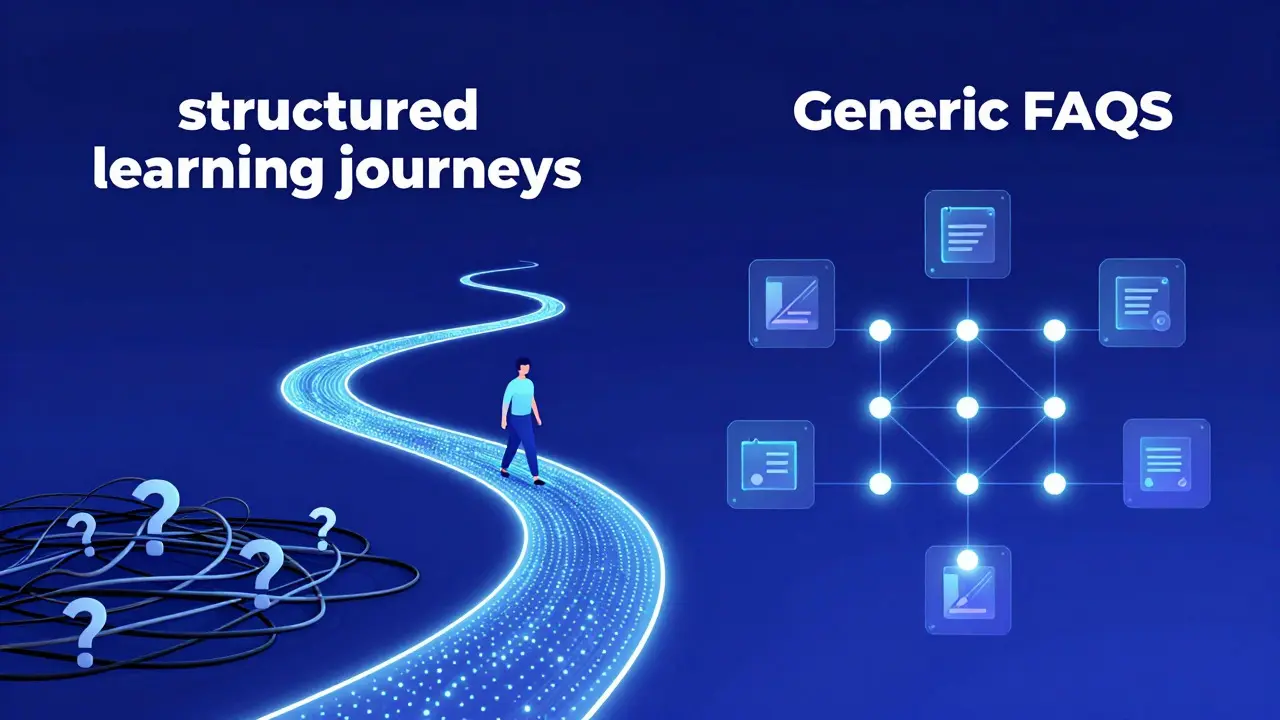
Consider the difference between a generic FAQ page and a structured learning journey. An FAQ answers specific questions after they arise. A learning journey anticipates needs before they happen. For instance, a UK-based SaaS company might notice that users drop off during the third week of onboarding. Instead of sending a generic "How are you finding us?" email, they send a targeted tutorial on advanced features relevant to that user's role. This proactive approach signals that the company cares about outcomes, not just subscriptions.
The Core Components of Effective User Training
Effective training isn't just about dumping information at the user. It requires a blend of formats, timing, and tone. Here are the key pillars that make up a robust education strategy:
- Microlearning: Short, focused lessons (under 5 minutes) that solve one specific problem. This fits modern attention spans perfectly.
- Interactive Tutorials: In-app guides or sandbox environments where users can practice without risk. Think of it like a driving school for your software.
- Community Forums: Peer-to-peer learning spaces where users share workarounds and best practices. This leverages social proof and collective intelligence.
- Certification Programs: For B2B clients, offering badges or certificates for mastering certain modules adds tangible value and encourages deeper engagement.
The format matters less than the intent. If your goal is to reduce churn, focus on tutorials that highlight ROI-generating features. If your goal is to drive upsells, create content that showcases premium capabilities. Always align the educational content with the business objective it supports.
Content Strategy: From Passive Consumption to Active Learning
Content marketing and customer education often overlap, but they serve different masters. Marketing content attracts; educational content retains. However, the line is blurring. Successful brands now use "edutainment"-educational content that is also engaging and entertaining. In the UK market, where consumers are savvy and skeptical of hard-sell tactics, this approach works exceptionally well.
Let’s look at a practical example. A fintech app targeting small business owners in Manchester might publish a blog post titled "How to Simplify VAT Filing with Our API." At first glance, it looks like standard SEO content. But if that article includes a step-by-step code snippet, a video walkthrough, and a downloadable template, it becomes an educational asset. The reader doesn’t just learn about the feature; they learn how to implement it. This positions the brand as a partner in success, not just a vendor.
Furthermore, personalization plays a huge role here. Using data from customer behavior, you can trigger specific content recommendations. If a user watches a video on basic setup but never touches the analytics dashboard, push a "Getting Started with Analytics" guide. This relevance ensures that education feels tailored, not broadcast.
Measuring Success: Beyond Clicks and Views
How do you know if your customer education efforts are working? Tracking views is a start, but it’s shallow. You need metrics that correlate directly with business health. Here is what to monitor:
- Time to Value (TTV): How quickly does a new user achieve their first meaningful outcome? Shorter TTV usually indicates better onboarding education.
- Support Ticket Volume: As education improves, ticket volume for basic questions should drop. Monitor this trend over quarters.
- Net Promoter Score (NPS) by Segment: Compare NPS scores between users who completed training modules versus those who didn’t. Often, the gap is significant.
- Feature Adoption Rate: Are users utilizing the full suite of tools? Low adoption often points to gaps in educational coverage.
These metrics provide a clear feedback loop. If TTV is increasing, review your onboarding flow. If support tickets are rising for a specific feature, create targeted content for that area. Continuous improvement is key.

Common Pitfalls to Avoid
Even well-intentioned education programs can fail if executed poorly. Watch out for these common traps:
- Information Overload: Don’t overwhelm new users with every possible feature on day one. Start with the core value proposition and expand gradually.
- Outdated Content: If your product updates frequently, ensure your tutorials keep pace. Nothing erodes trust faster than a video showing a button that no longer exists.
- Lack of Accessibility: Ensure all content is accessible to users with disabilities. This includes captions for videos, alt text for images, and screen-reader-friendly documentation. In the UK, accessibility compliance is both a legal expectation and a moral imperative.
- Ignoring Feedback Loops: Add simple feedback buttons to every tutorial. Ask, "Was this helpful?" Use this data to refine your content library.
Building a Culture of Empowerment
Ultimately, customer education is about mindset. It shifts the internal culture from "we sell products" to "we enable success." This change ripples out to every touchpoint, from sales scripts to support interactions. When your team believes in empowering the user, it shows in the quality of the content they produce and the empathy they bring to customer interactions.
For UK businesses, this is particularly relevant in sectors like healthcare, finance, and technology, where regulatory changes and complex systems demand ongoing user guidance. By investing in education, you aren't just creating content; you're building a relationship based on mutual growth. The result? Customers who stay longer, spend more, and champion your brand to others. That is the true power of educating your audience.
What is the difference between customer education and customer support?
Customer support is reactive, solving problems after they occur. Customer education is proactive, preventing problems by teaching users how to use the product effectively. Support handles exceptions; education handles the norm.
How much time should I dedicate to creating educational content?
Start with 10-15% of your marketing budget allocated to education. Focus on high-impact areas first, such as onboarding and top three most-used features. Scale up as you see positive metrics like reduced support tickets and higher retention.
Is video the best format for customer education?
Video is highly effective for visual learners and complex tasks, but it shouldn't be the only format. Combine it with written guides for reference, interactive demos for practice, and podcasts for on-the-go learning. A multi-format approach caters to diverse learning preferences.
How do I measure the ROI of customer education?
Calculate the cost of creating and maintaining content, then compare it against savings from reduced support costs, increased retention rates, and higher average order values from educated users. Even a modest increase in retention can significantly outweigh the investment in education.
Should I offer certifications to my customers?
Certifications work best for B2B products or complex enterprise solutions where users need to demonstrate proficiency to their own teams. For B2C consumer products, badges or progress trackers may be more appropriate and less formal.