
 by
by Customer Feedback Loops in the UK: Using Surveys and Reviews to Improve
7 May, 2026Imagine spending thousands on marketing only to watch customers walk out the door because you ignored their complaints. It happens more often than you’d think. In the UK, where consumer expectations are rising faster than inflation, listening isn’t just nice-it’s survival. You don’t need a crystal ball to know what your customers want. They tell you every day through reviews, support tickets, and survey responses. The trick is building a system that actually uses that data.
This guide breaks down how to build effective customer feedback loops specifically for the UK market. We’ll look at practical steps to collect insights, analyze them without getting overwhelmed, and turn those numbers into real product improvements. Whether you run a small e-commerce shop in Manchester or a SaaS startup in London, these methods work.
Why Feedback Fails Before It Starts
Most businesses treat feedback like a box-ticking exercise. They send a survey, get three responses, and file it away. That’s not a loop; that’s a dead end. A true feedback loop requires action. If you ask a customer about their experience and then do nothing, they feel ignored. Worse, they stop trusting your brand entirely.
In the UK context, this is critical. British consumers are notoriously skeptical of corporate PR. They value authenticity over polish. When a company responds genuinely to criticism, loyalty spikes. When they ignore it, churn follows. The gap between collecting data and acting on it is where most companies fail.
- The Collection Trap: Sending surveys too frequently leads to fatigue. Customers will skip questions or give random answers just to close the tab.
- The Analysis Gap: Gathering 1,000 responses means nothing if you don’t segment them by customer type, purchase history, or region.
- The Action Void: Identifying a problem but lacking a process to fix it creates internal frustration and external disappointment.
To fix this, you need a closed-loop system. This means every piece of feedback has an owner, a timeline, and a follow-up plan. It turns passive data into active strategy.
Choosing the Right Tools for the Job
You can’t rely on one method alone. Different tools capture different types of insight. A five-star rating tells you satisfaction levels, but it doesn’t explain why someone was unhappy. Open-ended comments reveal the "why," while behavioral data shows what people actually do versus what they say they do.
| Method | Best For | UK Specific Consideration | Effort Level |
|---|---|---|---|
| Net Promoter Score (NPS) | Measuring overall loyalty and likelihood to recommend | Highly respected metric in UK B2B sectors | Low |
| Customer Satisfaction (CSAT) | Immediate reaction to a specific interaction or purchase | Useful for post-delivery checks in retail | Medium |
| Online Reviews | Social proof and public sentiment analysis | Trusted Housebuilder Register and Trustpilot are key platforms | Low (passive collection) |
| In-Depth Interviews | Uncovering deep emotional drivers and pain points | Requires cultural nuance to interpret British understatement | High |
NPS is great for high-level tracking. It asks one simple question: "How likely are you to recommend us?" Scores range from 0 to 10. Promoters (9-10) drive growth. Passives (7-8) are satisfied but vulnerable to competitors. Detractors (0-6) can damage your reputation. In the UK, a strong NPS correlates directly with word-of-mouth referrals, which remain a powerful driver for local businesses.
CSAT is more tactical. Send it right after a support call or delivery. It’s quick and gives you immediate pulse checks. However, CSAT scores fluctuate wildly based on single events. Don’t use it as your sole measure of long-term health.
Reviews are public and permanent. Platforms like Trustpilot, Feefo, and Google Business Profile dominate the UK landscape. Ignoring negative reviews here is dangerous. Responding professionally shows potential customers that you care. It also provides free market research. Read the negative reviews of your competitors to find gaps you can fill.
Decoding British Consumer Behavior
Culture matters in feedback. British consumers tend to be polite, even when frustrated. They might say "It’s fine" when they mean "It’s terrible." This indirect communication style can skew survey results if you’re not careful. Direct questions often yield honest answers, but open-ended ones require deeper interpretation.
For example, a comment like "The service was adequate" might seem neutral. But in a UK context, "adequate" is often code for "disappointing." Conversely, "brilliant" or "fantastic" indicates genuine delight. Training your team to read between the lines is essential. Use sentiment analysis tools calibrated for British English idioms and slang to avoid misinterpretation.
Also, consider regional differences. A customer in Glasgow may have different priorities than one in Cornwall. Localize your feedback requests. Mention local landmarks or community issues in your surveys to show you understand their specific context. This increases response rates significantly.
Building the Loop: From Data to Action
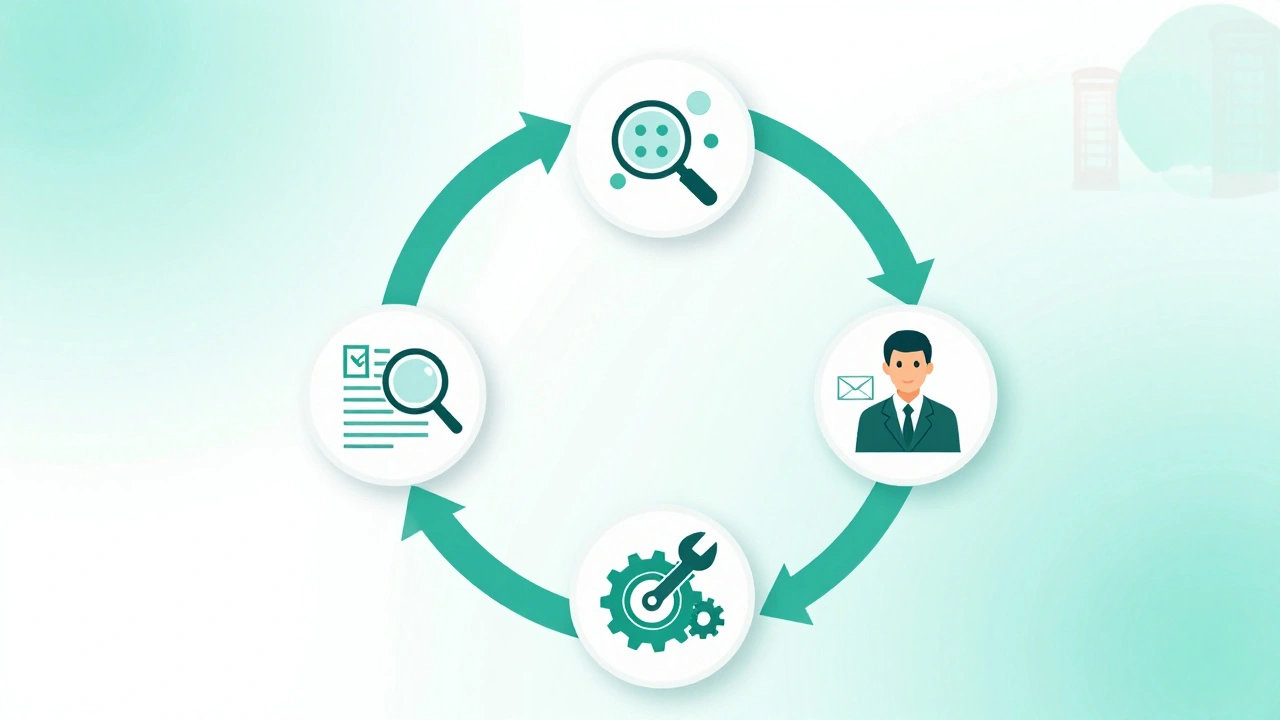
Collecting data is easy. Acting on it is hard. Here’s how to structure your internal process so feedback drives change.
- Centralize Everything: Pull data from surveys, reviews, social media, and support tickets into one dashboard. Tools like Zendesk or HubSpot help aggregate this. Fragmented data leads to fragmented insights.
- Tag and Categorize: Create tags for common themes: shipping delays, pricing confusion, UI bugs, friendly staff. Automate tagging where possible using AI, but keep human oversight for accuracy.
- Assign Ownership: Every issue needs an owner. If customers complain about slow loading times, the engineering team owns it. If they hate the checkout flow, marketing or UX takes responsibility. No ambiguity.
- Set Deadlines: Define SLAs (Service Level Agreements) for addressing feedback. Critical issues should be resolved within 48 hours. Minor tweaks can wait for the next sprint cycle.
- Close the Loop: Contact the customer who gave the feedback. Tell them what you changed because of their input. This step is crucial. It transforms a critic into a champion.
Let’s say you run an online clothing store. Ten customers mention that sizes run small. Instead of ignoring it, update your size guide immediately. Email those ten customers with a discount code for their next purchase, apologizing for the confusion. Then, announce the updated size guide on social media. You’ve turned a complaint into a trust-building moment.
Leveraging Technology Without Losing Humanity
AI and automation are powerful allies in managing feedback volume. Natural Language Processing (NLP) can scan thousands of reviews in seconds to identify trending topics. Chatbots can handle initial queries, freeing up human agents for complex issues. But technology shouldn’t replace empathy.
Automated responses to negative reviews often backfire. A generic "Thank you for your feedback" feels dismissive. Personalize your replies. Acknowledge the specific issue. Offer a solution. Show that a real person read their words. In the UK, where personal relationships matter in business, this human touch is non-negotiable.
Use AI for triage, not resolution. Let algorithms flag urgent issues or detect sentiment shifts. Then, let humans craft the response and implement the fix. This hybrid approach scales efficiently while maintaining brand warmth.

Measuring Success Beyond Vanity Metrics
Don’t just track the number of reviews or average star ratings. These are vanity metrics. Focus on outcomes that impact your bottom line.
- Retention Rate: Are customers coming back? Feedback loops should reduce churn.
- Customer Lifetime Value (CLV): Happy customers spend more over time. Track changes in CLV after implementing feedback-driven improvements.
- Resolution Time: How quickly do you address issues? Faster resolution correlates with higher satisfaction.
- Feedback-to-Action Ratio: What percentage of collected feedback leads to a tangible change? Aim for high conversion here.
If your NPS stays flat despite thousands of surveys, something is wrong. You’re either asking the wrong questions or failing to act. Dig deeper. Segment your data. Talk to detractors personally. Find the root cause.
Common Pitfalls to Avoid
Even well-intentioned programs stumble. Watch out for these traps.
Survey Fatigue: Bombarding customers with emails kills engagement. Space out requests. Trigger surveys based on behavior, not calendar dates. Ask after a purchase, not every Monday.
Bias Blindness: Only listening to vocal customers skews your perspective. Silent majority users might be perfectly happy or quietly leaving. Use passive data like usage patterns to balance active feedback.
Internal Silos: Marketing collects feedback, but Product never sees it. Break down walls. Share insights across departments. Make feedback a company-wide priority, not a departmental task.
Ignoring Positive Feedback: Celebrating wins builds morale and reinforces good behavior. Share positive reviews internally. Highlight employees who receive praise. It costs nothing and boosts culture.
How often should I send customer surveys?
Frequency depends on your customer journey. For transactional businesses, send a CSAT survey immediately after purchase or support interaction. For relationship-based models, quarterly NPS surveys work best. Avoid sending more than one survey per month to prevent fatigue. Trigger-based surveys tied to specific actions usually yield higher quality responses than scheduled blasts.
What is the difference between NPS and CSAT?
NPS (Net Promoter Score) measures long-term loyalty and likelihood to recommend, scored on a 0-10 scale. CSAT (Customer Satisfaction) measures immediate satisfaction with a specific interaction, usually on a 1-5 scale. NPS predicts future behavior, while CSAT reflects current sentiment. Use both for a complete picture.
How do I handle negative reviews effectively?
Respond promptly, politely, and personally. Acknowledge the specific issue raised. Apologize sincerely if appropriate. Offer a solution or invite them to contact you directly to resolve it. Never argue publicly. Showing you care turns critics into advocates and reassures potential customers reading the thread.
Is it worth investing in AI for feedback analysis?
Yes, if you have significant volume. AI tools can process thousands of reviews instantly, identifying trends and sentiment shifts that humans might miss. However, use AI for triage and pattern recognition, not for crafting final responses. Human empathy remains essential for building trust and resolving complex issues.
How does UK culture affect customer feedback?
British consumers often use understatement. Words like "adequate" or "fine" may indicate dissatisfaction rather than neutrality. Politeness can mask frustration. Train your team to interpret indirect language carefully. Use sentiment analysis tools tuned for British English to avoid misreading subtle cues. Direct questions often elicit clearer answers than open-ended ones.