 by
by Email Marketing for UK Ecommerce: Strategies to Boost Repeat Sales
17 Aug, 2026Most UK online stores bleed money through the back door. You spend heavily on Facebook ads or Google Shopping to acquire a new customer, only to watch them vanish after one purchase. The real profit isn't in that first sale; it's in the second, third, and fourth. If your Email Marketing is just a weekly newsletter with a "New Arrivals" banner, you are leaving significant revenue on the table. For UK-based merchants, the challenge is specific: you need to navigate strict data laws while building relationships that feel personal, not robotic.
The goal here is simple. We want to turn one-time buyers into loyal regulars. This requires moving away from generic blasts and toward strategic lifecycle automation. By understanding where a customer sits in their journey, you can send the right message at the right time. This guide breaks down the exact campaigns that drive these repeat transactions, tailored for the UK market.
Why Retention Beats Acquisition in the UK Market
Acquiring a new customer in the UK ecommerce space is expensive. With rising ad costs on platforms like Meta and Google, your Customer Acquisition Cost (CAC) keeps climbing. In contrast, winning back an existing customer costs a fraction of that. Industry benchmarks suggest that increasing customer retention rates by just 5% can boost profits by 25% to 95%. That math is hard to ignore.
But there is a catch in the UK. Consumers are savvy about privacy. Since the implementation of GDPR and the ePrivacy Regulation, users expect transparency. They don't mind receiving emails, but they hate feeling spammed. The difference between a welcome and a nuisance lies in relevance. If you sell running shoes, sending an email about yoga mats three days after they bought sneakers feels disjointed. But sending a tip on how to care for those specific sneakers? That builds trust. Trust leads to repeat purchases.
Think of your email list not as a database of addresses, but as a community of people who have already said "yes" to you once. Your job is to keep saying yes to them with value. This shift in mindset changes how you write subject lines, what you include in the body copy, and when you hit send.
Navigating UK Compliance: GDPR and Double Opt-In
You cannot run effective email campaigns in the UK without understanding the legal landscape. The Information Commissioner’s Office (ICO) enforces rules under the UK GDPR. The most critical rule for ecommerce is consent. You need explicit permission to send marketing emails. This usually means implementing a double opt-in process.
Double opt-in works like this: A user signs up on your site, receives a confirmation email, and clicks a link to confirm their subscription. Only then do they enter your active list. It adds a step, sure, but it cleans your list automatically. No more bouncing emails from typos or fake sign-ups. It also protects you legally because you have proof the user actively confirmed their intent.
Beyond consent, you must provide an easy way to unsubscribe. The ICO requires that every commercial email has a clear, functional unsubscribe link. Hiding it in tiny font at the bottom is a recipe for fines. Place it visibly. Most customers won't click it unless they truly want out, and if they do, let them go gracefully. Keeping unhappy subscribers hurts your deliverability rates, which affects everyone else on your list.
Also, be transparent about data usage. Tell them exactly why you are collecting their email. "Get 10% off your next order" is a clear incentive. Vague promises lead to low engagement. Specificity builds credibility.
The Welcome Series: Setting the Tone for Loyalty
Your welcome series is your first chance to set expectations. Don't just say "Hi." Introduce your brand story, highlight your best-selling products, and offer immediate value. A standard effective sequence looks like this:
- Email 1 (Immediate): Deliver the promised discount code. Thank them for joining. Keep it short. Focus on the benefit.
- Email 2 (Day 2): Share your brand story. Why did you start this business? What makes your products different? Humanize the brand. People buy from people, not logos.
- Email 3 (Day 4): Showcase your best-sellers or top-rated items. Use social proof. Include reviews or star ratings. Make it easy to browse.
- Email 4 (Day 7): Offer help. Ask what questions they have. Link to your FAQ page or size guide. Reduce friction before they even try to buy again.
This sequence educates and nurtures. It moves the customer from "new stranger" to "informed prospect" quickly. The key is pacing. Don't overwhelm them with four emails in one day. Space them out so each message lands fresh.
Post-Purchase Automation: The Unsung Hero
Many merchants stop emailing after the order confirmation. This is a mistake. The post-purchase window is prime time for cross-selling and building habit. Here is what should happen after a customer buys:
- Order Confirmation: Immediate. Clear details. Tracking link. Set expectations for delivery dates.
- Shipping Notification: When the item leaves the warehouse. Excitement builder.
- Delivery Day: "Your package is arriving today!" Add a small tip on how to use the product.
- Post-Delivery (Day 3-5): Check-in. "Did it arrive safely? Any questions?" This shows care, not just commerce.
- Cross-Sell (Day 7-10): Suggest complementary items. If they bought a camera, suggest a lens or a bag. Not random items. Relevant ones.
- Review Request (Day 14): Ask for feedback. Offer a small incentive if appropriate, but don't force it. Reviews build trust for future customers.
Each of these emails serves a purpose. They reduce support tickets by answering questions proactively. They increase Average Order Value (AOV) through relevant cross-sells. And they keep your brand top-of-mind without being pushy.
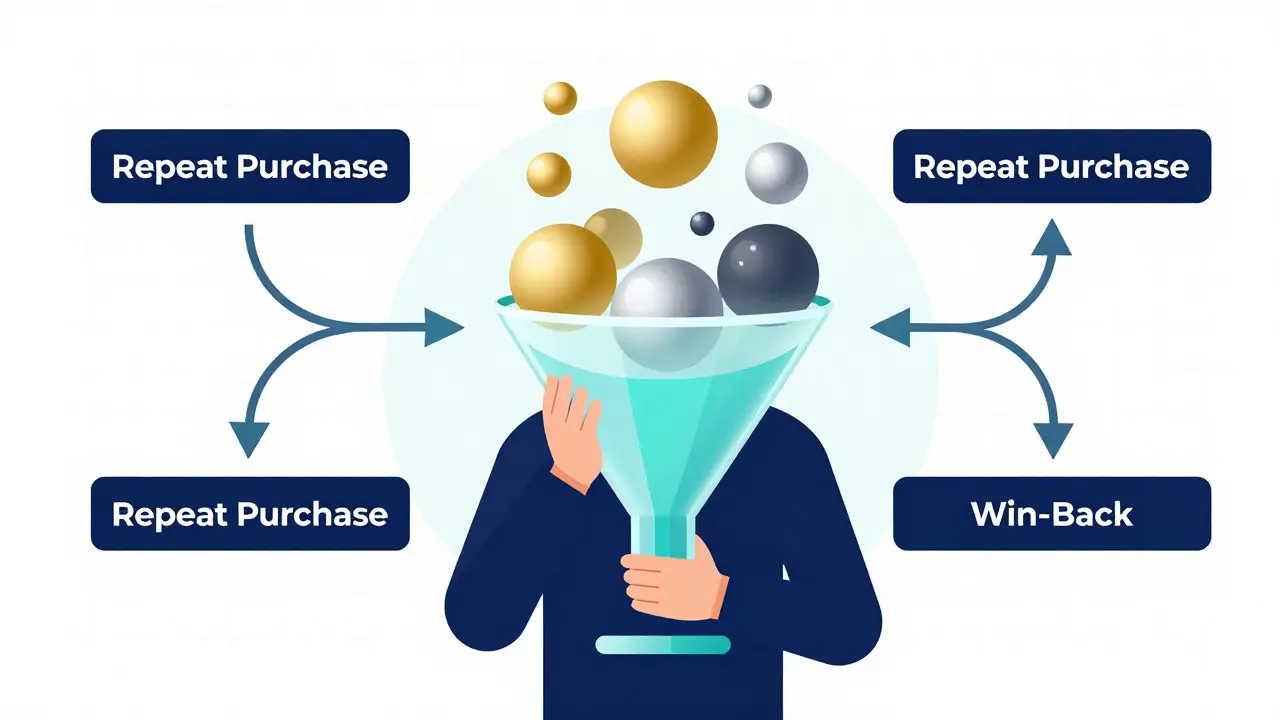
Win-Back Campaigns: Re-engaging Lapsed Customers
Not every customer will stay engaged forever. Some will go quiet. Instead of deleting them, try to win them back. Define a lapsed customer as someone who hasn't purchased in 60, 90, or 120 days, depending on your product cycle.
A strong win-back campaign involves a sequence of three emails over two weeks:
- Email 1: The Nudge. Subject line: "We miss you." Body: Simple reminder. Highlight new arrivals or seasonal items. No discount yet. Just visibility.
- Email 2: The Incentive. Subject line: "Here's 15% off to come back." Body: Direct offer. Create urgency. "Valid for 7 days." Give them a reason to act now.
- Email 3: The Last Call. Subject line: "This is your last chance." Body: Extend the offer slightly longer or add a free gift. If they don't open this, they are likely cold. Consider moving them to a less frequent cadence.
Monitor open rates and click-through rates closely. If the first email gets high opens but low clicks, your content isn't resonating. If opens are low, your subject lines need work. Adjust based on data, not guesswork.
Segmentation: Talking to Individuals, Not Crowds
One-size-fits-all emails fail because they treat every subscriber the same. Segmentation is the antidote. Divide your list based on behavior and demographics.
| Segment Type | Definition | Recommended Action |
|---|---|---|
| Purchase History | Customers grouped by what they bought | Send replenishment reminders or related accessories |
| Engagement Level | Based on opens/clicks in last 90 days | High engagement: New drops. Low engagement: Win-back offers |
| Customer Lifetime Value (CLV) | High-value vs. low-value customers | High CLV: VIP perks, early access. Low CLV: Standard promos |
| Geographic Location | Region within the UK | Local weather-based promotions or regional events |
For example, if you sell skincare, segment customers who bought moisturizer versus those who bought sunscreen. Send the moisturizer buyers tips on layering products. Send the sunscreen buyers reapplication reminders. This level of specificity feels personal. It shows you know what they need. It drives higher conversion rates than generic blasts.
Start with simple segments. Purchase history is the easiest to implement. Most email service providers (ESPs) like Klaviyo or Mailchimp make this automatic. As you grow, add behavioral segments like cart abandoners or browse-only visitors.

Measuring Success: Metrics That Matter
You can't improve what you don't measure. Focus on these key metrics for repeat sales:
- Repeat Purchase Rate: Percentage of customers who buy more than once. Aim for 20-30% in healthy ecommerce models.
- Customer Lifetime Value (CLV): Total revenue a customer generates over their relationship with you. Compare this to CAC. Ideally, CLV should be 3x CAC.
- Email Revenue Attribution: How much revenue comes directly from email clicks? Track this to prove ROI.
- Unsubscribe Rate: Should stay below 0.5%. If it spikes, review your content frequency or relevance.
- Open Rate & Click-Through Rate (CTR): These indicate engagement. While open rates are declining industry-wide due to Apple's Mail Privacy Protection, CTR remains a reliable signal of interest.
Review these metrics monthly. Look for trends, not just single data points. If your repeat purchase rate is dropping, check your post-purchase emails. Are they engaging? Are the cross-sells relevant? Tweak and test.
Common Pitfalls to Avoid
Even experienced marketers make mistakes. Watch out for these:
- Sending Too Frequently: Bombarding inboxes kills engagement. Find your sweet spot. For most UK brands, 2-4 emails per week is safe. Monitor unsubscribes to adjust.
- Ignoring Mobile Optimization: Over 60% of email opens happen on mobile. Ensure your templates look perfect on phones. Test before sending.
- Weak Subject Lines: This is your first impression. If it doesn't grab attention, the rest doesn't matter. A/B test subject lines regularly.
- No Clear Call-to-Action (CTA): Every email should have one primary goal. One button. One message. Confusion leads to inaction.
- Ignoring Data Privacy: Fines under UK GDPR can reach 4% of global turnover. Stay compliant. Update your privacy policy. Be transparent.
Avoiding these pitfalls saves time and money. It also builds trust. Trust is the currency of repeat sales.
Frequently Asked Questions
How often should I send emails to my UK customer base?
There is no single right answer, but consistency is key. For most UK ecommerce brands, sending 2 to 4 emails per week works well. This includes transactional emails (order confirmations) and promotional emails. Monitor your unsubscribe rate. If it rises above 0.5%, consider reducing frequency. Always prioritize quality over quantity.
Is double opt-in mandatory in the UK?
While not explicitly mandated by law in all cases, double opt-in is the gold standard for proving consent under UK GDPR. It provides clear evidence that a user actively agreed to receive marketing emails. This protects you from potential complaints or investigations by the ICO. It also improves list hygiene by filtering out accidental sign-ups.
What is the best time to send emails in the UK?
General best practices suggest Tuesday through Thursday mornings (8 AM to 11 AM) perform well for B2C ecommerce. However, this varies by industry and audience. Some niche audiences engage better in the evening. The only way to know for sure is to A/B test send times with your specific list. Use your ESP's analytics to find your peak engagement windows.
How do I handle customers who haven't bought in 6 months?
Launch a win-back campaign. Start with a gentle nudge highlighting new products. Follow up with a targeted discount offer. If they still don't engage after 2-3 emails, move them to a lower frequency segment or suppress them from daily promotions. This keeps your main list engaged and prevents deliverability issues.
Do I need to update my privacy policy for email marketing?
Yes. Your privacy policy should clearly state how you collect, use, and store email addresses. Mention that you may send marketing communications and how users can unsubscribe. Keep the language simple and accessible. Avoid legal jargon. Transparency builds trust and reduces the risk of complaints to the ICO.