 by
by Financial Services in the UK: Licensing and FCA Regulation Explained
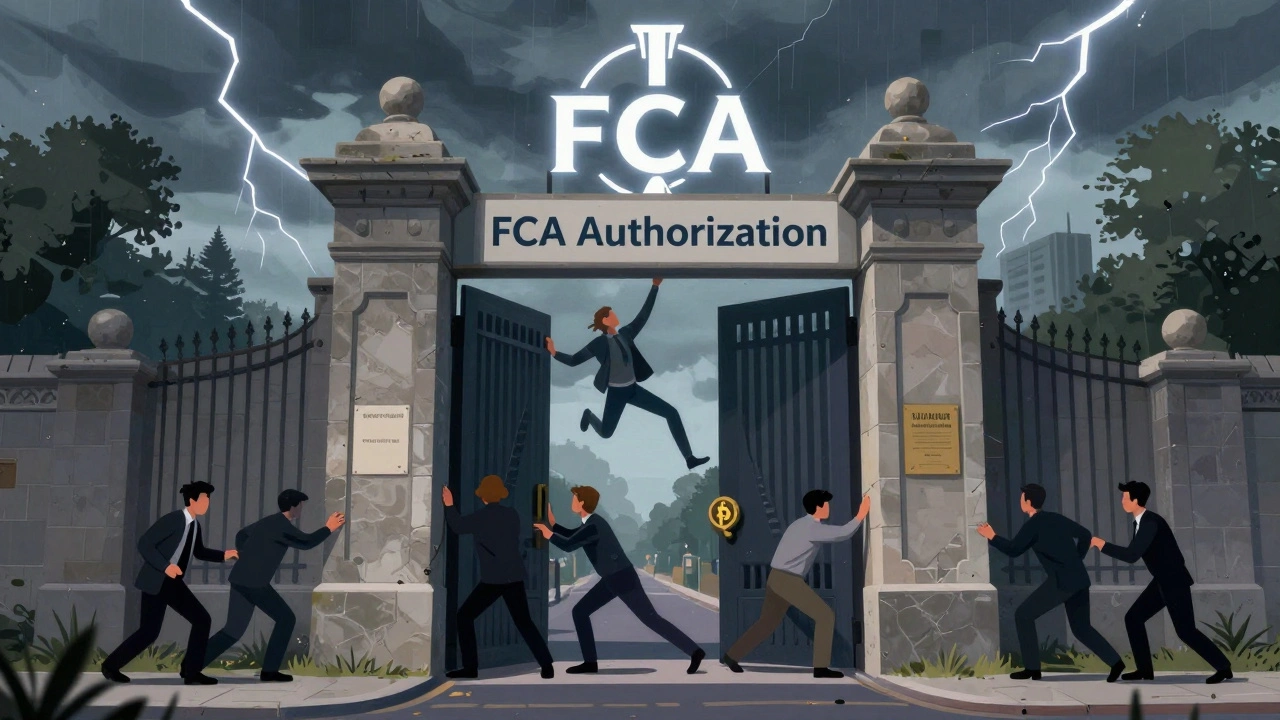
27 Feb, 2026If you're running a financial business in the UK, you can't just open up shop and start taking money. The law doesn't work that way. The Financial Conduct Authority (FCA) is the gatekeeper. It decides who can operate, what they can do, and how they must behave. Getting licensed isn't a formality-it's a full-on process that can take months, cost tens of thousands of pounds, and demand detailed proof you know what you're doing. And if you skip it? You're breaking the law.
Why the FCA Exists
The FCA wasn't created to make life harder for businesses. It was born out of the 2008 financial crisis, when too many firms misled customers, took excessive risks, and collapsed without warning. The UK government realized that simply trusting financial firms to do the right thing wasn't enough. So in 2013, the FCA replaced the old Financial Services Authority with a sharper, more focused regulator. Its job? To protect consumers, ensure market integrity, and promote healthy competition.
That means if you're offering investment advice, managing client money, selling insurance, or even running a crypto asset business, you need to be authorized. The FCA doesn't just check your background-it looks at your entire business model. Are your staff trained? Do you have proper systems to stop money laundering? Can your customers understand the risks they're taking? If the answer is no, you won't get approved.
Who Needs an FCA License
Not every financial activity needs a license, but most do. Here’s what the FCA covers:
- Providing investment advice (even if you're just giving tips on stocks)
- Managing client assets (like a wealth manager or robo-advisor)
- Arranging deals in investments (brokering insurance or pensions)
- Operating a payment service (including digital wallets and crypto exchanges)
- Offering credit or lending (including payday loans and buy-now-pay-later services)
- Running a crowdfunding platform or peer-to-peer lending site
- Dealing in cryptoassets (since 2023, all firms must register with the FCA)
Even if you're small-say, a solo financial planner-you still need authorization. The FCA doesn't care how big you are. What matters is whether you're doing one of these regulated activities. Some firms try to avoid licensing by calling themselves "advisers" instead of "financial advisers," but the FCA sees right through that. If you're giving advice about regulated products, you're regulated.
The Licensing Process: What to Expect
Applying for FCA authorization isn't like filing a tax return. It's a marathon. The average application takes 6 to 12 months. Some take longer, especially if the FCA has questions or if your business model is unusual.
Here's what you'll need to submit:
- A detailed business plan showing how you'll make money and stay solvent
- Proof of financial resources (at least £50,000 in capital for most firms, sometimes much more)
- Background checks on all directors and key staff
- Compliance manuals covering anti-money laundering, complaints handling, and data protection
- Proof that your IT systems are secure and auditable
- A clear explanation of how you'll treat customers fairly
You’ll also need to pay a non-refundable application fee, which ranges from £1,500 for small firms to over £50,000 for complex businesses. The FCA publishes its fee schedule every year, and it’s updated for 2026. You can’t skip this step-even if you’re just testing the waters.
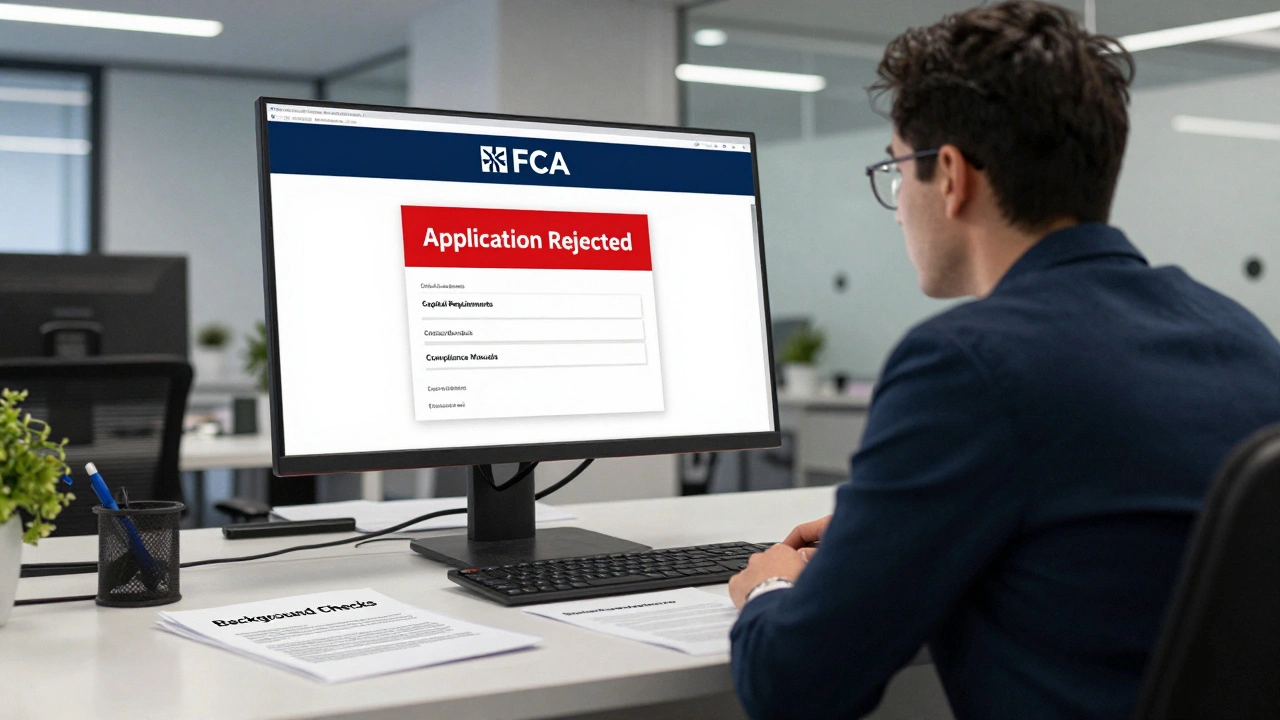
Many firms hire consultants to help them through this process. That’s not a luxury-it’s often a necessity. A bad application gets rejected, and you’ll have to wait six months before reapplying. That kind of delay can kill a startup.
What Happens After You Get Licensed
Getting approved isn’t the finish line. It’s the starting line. The FCA doesn’t just hand you a certificate and walk away. They monitor you. They do unannounced inspections. They review your transaction records. They check if your marketing materials are misleading. They’ll ask for quarterly reports on your financial health and compliance status.
If you mess up-say, you mis-sold a product or failed to report suspicious activity-you’ll get a warning. Then a fine. Then, if it keeps happening, your license gets pulled. In 2025 alone, the FCA revoked over 120 licenses for firms that broke the rules. Some were small firms with poor systems. Others were well-known names that ignored red flags.
You also have to follow the FCA’s Principles for Businesses. These aren’t suggestions. They’re rules. For example:
- Principle 6: You must pay due regard to the interests of your customers and treat them fairly
- Principle 7: You must communicate information to clients clearly, fairly, and not misleadingly
- Principle 10: You must handle complaints properly and promptly
There’s no wiggle room. Even if you think your customer "understood" the risk, if the FCA decides your communication wasn’t clear enough, you’re still in breach.
Common Mistakes That Get Firms Rejected
Most applications fail because of avoidable errors. Here are the top three:
- Underestimating capital requirements - Many firms think £50,000 is enough, but if you’re handling client money or offering complex products, you might need £1 million or more. The FCA calculates this based on your expected volume and risk.
- Weak compliance systems - If your anti-money laundering policy is just a copy-paste from a website, it won’t cut it. The FCA wants customized, tested, and regularly updated procedures.
- Unqualified key personnel - If your CEO has no financial experience, or your compliance officer hasn’t passed the required certification (like the CF30 or CF10 exams), your application will stall.
Another big mistake? Trying to operate before approval. Some firms start taking payments or giving advice while waiting for their license. That’s illegal. The FCA doesn’t care if you "just got started." If you’re doing regulated activity without permission, you’re breaking the law-and you could face criminal charges.
What If You’re Outside the UK?
Many non-UK firms think they can serve UK customers remotely. That’s a dangerous assumption. If your website targets UK residents-using pounds, offering UK phone numbers, or advertising in British media-you’re considered to be operating in the UK. That means you need FCA authorization.
Some EU firms used to rely on passporting rights after Brexit, but those are gone. Now, even firms based in Germany or France must apply directly to the FCA if they want to serve UK clients. The same goes for US, Australian, or Canadian firms. There’s no shortcut.
The FCA has a "temporary permissions regime" for firms that were already operating before Brexit, but that ended in 2022. If you’re new, you’re on the same playing field as everyone else: apply properly or don’t operate at all.

What Happens If You Don’t Get Licensed
The FCA doesn’t just issue fines. It can shut you down. In 2024, the FCA blocked over 300 unlicensed crypto firms from advertising in the UK. It also forced payment platforms to freeze accounts linked to illegal operators. If you’re caught, your bank account could be frozen. Your domain might be taken down. Your personal assets could be at risk.
And it’s not just legal trouble. Your reputation is ruined. Clients won’t trust you. Suppliers won’t work with you. Investors will walk away. In financial services, trust is everything-and once it’s gone, it’s nearly impossible to rebuild.
How to Stay Compliant Long-Term
Licensing is just step one. Staying compliant is ongoing work. You need to:
- Update your compliance manuals every year
- Train staff on new rules (especially around crypto and AI-driven advice)
- Monitor your systems for security breaches
- Respond to customer complaints within 15 days
- Report suspicious activity to the National Economic Crime Centre
The FCA releases guidance every quarter. You should be reading it. If you’re not, you’re falling behind. In 2025, the FCA introduced new rules on AI use in financial advice. Firms that didn’t update their policies within 90 days got fined.
There’s no "set it and forget it" in this industry. Compliance isn’t a cost center-it’s part of your business model. The firms that thrive are the ones that treat it as a competitive advantage. They use it to build trust, attract better clients, and avoid costly mistakes.
Final Thought: It’s Not About Rules, It’s About Trust
The FCA doesn’t want to be a monster. It wants financial services to work for people-not against them. That’s why it’s so strict. If you’re building a business in this space, your goal shouldn’t be to "get around" the rules. It should be to build something so transparent, fair, and well-run that the FCA has nothing to criticize.
Because in the end, the most valuable thing you can have isn’t a license. It’s a reputation.
Do I need an FCA license if I only advise UK clients remotely from another country?
Yes. If your business targets UK customers-through your website, marketing, or services-you’re considered to be operating in the UK. The FCA requires authorization regardless of where you’re physically located. This includes firms based in the US, EU, or elsewhere. Ignoring this rule can lead to enforcement action, including account freezes and legal penalties.
How long does the FCA licensing process take?
The average time is between 6 and 12 months. Simple applications for small firms may be approved faster, but complex businesses-especially those dealing with crypto, lending, or investment management-often take longer. The FCA may request additional information, which can delay approval. You can’t start regulated activities until you receive formal written approval.
What’s the minimum capital requirement for FCA authorization?
It varies based on your business model. Most firms need at least £50,000 in capital. However, firms handling client money, offering complex investments, or operating as a payment institution may need £1 million or more. The FCA calculates this using its own formula based on expected transaction volumes and risk exposure. Underestimating this is one of the most common reasons applications are rejected.
Can I operate while my FCA application is pending?
No. It is illegal to carry out any regulated financial activity in the UK without FCA authorization-even if your application is under review. This includes giving advice, managing funds, or processing payments. Doing so can lead to criminal charges, fines, and permanent bans. Many firms lose funding or client trust by rushing this step.
What happens if my FCA license is revoked?
If your license is revoked, you must immediately stop all regulated activities. You may be barred from applying again for up to five years. The FCA will publish your name on its public register as "authorized but withdrawn," which damages your reputation. You may also face financial penalties, and your directors could be personally liable if misconduct is proven. Reapplying requires a completely new application and payment of full fees.