 by
by Food Safety and HACCP Compliance in the UK: Legal Framework and Practical Steps
18 Mar, 2026Every year in the UK, around 1 million people get sick from food poisoning. Many of these cases could be prevented - not with better handwashing alone, but with a solid, legally required food safety system called HACCP. If you run a restaurant, café, takeaway, or even a small bakery in the UK, ignoring HACCP isn’t just risky - it’s illegal. The law doesn’t leave room for guesswork. You either have a working HACCP plan, or you’re breaking the law.
What Is HACCP, Really?
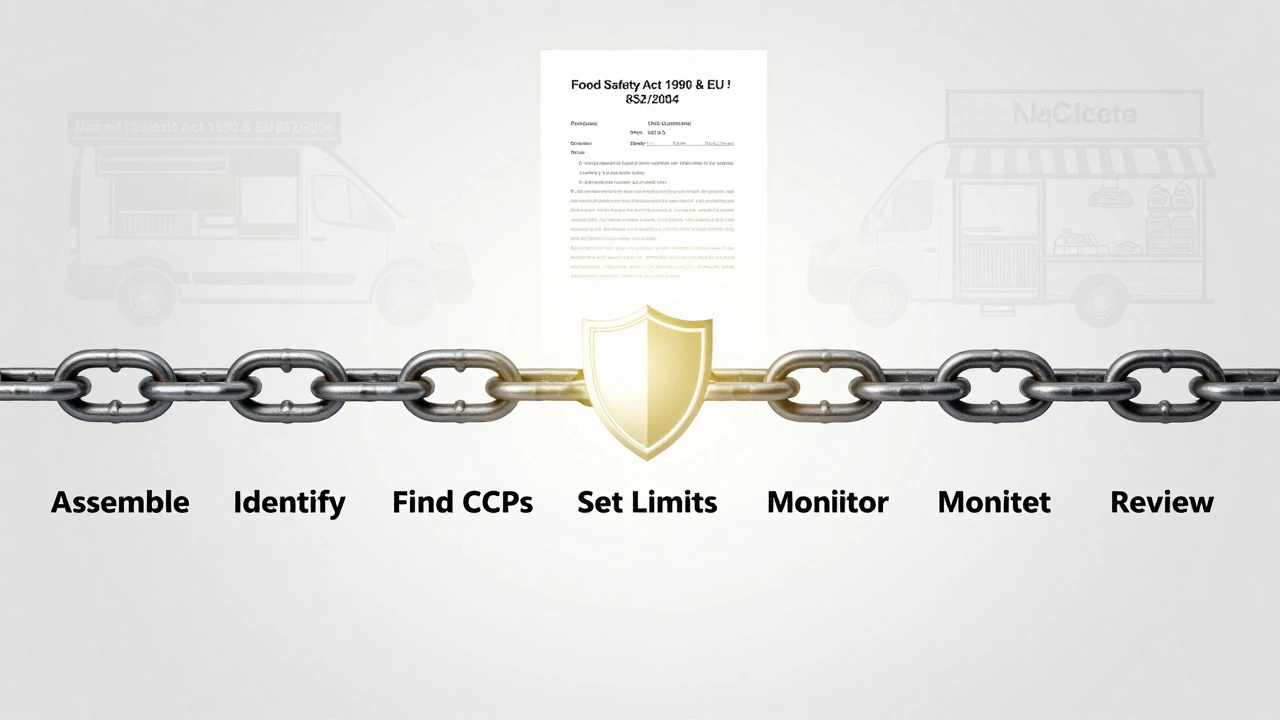
HACCP stands for Hazard Analysis and Critical Control Points. It’s not a checklist you print and stick on the wall. It’s a science-based system that identifies where things can go wrong in your food handling process - and then locks those points down with clear, measurable controls. Think of it like a chain: if one link breaks, the whole thing fails. HACCP finds the weak links before they snap.
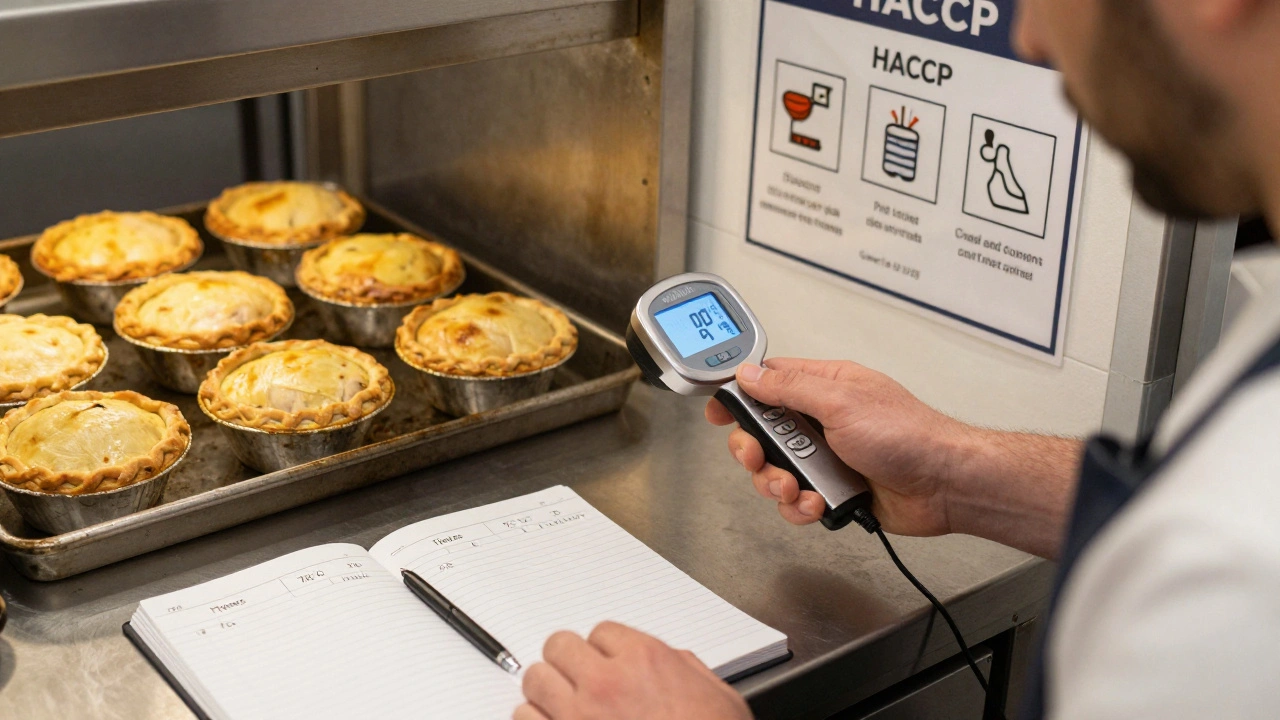
It’s not about being perfect. It’s about being systematic. For example, if you cook chicken, HACCP doesn’t just say "cook it well." It says: "Cook chicken to 75°C for at least 30 seconds, check the temperature with a calibrated thermometer every time, record the reading, and if it’s below 75°C, throw it out and retrain the staff." That’s the difference between a rule and a system.
The Legal Backbone: UK Food Safety Law
The legal foundation for food safety in the UK comes from the Food Safety Act 1990. It’s the big umbrella. Under this law, all food businesses must ensure their food is safe, not misdescribed, and of the standard consumers expect. But the real teeth come from EU Regulation 852/2004, which the UK kept after Brexit. This regulation makes HACCP mandatory for every food business, no matter how small.
You can’t claim ignorance. Even if you’re a single-person street food vendor, you’re legally required to have a HACCP-based food safety system. The Food Standards Agency (FSA) enforces this. Inspectors don’t just check if your kitchen is clean. They ask: "Where are your critical control points? Show me your monitoring records. Prove you train your staff. What did you do when the fridge broke last month?"
7 Practical Steps to Get HACCP Right
Getting HACCP working isn’t about hiring a consultant. It’s about doing the work - step by step. Here’s how to build it yourself:
- Assemble your team - Even if you’re the only employee, you need to map out every step of your food process. Start with receiving, storing, prep, cooking, cooling, serving. Write it down. No assumptions.
- Identify hazards - What can go wrong? Biological (bacteria like salmonella), chemical (cleaning products), physical (glass, metal, hair)? Don’t skip this. A 2023 FSA report found 62% of failed inspections were due to unrecorded hazards.
- Find your critical control points (CCPs) - These are the exact moments where you must take action to prevent, eliminate, or reduce a hazard. For a sandwich shop? That’s chilling raw meat below 5°C and cooking fillings to 75°C. For a coffee shop? It’s sanitizing milk frothing wands after every use.
- Set critical limits - Numbers matter. "Hot enough" isn’t enough. "75°C for 30 seconds" is. "Fridge at 4°C or below" is. Use thermometers you’ve calibrated. Record the numbers. If you don’t measure it, you can’t prove it.
- Monitor your CCPs - Who checks the temperature? When? How often? Every hour? Every batch? Document it. A logbook, a spreadsheet, or a simple app - it doesn’t matter as long as it’s consistent and dated.
- Have corrective actions - What happens when something goes wrong? If chicken hits 72°C? You stop serving. You reheat it. You log why it happened. You talk to the person who cooked it. No exceptions. The FSA expects this. No "oops" - just fixes.
- Review and update - Your system isn’t static. If you add a new menu item? Change suppliers? Buy a new oven? Update your HACCP plan. Every six months, sit down and ask: "Is this still working?"
What Happens If You Don’t Comply?
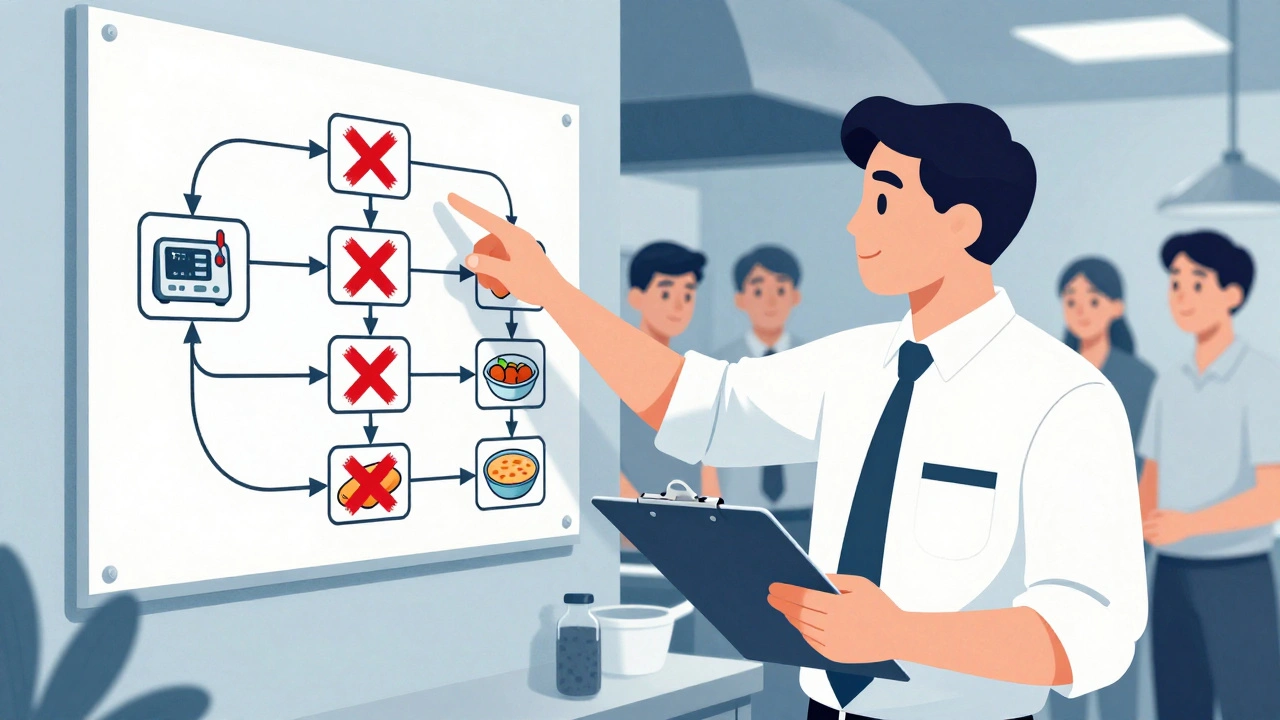
Inspections are not optional. The FSA can show up unannounced. If they find no HACCP plan, or if your records are incomplete, you’ll get an improvement notice. That means you have 14 days to fix it. If you don’t? You can be fined up to £20,000 per offence. Repeat violations? You could be shut down. Or worse - prosecuted. In 2024, over 1,200 UK food businesses were prosecuted for failing HACCP inspections.
It’s not just about fines. A single outbreak linked to your business can destroy your reputation. Customers don’t forget. A 2025 survey by Which? found that 78% of people would never return to a restaurant that had been cited for food safety violations.
Common Mistakes (And How to Avoid Them)
Most businesses fail HACCP not because they’re lazy - but because they misunderstand it.
- Mistake: Thinking HACCP is just about cleaning. Fix: Cleaning is hygiene. HACCP is about controlling hazards at key steps - like temperature, cross-contamination, and time.
- Mistake: Using a generic template from the internet. Fix: Your system must match your actual process. A burger joint’s CCPs are different from a dairy farm’s. Copy-paste won’t pass inspection.
- Mistake: Only training staff once. Fix: Food safety training isn’t a one-time box-ticking exercise. Refresh it every 12 months. Keep certificates. The FSA checks them.
- Mistake: Not recording anything. Fix: If it’s not written down, it didn’t happen. Even a simple notebook with dates and initials is better than nothing.
Tools That Actually Help
You don’t need expensive software. But you do need tools that work.
- Calibrated digital thermometers (check them monthly with ice water and boiling water)
- Simple logbooks - printable templates from the Food Standards Agency The UK government body responsible for food safety and hygiene standards website
- Free HACCP templates from the Food Safety Authority of Ireland A trusted source of food safety guidance used by UK businesses (yes, even UK businesses use these)
- Staff training videos from the Chartered Institute of Environmental Health A professional body that sets standards for environmental health officers in the UK
One takeaway: HACCP isn’t about paperwork. It’s about control. If you know exactly where your food risks are - and you’ve built a system to stop them - you’re not just compliant. You’re protected.
What Comes Next?
Once your HACCP plan is running, you’re not done. You’re now in the zone of continuous improvement. Keep training. Keep recording. Keep asking: "What’s the next thing that could go wrong?"
Many businesses that get HACCP right start seeing other benefits: fewer food waste incidents, less staff turnover (because people feel safer), and better customer trust. In fact, businesses with documented HACCP systems report 40% fewer customer complaints, according to a 2025 UK Food Business Report.
You’re not just avoiding fines. You’re building a business that lasts.
Is HACCP mandatory for small food businesses in the UK?
Yes. The law applies to every food business, no matter how small. Even a single-person home-based bakery or mobile coffee cart must have a HACCP-based food safety system. There are no exemptions based on size. The Food Standards Agency expects you to identify hazards and control them - even if your operation is simple. A basic plan with a few critical control points is enough to start.
Do I need to hire a consultant to create a HACCP plan?
No. While consultants can help, you don’t need one. The Food Standards Agency provides free templates and step-by-step guides online. The key is understanding your own process. Walk through every step of your food handling - from delivery to serving - and ask where things could go wrong. Then set clear controls. Many successful businesses built their plans themselves using FSA resources.
What’s the difference between HACCP and food hygiene ratings?
They’re related but different. Food hygiene ratings (like the 0-5 stars you see on windows) are based on inspections of cleanliness, structure, and food handling practices. HACCP is the formal, documented system you must have in place to prevent food safety hazards. You can have a high hygiene rating without a proper HACCP plan - but you’re still breaking the law. HACCP is the foundation. The rating is the inspection result.
How often do I need to update my HACCP plan?
Update it whenever your process changes - new menu items, new equipment, different suppliers, or staff turnover. At a minimum, review it every six months. The FSA expects businesses to treat HACCP as a living document. If your plan hasn’t changed in two years, it’s probably outdated and won’t pass inspection.
Can I use digital tools instead of paper logs?
Absolutely. Many businesses now use free or low-cost apps to log temperatures, cleaning times, and staff training. The FSA accepts digital records as long as they’re accurate, dated, and accessible during an inspection. Just make sure you can export or print them if needed. The medium doesn’t matter - the data does.
What if my staff forgets to record temperature checks?
That’s a training failure - not a paperwork failure. Your HACCP plan must include staff training as a control. If records are missing, you must investigate why. Did someone not understand? Was the thermometer out of reach? Was there no time? Fix the system, not the person. Re-train, adjust the process, and document what you changed. The FSA looks for evidence of learning, not perfection.