
 by
by Grant Writing for UK Businesses: How to Craft a Winning Funding Application
13 Dec, 2025Getting a grant for your UK business isn’t about luck. It’s about writing a clear, compelling, and perfectly targeted application that answers exactly what funders are looking for. Most businesses fail not because they don’t have a good idea, but because their application gets lost in a pile of vague, generic, or poorly structured submissions. In 2024, over 68% of UK business grant applications were rejected-not because the ideas were weak, but because they didn’t speak the language of the funder.
Understand What Funders Actually Want
Every grant program has a goal. The UK government, charities, and regional development agencies don’t hand out money just to be nice. They want measurable outcomes: job creation, innovation in clean tech, support for rural communities, or growth in underserved sectors. If your application doesn’t tie directly to their stated priorities, it won’t get past the first screen. For example, the Innovate UK Smart Grants fund projects that show clear commercial potential and technological innovation. If you’re applying for this, you need to show how your product reduces costs, scales quickly, or enters a new market-not just that you need money to grow. Look at the funder’s website. Read their mission statement. Check their past funded projects. If they’ve funded three local food producers in the last two years, they’re likely focused on regional food security. Tailor your language to match.Structure Your Application Like a Story
A winning grant application tells a story with a clear beginning, middle, and end.- Beginning (The Problem): Start with a real, specific problem your business solves. Don’t say "there’s a need for better software." Say, "Small independent retailers in Yorkshire lose an average of 14 hours a week managing inventory across three platforms."
- Middle (Your Solution): Explain your product or service clearly. Show how it fixes the problem. Include data: "Our platform reduces inventory errors by 72% and cuts admin time by 11 hours per week."
- End (The Impact): What happens if you get the grant? How many jobs will you create? How much carbon will you save? How many businesses will you help? Funders care about ripple effects.
Be Specific About the Money
One of the biggest mistakes? Vague budgeting. Funders want to know exactly where every pound goes. Break your budget into clear categories:- Personnel: Salaries for two full-time roles (£60,000)
- Equipment: Two industrial 3D printers (£18,500)
- Marketing: Targeted ads to reach 5,000 local retailers (£5,000)
- Contingency: 10% of total (£8,350)
Prove You Can Deliver
Funders don’t just fund ideas-they fund teams. They need to believe you can execute. Include:- Short bios of key team members (focus on relevant experience, not just job titles)
- Proof of past success: "We grew revenue by 140% in 18 months," or "Our pilot with 12 schools reduced food waste by 45%."
- Letters of support from partners, customers, or local councils

Follow the Rules Exactly
This sounds obvious, but it’s the #1 reason applications get rejected. Missing a signature. Using the wrong font. Submitting a PDF when they asked for Word. These aren’t minor details-they signal carelessness. Create a checklist before you hit submit:- Is every required form filled out?
- Are all attachments labeled correctly?
- Is the word count within limit?
- Have you included your company registration number and VAT number?
- Did you submit before the deadline-local time?
Use the Right Sources
Not all grants are created equal. Some are scams. Others are too competitive to be worth the effort. Stick to trusted sources:- GOV.UK Business Finance Finder - official government grants and loans
- UK Innovation and Growth Programme - for tech and manufacturing
- Local Enterprise Partnerships (LEPs) - regional funding for job creation
- Charity Commission Register - for charitable trusts that fund business initiatives
What Gets Funded in 2025?
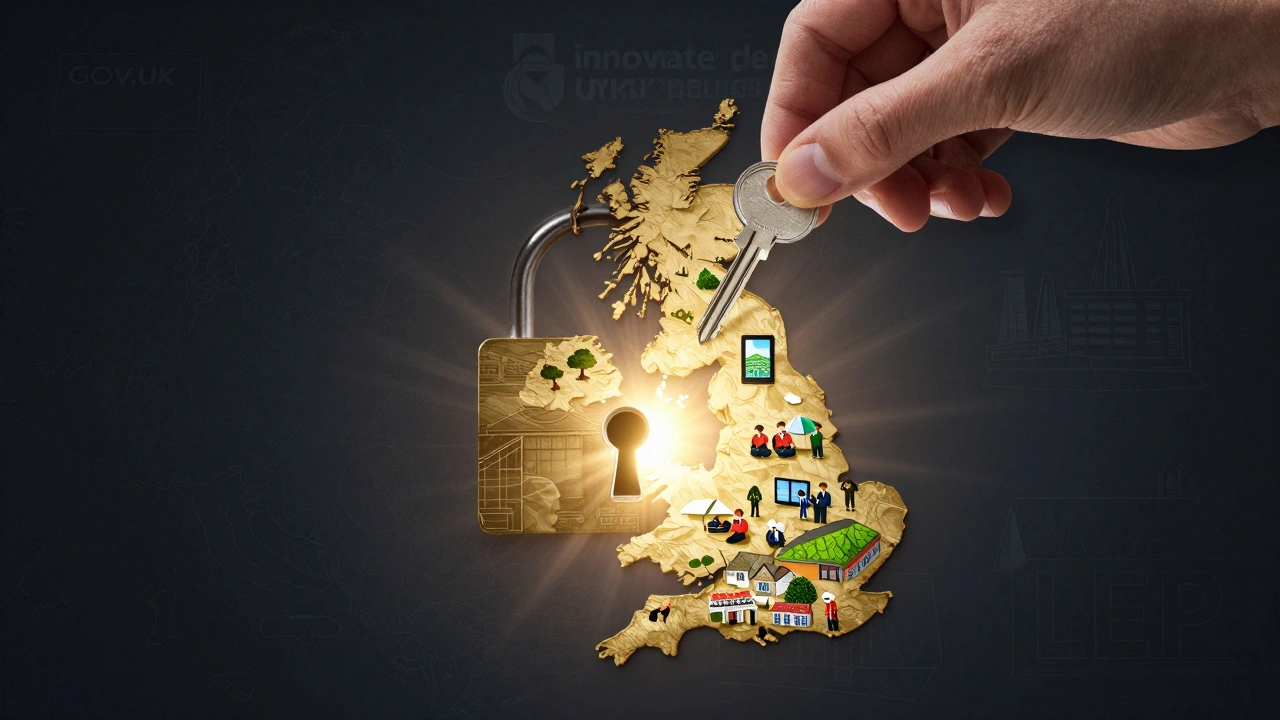
Current trends show funders are prioritizing:- Decarbonization: Projects that reduce emissions or use renewable energy
- Digital inclusion: Tools that help small businesses use tech (e.g., AI for invoicing)
- Regional growth: Outside London and the Southeast
- Skills development: Training programs that upskill employees
What to Do After You Apply
You’ve submitted. Now what?- Wait. Most decisions take 8-16 weeks. Don’t pester them.
- Prepare for an interview. Many grants require a short presentation or Q&A. Practice answering: "Why you?" and "What if you don’t get this funding?"
- If you’re rejected, ask for feedback. Most funders will give it-if you ask politely.
- Don’t give up. The average successful applicant applies 2-3 times before getting funded.
Frequently Asked Questions
Do I need to be a registered company to apply for a UK business grant?
Yes. Most grants require you to be a registered limited company, LLP, or charity with a valid Companies House registration number. Sole traders can apply for some local or community grants, but the majority of larger funding programs require formal business structure.
Can I apply for multiple grants at the same time?
Yes, but be careful. Some funders won’t allow you to use their grant to cover costs already paid by another grant. Always check the rules. If you’re applying for overlapping funding, explain how each grant will be used for a different part of your project. Transparency is key.
How long does it take to get grant money after approval?
It varies. Some programs pay out within 4-6 weeks after signing the agreement. Others require milestone reporting and release funds in tranches. Always ask about payment timelines before applying. Some grants require you to spend your own money first and then claim reimbursement-make sure you can afford that.
Are grants taxable in the UK?
Most business grants are considered income and must be declared on your company’s tax return. However, some grants for research and development (R&D) may be exempt under specific HMRC rules. Always consult your accountant or check HMRC guidance on grant treatment. Never assume a grant is tax-free.
What if my business is in Scotland, Wales, or Northern Ireland?
You still apply through UK-wide programs, but you’ll also have access to devolved funding. Scotland has Scottish Enterprise, Wales has Business Wales, and Northern Ireland has Invest NI. These often offer additional support, including match funding or regional grants with lower competition. Always check both national and regional sources.