
 by
by Guide to Microloans for UK Small Businesses: Best Lenders and Requirements
30 Apr, 2026Quick Takeaways
- Microloans typically range from £500 to £25,000, filling the gap between personal savings and large commercial loans.
- They are often provided by non-profit lenders, community development financial institutions (CDFIs), and specialized fintechs.
- Requirements focus less on perfect collateral and more on a viable business plan and a clear path to repayment.
- Ideal for purchasing equipment, managing seasonal cash flow, or funding initial marketing pushes.
What Exactly Are Microloans?
When we talk about Microloans is a type of small, short-term loan provided to entrepreneurs and small businesses who lack access to traditional banking services. Often referred to as microcredit, these loans aren't about funding a global empire; they are about giving a local shop, a freelance designer, or a startup founder just enough capital to reach the next level. Unlike a standard commercial mortgage or a massive venture capital round, microloans prioritize accessibility. They are designed to bridge the "funding gap" for people who have a great idea but perhaps not enough assets to secure a traditional loan from a giant like HSBC or Barclays.
In the UK, these loans are frequently managed by Community Development Finance Institutions (CDFIs) non-profit organizations that provide credit and support to underserved communities and small businesses . These lenders aren't just looking at a credit score; they're looking at the potential of the business and the commitment of the owner.
Where to Find Microloan Lenders in the UK
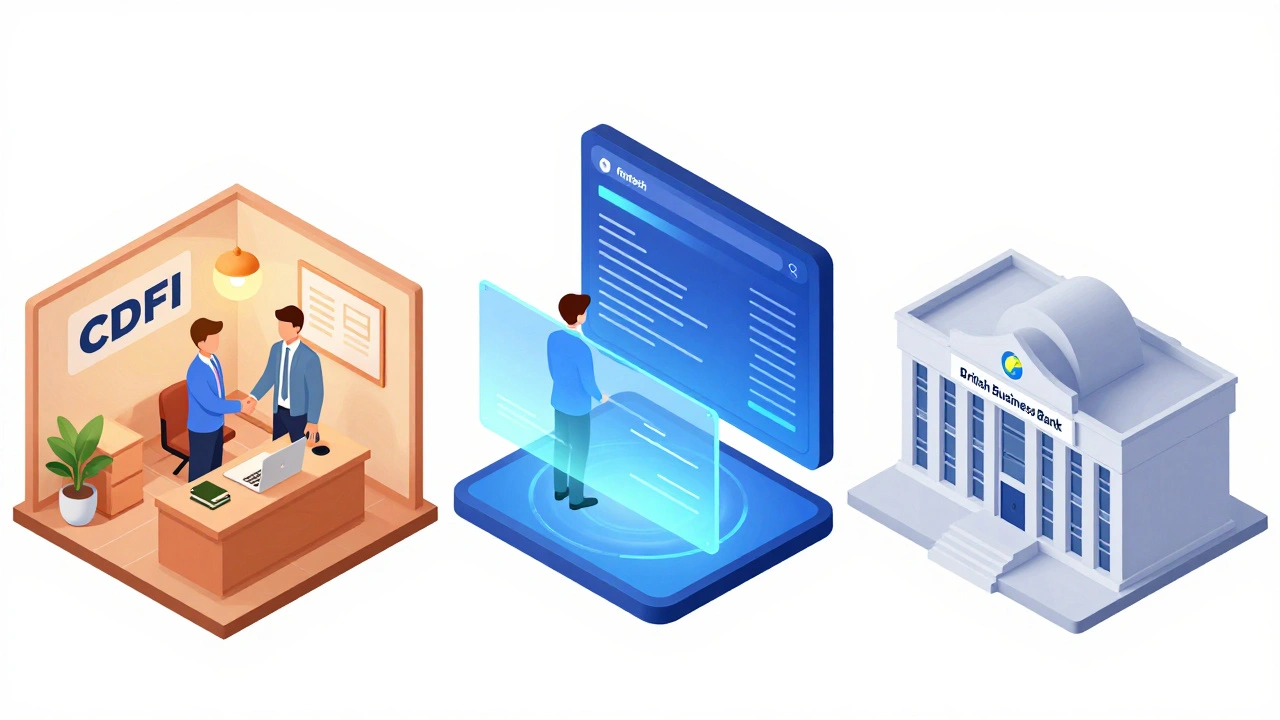
You won't always find the best microloans by walking into a branch on the high street. The landscape is split between social lenders, government-backed schemes, and modern fintech platforms.
One of the most reliable paths is through the Responsible Finance an umbrella organization that represents credit unions and CDFIs in the UK to ensure fair and ethical lending network. They can point you toward local CDFIs that operate specifically in your region, whether you're in the Midlands or the Highlands. These local lenders often provide more than just money; they offer mentoring and business advice to ensure you don't fail.
Then there are the fintech disruptors. Companies like Funding Circle or Iwai specialize in rapid-fire approvals. While these are technically "small business loans," they function as microloans for those borrowing under £20,000. They use automated algorithms to assess risk, meaning you can sometimes get an answer in hours rather than weeks. However, be careful-the interest rates here are often higher than those from a non-profit CDFI because the fintech is chasing a profit margin.
Finally, keep an eye on the British Business Bank a government-owned development bank that provides finance to small and medium-sized enterprises (SMEs) in the UK . While they don't always lend directly to the public, they provide the capital that other lenders use to offer microloans, effectively lowering the risk for the lender and making it easier for you to get approved.
| Provider Type | Typical Loan Amount | Approval Speed | Primary Focus |
|---|---|---|---|
| CDFIs / Non-Profits | £500 - £25,000 | Slow (Weeks) | Social Impact & Viability |
| Fintech Lenders | £1,000 - £50,000 | Fast (Hours/Days) | Credit Score & Cash Flow |
| Credit Unions | £100 - £10,000 | Moderate (Days) | Community Membership |
What You Need to Get Approved
Lenders know that if you're applying for a microloan, you might not have a pristine balance sheet. But they still need proof that you can pay the money back. If you walk in with just a "good feeling," you'll be rejected. You need a paper trail.
First and foremost is the Business Plan a formal statement of business goals, reasons they are attainable, and plans for reaching them . For a microloan, this doesn't need to be a 50-page tome. A lean document showing your target market, your pricing strategy, and how exactly the loan will generate more revenue is enough. If you're borrowing £5,000 for a new oven, show how that oven allows you to bake 20% more bread per day.
Next, be ready with your cash flow forecasts. Lenders want to see a 12-month projection of money coming in versus money going out. They are looking for a "cushion"-the amount of money left over after all expenses and loan repayments are made. If your margin is too thin, they'll see it as a high risk.
You'll also need personal identification and, in most cases, a personal guarantee. A Personal Guarantee a legal promise that the borrower will repay the loan from their personal assets if the business fails means that the lender isn't just trusting the business; they're trusting you. This is a standard requirement for UK microloans because small businesses are inherently volatile.
Practical Use Cases: When Does a Microloan Make Sense?
Not every financial need requires a microloan. Using a loan to cover basic operating losses is usually a red flag-it's a band-aid on a leaking pipe. Instead, use microloans for growth-oriented assets.
Imagine a freelance graphic designer who is turning away clients because their laptop is ten years old and crashes during renders. A £2,000 microloan for a high-end workstation is a smart move. The new hardware increases productivity, allowing them to take on two more clients per month, which pays for the loan in ninety days. That's a productive use of debt.
Another common scenario is managing Working Capital the capital of a business which is used in its day-to-day trading operations during seasonal dips. If you run a Christmas tree farm or a summer surf shop, you have months of high income followed by months of zero. A small loan can keep the lights on and the staff paid during the off-season so you don't have to liquidate assets or take on predatory high-interest credit cards.
Finally, microloans are excellent for "market testing." If you've developed a prototype for a new product, you might need £3,000 for a small initial production run to see if people actually buy it before you commit to a £50,000 bank loan. It limits your risk while providing enough fuel to prove your concept.

The Pitfalls to Avoid
The biggest mistake people make is ignoring the "Total Cost of Borrowing." A loan might look cheap because the monthly payment is low, but if the term is long, you might end up paying back double what you borrowed. Always ask for the APR (Annual Percentage Rate) and check for early repayment penalties. Some lenders charge you a fee if you try to pay the loan off early, which is counterintuitive but common.
Another trap is "over-borrowing." It's tempting to take £10,000 when you only need £5,000 just to have a safety net. But every extra pound you borrow is a pound you have to pay back with interest. Debt is a tool, not a gift. Only borrow what is strictly necessary to achieve a specific, measurable growth milestone.
Lastly, don't neglect the non-financial support. Many CDFIs offer free training on bookkeeping or marketing as a condition of the loan. Some entrepreneurs ignore these sessions because they're "too busy," but these resources are often more valuable than the cash itself. Learning how to manage your margins is what prevents you from needing a second loan six months later.
Do I need a perfect credit score to get a microloan in the UK?
No, that's one of the primary reasons microloans exist. While lenders will check your credit history, they are much more flexible than traditional banks. They focus more on the viability of your business plan and your ability to generate future income than on past mistakes. However, a very poor score might mean you need a co-signer or a larger personal guarantee.
How long does it typically take to receive the funds?
It varies wildly by lender. Fintech providers can often deposit funds into your account within 24 to 72 hours after approval. CDFIs and community-based lenders take longer-usually two to six weeks-because they perform a more manual, holistic review of your business and may require a face-to-face interview.
Can I use a microloan to pay off other debts?
Generally, no. Most microloan providers specify that funds must be used for business growth, such as purchasing equipment, inventory, or marketing. Using a growth loan to pay off existing debt is seen as a high-risk move and is often explicitly forbidden in the loan agreement.
What happens if I can't make a payment?
The first step is always communication. Because many microloan lenders are mission-driven (especially CDFIs), they are often more willing to restructure your payment plan if you encounter a genuine hardship. However, if you disappear, they will trigger the personal guarantee, meaning your personal assets could be used to settle the debt.
Is there a limit to how many microloans I can have at once?
There is no legal limit, but there is a practical one: your debt-to-income ratio. Lenders look at how much of your monthly revenue is already going toward debt. If too much of your cash flow is tied up in repayments, you'll be seen as "over-leveraged," and new lenders will likely reject your application.
Next Steps for Borrowers
If you're ready to apply, start by cleaning up your books. Ensure your last three months of bank statements clearly show your business income and expenses. If you're a sole trader, separate your personal spending from your business spending now-it makes you look much more professional to a lender.
Next, decide on your priority. If you need cash tomorrow to seize a fleeting opportunity, head toward a fintech lender. If you want a lower interest rate and a long-term mentor to help you grow, spend the time to find a local CDFI. Prepare your lean business plan, calculate exactly how much you need (and not a penny more), and apply to two or three different providers to compare the APR and terms.