
 by
by HSE Risk Assessments in the UK: How to Conduct and Document Workplace Risks
19 Feb, 2026Every year in the UK, over 600,000 workers suffer injuries or illnesses from workplace incidents. Many of these could have been prevented with a proper HSE risk assessment. The Health and Safety Executive (HSE) doesn’t just recommend these assessments-they legally require them. If you run any business in the UK with employees, you’re obligated by the Management of Health and Safety at Work Regulations 1999 to identify, evaluate, and record risks. Skipping this step isn’t just risky-it’s illegal.
What Counts as a Risk Assessment?
A risk assessment isn’t a form you fill out once and forget. It’s a process. You look at your workplace, spot things that could harm people, figure out how likely harm is, and decide what to do about it. It’s not about finding every tiny hazard. It’s about focusing on the big ones-the ones that could cause serious injury or long-term illness.
Think of it like this: if you run a warehouse, a broken forklift ramp is a risk. A loose floor tile? Also a risk. But the ramp? That’s the one that could crush someone. That’s your priority. The HSE expects you to be smart about what you focus on, not just check boxes.
Five Steps to Do It Right
There’s a clear, simple method the HSE uses to guide businesses. You don’t need consultants or fancy software. Just follow these five steps:
- Identify the hazards-Walk through your workplace. Look at equipment, chemicals, work processes, even how people move around. Ask workers. They know the hidden dangers better than anyone.
- Decide who might be harmed-Not everyone is at equal risk. Cleaners might get exposed to chemicals. New hires might not know safety procedures. Pregnant workers or those with disabilities may need extra protection. List the groups, not just the job titles.
- Evaluate the risks-Ask: How likely is this to cause harm? How bad could it be? Use a simple scale: Low, Medium, High. A wet floor near a staircase? High risk. A cluttered break room? Medium. You don’t need a math equation. Just use common sense.
- Record your findings-If you have five or more employees, the law says you must write this down. That includes the hazards, who’s at risk, and what you’re doing to fix it. Even if you have fewer than five, writing it down helps you remember what you did and why.
- Review and update-Risks change. You buy new machinery. Someone gets injured. You hire ten new people. Your assessment isn’t a one-time task. Review it at least once a year, or after any major change.
What Should You Document?
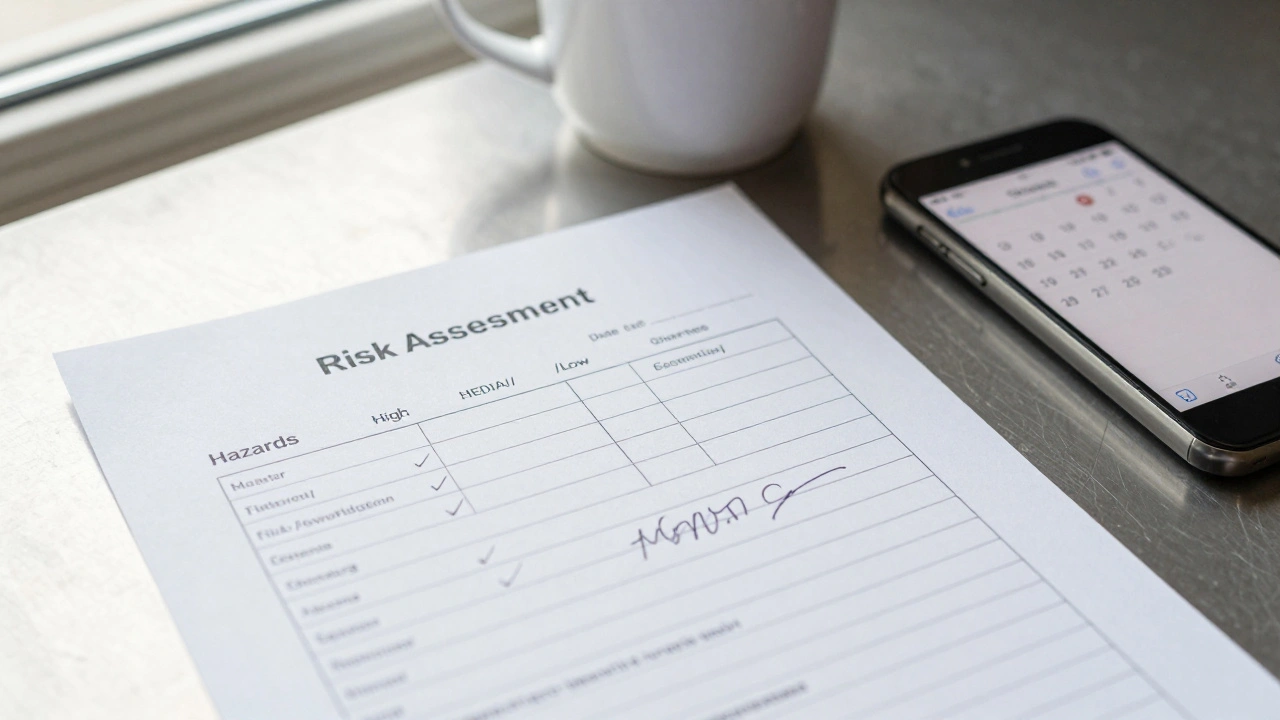
Documentation isn’t about creating a 50-page report. It’s about proving you took reasonable steps to protect people. Your record should include:
- The date of the assessment
- The name of the person who did it
- Each hazard identified
- Who could be affected
- The risk level (Low/Medium/High)
- What actions you took-or plan to take-to control the risk
- When you’ll review it again
Keep it simple. A spreadsheet works. A printed form works. A digital form in a shared folder works. The HSE doesn’t care about the format. They care that you can show you did the work.
Common Mistakes Businesses Make
Most companies aren’t trying to cut corners. They just don’t know what’s expected. Here are the top three mistakes:
- Using templates without adapting them-A generic template from the internet won’t match your factory, office, or warehouse. If your assessment says “risk of falling from height” but you have no ladders or platforms, you’re wasting space.
- Ignoring non-employees-Visitors, contractors, delivery drivers-they’re not your staff, but they’re still at risk. A delivery van backing into a pedestrian walkway? That’s your problem to fix.
- Doing it once and forgetting-A risk assessment from 2021 is useless if your equipment changed in 2023. The HSE doesn’t accept “we did it last year” as a defense.
One real example: A small logistics firm in Birmingham didn’t update their assessment after installing automated sorting machines. A worker got caught in the belt system. They hadn’t trained anyone on the new machine. The HSE fined them £85,000. The fix? A simple update to the risk assessment and 30 minutes of training.
Who Can Do It?
You don’t need a safety expert. You need someone who knows the job. That could be you, your supervisor, or a trained team member. The HSE says the person should be “competent”-which means they understand the work, know the risks, and can spot problems.
If you’re unsure, use free HSE tools. Their website has downloadable templates, checklists, and industry-specific guides. For example, if you run a construction site, they have a step-by-step guide for scaffolding risks. If you run a care home, they have one for manual handling. Use them. They exist because they work.
What Happens If You Don’t?
The HSE doesn’t just send letters. They show up. Inspectors can walk into any workplace without warning. If they find you didn’t do a proper assessment, you could face:
- A formal notice requiring you to fix the issue
- A fine of up to £20,000 in a magistrates’ court
- Unlimited fines in crown court for serious breaches
- Criminal charges if someone dies because of negligence
In 2024, over 1,200 businesses in England and Wales were prosecuted for failing to conduct proper risk assessments. The average fine? £18,000. Some were over £100,000. It’s not worth the gamble.
How to Keep It Alive
The best risk assessments aren’t dusty files. They’re living documents. Here’s how to keep them useful:
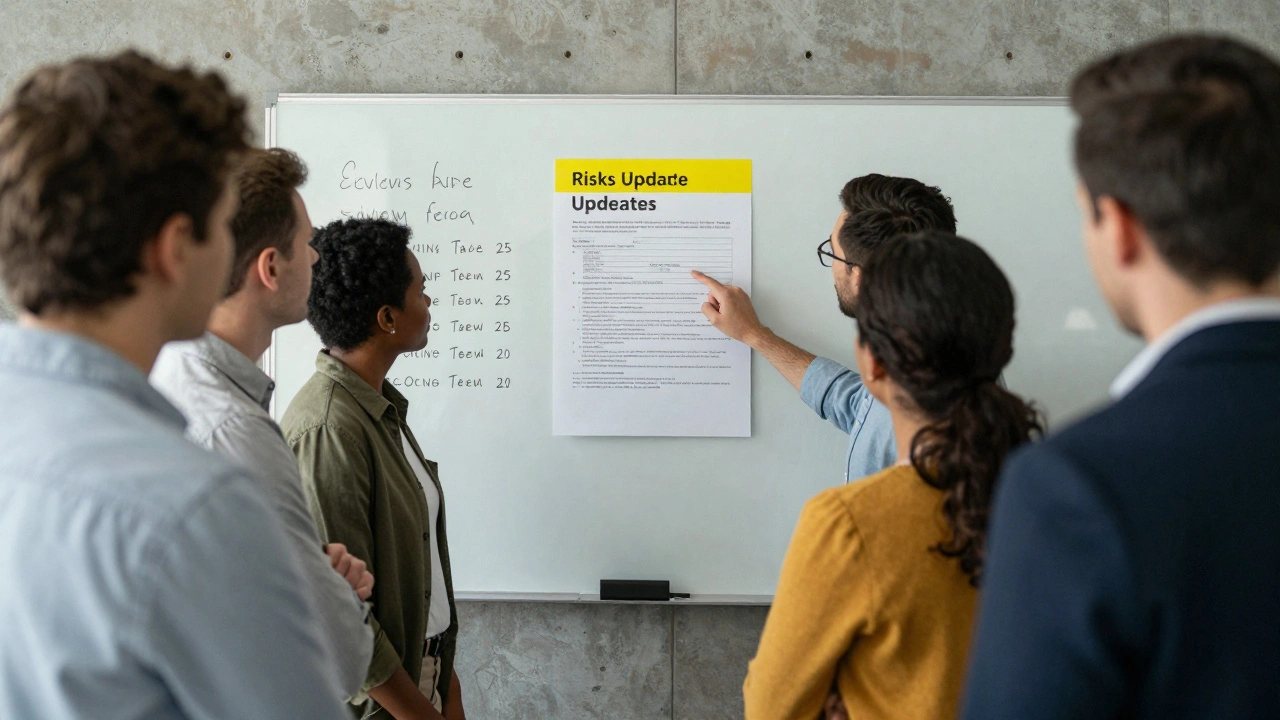
- Post summaries in break rooms or on notice boards
- Include risk updates in team meetings
- Ask workers: “Have you seen anything new that could hurt someone?”
- Use near-miss reports-when someone almost got hurt-to update your assessment
- Train new hires on the assessment during onboarding
When employees see that their feedback leads to real changes, they pay attention. That’s when safety becomes part of your culture-not just a box you checked.
Tools That Help
You don’t need expensive software. But some free or low-cost tools make it easier:
- HSE’s Risk Assessment Toolkit-Free downloadable templates for 20+ industries
- Google Sheets or Excel-Simple tables with dropdowns for risk levels
- Microsoft Forms-Create a quick survey for staff to report hazards
- Free mobile apps-Like HSE’s own “Safety Check” app for on-site logging
One roofing company in Glasgow switched from paper forms to a Google Sheet. They added a column for “last reviewed” and set monthly reminders. Within six months, they cut their accident rate by 40%.
Final Thought
A risk assessment isn’t about paperwork. It’s about people. It’s about making sure the person who shows up to work every day goes home the same way. The law doesn’t ask for perfection. It asks for reasonable care. If you’ve looked at your workplace, talked to your team, fixed the big dangers, and written it down-you’re doing it right.
Do I need to do a risk assessment if I only have three employees?
Yes. The legal requirement to document your risk assessment only applies if you have five or more employees. But even with fewer, you still need to identify and manage risks. Writing it down helps you stay organized and proves you’re taking safety seriously. Many small businesses find it easier to document everything, even if not legally required.
How often should I review my risk assessment?
At least once a year. But you should also review it after any incident, near-miss, change in equipment, new staff, or new process. If you install new machinery, bring in hazardous materials, or expand your workspace, update the assessment before anyone starts using it. Don’t wait for an inspector to ask.
Can I use a consultant to do my risk assessment?
You can, but you’re still responsible. The HSE expects the business owner or manager to understand the risks and controls. If you hire someone, make sure they visit your site, talk to your staff, and don’t just copy a template. A good consultant will train you to maintain it yourself. A bad one will hand you a generic document you can’t use.
What if my business has multiple locations?
Each location needs its own assessment. Risks vary by site-even if the jobs are the same. A warehouse in Manchester has different hazards than an office in Cardiff. You can use the same process across sites, but each one needs its own documented evaluation. The HSE treats each location as a separate workplace.
Are contractors responsible for their own risk assessments?
They’re responsible for their own workers’ safety. But you’re responsible for the environment they’re working in. If a contractor is using your equipment or working in your space, you must tell them about your risks. You also need to make sure your assessment includes their activities. Don’t assume they’ll handle it. Coordinate. Document. Share.
Can I be fined even if no one got hurt?
Absolutely. The HSE doesn’t wait for injuries to act. If they find you didn’t assess risks properly, even if nothing happened yet, they can issue a legal notice or fine you. Prevention is the goal. The law is designed to stop accidents before they happen, not punish after the fact.