
 by
by Import VAT and Postponed VAT Accounting in the UK: Cash Flow Benefits Explained
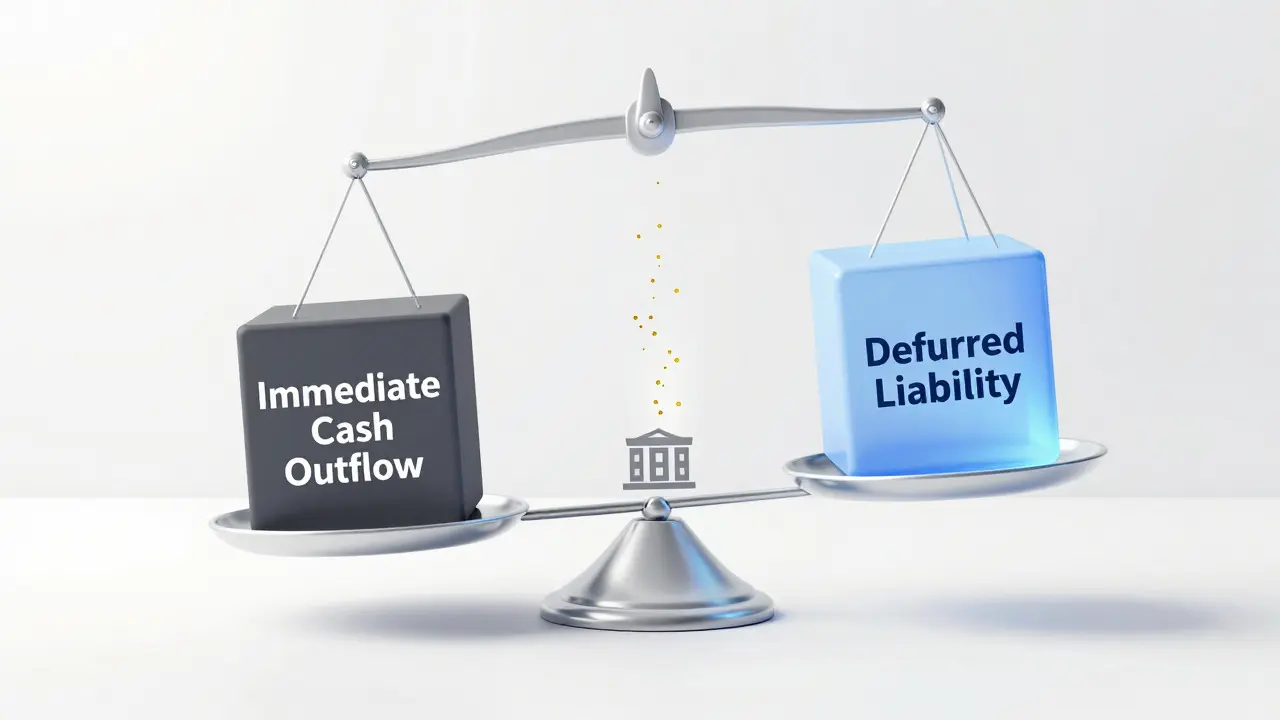
17 Aug, 2026Imagine you just paid £50,000 for a shipment of raw materials from Germany. Traditionally, you’d hand over that import VAT to HMRC at the border before your customers even see the product. That’s a massive hit to your working capital right when you need it most. But since 2017, UK businesses have had a smarter option: postponed VAT accounting. This mechanism lets you account for import VAT on your regular VAT return instead of paying it upfront, fundamentally changing how you manage cash flow.
This isn't just a technicality; it's a strategic financial lever. If you are importing goods into Great Britain, understanding how this works can free up tens or even hundreds of thousands of pounds in liquidity. Let’s break down exactly how it works, who qualifies, and the specific pitfalls you need to avoid to keep your books clean.
How Postponed VAT Accounting Works
Postponed VAT accounting is a scheme allowing UK VAT-registered businesses to declare import VAT on their periodic VAT returns rather than paying it to HMRC upon entry of goods. Instead of using a Customs Declaration Service (CDS) payment reference number to pay VAT directly to HMRC at the port, you simply record the VAT due as an output tax liability on your next VAT return.
The mechanics are straightforward but require precision:
- Customs Entry: Your goods arrive in Great Britain. You file a customs declaration via the CDS.
- VAT Calculation: Calculate the import VAT due (usually 20% of the CIF value plus any duty).
- Recording: Enter this amount in Box 40 (Output VAT) of your VAT return.
- Reclaiming Input Tax: If the goods are used for business purposes, claim the same amount as input tax in Box 43 (Input VAT).
- Netting Off: In many cases, if your input tax equals your output tax for that import, the net cash impact is zero. You owe nothing extra to HMRC for that specific transaction.
The key here is timing. You don’t pay the money immediately. You effectively get an interest-free loan from HMRC until your next VAT deadline, which could be one to four months later depending on your accounting period.
Who Can Use This Scheme?
You might think this is only for large corporations with complex supply chains. Not quite. The eligibility criteria are broader than many assume, but there are strict requirements.
- VAT Registration: You must be registered for VAT in the UK. Non-VAT registered businesses cannot use this method and must pay import VAT upfront.
- Goods Location: The goods must be entering Great Britain (England, Scotland, Wales). Note that Northern Ireland has different rules post-Brexit due to the Windsor Framework.
- Customs Procedure: The goods must be placed under a specific customs procedure, such as release for free circulation.
If you are a small e-commerce seller bringing in stock from China or a manufacturer sourcing components from Europe, you likely qualify. However, if you are importing goods for personal use or through a non-VAT registered entity, this option is off the table.
The Cash Flow Impact: A Real-World Example
Let’s look at concrete numbers to see why this matters. Suppose “TechParts Ltd” imports electronic components worth £100,000 (CIF value) from Japan. There is no additional duty, so the import VAT is 20%, totaling £20,000.
Traditional Method (Pay Upfront): * TechParts pays £100,000 to the supplier. * TechParts pays £20,000 to HMRC at the port. * Total cash outflow: £120,000. * They reclaim the £20,000 on their next VAT return (say, 6 weeks later). * Net cost during those 6 weeks: £120,000 tied up.
Postponed VAT Accounting Method: * TechParts pays £100,000 to the supplier. * No payment to HMRC at the port. * On their VAT return, they add £20,000 to Output VAT (Box 40) and £20,000 to Input VAT (Box 43). * Net cash outflow: £100,000. * The £20,000 cancels itself out on the return. * Cash saved: £20,000 retained in the business for 6+ weeks.
For a company importing monthly, this creates a consistent float. If you import £500,000 worth of goods every month, you’re holding onto £100,000 in VAT cash that would otherwise sit with HMRC. That’s significant working capital you can use for payroll, marketing, or inventory expansion.
Common Pitfalls and Compliance Risks
While the benefits are clear, the scheme requires discipline. HMRC is vigilant about errors because they affect their immediate revenue collection. Here are the mistakes that trigger audits:
- Mismatched Figures: The VAT amount declared on the customs entry must match the amount declared on the VAT return exactly. Even a penny difference can flag your account.
- Missing Reference Numbers: You must include the Customs Declaration Service (CDS) reference number in your records. HMRC uses this to cross-check data between customs and VAT systems.
- Non-Business Use: If you import goods for personal use or exempt supplies, you still have to account for the VAT, but you can’t reclaim it as input tax. Forgetting to separate these leads to over-claiming input tax.
- Northern Ireland Confusion: Since 2021, goods moving from GB to NI may not be subject to standard import VAT rules. Applying postponed accounting to NI-bound goods incorrectly can lead to penalties.
Keep your documentation tight. Every import should have a corresponding customs entry and a line on your VAT return. If your accountant handles this, ensure they have direct access to your CDS portal data to automate reconciliation.
Comparison: Traditional vs. Postponed Accounting
| Feature | Traditional (Upfront Payment) | Postponed VAT Accounting |
|---|---|---|
| Cash Outflow Timing | Immediate (at port) | Deferred (on VAT return) |
| Working Capital Impact | Negative (ties up cash) | Neutral/Positive (retains cash) |
| Eligibility | All importers | VAT-registered businesses only |
| Administrative Complexity | Low (single payment) | Medium (requires reconciliation) |
| Risk of Error | Low | Medium (mismatches possible) |

Strategic Considerations for Businesses
Should you always use postponed accounting? Generally, yes, if you are VAT registered. However, consider your cash flow cycle. If you are consistently overpaid by HMRC, postponing VAT might delay your refund slightly because the import VAT offsets against other liabilities first. Conversely, if you are usually owing VAT, postponing it helps smooth out your payments, avoiding large lump-sum hits at quarter-end.
Also, think about your suppliers. If you pay suppliers in advance but receive goods later, aligning your VAT accounting periods with your payment terms can optimize liquidity. Some businesses even adjust their VAT accounting periods (monthly vs. quarterly) specifically to maximize the float provided by postponed VAT accounting.
Frequently Asked Questions
Do I need to pay import VAT if I use postponed accounting?
You do not pay it separately at the point of entry. Instead, you declare it as output tax on your VAT return. If you are entitled to reclaim it as input tax, the net cash payment is often zero. If you cannot reclaim it (e.g., for personal use), you will end up owing that amount to HMRC on your VAT return.
Can I use postponed VAT accounting for services imported from outside the EU?
No. Postponed VAT accounting applies specifically to the import of goods into Great Britain. Services imported from overseas are accounted for differently, typically through reverse charge mechanisms, which already function similarly to postponed accounting in terms of cash flow.
What happens if my customs entry and VAT return figures don’t match?
HMRC’s systems automatically cross-reference CDS data with VAT returns. Mismatches can lead to queries, late payment interest, or penalties if deemed careless. It is crucial to reconcile these figures before submitting your VAT return. Most modern accounting software integrates with CDS to prevent this error.
Does postponed VAT accounting apply to Northern Ireland?
The rules differ for Northern Ireland due to its unique position in the single market. Goods moving from Great Britain to Northern Ireland may be treated as domestic sales for VAT purposes, while goods entering NI from outside the UK/EU follow specific protocols. Always verify the destination before applying the scheme.
Is there a limit to how much VAT I can postpone?
There is no statutory cap on the amount of VAT you can postpone. However, very large balances might attract attention from HMRC if they seem inconsistent with your trading volume. Ensure your business activity supports the scale of your imports.