 by
by International Payments and FX in the UK: Reduce Fees and Currency Risk Now
18 Feb, 2026Every year, UK businesses lose millions because of hidden fees and bad exchange rates on international payments. It’s not just about paying more - it’s about losing money before the transaction even finishes. If you’re sending money to suppliers in Europe, paying freelancers in Asia, or selling to customers in the US, you’re likely getting ripped off by banks and traditional payment providers. The good news? You don’t have to. Reducing fees and managing currency risk isn’t about being a financial expert. It’s about knowing where to look and what to ask for.
Why UK Businesses Are Losing Money on FX
Most UK companies still use their high street bank for international payments. Sounds simple, right? But here’s what really happens: your bank doesn’t use the real exchange rate. Instead, they apply a markup - often between 3% and 5% - on top of the mid-market rate. That’s not a fee you see on your statement. It’s buried. For a £10,000 payment, that’s £300 to £500 gone before your recipient even sees a penny. And it gets worse. Banks charge extra for processing, intermediary fees, and currency conversion on top of that. A typical SWIFT transfer can cost anywhere from £15 to £50 in fees alone. When you’re doing this monthly, or weekly, those numbers add up fast. One manufacturing company in Manchester told me they were paying £18,000 a year just in FX markups on supplier payments. They didn’t even realize it until they switched providers.What Is Currency Risk - And Why It Matters
Currency risk isn’t just about exchange rates changing. It’s about unpredictability. If you invoice a client in euros and they pay in 60 days, what happens if the pound weakens by 4% in that time? You get paid less than you expected. That’s not a small margin. That’s a profit killer. Think of it this way: a UK-based software company sells a £50,000 contract to a client in Germany. They invoice in euros at 1.18 EUR/GBP. They expect £42,373. But if the rate shifts to 1.13 by payment time, they only get £44,248 - a loss of nearly £2,000. That’s not market fluctuation. That’s avoidable risk. Most businesses don’t hedge. They assume rates will even out. But they don’t. And when they don’t, it hits cash flow. Small businesses can’t absorb that kind of shock. Medium-sized firms start cutting budgets. And in a tight economy, that’s how growth dies.How to Cut FX Fees by 70% or More
The fix isn’t complicated. It’s about switching from banks to specialist providers. Companies like Wise, OFX, and Revolut Business aren’t just cheaper - they’re transparent. Here’s how they do it:- They use the real mid-market rate - no hidden markups. You see exactly what you’re getting.
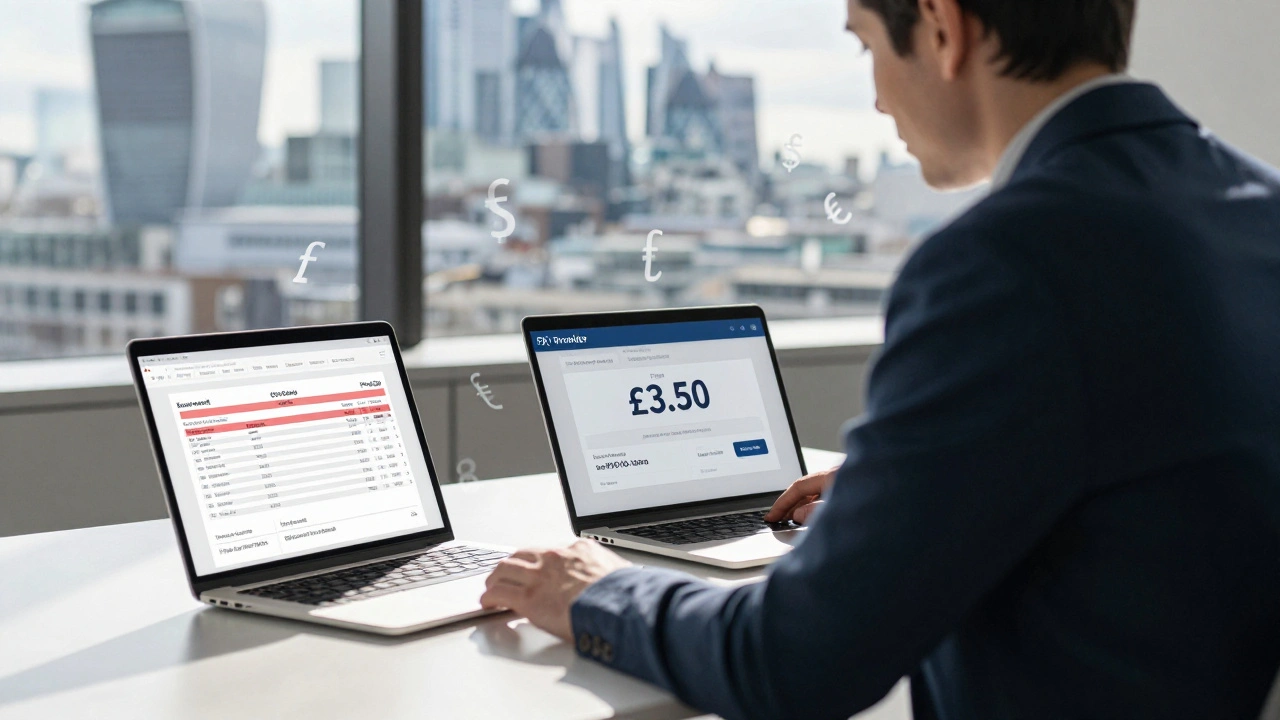
- Fees are flat. For example, Wise charges £0.50 to £3.50 per transfer, depending on currency and amount.
- No intermediary banks. They use local banking networks, so payments skip the SWIFT system entirely.
- Multi-currency accounts. Hold EUR, USD, AUD, CAD, and more in one account. No conversion needed until you need it.

Locking in Rates: How to Manage Currency Risk
You can’t control exchange rates. But you can control when you convert. Here’s how:- Forward contracts: Lock in a rate today for a payment due in 3, 6, or 12 months. You know exactly how much you’ll pay or receive. Providers like Currencies Direct and TorFX offer this with no upfront cost.
- Limit orders: Set a target rate. If the market hits it, your payment triggers automatically. Great for recurring invoices.
- Multi-currency invoicing: Invoice in your customer’s currency. Let them pay in their local money. You get paid faster, and they avoid their own FX fees. Win-win.
What to Look for in a Payment Provider
Not all providers are equal. Here’s what to check before you sign up:- Transparency: Can you see the exact exchange rate before confirming? If not, walk away.
- Real-time tracking: Do you get SMS or email updates? Payments should never feel like a black box.
- Regulation: Are they authorised by the FCA? Always verify. Use the FCA register.
- Customer support: Can you talk to a real person in the UK? No chatbots. No offshore call centers.
- Integration: Does it connect to your accounting software (QuickBooks, Xero)? Automation saves time and reduces errors.

Common Mistakes UK Businesses Make
Don’t make these errors:- Using your personal account for business payments: Banks flag this. It can freeze your account.
- Only checking rates once a year: FX moves daily. Even 1% matters over time.
- Assuming your bank’s rate is fair: It’s not. Compare it to Google’s or XE’s mid-market rate. You’ll be shocked.
- Not setting up alerts: If the pound drops 2% against the euro, you need to know before your next payment.
- Ignoring local payment methods: In Germany, SEPA Instant is faster and cheaper than SWIFT. In Australia, BECS is the norm. Know the local rules.
Real Savings: A Case Study
A London-based e-commerce business sold to 12 countries. They were using PayPal and HSBC. Their monthly FX costs averaged £3,200. Their average payment delay? 5.7 days. They switched to a combination of Wise for bulk transfers and a forward contract provider for large orders. Here’s what changed:- FX fees dropped to £890/month - a 72% cut.
- Payment speed improved to 1.2 days on average.
- They started invoicing in local currencies - customer complaints dropped by 60%.
- They saved £28,000 in the first year.
What’s Next for UK Businesses
The UK is moving fast. The FCA is pushing for more transparency in FX pricing. New digital banks are launching multi-currency accounts with zero fees. And the rise of embedded finance means your accounting software will soon handle international payments automatically. But right now, the advantage is still yours to take. The tools exist. The data is public. The savings are real. If you’re still using your bank for international payments, you’re overpaying. And you’re risking your profits to currency swings you never planned for. Start today. Compare your last three payments. Look up the mid-market rate on XE.com. Calculate the difference. That’s your loss. Now, call one specialist provider. Ask for a free quote. You might be surprised how little it costs to fix.Are international payment fees higher with UK banks than with specialist providers?
Yes, significantly. UK banks typically add a 3% to 5% markup on top of the real exchange rate, plus £15-£50 in processing fees. Specialist providers like Wise or OFX use the real mid-market rate with flat fees as low as £0.50. For a £10,000 payment, that’s a difference of £300-£500 in hidden costs alone.
How can I lock in a favorable exchange rate for future payments?
Use a forward contract. This lets you lock in today’s exchange rate for a payment due in 1 to 12 months. Providers like Currencies Direct and TorFX offer this with no upfront cost. You pay nothing until the payment date. This protects you from currency swings and helps with budgeting. It’s especially useful for businesses with regular overseas supplier payments or long-term contracts.
Is it better to invoice in GBP or the customer’s local currency?
It depends, but invoicing in the customer’s currency often saves both sides money. If you invoice in GBP, your customer pays their bank’s FX fee. If you invoice in their currency, they pay nothing, and you control the timing of your own conversion. Many businesses use multi-currency accounts to hold funds in multiple currencies, converting only when needed. This reduces friction and speeds up payments.
What’s the fastest way to send money internationally from the UK?
The fastest options use local banking networks instead of SWIFT. Providers like Wise, Revolut Business, and OFX route payments through local systems - for example, SEPA in Europe or ACH in the US. This cuts delivery time to 1-2 days, sometimes even same-day. Traditional bank transfers via SWIFT take 3-5 days and cost more. Speed matters when cash flow is tight.
Should I use a multi-currency business account?
If you do international business regularly, yes. A multi-currency account lets you hold, receive, and send money in EUR, USD, AUD, CAD, and more without converting until you need to. This avoids repeated FX markups. You can also get local account details (like a German IBAN or US routing number) to make receiving payments easier. Providers like Wise and Revolut offer these accounts with low or zero monthly fees.
How do I know if a payment provider is trustworthy?
Check if they’re authorised by the UK Financial Conduct Authority (FCA). You can search their name on the FCA register. Also, look for clear fee structures, real-time tracking, UK-based customer support, and integration with tools like Xero or QuickBooks. Avoid providers that hide fees or use vague terms like "competitive rates." If you can’t see the exact rate before sending, it’s not transparent.