
 by
by Interview Techniques for UK Hiring Managers: Assessing Candidate Fit
9 Apr, 2026Key Takeaways
- Move from intuitive "gut feeling" to structured, evidence-based scoring.
- Use behavioral questions to predict future performance based on past actions.
- Balance technical proficiency with cultural alignment to avoid toxic hires.
- Stay compliant with the Equality Act 2010 to avoid legal pitfalls during assessment.
- Focus on "culture add" rather than "culture fit" to encourage diversity.
The Myth of the Gut Feeling
Many managers rely on a "vibe check." You know the feeling: the candidate is charismatic, went to a similar university, or shares your love for hiking, and suddenly you're convinced they're the right choice. This is called affinity bias, and it's the fastest way to build a stagnant, homogenous team. If you hire people who think and act exactly like you, you'll miss the blind spots that only a diverse perspective can catch.
To fight this, you need Structured Interviews is a standardized method of interviewing where every candidate is asked the same set of questions in the same order, and their responses are graded against a pre-defined rubric . By removing the randomness of the conversation, you force yourself to compare candidates on their merits rather than their likability. Think of it like a scientific experiment: if the variables (the questions) change for every person, your results (the hiring decision) are unreliable.
Mastering Behavioral Interviewing
Asking "Would you handle a difficult client by staying calm?" is a useless question. Every candidate will say "yes." Instead, you want to see the evidence. This is where Behavioral Interviewing comes in. It is based on the premise that past behavior is the best predictor of future performance. Instead of hypotheticals, you ask for specific stories.
A great way to keep candidates on track is by encouraging the STAR method (Situation, Task, Action, Result). If a candidate gives a vague answer like "I usually just communicate well with my team," push back. Ask, "Can you tell me about a specific Tuesday last month when that communication saved a project?" The magic is in the details. If they can't provide a concrete example, they might be inflating their experience.
| Question Type | Example | What it Measures | Reliability |
|---|---|---|---|
| Hypothetical | "What would you do if...?" | Imagined logic/theory | Low |
| Behavioral | "Tell me about a time when..." | Proven track record | High |
| Technical | "How do you implement X?" | Hard skills/Knowledge | Very High |

Assessing Cultural Add vs. Cultural Fit
We've all heard the term "culture fit," but it's often used as a mask for exclusion. If your company culture is "hard-working and intense," and you only hire people who fit that mold, you end up with a burnout factory. Instead, look for Cultural Add. This means identifying what your team is missing and finding a candidate who brings a new perspective, skill, or way of thinking that improves the collective.
To assess this, define your core values clearly. If one of your values is "Radical Candor," don't just ask if they like honest feedback. Ask them to describe a time they had to give a piece of very difficult feedback to a superior. Their answer will tell you if they actually embody that value or if they're just echoing your job description back to you.
Staying Compliant with UK Law
In the UK, the interview process isn't just about finding the best person; it's about doing it legally. The Equality Act 2010 is the primary piece of legislation in the UK that protects people from discrimination in the workplace and during the recruitment process . This means you cannot ask questions that touch upon "protected characteristics" such as age, disability, gender reassignment, marriage/civil partnership, pregnancy, race, religion, sex, or sexual orientation.
Common pitfalls include asking "Do you have children?" or "Where are you originally from?" Even if you're just trying to make small talk, these questions can be used as evidence of bias if the candidate isn't hired. Keep the conversation strictly focused on the Job Description and the competencies required for the role. If you need to know if they can work specific hours, ask "Are you able to commit to the hours required for this role?" rather than asking about their home life.
The Role of the Work Sample Test
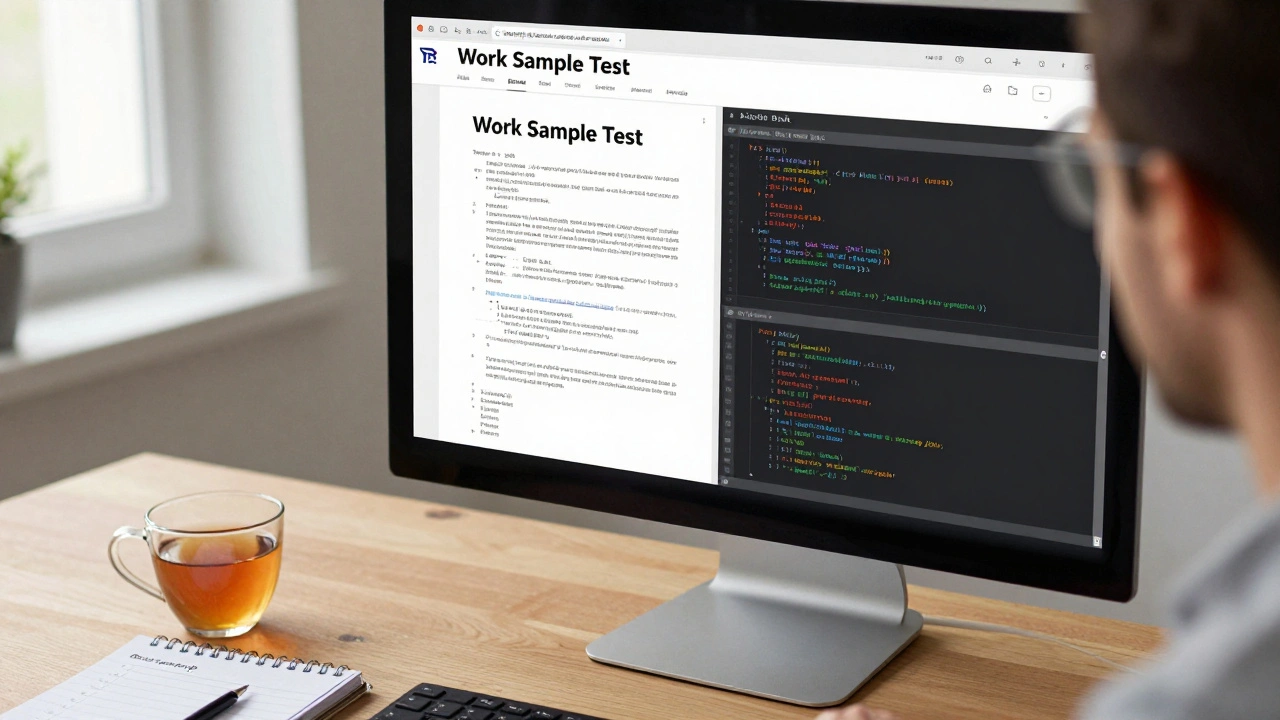
Interviews are essentially professional acting auditions. Some people are just great at interviewing, while some brilliant engineers or analysts are terrible at it. To level the playing field, introduce a Work Sample Test. This is a short, paid assignment that mimics a real task they would do on the job.
For a marketing manager, this might be drafting a brief for a new campaign. For a developer, it could be a code review of a buggy piece of software. The key is to keep it short-no more than 2-4 hours of work. This shifts the focus from "how well can you talk about the work" to "how well can you actually do the work." It's the most reliable way to verify candidate fit before signing a contract.
Structuring the Final Decision
Avoid the "groupthink" trap. When a panel of three managers discusses a candidate, the most senior person often speaks first, and everyone else subconsciously aligns their opinion to match. To prevent this, implement a "silent scoring" period. Every interviewer should fill out their rubric and score the candidate's answers independently before anyone speaks.
Once the scores are in, look for discrepancies. If Interviewer A gave a 5/5 for leadership and Interviewer B gave a 1/5, that's where the real conversation starts. Don't average the scores; investigate the gap. Did the candidate give a different answer? Did the interviewer misunderstand the requirement? This rigor ensures that the decision is based on evidence, not the loudest voice in the room.
How do I handle candidates who give generic answers?
Use a technique called "drilling down." If a candidate says they are "a great communicator," ask them to describe the most difficult conversation they've had in the last six months. Then, ask what specifically they said in that moment and what the reaction was. If they can't get granular, they likely don't have the experience they're claiming.
Is it legal to ask about a candidate's current salary in the UK?
While not strictly illegal, it's increasingly discouraged and can be seen as an unfair practice that perpetuates the gender pay gap. Instead, state the budget for the role and ask the candidate if that aligns with their expectations. This keeps the focus on the value of the role rather than the candidate's history.
How long should a structured interview take?
Typically, 60 to 90 minutes is the sweet spot. This allows 10 minutes for introductions, 45-60 minutes for 5-7 core behavioral questions, and 15-20 minutes for the candidate to ask their own questions. Going longer often leads to fatigue and a return to informal, biased chatting.
What is the best way to test for "soft skills"?
Stop treating soft skills as vague traits. Instead, treat them as competencies. For example, instead of "emotional intelligence," test for "conflict resolution." Ask for a specific instance where they managed a clash of personalities within a team and what the measurable outcome was.
Should I tell candidates the questions in advance?
Actually, yes. Sending the core themes or questions 24-48 hours in advance reduces anxiety and allows neurodivergent candidates to perform better. It doesn't help people lie-it just helps the best candidates organize their real-life examples more effectively, giving you a clearer picture of their actual ability.
Next Steps for Your Hiring Process
If you're currently hiring, start by auditing your last three interviews. Did you ask everyone the same questions? Did you have a written rubric, or did you just make a note that they "seemed nice"? If you find you're leaning on intuition, your first step is to write a competency map for your open role. List the 5 most critical skills (e.g., "Stakeholder Management," "Python Proficiency," "Crisis Handling") and write two behavioral questions for each.
For those managing larger teams, consider training your junior managers on bias awareness. The goal isn't to eliminate bias-which is impossible-but to build a system that makes bias visible so it can be challenged. By implementing structured scoring and work sample tests, you'll move from hoping you've found a good fit to knowing you have.