 by
by IP Infringement in the UK: How to Enforce, Issue Takedowns, and Respond Effectively
9 Dec, 2025When your brand, product, or creative work shows up on a UK website without permission, it’s not just annoying-it’s costly. In 2024, UK Intellectual Property Office reports showed over 12,000 confirmed cases of online IP infringement, with 68% involving counterfeit goods and 22% involving unauthorized use of copyrighted content. If you’re a small business owner, artist, or startup founder, you can’t afford to ignore this. The good news? The UK has clear, enforceable rules-and you have real power to act.
How IP Infringement Happens in the UK
IP infringement in the UK isn’t always obvious. It’s not just fake sneakers on eBay. It’s a YouTube video using your logo without permission. It’s a Shopify store selling knockoff versions of your patented product. It’s a blog copying your product descriptions word-for-word and ranking higher on Google because they updated their site more often.
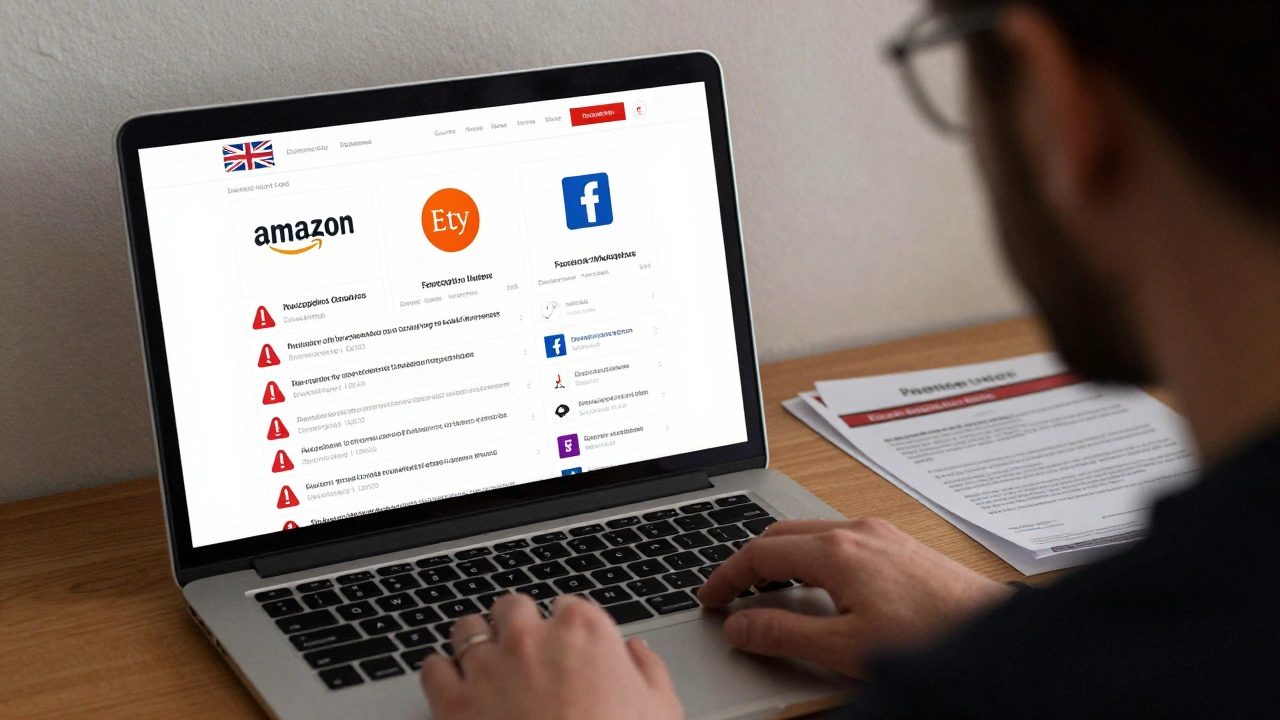
Most cases start online. Platforms like Amazon UK, Etsy, Facebook Marketplace, and even TikTok shops are common hotspots. Unlike some countries, the UK doesn’t require you to prove intent to infringe. If someone uses your registered trademark, copyright, or patented design without a license, they’re breaking the law-even if they didn’t know it was yours.
Registered IP rights matter. If you haven’t registered your trademark with the UK Intellectual Property Office (UKIPO), your options shrink dramatically. Same with copyright: while it’s automatic in the UK for original works, proving ownership without dated records or registration makes enforcement harder. Many businesses lose cases not because the infringement didn’t happen, but because they can’t prove they owned it first.
Enforcing Your Rights: The UK Legal Framework
The UK offers three main legal tools to fight IP infringement: civil courts, the Intellectual Property Enterprise Court (IPEC), and administrative takedown procedures.
The IPEC is your best first move if you’re a small business. It’s designed for claims under £500,000 and caps legal costs at £500,000 total (with a £50,000 cap for each side’s costs). You don’t need a big law firm. Many solicitors offer fixed-fee packages for infringement letters and IPEC claims. You can even represent yourself in IPEC if your case is straightforward.
For larger cases, the High Court handles claims with no cap on damages. But it’s expensive. A single court hearing can cost £20,000-£100,000. Only use this if the infringement is widespread, causing major revenue loss, or damaging your brand reputation.
Don’t forget the Digital Economy Act 2017. It lets rights holders request website blocking orders from the courts. If a site is repeatedly hosting pirated content, the UK’s major ISPs can be ordered to block access to it. This has been used successfully against torrent sites like The Pirate Bay and streaming platforms selling illegal content.
How to Issue a Takedown Notice in the UK
Before you go to court, most platforms have their own takedown systems. These are fast, free, and often effective.
Here’s how to do it right:
- Identify the infringer: Get the exact URL, product ID, or user handle. Screenshots with timestamps help.
- Confirm your rights: Have your trademark registration number or copyright certificate ready. For copyright, keep original files, drafts, or publication dates.
- Use the platform’s official form: Amazon UK, eBay, Etsy, and Google all have online portals. Don’t email support-use their legal reporting tools.
- Include required details: Your name, contact info, description of the IP, proof of ownership, and a statement under penalty of perjury that the use is unauthorized.
- Follow up: If the item isn’t removed within 5-10 business days, escalate. Some platforms have dedicated IP teams you can contact directly.
For websites not on major platforms (like independent blogs or Shopify stores), send a formal cease-and-desist letter. You can draft one yourself. Include: your rights, the infringement, a demand to remove it within 7 days, and a warning of legal action. Send it via email and registered post. Keep proof of delivery.
What to Do If You’re Accused of IP Infringement
Getting a takedown notice or legal letter can be terrifying. But panic won’t help. Here’s what to do:
- Don’t delete anything: Deleting content or changing your site can be seen as evidence of guilt. Preserve everything.
- Check your rights: Did you license the content? Is it fair use? In the UK, parody, criticism, and educational use can be legal under fair dealing rules. But they’re narrow-consult a lawyer before assuming you’re covered.
- Verify the claimant’s ownership: Many takedown notices come from trolls or fake rights holders. Search UKIPO’s trademark database or the UK Copyright Service to confirm the sender actually owns the IP.
- Respond in writing: If you believe the claim is wrong, reply with evidence. For example: “I created this design in 2022. Here are my design files dated March 14, 2022.”
- Consider a counter-notice: If you’re on a platform like Etsy or YouTube, you can file a counter-notice. But only if you’re confident you have a legal right to use the content. Filing falsely can lead to account termination or legal liability.
Common Mistakes That Cost Businesses
Many businesses lose IP cases not because they’re wrong, but because they make avoidable errors.
- Not registering IP early: A UK trademark costs £170 for one class. Wait too long, and someone else registers your brand name. Then you’re the infringer.
- Using stock images without checking licenses: A free image from Pexels might not allow commercial use. Always read the license. Many UK businesses get hit for using “free” images from Google.
- Ignoring domain squatting: If someone registers your brand as a .co.uk domain, you can file a complaint under Nominet’s dispute resolution policy. But you need to act fast-most policies require you to file within 12 months.
- Replying emotionally: Angry emails to infringers or public posts calling them thieves can backfire. Stick to facts, documentation, and legal channels.
Preventing Future Infringement
Prevention is cheaper than enforcement.
- Register your IP: Trademarks, copyrights, and design rights are cheap compared to legal fees. Do it before you launch.
- Monitor your brand: Use free tools like Google Alerts for your brand name, or paid tools like Brandwatch or Trademarkia to track mentions across the web.
- Watermark your work: Add subtle logos or metadata to images, videos, and documents. It doesn’t stop theft, but it makes it harder to claim ignorance.
- Include IP notices: Put “© 2025 [Your Company]. All rights reserved.” on your website, packaging, and marketing materials. It doesn’t give you extra rights, but it shows you’re serious.
Also, consider joining the UK Intellectual Property Office’s IP Pro Bono Network. It connects small businesses with volunteer lawyers who help with infringement issues for free.
Frequently Asked Questions
Can I sue someone in the UK for using my logo without permission?
Yes-if you have a registered trademark. Unregistered logos are harder to protect, but you may still have rights under common law passing off if you can prove your brand has reputation and the infringer caused confusion. The IPEC handles these cases efficiently for small businesses. Damages can include lost profits, legal fees, and sometimes punitive penalties.
How long does a copyright takedown take in the UK?
On major platforms like YouTube or Amazon UK, most takedowns are processed within 3-10 business days. If the infringer files a counter-notice, the platform must wait 10-14 days before restoring the content, giving you time to file a court claim. If you don’t, the content returns. For independent websites, response time depends on the host-some act within 48 hours, others take weeks.
Is it worth enforcing IP against small sellers on Etsy or Facebook?
Yes, especially if they’re using your exact branding or product design. Small sellers often scale up quickly. One infringer on Etsy can become ten. Plus, platforms are more likely to ban repeat offenders. A single successful takedown can stop a pattern. Use the platform’s reporting tools-they’re designed for this.
What’s the difference between copyright and trademark infringement in the UK?
Copyright protects original creative works-like text, music, photos, and designs. It’s automatic and lasts 70 years after the creator’s death. Trademark protects brand identifiers-names, logos, slogans. You must register it with UKIPO. Trademark infringement happens when someone uses a similar mark in a way that confuses customers. Copyright infringement is about copying content; trademark is about confusing the market.
Can I get my money back if I’m falsely accused of IP infringement?
If you’re wrongly targeted, you can file a claim for damages under the UK’s Defamation Act or the Misrepresentation Act if the accuser made false statements. In rare cases, courts have awarded compensation for lost sales, legal fees, and reputational harm. Document everything: emails, screenshots, sales records. A lawyer can help you file a counterclaim.
Next Steps
If you’re facing infringement right now, start here: gather your IP registration documents, take screenshots of the infringing content, and file a report with the platform. Don’t wait. The longer you wait, the harder it is to prove harm.
If you haven’t registered your IP yet, do it now. A UK trademark costs under £200 and lasts 10 years. A copyright registration with the UK Copyright Service is free, but keeping dated records is critical.
Most importantly, don’t go it alone. Reach out to the UK Intellectual Property Office’s free advice line or join a local business association with legal support. Protecting your IP isn’t just legal-it’s how you protect your future.