 by
by Manufacturing Businesses in the UK: Production Management Essentials
9 Mar, 2026Running a manufacturing business in the UK isn’t just about running machines. It’s about keeping every part of the system working together - from raw materials arriving at the dock to finished products hitting the shelf. If your production line is slowing down, or if you’re constantly firefighting quality issues, you’re not alone. Many UK manufacturers struggle with the same hidden bottlenecks: poor scheduling, inconsistent inventory, or teams working in silos. The good news? Fixing these isn’t about hiring more staff or buying expensive tech. It’s about mastering the essentials of production management.
What Production Management Actually Means in UK Factories
Production management isn’t a fancy term for supervision. It’s the backbone of your operation. In UK manufacturing, it means having clear control over planning, execution, and monitoring of every step in making your product. Think of it like a conductor leading an orchestra. One out-of-sync instrument - say, a delayed component delivery or a misaligned machine - and the whole performance falls apart.
According to the UK Manufacturing Survey 2025, factories with formal production management systems saw a 22% drop in downtime and a 17% increase in on-time deliveries. That’s not magic. That’s structure. The best manufacturers don’t rely on gut feeling. They use data - daily output rates, machine uptime logs, defect tracking - to make decisions.
Five Core Essentials for UK Manufacturing Operations
- Real-time production tracking - Don’t wait for weekly reports. Use simple digital dashboards to see how many units are completed, how many are stuck in quality checks, and where delays are happening. Even a basic tablet with a free app like Tally or Airtable can replace paper logs.
- Standardized work instructions - If your operators are guessing how to set up a machine, you’re asking for mistakes. Write down clear, step-by-step instructions for every task. Include photos. Record short videos. Make sure every shift has the same playbook.
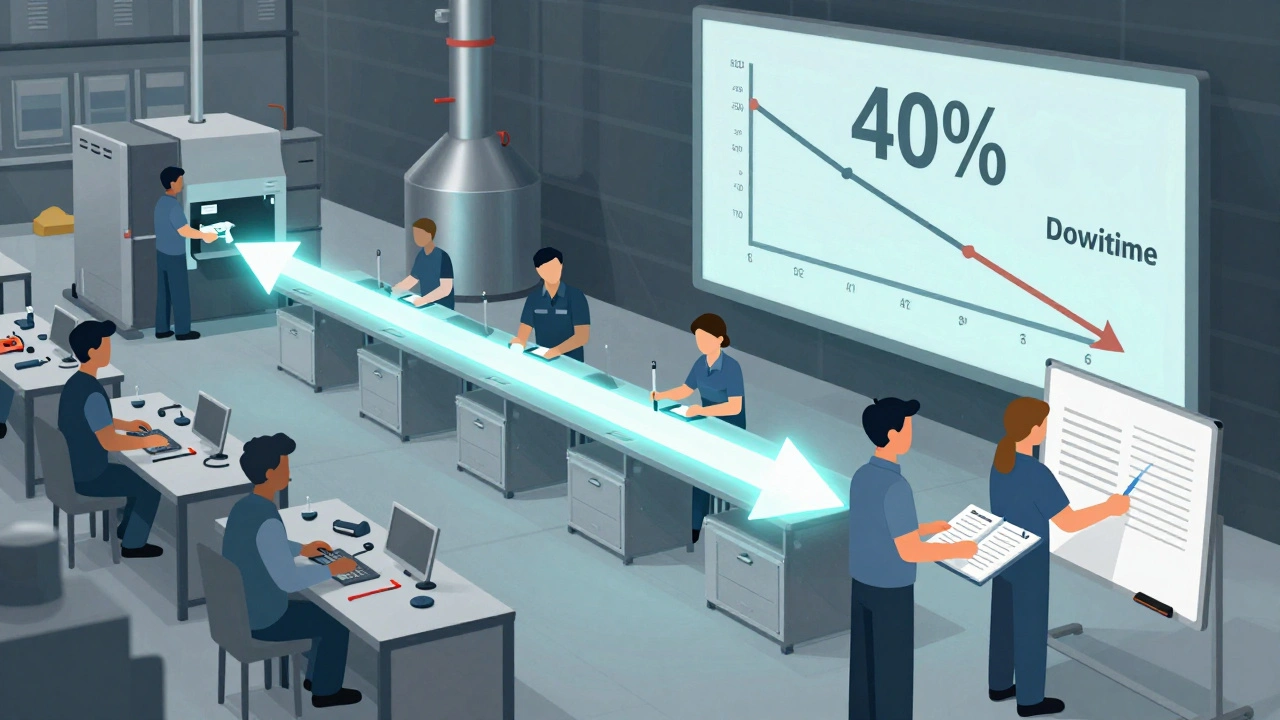
- Preventive maintenance schedules - A broken CNC machine can cost £8,000 in lost output per day. Most UK factories wait for breakdowns. Smart ones schedule maintenance based on usage hours, not calendar dates. A 2024 study from the Manufacturing Technologies Association showed that factories with preventive programs cut unplanned downtime by 40%.
- Inventory control tied to production - Holding too much stock ties up cash. Holding too little halts production. The sweet spot? Just-in-time (JIT) principles. Track raw material usage daily. Link your inventory system to your production schedule. If you’re making 500 units a day, you shouldn’t have 3,000 units of raw material sitting idle.
- Clear communication between shifts - If the night shift finds a recurring defect and doesn’t tell the day shift, it repeats. Use a simple digital logbook or even a whiteboard with sticky notes. Record what went wrong, what was fixed, and who did it. No jargon. Just facts.
Lean Manufacturing Isn’t a Buzzword - It’s Your Lifeline
Lean manufacturing isn’t about cutting staff. It’s about removing waste. In UK factories, the biggest wastes aren’t always obvious:
- Motion waste - Workers walking 20 meters to grab a tool they need every 15 minutes.
- Waiting waste - Machines sitting idle because the previous process is backed up.
- Overproduction - Making 1,000 units because “we always do,” when the order was for 600.
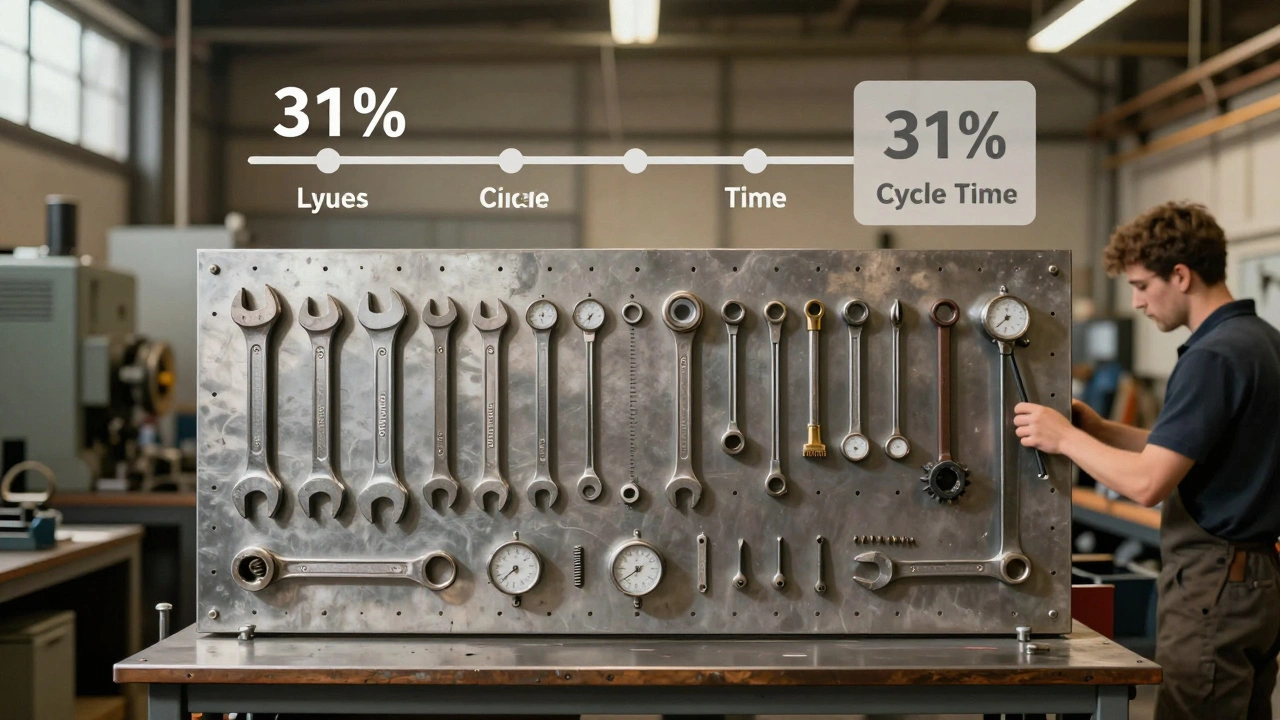
One metal fabrication shop in Stoke-on-Trent reduced its production cycle time by 31% in six months just by rearranging their workspace. They moved frequently used tools within arm’s reach, grouped similar processes together, and eliminated unnecessary handoffs. No new machines. No extra staff. Just better flow.
How to Start Improving Tomorrow - Not Next Year
You don’t need a consultant or a six-month project. Start with one small change:
- Pick one production line that’s causing headaches.
- Track its output for three days. Write down every delay, defect, or downtime event.
- Ask your team: “What’s the one thing that slows you down the most?”
- Solve that one thing. Fix the tool that keeps breaking. Redesign the checklist. Move the parts bin.
- Measure the result. Did output go up? Did errors drop?
That’s how improvement happens. Not with PowerPoint presentations. Not with expensive software. With small, consistent actions.
Common Mistakes UK Manufacturers Keep Making
- Believing automation fixes everything - Buying a robot won’t help if your processes are messy. Automating a bad system just makes it faster at making mistakes.
- Ignoring operator feedback - The person running the machine knows more about its quirks than any manager ever will. Listen to them.
- Using outdated KPIs - “Units produced per hour” sounds smart, but if quality is falling, it’s meaningless. Track good units per hour, not total output.
- Not training new hires properly - If you’re hiring faster than you’re training, you’re creating chaos. Build a 3-day onboarding routine that includes shadowing, checklists, and hands-on practice.
Tools That Actually Help - No Fluff
You don’t need SAP or Oracle. Here’s what works for small and mid-sized UK manufacturers right now:
| Tool | What It Does | Cost (Monthly) | Best For |
|---|---|---|---|
| Tally | Digital forms for shift handovers, defect logs, and machine checks | Free to £25 | Small teams, paper-to-digital transition |
| Airtable | Customizable inventory and production scheduling | £10 to £45 | Mid-sized factories needing flexible data |
| Zapier | Connects tools - like syncing inventory levels with sales orders | £15 to £75 | Automating repetitive tasks |
| Moodle | Free online training platform for onboarding and refresher courses | Free | Training new operators consistently |
What Happens When You Get It Right
One precision engineering firm in Sheffield went from 18% defect rate to 3% in nine months. They didn’t replace their machines. They didn’t hire a new manager. They implemented daily 10-minute huddles, standardized their inspection checklist, and started tracking every defect back to its source. Within months, their customer complaints dropped. Their repeat orders jumped. Their team started feeling proud of their work.
That’s the real win. Not just higher output. Better quality. Happier staff. More reliable deliveries. And yes - more profit.
Production management in the UK isn’t about being perfect. It’s about being consistent. It’s about showing up every day and asking: What’s broken? How can we fix it? And what’s next?
What’s the biggest mistake UK manufacturers make in production management?
The biggest mistake is treating production as a black box. Many managers focus only on output numbers without understanding what’s happening on the floor. They don’t track where delays happen, ignore operator feedback, or assume that more machines = better results. The real issue is usually poor communication, inconsistent processes, or lack of data - not equipment.
Do I need expensive software to manage production?
No. Many UK manufacturers succeed with free or low-cost tools like Tally, Airtable, or even Google Sheets. What matters isn’t the tool - it’s the discipline. If you’re not recording data, tracking defects, or holding daily check-ins, no software will fix that. Start simple. Get the basics right before investing in complex systems.
How can I improve production efficiency without hiring more staff?
Focus on eliminating waste. Redesign workflows so workers spend less time walking, waiting, or searching for tools. Standardize processes so mistakes drop. Train teams to spot problems early. One factory in Birmingham cut its production time by 25% just by reorganizing its tool storage and creating visual work instructions. No extra hires needed.
What KPIs should I track in manufacturing?
Track these four: On-time delivery rate, First-pass yield (good units out of total produced), Machine uptime percentage, and Daily output per operator. Avoid vanity metrics like total units made - if quality is low, high volume means more returns and wasted materials.
Is lean manufacturing only for big factories?
Lean works best in small and mid-sized operations. Big companies have layers of bureaucracy that slow them down. Small factories can change processes in days, not months. The principles - reduce waste, improve flow, empower workers - apply to any size. A 12-person workshop can be just as lean as a 500-person plant.
Next Steps: Start Small, Stay Consistent
Don’t try to overhaul everything at once. Pick one area that’s causing the most frustration - maybe your quality checks are backed up, or your inventory is always wrong. Fix that one thing. Measure the result. Then move to the next. Over time, those small wins add up to a factory that runs smoothly, reliably, and profitably.
Manufacturing in the UK isn’t dying. It’s evolving. The winners aren’t the ones with the biggest budgets. They’re the ones who pay attention to the details - every day.