
 by
by Maternity and Paternity Leave in the UK: What Employers Must Pay and Do by Law
23 Jan, 2026When an employee in the UK announces they’re having a baby, the clock starts ticking on legal obligations that can’t be ignored. Employers who don’t know the rules risk fines, tribunal claims, and damaged reputations. This isn’t about being nice-it’s about following the law. And the law is clear: you must offer paid time off, protect jobs, and handle paperwork correctly. Get it wrong, and you’re not just risking penalties-you’re putting your business on the wrong side of workplace fairness.
Who Qualifies for Maternity Leave and Pay?
An employee is eligible for Statutory Maternity Pay (SMP) if they’ve worked for you continuously for at least 26 weeks by the end of the 15th week before the baby’s due date. That’s called the qualifying week. They also need to earn at least £123 a week (before tax) in the 8 weeks leading up to that qualifying week. These aren’t flexible thresholds. If they don’t meet both, they won’t get SMP-but they might still qualify for Maternity Allowance from the government.
Maternity leave lasts up to 52 weeks. The first 2 weeks after birth are mandatory leave (4 weeks for factory workers). You can’t ask them to return early. The rest is flexible: they can take it all at once, split it with their partner, or return part-time under flexible working rules. But the job must be held open for them. Even if they’re not getting paid, their right to return is protected.
How Much Do You Pay During Maternity Leave?
Statutory Maternity Pay runs for 39 weeks. For the first 6 weeks, you pay 90% of their average weekly earnings-no cap. After that, it’s £184.03 a week (as of April 2025), or 90% of earnings if that’s lower. You can’t pay less than the statutory rate unless you offer more as part of your company policy. Many employers do. A 2024 survey by the Chartered Institute of Personnel and Development found that 62% of large UK firms offer enhanced maternity pay, often 100% of salary for 6 to 12 weeks.
You can reclaim most of this from HMRC. For small employers (under 250 staff), you can recover 103% of SMP paid out. Larger employers get 92%. You need to keep accurate payroll records and submit claims through your payroll software. Missing the deadline means you eat the cost.
Paternity Leave Rules: It’s Not Just for Mothers
Fathers, partners, and non-birth parents are entitled to two weeks of paid paternity leave. They must have worked for you for at least 26 weeks by the end of the 15th week before the due date. They need to take it within 56 days of the birth. It’s not optional-you can’t refuse it if they meet the criteria.
Paternity Pay is the same as the second part of SMP: £184.03 a week or 90% of average weekly earnings if that’s lower. Like maternity pay, you can reclaim it from HMRC. The key difference? Only two weeks. No extensions. No flexibility. No exceptions.
Shared Parental Leave: The Complex Middle Ground
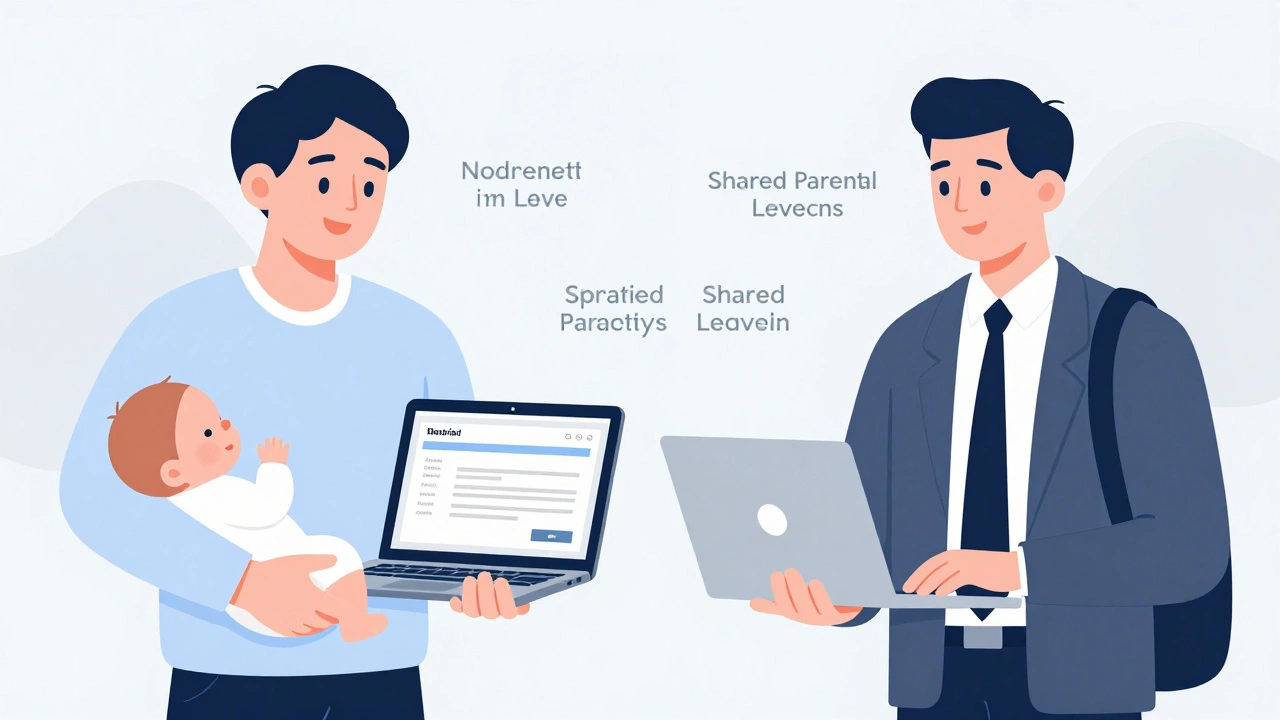
Shared Parental Leave (SPL) lets parents split up to 50 weeks of leave and 37 weeks of pay between them after the baby is born. But it’s complicated. To qualify, the mother must end her maternity leave and pay early. Then both parents must meet the employment and earnings tests. The mother must have worked 26 weeks by the end of the 15th week before the due date, and the partner must have worked 26 weeks and earned £30 a week on average in the 13 weeks before the due date.
Once approved, they can take leave in blocks-weeks, days, or even days off in a row. Pay is the same as SMP: £184.03 a week or 90% of earnings. But here’s the catch: most employers don’t enhance SPL pay. If you pay full salary during maternity leave, you’re not required to do the same for SPL. Many companies offer only statutory pay for shared leave, which can create tension. It’s legal-but it’s not seen as fair by employees.
What You Must Do as an Employer
You have specific duties under UK law. Miss one, and you’re in breach.
- Provide written information: Within 28 days of being told about the pregnancy, give the employee a written statement about their rights to maternity, paternity, and adoption leave.
- Accept notice: Employees must give at least 15 weeks’ notice before the due date for maternity leave. For paternity leave, they need to give 28 days’ notice.
- Confirm leave dates: Once they give notice, you must respond in writing within 28 days confirming the dates, pay, and return date.
- Keep their job safe: If they return after ordinary maternity leave (26 weeks), they must get their old job back. After additional leave (52 weeks), you must offer a suitable alternative job with no worse terms.
- Don’t penalize: You can’t treat them badly because they’re on leave. That’s discrimination. Even subtle actions-like excluding them from meetings or promotions-are illegal.
These aren’t suggestions. They’re legal requirements backed by the Equality Act 2010 and the Employment Rights Act 1996. The Employment Tribunal hears hundreds of cases every year where employers failed to follow these steps.
What Happens If You Get It Wrong?
Failure to pay statutory leave correctly can lead to claims for unlawful deduction of wages. If you refuse leave or make someone feel pressured to return early, you could face an unfair dismissal claim. Discrimination claims can cost you far more-unlimited compensation, plus reputational damage.
In 2024, the UK government published data showing that 1,872 employment tribunal claims were related to pregnancy and maternity discrimination. Over half were successful. The average award was £13,500. Some exceeded £100,000 when emotional distress was included.
HMRC also audits employers. If you claimed SMP but didn’t pay it properly, you’ll have to repay it-with interest. And you’ll be flagged for future checks.
Best Practices for Employers
Compliance isn’t enough. The best employers go further.
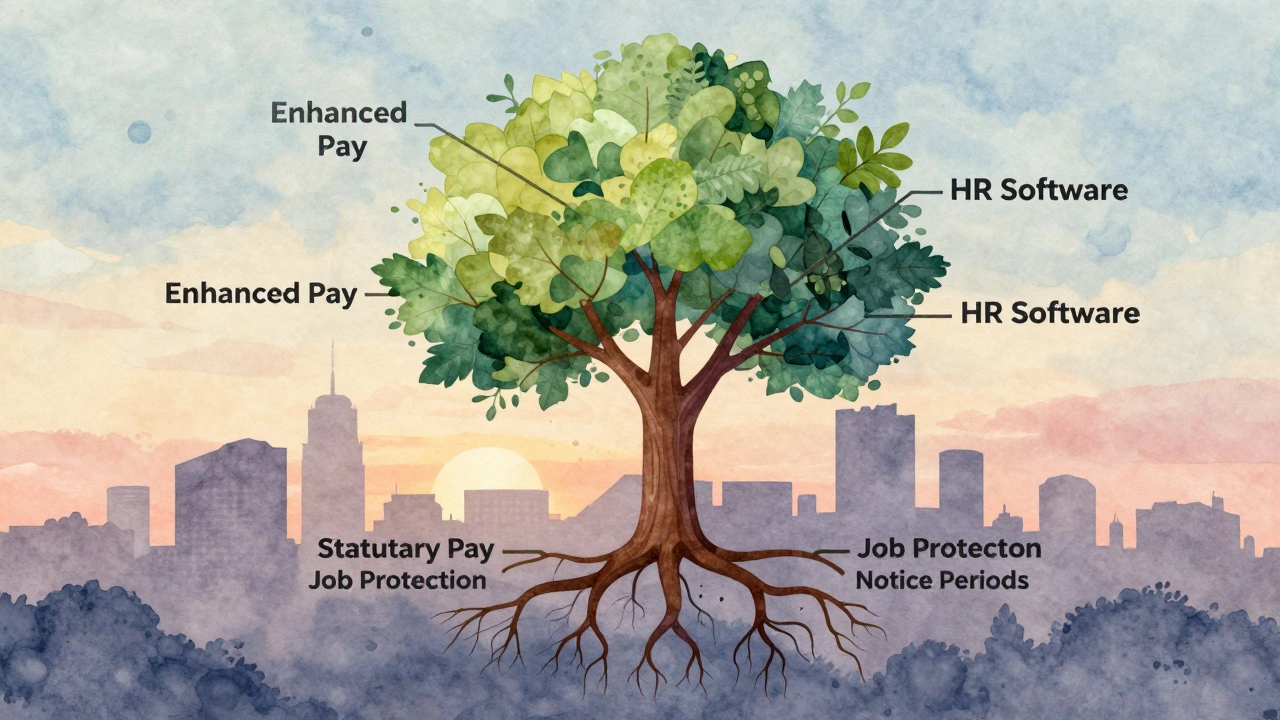
- Offer enhanced pay: Even if you’re not required to, paying 100% of salary for 8-12 weeks makes you stand out as an employer of choice.
- Train managers: Line managers often don’t know the rules. Train them not to ask about return dates, to include employees in team updates, and to avoid making assumptions about their commitment.
- Use HR software: Systems like BambooHR, Cezanne HR, or Sage Payroll can auto-calculate leave eligibility, track notice periods, and flag deadlines.
- Review your policy annually: Laws change. Pay rates adjust each April. Your policy should reflect current rates and rules.
- Communicate clearly: Give new parents a written guide-simple, jargon-free, with contact details for HR. Don’t make them dig through HR portals.
Companies that do this well see higher retention. A 2025 report by the UK Business Families Federation found that 78% of employees who received enhanced parental pay stayed with their employer for more than five years-compared to 51% who didn’t.
What About Adoption and Fostering?
Adoptive parents have the same rights as birth parents. Statutory Adoption Pay mirrors SMP: 39 weeks, same pay rates. Leave is also up to 52 weeks. The same rules apply: job protection, notice periods, and no discrimination. Fostering doesn’t count unless it’s with a view to adoption. If you’re unsure, check with HMRC or an employment lawyer.
Final Thought: It’s Not a Cost-It’s an Investment
Some employers see parental leave as a burden. But the data says otherwise. Companies with strong parental leave policies have lower turnover, higher morale, and better gender balance in leadership. They attract talent. They retain it. And they avoid costly legal battles.
The law sets the minimum. What you do beyond that defines your culture. You don’t need to be perfect. But you do need to be compliant-and fair.
Can an employer refuse maternity leave in the UK?
No. If an employee meets the eligibility criteria (26 weeks’ service by the 15th week before the due date and minimum earnings), they have a legal right to take up to 52 weeks of maternity leave. Employers cannot refuse it, even if they’re short-staffed. Denying leave is a breach of the Employment Rights Act 1996 and can lead to an employment tribunal claim.
Do I have to pay full salary during maternity leave?
No, you only have to pay the statutory rate: 90% of average weekly earnings for the first 6 weeks, then £184.03 a week (as of April 2025) for the next 33 weeks. But many employers choose to offer enhanced pay-like 100% salary for several weeks-as a benefit. It’s not required by law, but it helps retain talent.
Can a father take paternity leave if he’s not married to the mother?
Yes. Marital status doesn’t matter. The father or partner must be the biological father, the mother’s spouse or civil partner, or the person in a relationship with the mother at the time of the birth. They must also meet the 26-week service requirement and give proper notice. They’re entitled to two weeks of paid paternity leave regardless of marital status.
What happens if an employee returns early from maternity leave?
An employee can return early, but they must give at least 8 weeks’ notice. They can’t return within the first two weeks after birth (four weeks for factory workers). If they return early, they still keep their right to the remaining leave-but they can’t take it later. They also keep their job protection and can still claim any unpaid Statutory Maternity Pay for the weeks they didn’t take.
Can I reduce an employee’s pay when they return from maternity leave?
No. If they return after ordinary maternity leave (26 weeks), they must return to the same job with the same pay and conditions. If they return after additional leave (52 weeks), you must offer a suitable alternative job with no less favorable terms. Reducing pay without agreement is unlawful and could lead to a claim for unfair treatment or discrimination.