 by
by Natural Disaster Preparedness in the UK: Flood, Storm, and Heat Risks
6 Mar, 2026The UK isn’t usually the first place that comes to mind when you think of natural disasters. But over the last five years, the country has faced record-breaking floods, storms with wind speeds over 100 mph, and heatwaves that pushed temperatures past 40°C. These aren’t rare anomalies anymore-they’re becoming the new normal. If you live in the UK, you need to know what’s coming and how to get ready. It’s not about panic. It’s about practical steps you can take today to protect your home, your family, and your finances.
Floods Are the Biggest Threat-And They’re Getting Worse
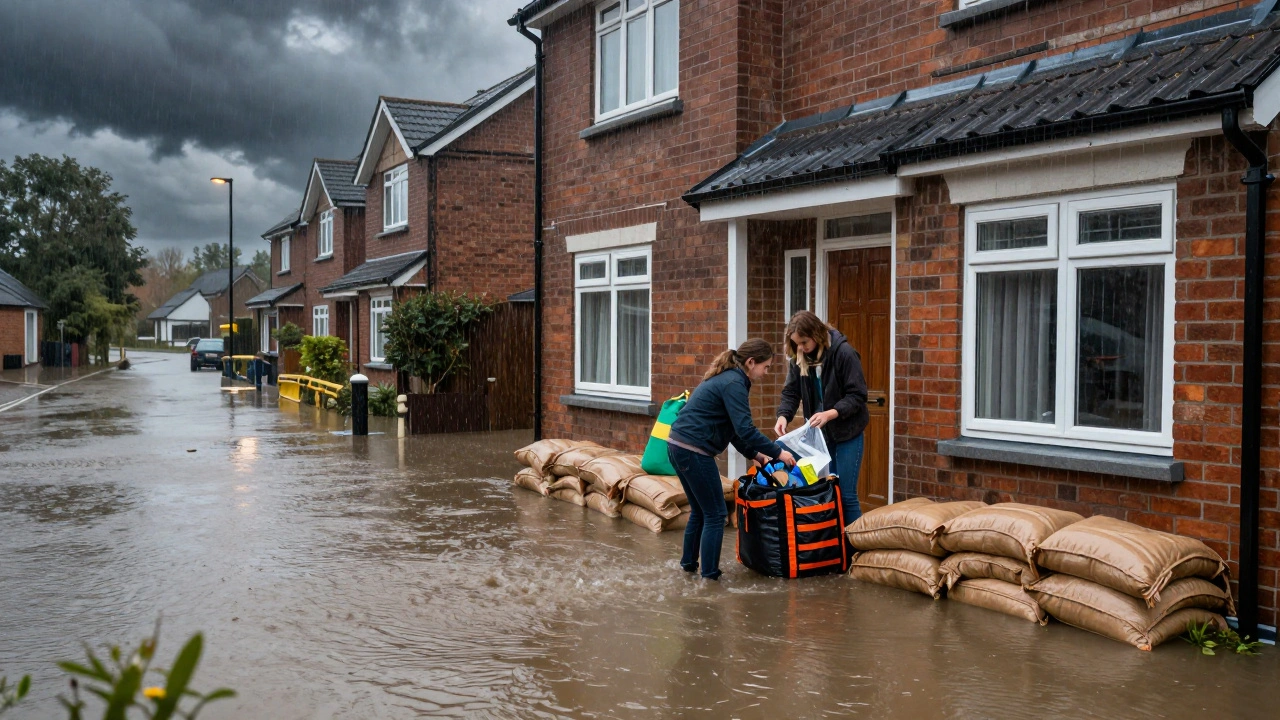
More than 5.9 million properties in the UK are at risk of flooding, according to the Environment Agency’s 2025 update. That’s nearly one in five homes. Coastal areas like Hull, York, and parts of Kent aren’t the only ones at risk. Even towns in the Midlands and the South West have seen rivers burst their banks after just 48 hours of heavy rain. In 2024, the River Severn overflowed in Worcester, leaving 1,200 homes without power for over a week. Insurance claims for flood damage hit £1.3 billion that year alone.
Here’s what actually works to reduce damage:
- Install flood barriers on doors and windows-these cost under £200 and can stop water from entering your home.
- Elevate your boiler, fuse box, and important electronics. Water rises fast. If your fuse box is on the ground floor, it won’t just get wet-it could electrocute you.
- Keep sandbags ready. Don’t wait until the rain starts. Buy them in advance or learn how to fill and stack them yourself. Local councils often offer free sandbags before flood season.
- Know your local flood warning system. Sign up for Environment Agency Flood Alerts via text or email. They send updates 12 to 48 hours before a flood hits.
Don’t assume you’re safe because you’ve never seen a flood. Soil saturation, urban runoff, and aging drainage systems mean even low-risk areas can flood in under an hour.
Storms Are More Than Just Wind-They’re Power Outage Triggers
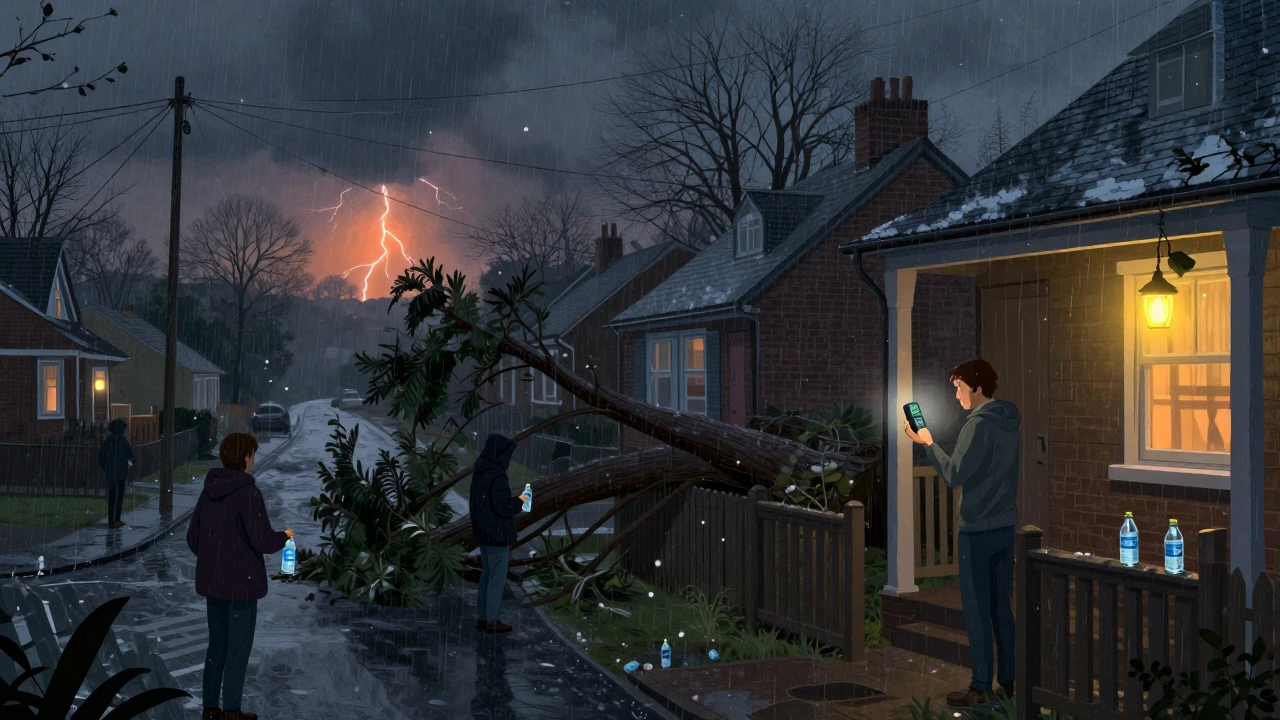
In December 2024, Storm Éowyn knocked out electricity for 600,000 homes across Scotland and Northern England. Trees fell on power lines. Transformers blew. Some people were without power for 10 days. The problem isn’t just the wind-it’s what happens after. No heating. No refrigeration. No internet. No way to charge your phone.
Storm preparedness is about resilience, not just shelter. Here’s how to build it:
- Keep a battery-powered radio. Smartphones die. Networks go down. A simple radio can give you emergency updates when nothing else works.
- Store at least three days’ worth of water-1.5 litres per person per day. You’ll need it for drinking, cooking, and basic hygiene if taps stop working.
- Charge power banks before storms hit. Keep one in your car and one in your emergency kit.
- Trim trees near your home. A single falling branch can take out your power line. If you rent, report overhanging branches to your landlord-legally, they’re responsible for maintenance.
- Know where your gas and electricity shut-off valves are. If a pipe bursts or a wire sparks, you need to cut power fast.
Many people think storms are a winter problem. But autumn storms are often stronger. The jet stream shifts, and low-pressure systems build up over the Atlantic with more energy than ever before.
Heatwaves Are Silent Killers-And the UK Isn’t Ready
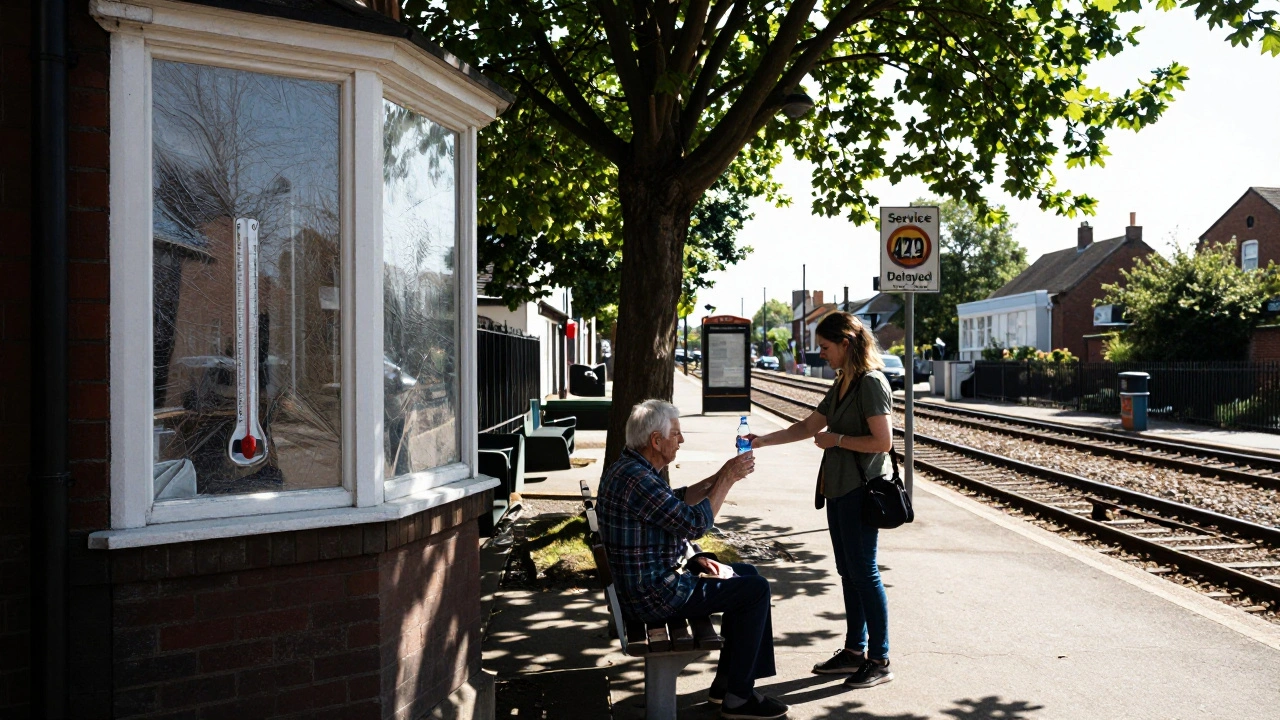
In July 2024, the UK hit 42.9°C. Over 1,000 excess deaths were linked to the heat. Most of them were elderly people living in top-floor flats with no air conditioning. Hospitals ran out of cooling units. Schools closed. Public transport slowed down because rails warped.
Heat doesn’t come with sirens or warnings like floods. It creeps in. And it hits hardest where you least expect it.
- Install reflective window film. It costs less than £50 per window and cuts indoor heat by up to 60%.
- Keep a supply of electrolyte drinks and water bottles in your fridge and car. Dehydration happens faster than you think.
- Open windows at night and close them during the day. This simple trick can keep your home 5°C cooler.
- Check on neighbours, especially those over 70 or with chronic illnesses. Heat stress doesn’t always show up as sweating-it can look like confusion or drowsiness.
- If you have a garden, plant shade trees. A single mature tree can reduce local temperatures by 3°C.
The UK’s building codes still treat heat like a rare event. Most homes were built for cold, not heat. That means insulation traps heat instead of blocking it. You can’t wait for the government to fix this. You have to act now.
Your Emergency Kit Isn’t Just for Emergencies-It’s for Daily Survival
Most people think of emergency kits as something for earthquakes or hurricanes. But in the UK, your kit should be tailored to your biggest risks: floods, storms, and heat.
Here’s what to include:
- 3-day supply of non-perishable food (energy bars, canned beans, dried fruit)
- 2 litres of water per person per day (store in sealed containers, not bottles)
- First aid kit with burn cream, antiseptic wipes, and painkillers
- Flashlight with extra batteries
- Portable phone charger (solar-powered is best)
- Important documents in a waterproof bag (insurance papers, ID, medical records)
- Blankets or thermal emergency sheets
- Small can opener and manual can opener
- Local map with evacuation routes marked
Keep this kit in a bag you can grab in under 30 seconds. Put it by the door, not in the attic. If your home floods, you won’t have time to search for it.
Insurance Won’t Save You-Preparation Will
Many people think their home insurance will cover everything. It won’t. Most policies have limits. Flood coverage often requires a separate policy. And if you don’t have proof you took preventive steps-like installing flood barriers or trimming trees-your claim could be denied.
Insurance companies now use data from the Environment Agency and Met Office to assess risk. If your house is near a river and you haven’t taken steps to reduce flood risk, you’re not just vulnerable-you’re uninsurable.
Start by:
- Reviewing your policy every year. Look for flood, storm, and heat-related exclusions.
- Documenting your home’s condition. Take photos of your electrical panel, boiler, and valuables. Store them in the cloud.
- Asking your insurer about discounts for installing flood protection. Some offer up to 15% off if you install approved barriers.
Preparation isn’t just about safety. It’s about keeping your insurance valid.
Community Matters More Than You Think
When floods hit in 2024, the fastest recoveries happened in neighbourhoods where people knew each other. One street in Derby set up a WhatsApp group for flood alerts. Another in Glasgow created a volunteer network to help elderly residents evacuate.
Get involved:
- Join your local Community Flood Action Group. Most councils have one.
- Sign up for Neighbourhood Watch. It’s not just for crime-it’s for emergency coordination.
- Teach your kids what to do. Kids remember instructions better than adults. Practice drills twice a year.
Isolation kills in disasters. Connection saves lives.
What to Do Right Now
You don’t need to overhaul your life. Start with three things this week:
- Check your Environment Agency flood map. Type your postcode into their website. If you’re at risk, get your flood plan ready.
- Fill a bucket with water. Leave it on your kitchen counter. Do it today. You’ll thank yourself when the taps run dry.
- Call a neighbour. Ask if they have an emergency kit. Offer to swap supplies. You’ll be surprised how many people haven’t thought about this.
Disasters don’t wait for perfect conditions. They come when you’re distracted. The best time to prepare was yesterday. The second-best time is now.
Are floods covered by standard home insurance in the UK?
No, standard home insurance in the UK doesn’t automatically cover floods. You need to check if your policy includes flood damage. Many insurers offer it as an add-on, especially in high-risk areas. The Flood Re scheme helps homeowners in high-risk zones get affordable flood cover, but you must apply through your insurer. If you live near a river or coast, always confirm flood coverage before signing a policy.
How do I know if my home is in a flood risk area?
Go to the Environment Agency’s online flood map and enter your postcode. The tool shows three levels of risk: low, medium, and high. It also shows if your property is at risk from rivers, surface water, or coastal flooding. Even if you’re not near water, surface flooding from heavy rain can affect any area with poor drainage. Don’t rely on how your neighbourhood looked 10 years ago-flood zones change every year.
Can heatwaves cause power outages in the UK?
Yes. During extreme heat, electricity demand spikes as people turn on air conditioning and fans. At the same time, overhead power lines sag in high temperatures, and transformers can overheat. In 2022 and 2024, heatwaves triggered rolling blackouts in London and the Midlands. The National Grid now warns that heat-related outages are becoming more frequent. Preparing means having backup power and reducing usage during peak hours.
What should I do if a storm knocks out my power?
Stay calm and stay safe. Don’t use candles-use battery-powered lights. Unplug appliances to avoid damage when power returns. If you have a generator, use it outside only-never indoors. Check on vulnerable neighbours. Call your utility provider for updates. Most companies update their outage maps online. If you’re in a high-rise building without lifts, avoid using stairs unless absolutely necessary. Stay warm if it’s cold, stay cool if it’s hot.
Is it safe to drive during a storm or flood?
Never drive through floodwater. Just 30cm of moving water can sweep away a car. Many deaths happen because people underestimate how fast water rises. If roads are flooded, turn around. Storms also bring falling trees, flying debris, and downed power lines. If winds exceed 50 mph, avoid driving altogether. The Met Office issues weather warnings-check them before you leave home.