 by
by Non-Disclosure Agreements in the UK: Templates and Negotiation Tips
17 Mar, 2026Signing a non-disclosure agreement (NDA) in the UK isn’t just a formality-it’s a critical step to protect your ideas, trade secrets, and sensitive business information. Whether you’re sharing product designs with a manufacturer, discussing financial projections with an investor, or hiring a contractor who’ll handle customer data, an NDA acts as your first line of defense. But here’s the thing: not all NDAs are created equal. A poorly written one won’t hold up in court. A vague one leaves loopholes. And a one-size-fits-all template? It might actually hurt you.
What Makes a UK NDA Different?
The UK doesn’t have a single law that defines NDAs. Instead, confidentiality is protected under common law and statutes like the Trade Secrets Regulations 2018, which implemented the EU Trade Secrets Directive. Even after Brexit, these rules still apply. That means UK courts expect NDAs to be precise, reasonable, and enforceable.
Unlike in some U.S. states, UK courts won’t enforce an NDA that’s too broad. For example, if your agreement says you can’t disclose “any information related to the business,” that’s too vague. Courts want specifics: what data is protected? How long does the secrecy last? Who’s bound by it?
Also, UK law requires that the information being protected must have a “quality of confidence.” That means it can’t be public knowledge or something easily found online. If you’re trying to protect something obvious-like your business’s location or phone number-you’re out of luck.
Essential Elements of a Solid UK NDA
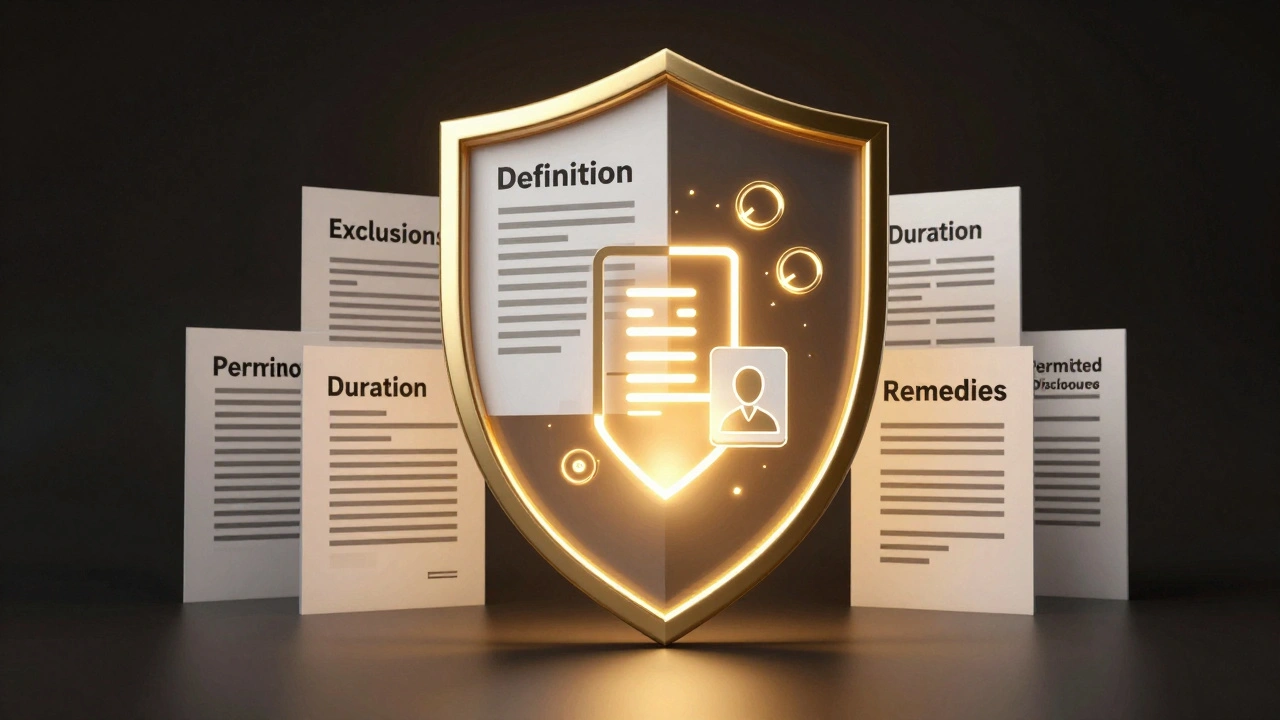
A strong NDA in the UK includes five non-negotiable parts:
- Definition of Confidential Information: List exactly what’s covered. Examples: source code, customer lists, pricing models, prototypes, marketing strategies. Avoid phrases like “all information disclosed.” Be specific.
- Exclusions: What’s not protected? Publicly available data, information already in the recipient’s possession, or stuff they independently developed without using your materials.
- Duration: Most UK NDAs last 2 to 5 years. For trade secrets like recipes or algorithms, some last indefinitely-but only if you can prove ongoing secrecy. Courts frown on endless terms unless justified.
- Permitted Disclosures: Who can you share with? Employees? Subcontractors? Lawyers? Clarify this. Many NDAs include a clause allowing disclosure to legal or financial advisors under confidentiality.
- Remedies: What happens if someone breaks it? UK courts usually award damages, not automatic injunctions. But if you clearly state that breach causes “irreparable harm,” you increase your chance of getting an emergency court order to stop the leak.
Where to Find Reliable UK NDA Templates
Don’t download random templates from forums. Many online NDAs are U.S.-focused, outdated, or legally flawed. Stick to trusted sources:
- GOV.UK: Offers free, basic templates for small businesses and freelancers. Good for simple situations but lacks customization.
- Law Society of England and Wales: Publishes guidance documents and sample clauses used by solicitors.
- LexisNexis and Westlaw: Paid legal databases with vetted templates and jurisdiction-specific annotations. Used by law firms across the UK.
- Specialist IP firms: Companies like Reddie & Grose or Potter Clarkson offer downloadable NDAs tailored to tech startups, life sciences, or manufacturing.
Pro tip: Always update your template annually. Laws change. Courts reinterpret terms. What was enforceable in 2023 might not be in 2026.
How to Negotiate an NDA Without Losing Trust
Negotiating an NDA isn’t about being tough-it’s about being smart. The other party might push back. They might say, “We never sign NDAs,” or “This clause is too restrictive.” Here’s how to respond:
- If they refuse to sign: Ask why. Is it the duration? The scope? The definition? Often, it’s not about principle-it’s about unfamiliarity. Offer to shorten the term to 12 months or limit it to one specific project.
- If they want to remove the remedies clause: Explain that you’re not asking for punishment-you’re asking for clarity. Say: “We just need to know what happens if this info gets out. That’s fair for both sides.”
- If they insist on mutual terms: That’s normal. Most NDAs today are mutual (both parties are bound). But if you’re the one sharing secrets and they’re not, insist on a one-way agreement. Just say: “We’re disclosing proprietary data. We need protection.”
- If they ask to delete the agreement after use: Say no. NDAs survive the relationship. If you’re sharing a patent application, the secrecy obligation doesn’t vanish when the meeting ends.
Real-world example: A London-based AI startup shared its training data with a cloud provider. The provider refused to sign the NDA unless they could use anonymized data for internal research. The startup agreed-but only after adding a clause that barred any reverse engineering or use in competitor products. That’s negotiation: give a little, protect a lot.
Common UK NDA Mistakes (And How to Avoid Them)
Even experienced founders mess this up. Here are the top five mistakes-and how to fix them:
- Using vague language: “All business information” → Fix: “Source code for the customer analytics dashboard, version 3.2, and associated API keys.”
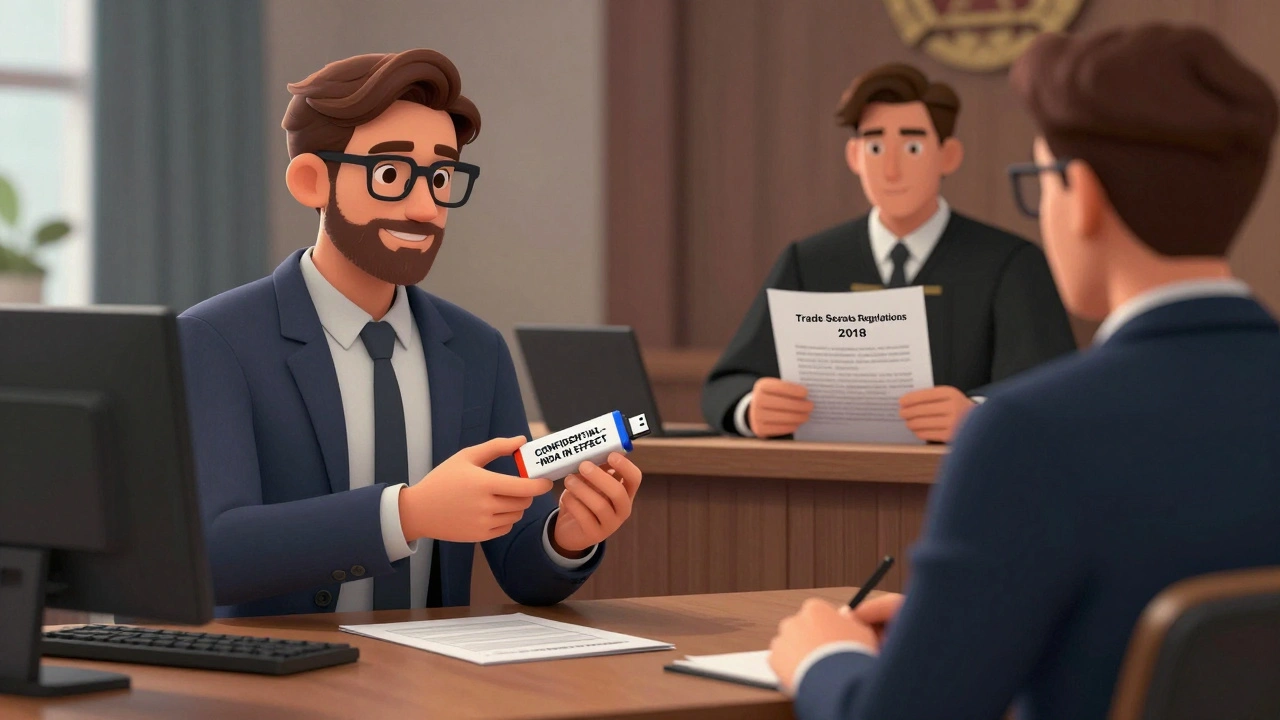
- Forgetting to mark documents: If you hand someone a USB drive labeled “Confidential,” that’s good. If you email it without a header? Courts may say you didn’t treat it as secret. Always label: “CONFIDENTIAL - NDA IN EFFECT.”
- Not getting signatures: Verbal NDAs don’t count in the UK. Even if both sides agree, you need signed documents. Use e-signatures (DocuSign, Adobe Sign)-they’re legally valid.
- Ignoring jurisdiction: If your partner is in Germany but the NDA says “governed by English law,” that’s fine. But if it says “governed by U.S. law”? That’s a red flag. UK courts won’t enforce foreign law unless clearly agreed.
- Not tracking disclosures: Keep a log: Who got what? When? Why? If a leak happens later, you’ll need proof you shared only what was necessary.
When You Should (and Shouldn’t) Use an NDA
Not every conversation needs an NDA. Don’t waste time:
- On initial investor pitches-VCs see dozens of ideas. They won’t sign. Instead, share only what’s necessary and file a provisional patent first.
- With suppliers you already trust-especially if you have a long-term contract with confidentiality clauses.
- When discussing public information-like your website traffic stats, which are already on your homepage.
Do use an NDA when:
- Sharing unreleased product designs
- Discussing merger terms
- Onboarding contractors with access to internal systems
- Working with universities or research labs on joint development
What Happens if Someone Breaks an NDA?
If someone violates your NDA in the UK, you have options:
- Send a cease-and-desist letter: Often enough to stop minor leaks. Done by a solicitor. Costs £500-£1,500.
- Apply for an injunction: A court order to stop further disclosure. Requires proof of immediate harm. Takes 1-3 weeks.
- Sue for damages: You must prove financial loss. That’s hard without records. Keep logs of costs incurred due to the breach.
- Report to the Information Commissioner’s Office (ICO): If personal data was leaked, you may need to report under GDPR rules-even if the NDA didn’t mention it.
Real case: In 2024, a Manchester-based software firm sued a former developer who shared their app architecture with a competitor. The court awarded £220,000 in damages because the NDA clearly defined the protected code, marked documents, and lasted 3 years. The developer had no defense.
Final Checklist: Before You Sign
Before you hit “accept” on any NDA, run through this:
- Is the definition of confidential information specific?
- Are exclusions clearly listed?
- Is the duration reasonable (2-5 years)?
- Are e-signatures allowed?
- Does it say it’s governed by English or Scottish law?
- Have you marked all documents as confidential?
- Have you logged who received what and when?
If you can answer yes to all of these, you’re in a strong position. If not? Go back. Revise. Don’t rush.
Can I use a U.S. NDA template in the UK?
No. U.S. NDAs often include clauses that don’t work in the UK-like unlimited duration or broad non-compete language. UK courts require specificity and reasonableness. Using a U.S. template risks the whole agreement being thrown out. Always use a UK-specific version.
Do I need a lawyer to draft an NDA?
Not always. For simple cases-like sharing a prototype with one contractor-a GOV.UK template with minor tweaks is fine. But if you’re dealing with investors, mergers, or proprietary tech, hire a solicitor. A £800 legal review can save you £80,000 in lost IP.
Can an NDA be口头 (verbal) in the UK?
Technically, yes-but it’s nearly impossible to enforce. UK courts require written evidence of the agreement, including what was shared and the terms of confidentiality. Verbal NDAs are rarely accepted as proof. Always get it in writing.
What if the other party is outside the UK?
You can still use a UK NDA, but make sure it says it’s governed by English or Scottish law. If the other party is in a country with weak IP enforcement, consider adding arbitration clauses or requiring jurisdiction in a UK court. Also, check if the country recognizes UK judgments.
How long should an NDA last in the UK?
For most business secrets, 2 to 5 years is standard. For trade secrets like formulas or algorithms, you can say “indefinitely,” but only if you actively protect the information (e.g., locking files, limiting access). Courts will cancel indefinite terms if you don’t prove ongoing secrecy.