 by
by Press Releases in the UK: How to Write, Distribute, and Build a Media List That Works
31 Dec, 2025Most UK businesses think a press release is just a fancy way to announce something. But if you’re not getting any coverage, it’s not because the news isn’t newsworthy-it’s because your press release doesn’t speak the language of journalists. In 2025, UK media outlets are overwhelmed. They’re not looking for fluff. They’re looking for clear, concise, and credible stories that fit their audience’s interests. Writing a press release that gets picked up isn’t about luck. It’s about structure, timing, and knowing exactly who to send it to.
What Makes a Press Release Actually Work in the UK?
A press release in the UK isn’t a marketing brochure. It’s a news story written in a specific format that journalists can copy-paste-or at least use as a starting point. The best ones follow the inverted pyramid: lead with the most important info, then add context, quotes, and background.
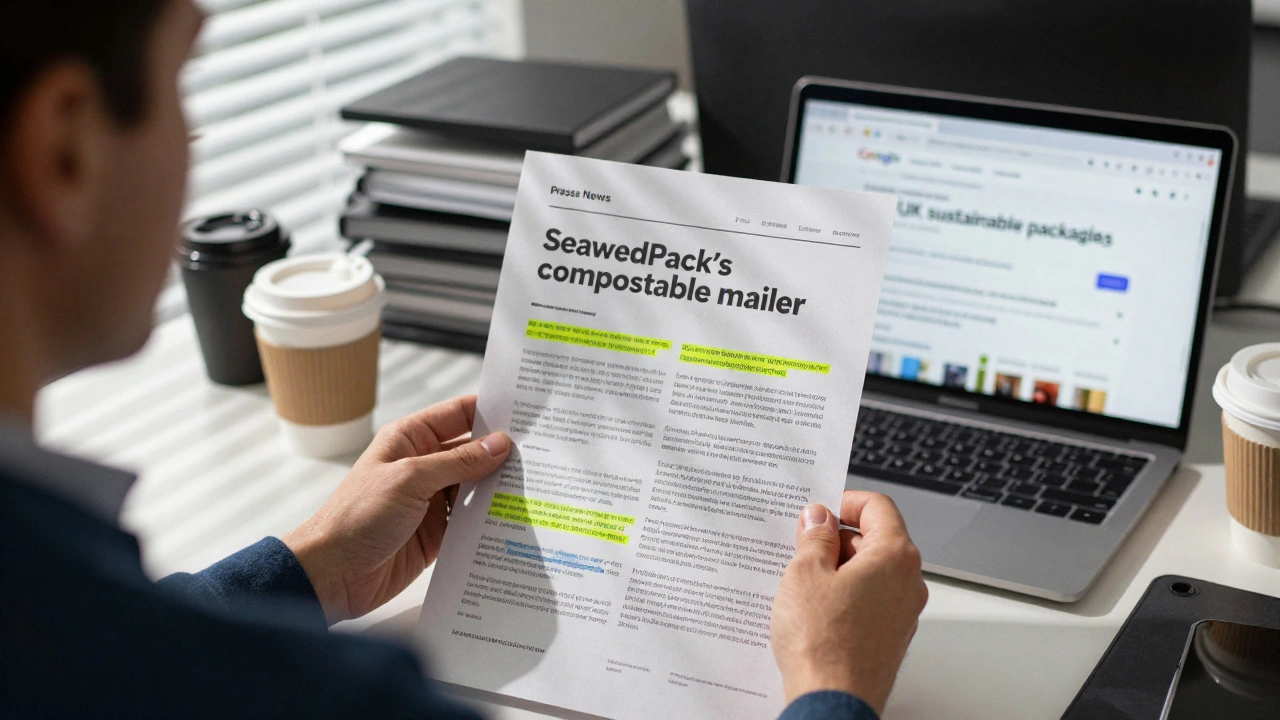
Let’s say you’re a London-based sustainable packaging startup. You’ve just launched a compostable mailer made from seaweed. A weak press release might say: "We’re thrilled to announce our new eco-friendly packaging solution!" That’s not a story. A strong one says: "UK supermarkets are ditching plastic mailers after a new Environment Agency report found 78% of home compostable packaging ends up in landfill. SeaweedPack, a London-based startup, just launched the first UK-certified compostable mailer that breaks down in 14 days-even in home bins. Tesco has already signed a trial with 500,000 units."
Notice the difference? The second version includes: a problem, a statistic, a solution, a named partner, and a scale. Journalists in the UK, especially those covering business or environment beats, will see this as a local story with national relevance. They’ll call you. That’s the goal.
How to Write a Press Release That Gets Read
Start with the headline. It’s not a slogan. It’s a news hook. Avoid words like "innovative," "groundbreaking," or "revolutionary." Those are red flags. Instead, focus on impact, change, or specificity.
Good headline: "Manchester Clinic Reduces Patient Wait Times by 40% with New AI Scheduling System" Bad headline: "Revolutionary AI System Transforms Healthcare in Manchester"
The body should be under 400 words. Journalists don’t read long releases. Use short paragraphs. One idea per paragraph. Always include:
- Who-your company and key person (CEO, founder, lead scientist)
- What-the announcement, clearly stated in the first sentence
- When-launch date, event date, or deadline
- Where-location, especially if it’s UK-specific
- Why-the reason this matters to the public or industry
Include a quote from a real person-not a marketing manager. A CEO, a clinician, a customer. Something authentic: "We’ve spent two years testing this with 300 patients. The results speak for themselves," says Dr. Helen Carter, Lead Clinician at Manchester Health Hub. That’s the kind of quote journalists use verbatim.
End with boilerplate: a 2-3 sentence company description. No buzzwords. Just facts: "SeaweedPack is a UK-based B Corp founded in 2022. Its compostable packaging is certified by the OK Compost Home standard and used by 120 UK e-commerce brands."
Attach high-res images (JPEG or PNG, under 2MB) and a logo. Never embed them in the text. Journalists download them separately.
Where to Distribute Press Releases in the UK
Not all press release distribution services are equal. Free services like PR Newswire or Business Wire cost money and often don’t target UK media well. Many UK journalists ignore them.
The best approach is hybrid: use a UK-focused distributor for reach, but also send targeted emails to journalists directly. Services like Pressat and UK Press Release Distribution have strong relationships with regional and national outlets, including the BBC, The Guardian, and local papers like the Manchester Evening News.
But here’s the truth: 80% of coverage comes from journalists who already know your industry. That’s why building your own media list is more valuable than paying for a blast.
How to Build a Media List That Actually Gets Responses
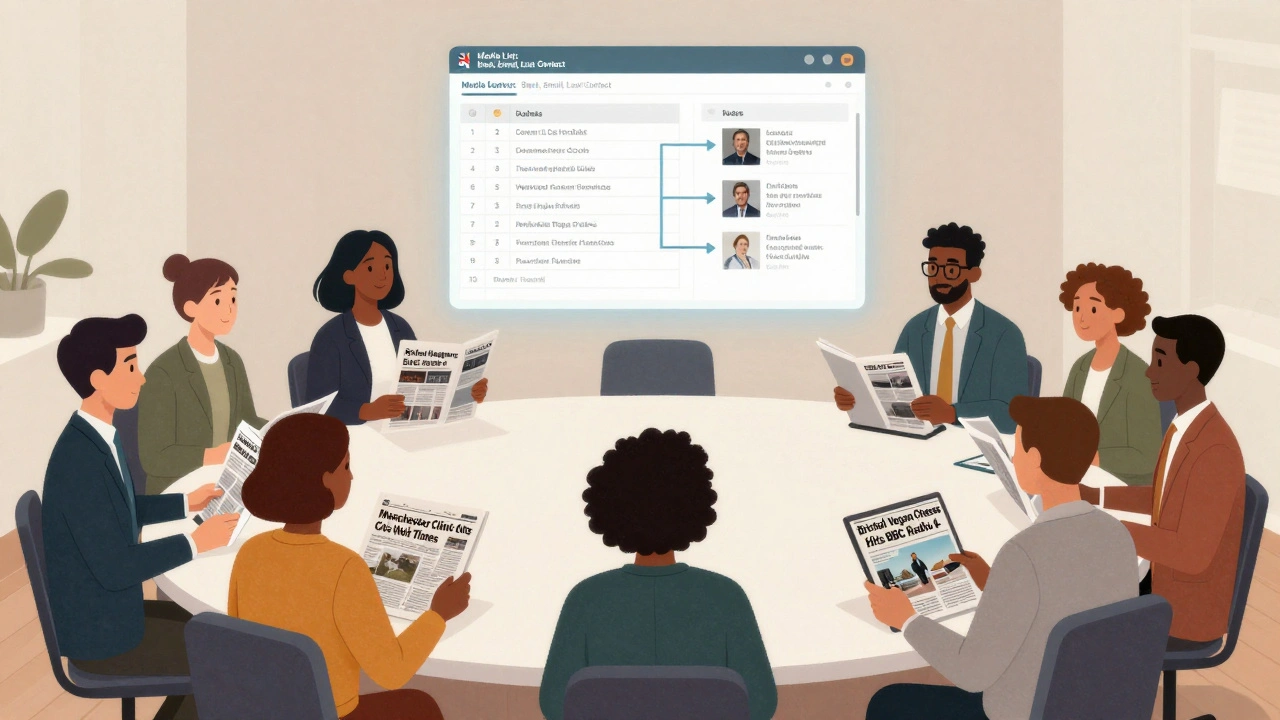
Forget buying lists. They’re outdated. Instead, build your own by watching what journalists are covering.
Start with Google News. Search for keywords like "UK sustainable packaging," "AI healthcare UK," or "local business growth." Look at the bylines. Who’s writing about your niche? Save their names, outlets, and email addresses. Use LinkedIn to find their profiles-many journalists list their contact info there.
Check out the media directories on the BBC Newsroom, The Guardian’s contributor page, and regional press associations like the Society of Editors. You’ll find direct emails and editorial calendars.
Don’t just collect names. Organize them by beat:
- Business & Finance: Financial Times, City AM, BusinessLive
- Environment: The Guardian Environment Desk, BBC News Environment, The Independent Green
- Technology: TechCrunch UK, Wired UK, ZDNet
- Local: Manchester Evening News, Bristol Post, Edinburgh Evening News
Keep a spreadsheet. Include columns for: Name, Outlet, Beat, Email, Last Contact, Notes. Update it every 3 months. Journalists change beats. Outlets shut down. You need current data.
When you send a release, personalize the email. Don’t say "Dear Editor." Say: "Hi Sarah, I saw your piece on plastic waste in the Thames last week. We’ve just launched a solution that’s already being used by 120 UK brands. Thought you might find it relevant." That’s 10x more likely to get a reply than a generic blast.
Timing Matters More Than You Think
Send your press release on a Tuesday or Wednesday morning. That’s when UK journalists are catching up after Monday’s backlog and before Wednesday’s deadline rush. Avoid Mondays (too busy) and Fridays (everyone’s leaving early).
Also, time it with real events. Launching a product? Send the release 5-7 days before the launch date. Announcing a partnership? Send it the day after the signing. If you’re tied to a holiday or event-like Earth Day or Small Business Saturday-plan ahead. Journalists plan their stories months in advance.
And never send a press release on a public holiday. The UK has eight bank holidays a year. If you send one on Boxing Day, it’ll get buried until January.
What Not to Do
Don’t pitch the same story to 50 journalists at once. That’s spam. Journalists talk to each other. If they see the same release from 10 different sources, they’ll ignore it.
Don’t include hyperlinks in the body of the release. Many newsrooms block them for security. Put links in the boilerplate or in a separate email.
Don’t follow up too soon. Wait 3-5 business days. If you haven’t heard back, send one polite email: "Just checking in-did you get a chance to review the release on [topic]? Happy to provide more info or arrange an interview." That’s it. No pressure.
Don’t lie or exaggerate. UK journalists have deep industry networks. If you claim your product is "used by 1000+ brands" but you’ve only signed 12, someone will find out. Reputation is everything.
Real Results: What Success Looks Like
A Bristol-based vegan food brand sent a press release to 12 targeted journalists after launching a new line of plant-based cheese. They didn’t use a distribution service. They sent personalized emails using their own media list. Three journalists replied. One wrote a full feature in the Bristol Post. Another picked it up for BBC Radio 4’s "Food Chain." The result? 17,000 new website visitors in 48 hours. Sales jumped 210% in the first week.
That’s not magic. That’s strategy.
Next Steps: Your 7-Day Press Release Action Plan
- Day 1: Pick one recent company update-new product, partnership, milestone, or data point.
- Day 2: Write the press release using the inverted pyramid format. Keep it under 400 words.
- Day 3: Build your media list. Find 10 journalists covering your niche in the UK. Save their names and emails.
- Day 4: Personalize your email pitch. No templates. One sentence about why you’re emailing them.
- Day 5: Send the release to your 10 journalists. Use a UK distributor like Pressat for wider reach.
- Day 6: Follow up with one polite email to those who haven’t replied.
- Day 7: Track results. What outlets picked it up? What traffic did it drive? Use that to refine your next release.
Press releases in the UK aren’t dead. They’ve just gotten smarter. The ones that work now are the ones that feel like news-not ads. If you treat them that way, you’ll get noticed.
Do press releases still work in the UK in 2025?
Yes, but only if they’re written like real news stories. Journalists ignore generic marketing announcements. A press release that includes a clear problem, a local angle, a verified statistic, and a direct quote from a credible source still gets picked up-especially by regional media and niche outlets.
What’s the best way to distribute a press release in the UK?
Use a UK-focused distributor like Pressat or UK Press Release Distribution for broad reach, but never rely on them alone. The real value comes from sending personalized emails to journalists you’ve researched. Half of all coverage comes from direct outreach, not distribution services.
How many journalists should I email per press release?
Start with 10-15 targeted journalists. Quality over quantity. Sending to 100 people with the same email guarantees you’ll be ignored. Focus on those who’ve written about your industry before. A single well-placed story from a respected outlet is worth more than 50 generic blasts.
Should I use a PR agency for press releases in the UK?
Only if you have a complex story or need ongoing media relations. For most small and mid-sized UK businesses, you can handle press releases yourself. The tools are free: Google News, LinkedIn, and a spreadsheet. Agencies charge £1,500-£5,000 per campaign. You can get similar results with 10 hours of focused work.
What’s the biggest mistake businesses make with press releases?
Treating them like advertisements. If your release reads like a product page, journalists will skip it. The best releases answer: Why should I care? Who does this affect? What’s new? If you can’t answer those in the first two sentences, rewrite it.