
 by
by Pricing Experiments for UK Businesses: A/B Testing Models and Offers
3 May, 2026Getting the price wrong can sink a business faster than bad product quality. In the UK market, where consumer confidence fluctuates with inflation and economic uncertainty, static pricing is a risky gamble. You aren't just setting a number; you are defining your brand's value proposition in real-time. This is why pricing experiments are systematic tests to determine optimal price points and package structures have moved from optional tactics to essential survival strategies for modern companies.
Most business owners fear that changing prices will alienate customers. They stick to what they know, even if it means leaving money on the table or losing market share to more agile competitors. The truth is that customers don't care about your cost base; they care about perceived value. By using data-driven methods like A/B testing is a method of comparing two versions of a webpage or offer to see which performs better, you remove the guesswork. You stop arguing about gut feelings and start making decisions based on actual revenue impact.
Why Traditional Pricing Fails in the Current UK Market
The UK economic landscape has shifted dramatically. Post-pandemic recovery, supply chain disruptions, and rising operational costs have forced businesses to rethink their margins. Traditional pricing models, often set once a year during budget planning, are too slow to react to these changes. If you raised prices in early 2023 and haven't adjusted since, you might be operating at a loss without realizing it.
Consumers are also smarter. With tools like price comparison engines and transparent review systems, shoppers know exactly what they should pay. If your price doesn't align with the value they perceive, they will click away. Static pricing assumes that customer behavior is constant, which is rarely true. Seasonal demand, competitor promotions, and macroeconomic factors all influence willingness to pay. Ignoring these variables leads to suboptimal revenue.
Furthermore, the risk of 'price blindness' is real. Many managers assume customers notice every small price change. Research suggests otherwise. Customers often tolerate small increases if the value remains consistent, but they punish large, unexplained jumps. Without testing, you don't know where that line is. You might be underpricing significantly, thinking you need to be cheaper to win, when in reality, customers would happily pay more for the same service.
Core Principles of Effective Pricing Experiments
Before launching any test, you need a solid foundation. Randomly changing prices without a hypothesis is not an experiment; it's chaos. Effective pricing experiments rely on three core principles: clarity, control, and statistical significance.
- Clarity of Goal: Are you trying to maximize revenue, increase profit margin, or acquire new customers? Each goal requires a different approach. For example, acquiring customers might mean lowering prices temporarily, while maximizing profit might involve raising them slightly.
- Control Groups: You must always have a baseline. Show one group your current price and another group the new price. Without a control group, you can't attribute changes in sales to the price change rather than external factors like seasonality or marketing campaigns.
- Statistical Significance: Don't make decisions based on small sample sizes. If you test a new price on ten people and get five sales, that's not enough data. Use calculators to determine how many visitors you need to ensure your results are reliable, typically aiming for a 95% confidence level.
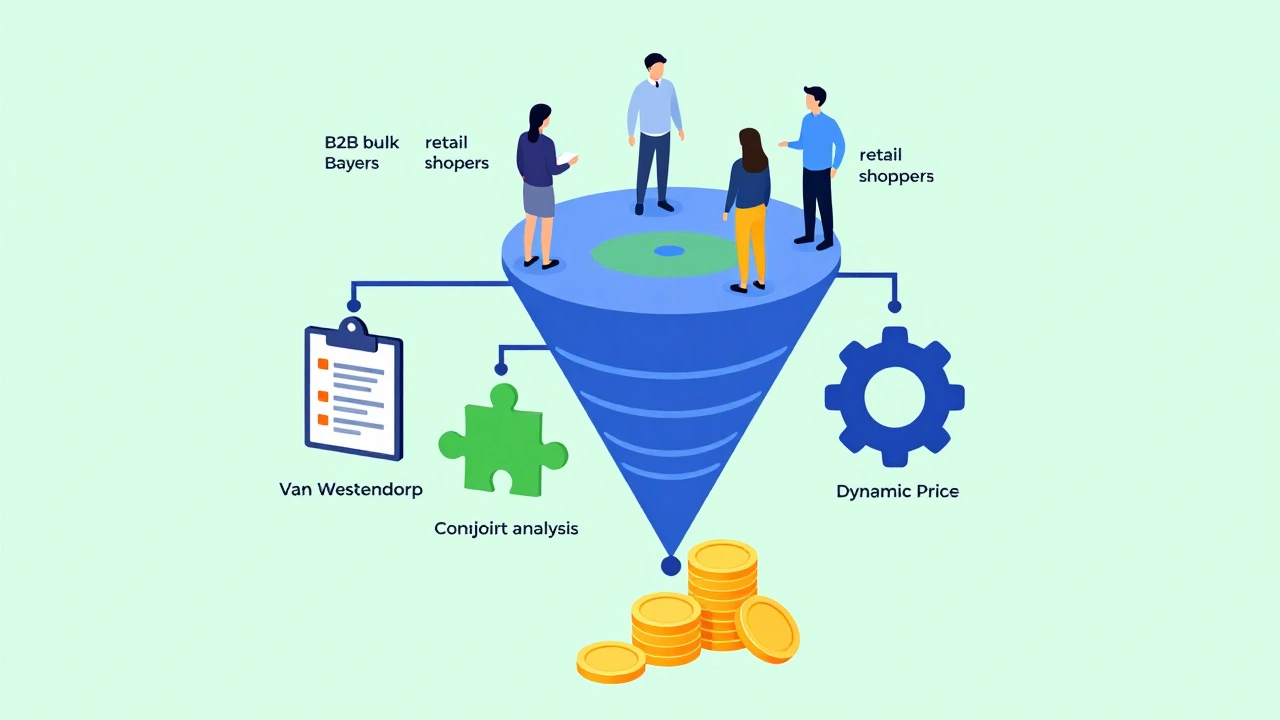
Another critical principle is segmentation. Not all customers are the same. A B2B client buying in bulk has different price sensitivity than a retail buyer purchasing a single unit. Segmenting your audience allows you to run targeted experiments. For instance, you might test a higher price point exclusively on returning customers who already trust your brand, while keeping introductory offers lower for new prospects.
Setting Up A/B Tests for Price Points
A/B testing is the most straightforward way to experiment with prices. It involves showing two different price options to similar segments of your audience simultaneously. The key is to change only one variable: the price. Everything else-the copy, the images, the layout-must remain identical.
To set this up, you'll need a platform that supports split testing. Most major e-commerce platforms and website builders have built-in tools or plugins for this. If you're using a custom solution, you may need a dedicated experimentation platform. Define your metrics clearly before starting. Conversion rate is obvious, but average order value (AOV) and total revenue per visitor (RPV) are often more telling.
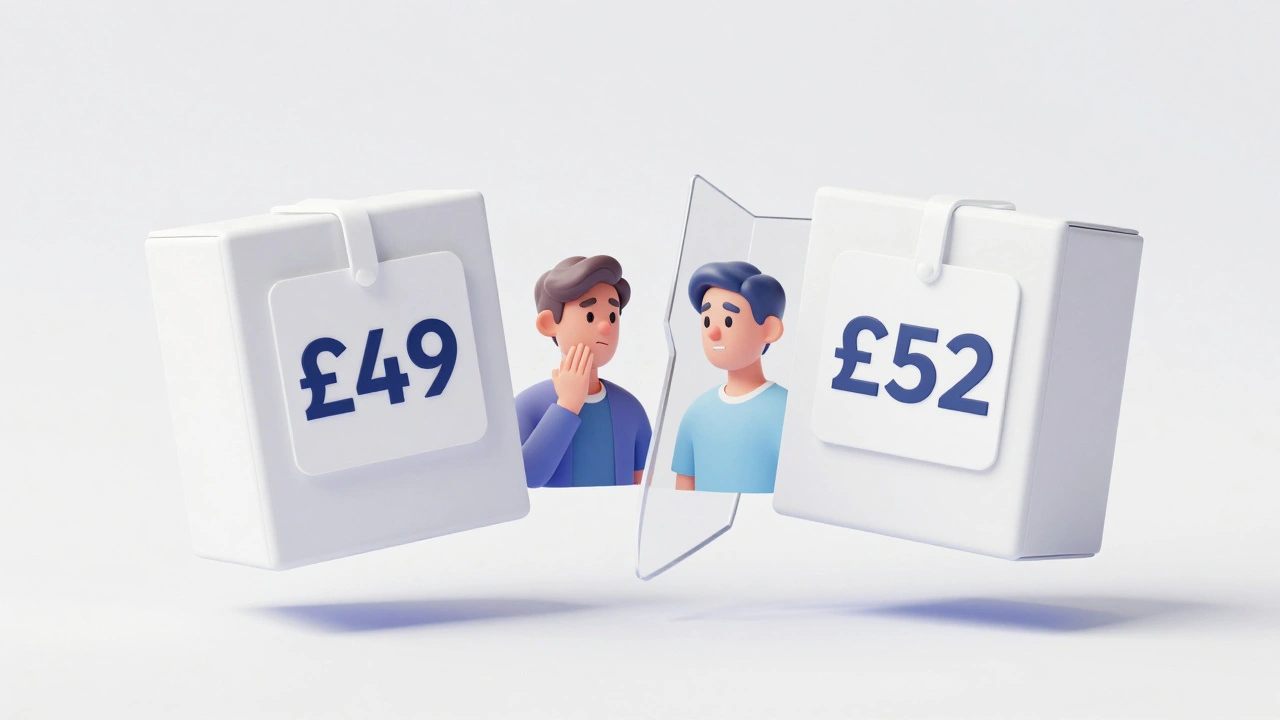
Consider the magnitude of the change. Small adjustments, like moving from £49 to £52, are less risky and easier to justify to stakeholders. Large jumps, like doubling the price, require more robust testing and clear communication of added value. Start small. Test a 5-10% increase first. If it converts well, you can push further. If it drops conversions, analyze why. Did the value proposition fail to support the higher price?
Timing matters too. Run tests during stable periods. Avoid testing during major sales events like Black Friday or Christmas, as external noise can skew results. Aim for a test duration of at least two weeks to capture weekly cycles in consumer behavior.
Beyond Simple A/B: Advanced Pricing Models
While simple A/B testing is great for quick wins, complex offerings require more nuanced approaches. Here are three advanced models worth considering for UK businesses looking to deepen their pricing strategy.
1. Van Westendorp Price Sensitivity Meter
This survey-based method asks customers four questions: at what price is the product too expensive, too cheap, a good value, and a bargain? Analyzing the responses gives you a price range where customers feel comfortable. It's particularly useful for new products where no historical data exists. It helps identify the 'indifference price' and the 'optimal price point.'
2. Conjoint Analysis
This technique measures how much value customers place on specific features. Instead of asking 'how much would you pay?', you present different bundles of features and prices. For example, does adding 24/7 support justify a £10 monthly increase? Conjoint analysis reveals trade-offs, helping you design packages that maximize perceived value while protecting margins.
3. Dynamic Pricing Algorithms
For high-volume businesses, manual testing isn't scalable. Dynamic pricing uses algorithms to adjust prices in real-time based on demand, inventory, and competitor activity. Airlines and ride-sharing apps popularized this, but it's increasingly used in retail and SaaS. However, it requires sophisticated infrastructure and careful monitoring to avoid customer backlash over perceived unfairness.
| Method | Best For | Data Required | Complexity |
|---|---|---|---|
| A/B Testing | Existing products, minor adjustments | High traffic volume | Low |
| Van Westendorp | New products, initial pricing | Survey respondents | Medium |
| Conjoint Analysis | Feature-heavy products, bundling | Detailed feature sets | High |
| Dynamic Pricing | High-volume, perishable inventory | Real-time data feeds | Very High |
Designing Offers That Convert
Pricing isn't just about the number; it's about the offer structure. How you bundle and present your product significantly impacts conversion. Two powerful psychological levers here are anchoring and decoy effects.
Anchoring involves presenting a high-priced option first to make subsequent options seem reasonable. For example, if you sell a basic plan for £20, a standard for £40, and a premium for £80, the £40 plan looks like a smart middle ground. The £80 anchor makes the £40 price feel affordable, even if it's your target profit driver.
The decoy effect is subtler. Introduce a third option that is slightly inferior to the target option but similarly priced. Say you have a small coffee for £2 and a large for £3. Add a medium for £2.80. Suddenly, the large looks like a steal because it's only 20p more than the medium. The medium acts as a decoy, nudging customers toward the large size.
Test these structures rigorously. Does adding a 'bundle' option increase average order value? Does removing the cheapest tier improve overall profitability by filtering out low-value customers? Use multivariate testing to explore combinations of price and package structure.
Legal and Ethical Considerations in the UK
Running pricing experiments in the UK requires adherence to strict regulations. The Competition and Markets Authority (CMA) monitors practices that could mislead consumers or restrict competition. Transparency is non-negotiable.
If you use dynamic pricing, ensure it doesn't discriminate unfairly. Algorithmic bias can lead to different prices for different users based on personal data, which may violate GDPR and consumer protection laws. Always disclose if prices are subject to change due to demand or other factors. Hidden fees or last-minute price hikes during checkout are illegal under the Consumer Rights Act 2015.
Additionally, be cautious with 'fake' discounts. Advertising a 'normal price' that you never actually charged is misleading. Ensure your reference prices are genuine and recent. When running A/B tests, inform participants if required by your privacy policy, though generally, anonymous aggregate data is acceptable. Ethics matter; customers who feel manipulated will leave negative reviews and damage your brand reputation long-term.
Implementing Your Strategy: A Step-by-Step Guide
Ready to start experimenting? Follow this practical roadmap to launch your first pricing experiment safely and effectively.
- Define Your Objective: Decide if you want to boost revenue, profit, or market share. Write this down clearly.
- Select a Product: Choose a product with sufficient traffic and sales history. Avoid testing on niche items with low volume.
- Hypothesize: Predict the outcome. "If we raise the price by 10%, conversion will drop by less than 5%, increasing total revenue."
- Choose Your Method: Start with simple A/B testing for existing products. Use surveys for new ones.
- Set Up the Test: Configure your platform to show variant A (control) and variant B (test) randomly to equal segments.
- Monitor and Adjust: Check daily for technical issues. Ensure tracking pixels are firing correctly.
- Analyze Results: After the test period, calculate statistical significance. Look at revenue per visitor, not just conversion rate.
- Iterate: Implement the winning variant. Then, move to the next question. Can we go higher? Should we bundle?
Document everything. Create a pricing log that tracks every experiment, its result, and the rationale behind the final decision. This builds institutional knowledge and prevents repeating failed tests.
Common Pitfalls to Avoid
Even experienced marketers stumble into traps. Watch out for these common errors.
Stopping Too Early: Impatience leads to false positives. Wait for statistical significance. Rushing conclusions can cause you to adopt a worse price permanently.
Ignoring External Factors: Did a competitor launch a sale? Was there a news event affecting spending? Contextualize your data. Anomalies might not be about your price.
Changing Multiple Variables: If you change the price and the headline simultaneously, you won't know what drove the change. Isolate variables.
Neglecting Customer Feedback: Quantitative data tells you what happened; qualitative data tells you why. Monitor reviews and support tickets during tests. If customers complain about value, investigate immediately.
How long should a pricing A/B test run?
Ideally, run tests for at least two to four weeks. This captures weekly cycles in consumer behavior and ensures you have enough data for statistical significance. Shorter tests risk false positives due to random fluctuations.
Is it legal to show different prices to different users in the UK?
Yes, provided it is not discriminatory based on protected characteristics and is transparent. However, dynamic pricing must comply with GDPR and consumer protection laws. Avoid hidden fees or misleading reference prices.
What is the best metric to measure pricing success?
Revenue Per Visitor (RPV) is often the best metric. It combines conversion rate and average order value, giving a holistic view of financial impact. Profit margin is also crucial if cost structures vary significantly between tiers.
Can I test prices on B2B services?
Yes, but B2B pricing is often negotiated. Focus on testing list prices, package structures, and discount thresholds. Surveys and conjoint analysis are often more effective than live A/B tests for high-ticket B2B items.
How do I handle customer complaints during a price test?
Monitor feedback channels closely. If complaints spike, pause the test. Ensure your value proposition clearly justifies the price. Sometimes, adding a brief explanation of value near the price point can mitigate negative reactions.