 by
by Profit and Loss Statement in the UK: How to Analyse Business Performance
26 Feb, 2026Every small business in the UK, whether it’s a bakery in Bristol or a software startup in Manchester, needs to know one thing: are they making money? Not just sales, not just cash in the bank-but real, lasting profit. That’s where the Profit and Loss Statement (P&L) comes in. It’s not a fancy report for accountants. It’s the heartbeat of your business health.
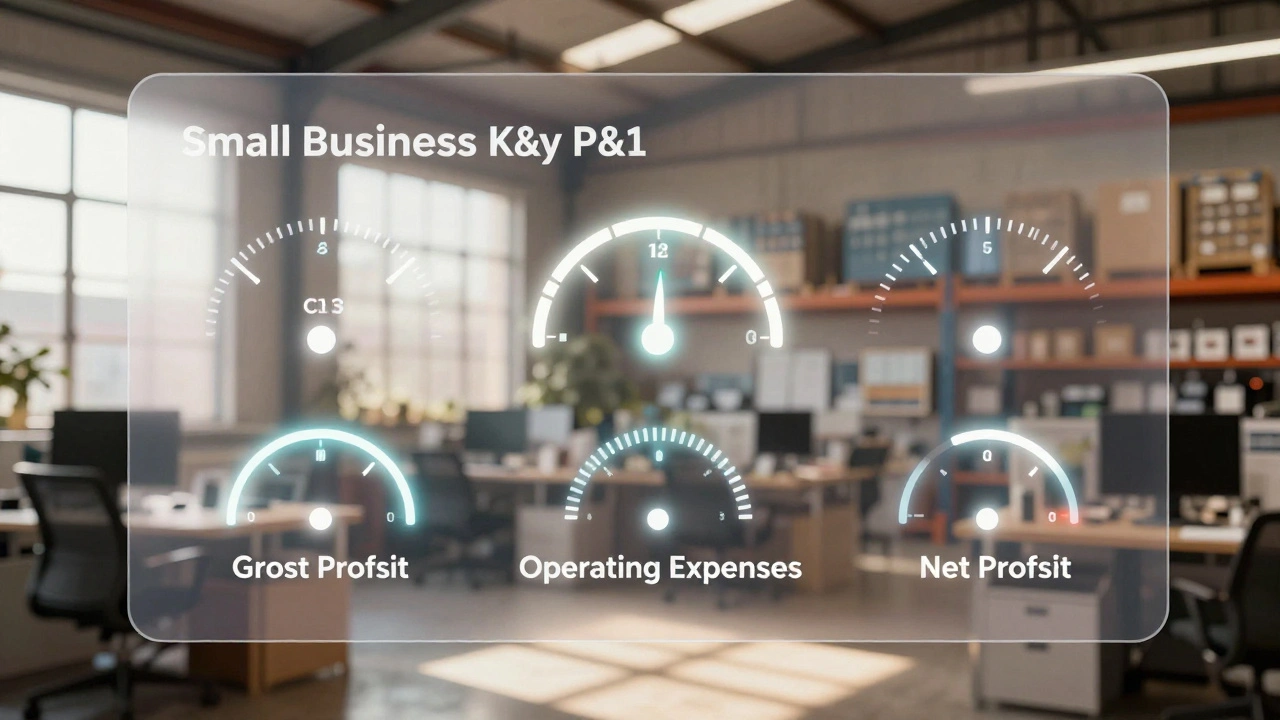
Think of it like a car dashboard. You don’t just look at the fuel gauge-you check the speed, the engine temperature, the oil pressure. The P&L does the same for your business. It shows you exactly where your money comes from, where it goes, and what’s left over. Skip it, and you’re driving blind.
What Exactly Is a Profit and Loss Statement?
A Profit and Loss Statement, also called an Income Statement, is a financial report that covers a specific time period-usually a month, quarter, or year. It lists all your revenue and all your expenses during that time, then calculates your net profit or loss.
In the UK, businesses must follow UK GAAP (Generally Accepted Accounting Principles) or IFRS if they’re larger or publicly traded. But even sole traders and small companies should use the same basic structure. It’s simple:
- Revenue (also called turnover): All money earned from sales of goods or services.
- Cost of Goods Sold (COGS): Direct costs tied to making or buying what you sell-materials, labour, packaging, shipping.
- Gross Profit: Revenue minus COGS. This tells you how much profit you make before overheads.
- Operating Expenses: Rent, utilities, salaries (not in COGS), marketing, software, insurance, bank fees.
- Operating Profit: Gross profit minus operating expenses. This is your core business performance.
- Other Income/Expenses: Interest earned, loan payments, one-off gains or losses.
- Net Profit (or Loss): The final number. Money left after everything is paid.
Here’s a real example from a London-based e-commerce store in 2025:
| Category | Amount (£) |
|---|---|
| Revenue | 420,000 |
| Cost of Goods Sold | 210,000 |
| Gross Profit | 210,000 |
| Operating Expenses | 145,000 |
| Operating Profit | 65,000 |
| Interest Expense | 8,000 |
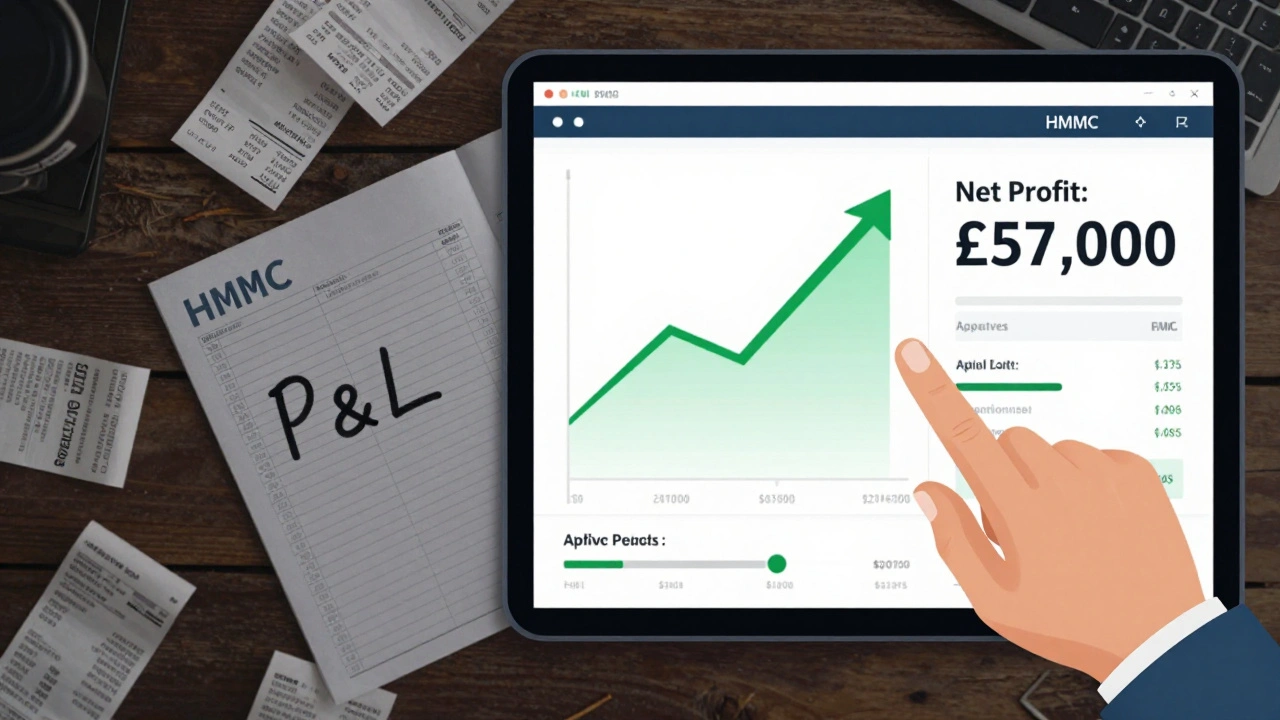
| Net Profit | 57,000 |
That £57,000 net profit? That’s what’s left after paying suppliers, staff, rent, ads, taxes, and loans. It’s not cash in the bank-because cash flow is different-but it’s the true measure of profitability.
Why UK Businesses Can’t Ignore This
In 2025, HMRC reported that over 60% of small businesses in the UK failed within five years. Many of them didn’t go bankrupt because of bad products. They went under because they didn’t understand their own numbers.
Here’s what happens when you ignore your P&L:
- You think you’re doing well because sales are up-but you’re giving away too much in discounts or paying too much in delivery fees.
- You keep hiring because you feel busy-but your operating expenses are climbing faster than revenue.
- You miss tax deadlines because you didn’t track profit accurately, leading to penalties.
- You can’t get a loan because banks ask for your last 12 months’ P&L-and yours shows declining margins.
Even if you’re not legally required to file a full P&L (like a sole trader under the £85,000 VAT threshold), you still need it. It’s your early warning system.
How to Build Your Own P&L (Step by Step)
You don’t need QuickBooks or an accountant to start. Here’s how to build one manually, using free tools like Excel or Google Sheets.
- Collect your sales data-from your till, online store, bank statements. Add up every pound earned in the period.
- Identify direct costs-what did it literally cost to deliver each product or service? For a plumber, that’s parts and fuel. For a consultant, it’s software subscriptions and travel.
- List all overheads-rent, phone, internet, payroll, advertising, accounting fees. Don’t forget subscriptions you forgot about-like Canva Pro or Shopify.
- Calculate gross profit: Revenue minus COGS.
- Subtract operating expenses from gross profit to get operating profit.
- Add or subtract interest, taxes, or one-off items (like selling equipment).
- Final number = Net Profit. If it’s negative, you’re losing money.
Do this every month. Even if it takes two hours. You’ll start spotting patterns: "Every April, our ad spend spikes but sales don’t rise." Or, "Our staff hours are up 20%, but revenue stayed flat. Are we overstaffed?"
What to Look For: The 3 Red Flags in UK P&Ls
Not all losses are equal. Here are the three most dangerous signs in a UK business P&L:
1. Shrinking Gross Profit Margin
Take the example above: £210,000 gross profit on £420,000 revenue = 50% margin. That’s healthy. But if next month it drops to 35%, something’s wrong.
Why? Maybe your supplier raised prices. Maybe you’re discounting too much to compete. Or you’re selling more low-margin items. If your gross margin falls below 30% for services or 40% for retail, you’re in trouble. You need to raise prices, cut COGS, or change your product mix.
2. Operating Expenses Eating Up Profit
If your operating expenses are over 70% of revenue, you’re burning cash. For example, if you make £500,000 in sales but spend £380,000 on rent, salaries, and marketing, your operating profit is just £120,000. That’s barely 24%-way too low.
UK businesses often overspend on things like:
- Too many admin staff
- Expensive office space
- Underused software subscriptions
- Overpaying for delivery services
Review these every quarter. Cancel what you don’t use. Negotiate better rates. Switch to remote work if it makes sense.
3. Net Profit Is Zero or Negative
If your net profit is below zero for three months straight, you’re not just losing money-you’re burning through your savings. That’s a red alarm.
But don’t panic. Look at the cause:
- One-time cost? (e.g., buying new equipment)
- Seasonal dip? (e.g., winter sales slump)
- Structural problem? (e.g., pricing too low)
If it’s structural, you need to fix the model. Not just cut costs. Raise prices. Improve conversion. Reduce customer acquisition cost.
How P&Ls Help You Get Funding or Sell Your Business
When you apply for a business loan in the UK, lenders don’t care about your Instagram followers. They care about your last 12 months of P&Ls. They want to see:
- Consistent or growing net profit
- Stable or improving gross margins
- Controlled operating expenses
Same goes if you want to sell your business. Buyers look at EBITDA (Earnings Before Interest, Taxes, Depreciation, and Amortisation)-which comes straight from your P&L. A business with £100,000 EBITDA might sell for 4-6x that. But if your P&L shows wild swings or negative profit? The offer drops.
One Manchester-based marketing agency doubled its sale price in 2024 just by cleaning up their P&L. They stopped lumping personal expenses into the business. They fixed inconsistent revenue recording. They showed three years of steady growth. Buyers saw stability. They paid 5.5x EBITDA.

Common Mistakes UK Business Owners Make
Even smart people mess up their P&Ls. Here’s what goes wrong:
- Confusing revenue with cash: You invoice £10,000 in December but get paid in January. That £10,000 still counts as revenue in December.
- Ignoring personal expenses: Paying your rent from the business account? That’s not an expense-it’s a withdrawal. It doesn’t belong on the P&L.
- Not tracking COGS properly: If you’re a retailer, your COGS should include shipping, import duties, and packaging-not just the product cost.
- Using outdated templates: Many free templates online don’t match UK tax rules. Always use HMRC-approved formats.
- Only checking once a year: If you wait until tax season, it’s too late to fix problems.
Tools That Make P&L Tracking Easier in the UK
You don’t need to do this manually forever. Here are the most trusted tools for UK small businesses:
- FreeAgent: Built for UK sole traders and limited companies. Auto-imports bank feeds, calculates VAT, generates P&L reports.
- QuickBooks Online: Popular with freelancers and small teams. Integrates with UK banks and HMRC for Making Tax Digital.
- Xero: Great for businesses with multiple users. Strong inventory and payroll features.
- Excel/Google Sheets: Still the best way to learn the structure. Use templates from HMRC’s website.
Most of these tools let you export your P&L as PDF or Excel for lenders or accountants. That’s worth the monthly fee.
Final Thought: Your P&L Is Your Business’s Mirror
It doesn’t lie. It doesn’t sugarcoat. If your sales are up but your net profit is down, your P&L is screaming at you. Ignore it, and you’ll keep making the same mistakes. Use it, and you’ll make smarter decisions-every week.
Start small. Do one month. Then two. Then every month. You’ll be amazed at how clearly you start to see your business’s true performance. And that’s the only way to grow for real.
Is a Profit and Loss Statement mandatory for all UK businesses?
No, not all businesses are legally required to file a full P&L. Sole traders under the VAT threshold don’t need to submit one to HMRC. However, every business-no matter how small-should prepare one internally. It’s essential for understanding profitability, managing cash flow, and securing loans or investors. Even if it’s not required by law, it’s required for survival.
What’s the difference between gross profit and net profit?
Gross profit is what’s left after subtracting the direct costs of making your product or service (like materials and labour). Net profit is what’s left after you pay everything-including rent, salaries, taxes, and interest. Gross profit tells you how efficiently you produce. Net profit tells you if your whole business is working.
How often should I update my Profit and Loss Statement?
Update it monthly. Quarterly is the absolute minimum. If you only check it once a year, you’re flying blind. Monthly updates let you spot trends early-like rising delivery costs or falling customer retention-before they turn into big problems. Many successful UK businesses review their P&L every Monday morning with their team.
Can I use my bank statement instead of a P&L?
No. A bank statement shows cash movement-not profit. You might have £50,000 in your account, but if you owe £30,000 in unpaid invoices, you’re not profitable. Or you might have £10,000 in the bank but spent £50,000 on equipment last month. That’s not profit-it’s a one-time expense. Only a P&L, built with accrual accounting, shows true financial performance.
What if my business has negative net profit?
Negative net profit means you’re spending more than you earn. First, check if it’s temporary-like a big one-time expense or slow season. If it’s ongoing, you need to act: raise prices, cut unnecessary costs, improve conversion rates, or stop selling low-margin products. If you’ve been negative for 3+ months, talk to an accountant. Ignoring it will drain your savings fast.