
 by
by Recovery Planning in the UK: How to Get Back to Normal After a Crisis
27 Dec, 2025When a crisis hits-whether it’s a flood in Manchester, a power grid failure in London, or a sudden supply chain collapse-the real test isn’t how well you reacted in the moment. It’s how fast and how smart you recover. In the UK, businesses and public services have learned the hard way that waiting for things to go back to normal on their own is a recipe for long-term damage. Recovery planning isn’t optional anymore. It’s the difference between surviving and disappearing.
What Recovery Planning Actually Means
Recovery planning isn’t just about having a backup drive or a list of emergency contacts. It’s a detailed, tested roadmap that answers one simple question: How do we get back to doing what we do, and doing it well, after something breaks?
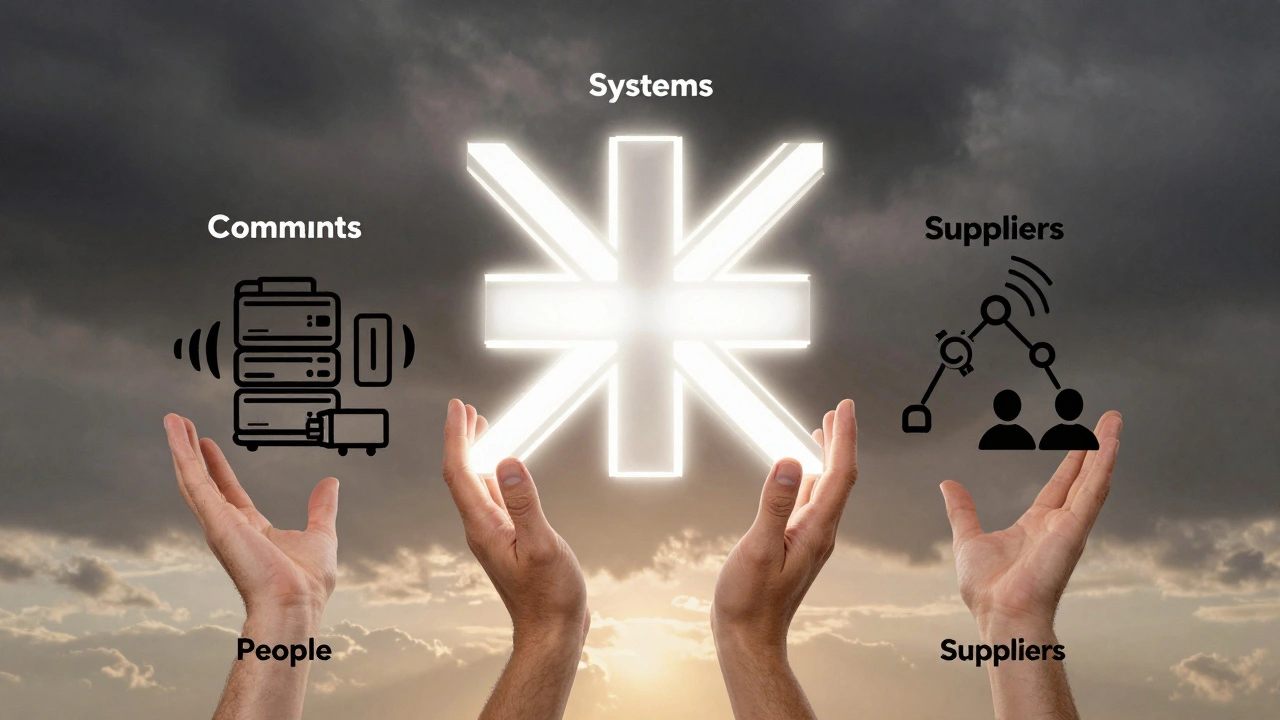
Think of it like fixing a car after an accident. You don’t just replace the broken bumper. You check the engine, the alignment, the brakes. You make sure nothing else got damaged in the crash. Recovery planning does the same for your operations. It looks at your people, your systems, your suppliers, your cash flow-and figures out what needs to be fixed, in what order, and by when.
In the UK, the Cabinet Office’s Business Continuity Guidance and the National Cyber Security Centre’s recovery frameworks have become standard references. But most organisations still treat recovery planning like a checkbox. They write a document, store it on a shared drive, and forget about it. That’s not planning. That’s wishful thinking.
Five Real-World Crises That Changed UK Recovery Planning
Here’s what actually happened in five recent UK crises-and what businesses learned from them:
- 2021 Suez Canal Blockage: UK supermarkets ran out of fresh produce. Companies with multi-sourcing strategies and real-time inventory tracking recovered in days. Others took weeks and lost customers for good.
- 2022 NHS Staff Shortages: Hospitals that had cross-trained staff and digital appointment systems kept operating. Those relying on paper records and rigid schedules faced cancellations and delays that lasted months.
- 2023 Storm Henk Flooding: Small businesses in Yorkshire lost physical records, cash registers, and even their storefronts. Those with cloud backups, remote access to accounting software, and insurance tied to digital assets reopened faster.
- 2024 Cyberattack on a Major UK Rail Operator: The system went down for 72 hours. Only those with offline ticketing protocols and pre-approved emergency transport partnerships kept passengers moving.
- 2025 Energy Price Shock: Manufacturers in the Midlands shut down for days. Those with energy usage monitoring tools and flexible production schedules switched to off-peak hours and kept running.
The pattern? The winners didn’t have more money. They had better plans.
The Four Pillars of a Working Recovery Plan
A recovery plan that actually works has four parts. Skip one, and your plan collapses.
- People First: Who’s responsible for what? Who can make decisions if the boss is out? Who’s trained to handle IT outages, supply chain issues, or customer panic? Your recovery plan must name names, not roles. “The Operations Manager” won’t cut it. “Sarah Chen, Head of Operations, reachable at +44 7911 123456” will.
- Systems and Data: Can you access your payroll if your office is flooded? Can your sales team take orders if the website is down? Cloud backups are basic. But do you have offline access to customer lists? Can you print invoices without your ERP system? Test this. Don’t assume.
- Suppliers and Partners: Who are your backup suppliers? Do you have contracts with alternative logistics providers? Have you tested their response times? One UK bakery lost 80% of its flour supply after a single port strike. They didn’t have a backup-and didn’t know their main supplier had only one warehouse.
- Communication: Who tells customers? Who tells staff? Who tells the press? A delay of even 12 hours in communication can turn a minor disruption into a reputation disaster. Have a template ready. Pre-approved messages. Pre-approved channels. Don’t write them during a crisis.

How to Build a Recovery Plan (Without Spending Months)
You don’t need a team of consultants. You don’t need fancy software. Start here:
- Identify your top three risks. What’s most likely to break your business? Power outage? Key staff leaving? Cyberattack? Don’t list 20. Pick the three that would actually stop you from operating.
- Map your critical functions. What must keep running? Payroll? Customer service? Delivery? List them. Then ask: What happens if each one stops for 24 hours? 72 hours? A week?
- Set recovery targets. RTO (Recovery Time Objective) and RPO (Recovery Point Objective) aren’t jargon-they’re your lifelines. RTO: How long can you be down before you lose customers? RPO: How much data can you afford to lose? Most small businesses can handle 4 hours of downtime. No more than 1 hour of data loss.
- Write one page. Not 50 pages. One page. What’s the first thing you do? Who calls who? Where’s the backup? What’s the fallback? Print it. Put it in your emergency kit. Give a copy to your team.
- Test it twice a year. Simulate a power cut. Shut down your main server. Call in sick to your key staff. See what breaks. Fix it. Then do it again.
Common Mistakes That Sink Recovery Plans
Most recovery plans fail because of these five errors:
- They’re too vague. “We will restore operations” isn’t a plan. “We will restore online sales using Shopify’s offline mode within 2 hours” is.
- They’re stored in one place. If your office burns down, your plan should still be accessible. Cloud storage, encrypted USB drives, even a printed copy kept at home-have multiple copies.
- They ignore human behavior. People panic. They forget passwords. They call the wrong person. Your plan must account for stress, not ideal conditions.
- They’re never updated. Last year’s supplier list is useless if that supplier went out of business. Review your plan every six months. Update names, numbers, systems.
- They’re treated as legal paperwork. If your recovery plan sits in a drawer and only gets looked at during an audit, it’s dead. It needs to be lived, tested, and talked about.
Recovery Planning Isn’t Just for Big Companies
You might think this only matters for banks or hospitals. But small businesses in the UK are hit hardest by crises-and have the least buffer.
A 2024 study by the Federation of Small Businesses found that 63% of UK small businesses had no formal recovery plan. Of those hit by a major disruption, 48% closed within six months. The ones with even a basic plan? 82% were still operating after a year.
It doesn’t take much. A sole trader in Bristol who kept her invoices in the cloud and had a backup laptop in her car reopened her shop within 48 hours after a fire. A café in Glasgow switched to takeaway-only using WhatsApp orders when their POS system failed-and kept 90% of their revenue.
If you’re a one-person operation, your recovery plan can be as simple as: “If I can’t work for 3 days, I’ll contact X for help, use Y app to take orders, and let customers know via Z.” That’s it. But if you don’t write it down, you’ll forget it when you need it most.
What Happens If You Don’t Have a Plan?
Without a recovery plan, you’re gambling. And the odds are stacked against you.
After the 2023 floods in Cumbria, a local hardware store lost its entire inventory, cash register, and customer database. They didn’t have backups. They didn’t have a list of suppliers who could deliver fast. They waited for insurance. By the time they got a payout, their customers had found other stores. They never reopened.
Another example: a digital agency in Leeds lost their server to ransomware. They had no offline backups. They spent two weeks rebuilding from scratch. During that time, they lost three major clients who hired someone else. They recovered technically-but not financially.
Recovery isn’t about fixing tech. It’s about keeping trust. Customers, staff, and suppliers need to know you’re still there. A plan tells them you are.
Where to Start Today
You don’t need to wait for a crisis. Start now:
- Take 30 minutes. Write down your top risk.
- Call your main supplier. Ask: “What’s your backup plan if something breaks?”
- Check your cloud backups. Can you restore your files in under an hour?
- Send one email to your team: “If our system goes down tomorrow, who do we call? What’s step one?”
- Print your plan. Put it in your bag. Keep a copy at home.
Recovery planning isn’t about being prepared for the worst. It’s about making sure you’re still here when things get better.
What’s the difference between business continuity and recovery planning?
Business continuity is about keeping things running during a crisis-like switching to backup power or working remotely. Recovery planning is about getting back to normal after the crisis ends. One keeps you alive; the other helps you thrive again.
Do I need a recovery plan if I work from home?
Yes. Working from home doesn’t make you immune to power outages, cyberattacks, or hardware failure. If your laptop dies and you don’t have cloud backups, you lose everything. Your recovery plan should include how you’ll access files, communicate with clients, and replace equipment fast.
How often should I update my recovery plan?
At least every six months. Update it anytime you change suppliers, hire new staff, switch software, or move offices. Even small changes can break your plan. A 2025 survey found that 71% of outdated recovery plans failed during real incidents because they listed old phone numbers or expired contracts.
Is recovery planning covered by insurance?
Insurance pays for physical damage, lost income, or stolen data-but only if you can prove you took reasonable steps to prevent loss. A documented, tested recovery plan shows insurers you acted responsibly. Without it, your claim could be denied or reduced.
Can I use a free template for my recovery plan?
Yes-but don’t use it as-is. Free templates from the UK government or the Federation of Small Businesses are good starting points. But you must customize them. Fill in your names, your systems, your risks. A generic plan is useless. A tailored one saves your business.
Next Steps If You’re Ready to Act
If you’ve read this far, you’re already ahead of most UK businesses. Now, take action:
- Download the UK government’s free Business Continuity Toolkit from GOV.UK.
- Book a 30-minute call with your accountant or IT provider. Ask: “What’s missing in our recovery setup?”
- Share this article with your team. Ask them: “What’s the one thing that would stop us from working?”
- Write your one-page plan by Friday.
Crises don’t wait for perfect plans. But they do wait for people who are ready.