 by
by Refinancing Business Debt in the UK: Consolidation Options and Cost Savings
10 Mar, 2026Running a business in the UK means dealing with cash flow, invoices, and yes - debt. If you’ve taken out multiple loans, credit lines, or overdrafts over the past few years, you might be paying more in interest than you realize. That’s where refinancing business debt comes in. It’s not about getting out of debt - it’s about getting better terms. And in 2026, with interest rates still above historical averages, smart refinancing can save you thousands.
Why Refinance Business Debt?
Imagine you took out three loans in 2022: a £50,000 business loan at 8.5%, a £20,000 overdraft at 12%, and a £30,000 credit card balance at 15%. You’re paying over £11,000 a year in interest alone. Now, imagine you could roll all of that into one loan at 5.5%. You’d cut your annual interest by nearly £5,000. That’s not a small win - that’s enough to hire a part-time employee or upgrade your software tools.
Refinancing isn’t just about lowering your rate. It’s about simplifying. One payment instead of five. One due date. One lender to deal with. It reduces admin stress and makes budgeting easier. Plus, many UK lenders now offer flexible repayment terms - from 3 to 10 years - so you can match your payments to your cash flow cycle.
How Refinancing Works in the UK
Refinancing means replacing existing debt with a new loan that has better terms. It’s not a new business loan - it’s a smarter one. Here’s how it works step by step:
- You gather all your current debt details: outstanding balances, interest rates, monthly payments, and lender names.
- You check your business credit score. Most lenders require a minimum of 650 for the best rates.
- You apply for a new loan - typically a business term loan, secured loan, or invoice finance product - large enough to pay off your existing debts.
- If approved, the new lender pays off your old creditors directly.
- You start making one payment to the new lender, at a lower rate and longer term.
Many UK lenders now offer online applications with decisions in under 48 hours. You don’t need to visit a branch. You don’t need to fill out 10 forms. Just upload your last six months of bank statements and your latest accounts.
Top 4 Refinancing Options in the UK (2026)
Not all refinancing products are the same. Here are the four most common and effective options available today:
| Option | Best For | Typical Interest Rate | Term Length | Secured? | Approval Time |
|---|---|---|---|---|---|
| Business Term Loan | Stable cash flow, established businesses | 5.5% - 8.5% | 3 - 10 years | Optional | 1 - 7 days |
| Secured Business Loan | Businesses with property or equipment | 4.8% - 7.2% | 5 - 15 years | Yes | 7 - 14 days |
| Invoice Financing | Businesses with slow-paying clients | 3.5% - 6.5% (of invoice value) | Ongoing | Yes (invoices) | 24 - 48 hours |
| Merchant Cash Advance | High-volume retail or service businesses | Equivalent to 15% - 30% APR | 3 - 18 months | No | Same day |
Invoice financing is especially popular in 2026. If you’re waiting 60+ days for clients to pay, this lets you get 80-90% of your invoice value upfront. The lender collects the rest from your customer when they pay. It’s not a loan - it’s cash flow acceleration.
Merchant cash advances are faster but more expensive. They’re best for short-term fixes, not long-term consolidation. Avoid them unless you’re confident your sales will cover the repayment.
How Much Can You Save?
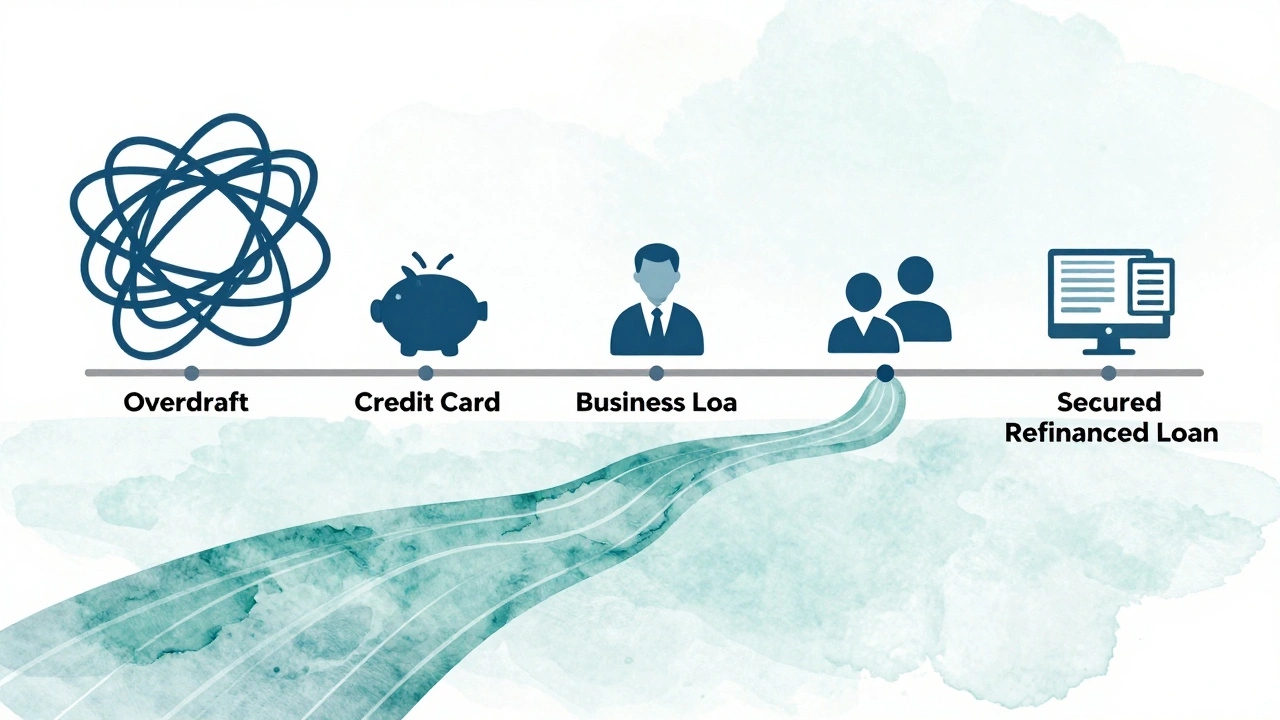
Let’s say you have £120,000 in high-interest debt across three sources:
- £50,000 at 9.2% (business loan)
- £40,000 at 13% (overdraft)
- £30,000 at 16% (credit card)
Your current monthly payment? £2,850. Annual interest? £13,560.
Now, refinance with a secured business loan at 6.1% over 7 years. Your new monthly payment? £1,840. Annual interest? £4,512.
You save £9,048 per year. That’s £63,336 over the life of the loan. And you’ve cut your monthly outflow by £1,010 - money you can reinvest in marketing, inventory, or staff training.
These aren’t hypotheticals. We’ve seen real cases: a London-based printing company saved £15,000 a year by switching from three overdrafts to one secured loan backed by their delivery vans. A Manchester café chain cut its monthly payments by 40% using invoice financing.
What You Need to Qualify
Lenders aren’t just looking at your credit score. They want to see:
- At least 12 months of trading history
- Positive cash flow (not just profit)
- Clear business accounts (even if you’re not audited)
- Good repayment history on existing debts
Even if your credit score is below 650, you can still qualify if your business is stable. Some lenders focus more on your turnover than your score. For example, if you’re doing £800,000 a year in sales and have a clean payment record, you’re in a strong position.
Don’t let a past late payment scare you off. If it was over a year ago and you’ve paid everything since, most lenders won’t hold it against you.
Pitfalls to Avoid
Refinancing sounds simple - but it’s easy to make mistakes:
- Extending your term too long - Yes, your monthly payment drops, but you pay more in total interest over time. Only extend if you need breathing room.
- Ignoring fees - Some lenders charge arrangement fees, early repayment penalties, or valuation costs. Always ask for the full cost breakdown.
- Refinancing just to get cash out - If you’re using the new loan to pay off debt and then spend the extra cash on non-essential items, you’re not solving anything. Refinancing should fund growth, not lifestyle.
- Not comparing lenders - Don’t just go with your current bank. Compare at least three options. Online lenders like Funding Circle, Tide, and Zopa Business often beat traditional banks on rates.

When Not to Refinance
Not every business should refinance. Here are three red flags:
- Your business is losing money month after month. Refinancing won’t fix a broken model.
- You’re using credit to cover payroll or rent. That’s a sign of deeper cash flow problems.
- Your debt-to-income ratio is over 50%. Lenders may reject you - or offer terrible terms.
If you’re in one of these situations, talk to a business advisor first. Refinancing isn’t a magic fix. It’s a tool. Use it wisely.
Next Steps: What to Do Now
Ready to explore refinancing? Here’s your 5-step plan:
- Collect your current debt statements - include balances, rates, and minimum payments.
- Run a free business credit check via Experian Business or Equifax.
- Calculate your current monthly interest cost. Write it down.
- Use an online refinancing calculator (many UK lenders offer them) to estimate savings.
- Apply to two or three lenders. Don’t apply to more than three - too many applications hurt your credit score.
Most applications take under 10 minutes. If you’re approved within a week, you could be saving money before the end of March.
Can I refinance business debt if I have bad credit?
Yes, but your options are limited. Lenders that specialise in higher-risk borrowers - like some online platforms - will still consider you if your business has strong turnover and consistent cash flow. You’ll likely pay a higher interest rate, but it may still be lower than what you’re paying now. Focus on improving your credit score by paying bills on time and reducing outstanding balances before applying.
How long does refinancing take in the UK?
It depends on the lender and product. Invoice financing can be approved in 24 hours. Secured loans with property valuations can take 2-3 weeks. Most unsecured term loans take 3-7 days from application to funds in your account. Speed comes down to how quickly you provide documents - bank statements, accounts, and ID.
Will refinancing affect my business credit score?
A single application has a small, temporary impact - usually 5-10 points. But if you’re approved and pay your new loan on time, your score will improve over time. The bigger benefit? Reducing your overall debt load and payment burden, which lenders see as a sign of financial health.
Can I refinance multiple loans from different lenders?
Absolutely. That’s the whole point. A new lender will pay off your existing creditors directly. You’ll receive one new loan agreement and one monthly payment. This makes tracking debt easier and reduces the risk of missing a payment.
Do I need to use a broker to refinance?
No, but it can help. Brokers have access to lenders you might not find on your own, especially if your situation is complex. They charge a fee - usually 1-3% of the loan amount - so weigh that against the potential savings. If you’re confident in your numbers, applying directly saves money.
Final Thought
Refinancing isn’t about escaping debt - it’s about taking control of it. In the UK, where business costs keep rising, cutting your interest payments is one of the fastest ways to improve your bottom line. You don’t need to be a financial expert. You just need to act. The money you save could be the difference between hiring your first employee and staying stuck in the same spot for another year.