 by
by Scaling Customer Support in the UK: Channels, SLAs, and Knowledge Bases
22 Dec, 2025When you’re growing fast in the UK, your customer support doesn’t get to take a vacation. Every new customer adds pressure - calls, emails, live chats, social media DMs. If you’re still using spreadsheets and one person answering everything, you’re already behind. Scaling customer support isn’t about hiring more staff. It’s about building systems that work while you sleep.
Choose the Right Support Channels - Not All of Them
UK customers expect help when they need it. But that doesn’t mean you need to be on every platform. In 2025, the top three channels for UK businesses are email, live chat, and phone. Social media (especially X and Facebook) is growing, but it’s a reactive channel - not a primary support line.
Here’s what works: start with email for non-urgent issues. It’s cheaper, gives you time to respond properly, and leaves a paper trail. Add live chat for high-intent users - like those checking out or stuck on a pricing page. Studies from the UK Customer Service Association show companies using live chat see 40% faster resolution times and 25% higher customer satisfaction scores.
Phone support? Keep it for complex issues or high-value customers. Don’t make every user wait on hold. Use an automated call-back system. Customers prefer waiting five minutes for a callback over 20 minutes on hold. That’s what 73% of UK consumers told the Office of Fair Trading in their 2024 survey.
Stop trying to be everywhere. Focus on three channels. Master them. Then expand.
Set Realistic SLAs - Or Watch Your Reputation Crumble
SLA stands for Service Level Agreement. It’s not a fancy word. It’s a promise. And customers remember broken promises.
In the UK, expectations are clear: 90% of customers expect a reply within 24 hours for email. For live chat, it’s under 2 minutes. Miss that, and your NPS drops fast. A 2024 report from Trustpilot found that UK businesses with response times over 6 hours saw a 34% increase in negative reviews.
Here’s how to set SLAs that don’t break your team:
- Email: 24-hour response, 48-hour resolution
- Live chat: 90-second response, 15-minute resolution
- Phone: 30-second wait, same-day resolution
- Social media: 4-hour response, 24-hour resolution
These aren’t arbitrary. They’re based on data from UK SaaS companies with 500+ customers. If you’re a small business, start with these. Track them in your helpdesk software. If you’re falling behind, you need more staff - or better automation.
And here’s the hard truth: if your SLA says “24-hour response” but you’re averaging 48, fix the system. Don’t just apologize. Customers don’t want apologies. They want reliability.
Build a Knowledge Base That Actually Gets Used
Most knowledge bases are digital graveyards. Articles written by someone who left the company. Outdated screenshots. Links that go nowhere.
A good knowledge base doesn’t just store answers - it stops questions before they happen. In the UK, companies with strong knowledge bases reduce support tickets by 30-50%. That’s not magic. It’s design.
Here’s how to build one that works:
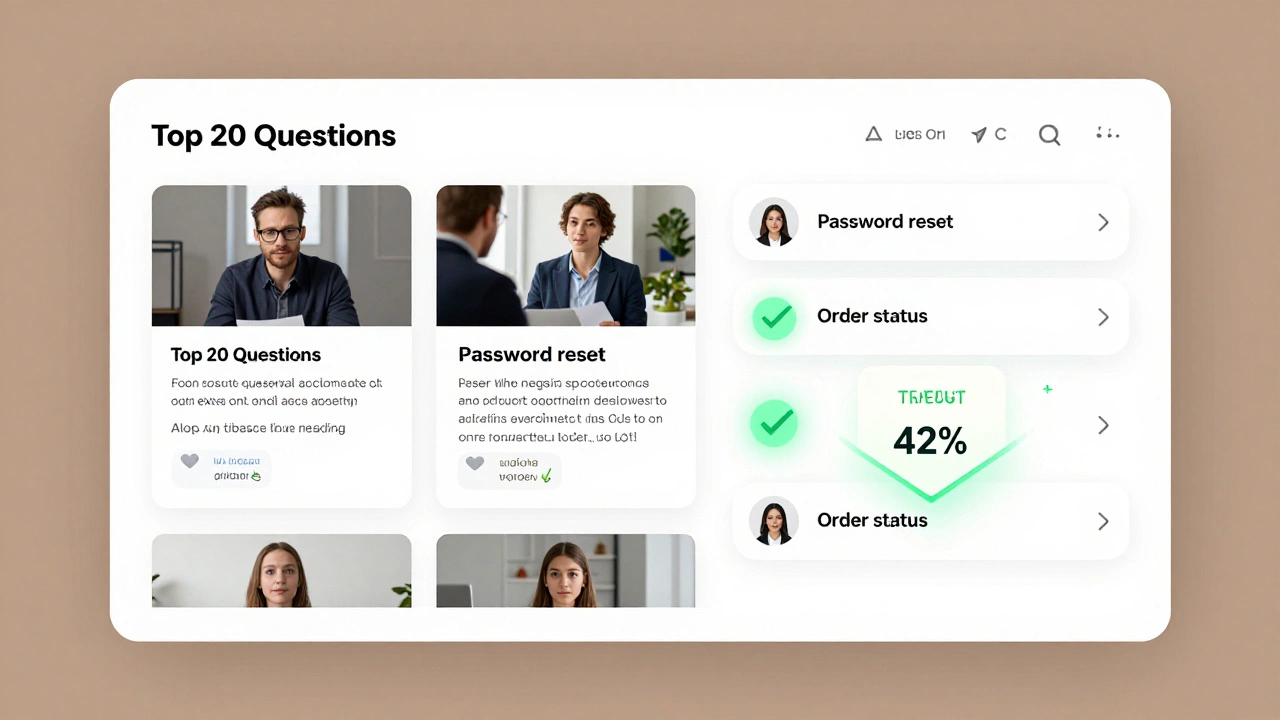
- Start with your top 20 questions. Use your helpdesk data. What do people ask most? Write answers in plain English. No jargon.
- Use video. UK customers prefer watching a 60-second video over reading a 500-word guide. Tools like Loom or Vimeo make this easy.
- Link articles in your email templates. When you reply to a common question, include: “This issue is covered here: [link].”
- Update every two weeks. Assign someone - even part-time - to review articles. Outdated info is worse than no info.
- Make it searchable. If your knowledge base needs a Google search bar, you’re doing it wrong. Use a tool like Helpjuice or Zendesk Guide with AI-powered search.
One UK fintech startup cut support tickets by 42% in six months just by fixing their knowledge base. They didn’t hire anyone. They just cleaned up what was already there.
Automate the Repetitive - Without Losing the Human Touch
Automation isn’t about replacing people. It’s about freeing them from boring tasks.
Use chatbots to handle simple stuff: “Where’s my order?” “How do I reset my password?” “What’s your return policy?” Tools like Intercom or Ada can handle 60-70% of routine queries without human input.
But here’s the catch: make the handoff smooth. If a bot can’t solve it, the customer shouldn’t have to repeat themselves. Your system should pass the chat history to the agent. No “Can you tell me again what happened?”
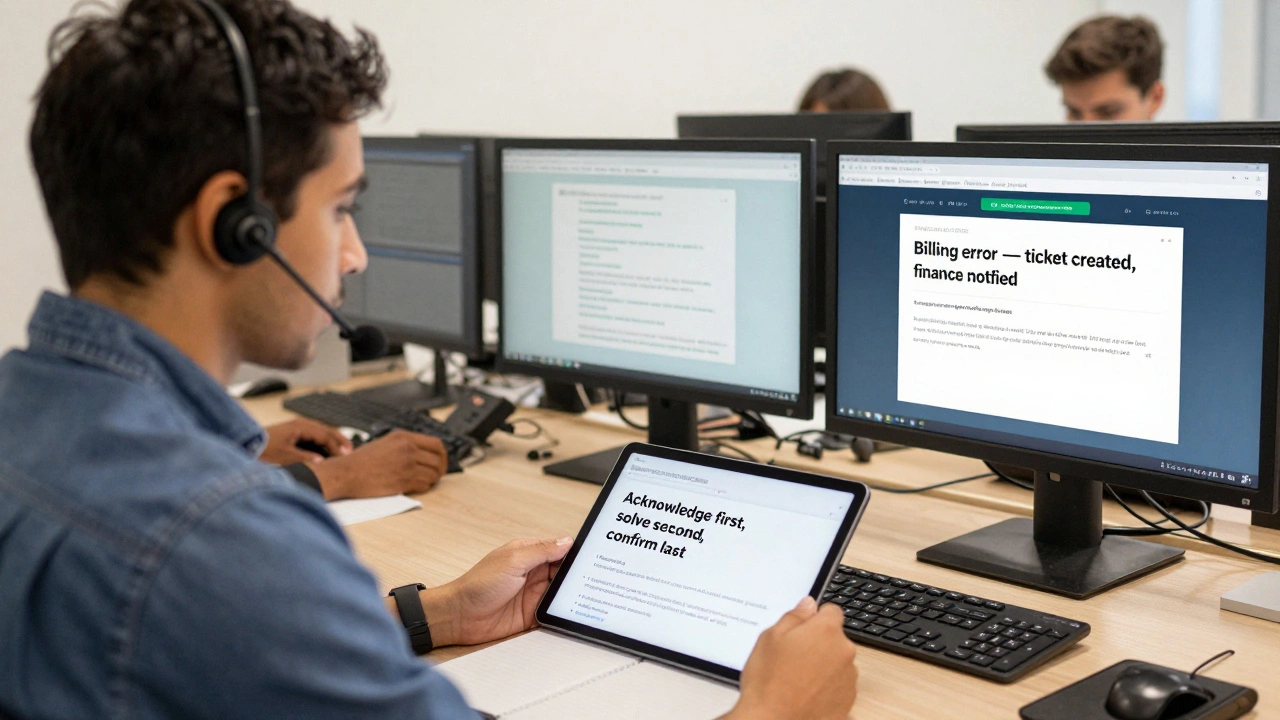
Also, automate internal workflows. If a customer reports a billing error, your system should auto-create a ticket, notify finance, and send a confirmation email - all without you lifting a finger.
Automation works when it’s invisible. The customer doesn’t know it’s happening. They just get faster answers.
Train Your Team Like You Mean It
Tools don’t scale support. People do. But training is often an afterthought.
UK support teams that scale well have three things:
- Onboarding that lasts two weeks, not two days
- Weekly coaching sessions - not just performance reviews
- Access to real customer feedback, not just metrics
Let your team listen to actual calls. Not the edited highlights. The messy ones. The angry ones. The confused ones. That’s how they learn.
Also, give them scripts - but not rigid ones. Teach them the principles: “Acknowledge first, solve second, confirm last.” Let them find their own words.
One support lead in Manchester told me: “I used to think training was about memorizing answers. Now I know it’s about learning how to think.”
Measure What Matters - Not Just Volume
Don’t track how many tickets you closed. Track how many problems were solved.
Here are the three metrics that actually predict growth:
- First Contact Resolution (FCR): What % of issues are solved in one interaction? Aim for 75%+.
- Customer Satisfaction (CSAT): After each ticket, ask: “How satisfied were you?” Use a 1-5 scale. Anything below 4.0 needs fixing.
- Support Cost per Ticket: Total support spend divided by tickets handled. If this number goes up as you scale, you’re doing it wrong.
Ignore ticket volume. It’s a vanity metric. A team can close 1,000 tickets a day - but if 70% come back, you’re not scaling. You’re spinning wheels.
What Happens When You Get It Right?
One UK edtech company grew from 5,000 to 50,000 customers in 14 months. Their support team went from 3 people to 12. But their cost per ticket dropped by 28%. Why? They built a knowledge base, automated the obvious, set clear SLAs, and trained their team to think - not just respond.
They didn’t hire more people to fix more problems. They fixed the system so fewer problems happened.
Scaling support isn’t about doing more. It’s about doing it smarter.
What’s the best way to start scaling customer support in the UK?
Start by identifying your top three support channels - email, live chat, and phone. Focus on mastering those before adding social media or chatbots. Then set clear SLAs based on UK customer expectations: 24-hour email response, under 2-minute live chat reply, and same-day phone resolution. Finally, build a knowledge base using your most common questions. Fix these three areas first, and scaling becomes much easier.
Do I need to hire more staff to scale support?
Not necessarily. Many businesses think scaling means hiring more people. But the real solution is automation and better systems. Use chatbots for simple questions, automate ticket routing, and improve your knowledge base so customers solve problems themselves. Only hire when your metrics show your team is overwhelmed - not just busy. Track first contact resolution and support cost per ticket. If those are going up, then it’s time to add staff.
How often should I update my knowledge base?
Update it every two weeks. Assign one person - even part-time - to review articles. Look for outdated links, broken screenshots, or answers that no longer match your product. Also, check your helpdesk data: if the same question pops up again, your knowledge base missed it. A living knowledge base cuts tickets by 30-50%. A static one just collects dust.
Are SLAs really that important for UK customers?
Yes. UK customers expect fast, reliable responses. A 2024 Trustpilot report showed businesses with response times over 6 hours saw a 34% spike in negative reviews. SLAs aren’t just internal goals - they’re customer promises. If you say “24-hour reply” but take 48, you lose trust. Set realistic SLAs based on data, then track them religiously. Consistency builds loyalty.
What’s the biggest mistake companies make when scaling support?
They focus on volume instead of quality. They hire more people, add more channels, and push for faster ticket closure - but ignore first contact resolution and customer satisfaction. You can close 1,000 tickets a day, but if 60% come back, you’re not scaling. You’re drowning. The real goal is to solve problems once and for all - not just count how many you’ve touched.
Next Steps: Where to Start Today
Don’t wait for the perfect system. Start small.
- Export your last 30 days of support tickets. Find the top 10 questions.
- Write clear answers for those in plain English. Add screenshots or short videos.
- Post them in your knowledge base - even if it’s just a Google Doc for now.
- Set one SLA: “All emails answered within 24 hours.” Track it for a week.
- Turn on a basic chatbot for password resets and order status.
Do those five things. In 30 days, you’ll see fewer tickets, happier customers, and a team that’s not burning out. That’s scaling - not with more people, but with better systems.