
 by
by Statutory Sick Pay in the UK: Eligibility, Evidence, and Employer Duties
17 Sep, 2026Imagine an employee calls in sick on a Monday morning. They’re genuinely ill, but they don’t have a doctor’s note yet because it’s only day two. Do you pay them? If so, how much? And what happens if they stay off for three weeks? For many small business owners in the UK, Statutory Sick Pay (SSP) is the minimum amount of money an employer must pay to employees who are too ill to work feels like a confusing maze of dates, forms, and legal traps. Get it wrong, and you could face fines or tribunal claims. Get it right, and you keep your team happy and your books clean.
The rules changed significantly recently, especially regarding when payment starts. Before April 2023, you didn’t have to pay for the first three days of sickness unless it was linked to a previous period of absence. Now, that waiting period is gone. SSP starts from day one. This shift alone has caught out plenty of managers who relied on old habits. But knowing when to start paying is just step one. You also need to know who qualifies, what proof you can ask for, and exactly how to calculate the rate without messing up payroll.
Who Actually Qualifies for SSP?
Not everyone off sick gets paid by the government-backed scheme. SSP isn’t a benefit you apply for; it’s a legal obligation for employers, but only under specific conditions. First, the person must be an employee. This includes part-time workers, casual staff, and even those on fixed-term contracts, as long as they’ve done some work for you. It does not cover self-employed contractors, freelancers, or company directors who don’t take a salary through PAYE.
Second, there’s the earnings threshold. As of April 2026, employees must earn at least £123 per week on average before tax. This figure adjusts annually with inflation, so always check the current HMRC rates. If someone earns less than this, you don’t owe them SSP. Instead, they might need to claim Universal Credit or Employment and Support Allowance directly from the Department for Work and Pensions.
Third, they must be off work for four or more consecutive days. These are called "Periods of Incapacity for Work" (PIW). Crucially, these days include weekends, bank holidays, and non-working days. So if someone falls ill on Friday night and returns on Wednesday, that counts as five days. If they’re only off for one or two days, no SSP is due, regardless of whether they worked during that time.
Calculating What You Owe
Once you’ve confirmed eligibility, the next hurdle is the math. The standard weekly rate for SSP is fixed by the government. In the 2025/2026 tax year, this stands at £118.75 per week. You pay this for up to 28 weeks. That sounds straightforward, but here’s where people trip up: you don’t always pay the full weekly rate if the employee works fewer than five days a week.
You calculate their daily rate by dividing the weekly SSP rate by the number of contractual working days they normally do. Let’s say Sarah works three days a week-Monday, Tuesday, and Thursday. Her daily SSP rate would be £118.75 divided by 3, which equals roughly £39.58 per day. If she’s off for those three days, you pay her £118.75 total for that week. If she’s off all seven calendar days but only works three, you still cap it at the weekly rate. Never pay more than the statutory maximum unless your company policy offers enhanced sick pay.
| Employee Type | Contractual Days/Week | Daily SSP Rate (2026) | Weekly SSP Cap |
|---|---|---|---|
| Full-Time | 5 | £23.75 | £118.75 |
| Part-Time (3 days) | 3 | £39.58 | £118.75 |
| Zero-Hours (avg 4 days) | 4 | £29.69 | £118.75 |
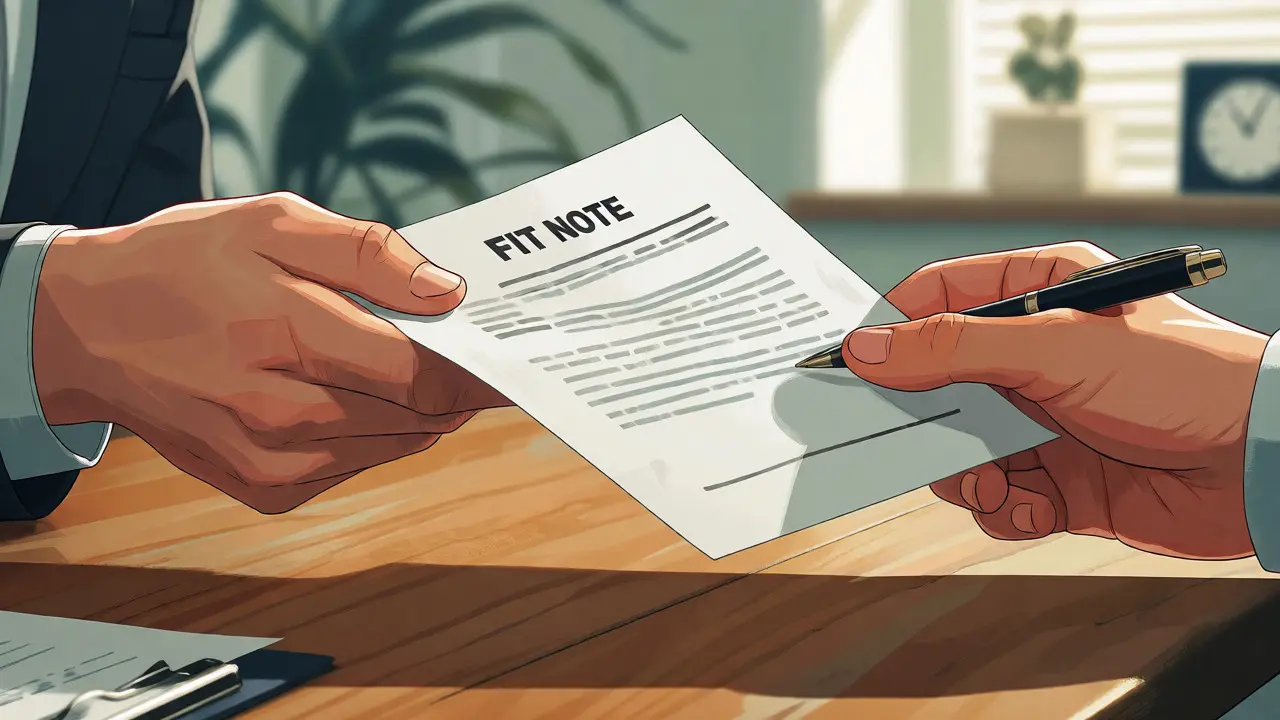
Evidence: When Do You Need a Fit Note?
This is the most common point of friction between managers and staff. Can you demand a doctor’s note immediately? The short answer is no. For the first seven days of illness-including non-working days-an employee can simply self-certify. This means they tell you they’re sick, usually via phone or email, and you accept it. Asking for medical evidence before day eight can look unreasonable and might breach contract terms if your handbook says otherwise.
From day eight onwards, you can require a Statement of Fitness for Work, commonly known as a fit note. This document comes from a healthcare professional, typically a GP or hospital specialist. It doesn’t diagnose the condition; it just states whether the employee is unfit for work or may be fit with adjustments.
Here’s a pro tip: don’t reject a fit note just because it’s late. If an employee provides it within a reasonable timeframe, honor it. Also, remember that fit notes now allow doctors to suggest "may be fit for work." This opens the door to phased returns, reduced hours, or different duties. If you ignore this option and send them home entirely, you might miss a chance to keep valuable staff productive while they recover.
Employer Obligations and Record Keeping
Paying the money is half the battle. Keeping accurate records is the other half. HMRC can audit your SSP payments at any time. You need to keep detailed logs for three years after the end of the tax year in which the payments were made. These records should show:
- The date the employee reported being sick.
- The reason for absence (if provided).
- Dates covered by any fit notes.
- Days you paid SSP and days you didn’t (with reasons).
- Total amounts paid.
You also have a duty to inform employees about their rights. If you decide not to pay SSP-for example, because they haven’t met the earnings threshold-you must provide a written explanation using Form SSP1. This form tells them why they aren’t getting SSP and directs them to claim other benefits if needed. Failing to issue this form can delay their access to state support and create resentment.
Another critical obligation involves notification. If an employee is off for more than seven days, they must notify you by the deadline set in your contract or by the end of the fourth day if no deadline exists. Late notification without good cause can mean you withhold SSP for the days they failed to report. However, "good cause" is broad-it covers things like being unconscious, having no access to a phone, or dealing with a family emergency. Use discretion rather than rigid enforcement.

Common Pitfalls and How to Avoid Them
One major mistake is assuming SSP applies to all types of leave. It doesn’t cover pregnancy-related absences in the final four weeks before the due date, nor does it cover time off for antenatal appointments. Those fall under separate statutory provisions. Similarly, if an employee is injured at work, they might qualify for Industrial Injuries Disablement Benefit instead, though SSP often runs concurrently initially.
Another trap involves linking periods of absence. If an employee goes off sick, returns for a few days, then falls ill again with the same condition, these periods link together. The gap between them is called a "linking period," currently set at seven calendar days. If the gap is shorter than seven days, the second spell continues the first one for SSP calculation purposes. This prevents people from resetting the clock every few days to avoid longer-term deductions.
Finally, beware of discriminatory practices. If you consistently deny SSP to women returning from maternity leave or to older employees with chronic conditions, you risk indirect discrimination claims. Ensure your absence management policies apply equally to everyone, regardless of gender, age, or disability status.
What Happens After 28 Weeks?
SSP has a hard stop. After 28 weeks of continuous incapacity, you no longer have to pay. At this point, the employee should transition to Employment and Support Allowance (ESA) or a newer equivalent benefit depending on their contribution history. Your job is to help them navigate this handover. Provide them with a statement of their SSP payments so they can prove their income to the DWP.
Some companies offer contractual sick pay schemes that top up SSP or extend coverage beyond 28 weeks. If you have such a scheme, ensure it’s clearly documented in the employment contract. Ambiguity here leads to disputes. If your policy says "enhanced sick pay," specify whether it’s full pay or half pay, and when it switches to SSP levels.
Do I have to pay SSP if my employee hasn't been with me for a year?
Yes. Unlike some benefits, SSP eligibility doesn't depend on length of service. As long as they are an employee earning above the Lower Earnings Limit (£123/week in 2026) and meet the other criteria, you must pay SSP from day one of their employment.
Can I refuse SSP if the employee didn't call in on the first day?
You can withhold SSP for the days they failed to notify you properly, provided you have a clear notification procedure in place. However, if they provide a valid reason for the delay (like being hospitalized), you generally must still pay for those days. Always document the reason for withholding.
Is SSP taxable?
Yes, SSP is treated like normal wages. It is subject to Income Tax and National Insurance contributions. You deduct these through your PAYE system just as you would for regular salary payments.
What if an employee is off sick during their holiday?
If an employee becomes ill during booked annual leave, they can choose to take it as sick leave instead. To do this, they must follow your normal sickness reporting procedures and provide medical evidence if required. Once approved, the holiday days are restored, and SSP begins. This rule helps prevent employees from burning vacation time when they're actually unwell.
Can I reclaim SSP costs from the government?
No. Since 2014, the Small Employers' Relief scheme ended. All employers, regardless of size, must fund SSP entirely from their own resources. There is no reimbursement mechanism from HMRC anymore.