 by
by Sustainable Commuting in the UK: How Cycle-to-Work, EVs, and Public Transport Are Changing Daily Travel
14 Feb, 2026Every morning, millions of people in the UK hop into their cars to drive to work. But something’s changing. More folks are leaving the keys behind and choosing bikes, buses, or electric cars instead. It’s not just about saving money-it’s about cutting pollution, reducing traffic, and making cities healthier. If you’re wondering how the UK is making sustainable commuting real, here’s what’s actually working right now.
Cycle-to-Work: The Quiet Revolution
In 2025, over 1.2 million UK employees joined the Cycle-to-Work scheme. That’s up from just 600,000 in 2020. The program lets workers save up to 42% on a new bike and safety gear by paying for it through salary sacrifice. Employers buy the bike, lease it to the employee, and the cost comes out of pre-tax income. No VAT. No income tax. Just a cheaper ride to work.
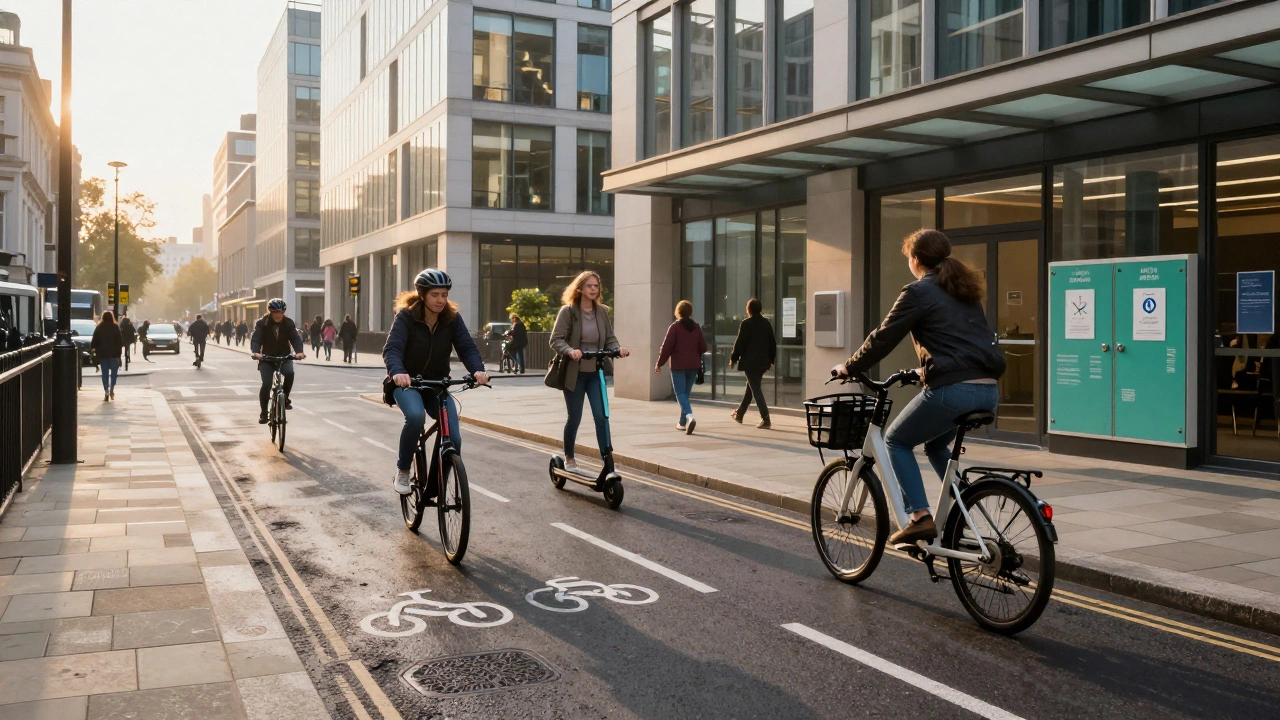
It’s not just about the savings. Cities like London, Bristol, and Manchester have added over 800 miles of protected bike lanes since 2022. In London alone, cycling increased by 37% between 2021 and 2025. The government’s cycle-to-work funding now includes e-bikes, cargo bikes, and even bike repair subscriptions. You can get a £3,000 e-bike for under £1,800 after tax savings.
Companies like Unilever and BT Group now offer bike valet services, showers, and secure indoor parking. One London-based tech firm saw a 28% drop in sick days after launching a full bike support program. People who cycle report better sleep, less stress, and more energy. It’s not a perk-it’s a productivity tool.
Electric Vehicles: More Than Just a Car
EVs aren’t just for the wealthy anymore. In 2025, 42% of all new cars sold in the UK were electric. That’s up from 18% in 2022. The government’s plug-in grant ended in 2023, but the real shift came from cheaper batteries and better charging.
Now, the average new EV costs less than £25,000 before incentives. Models like the Nissan Leaf, MG4, and Renault Zoe are priced right. Used EVs are even more affordable-with many 2020 models under £10,000. And charging? It’s easier than ever. Over 50,000 public charging points are now in place, including 12,000 rapid chargers that can add 100 miles in under 15 minutes.
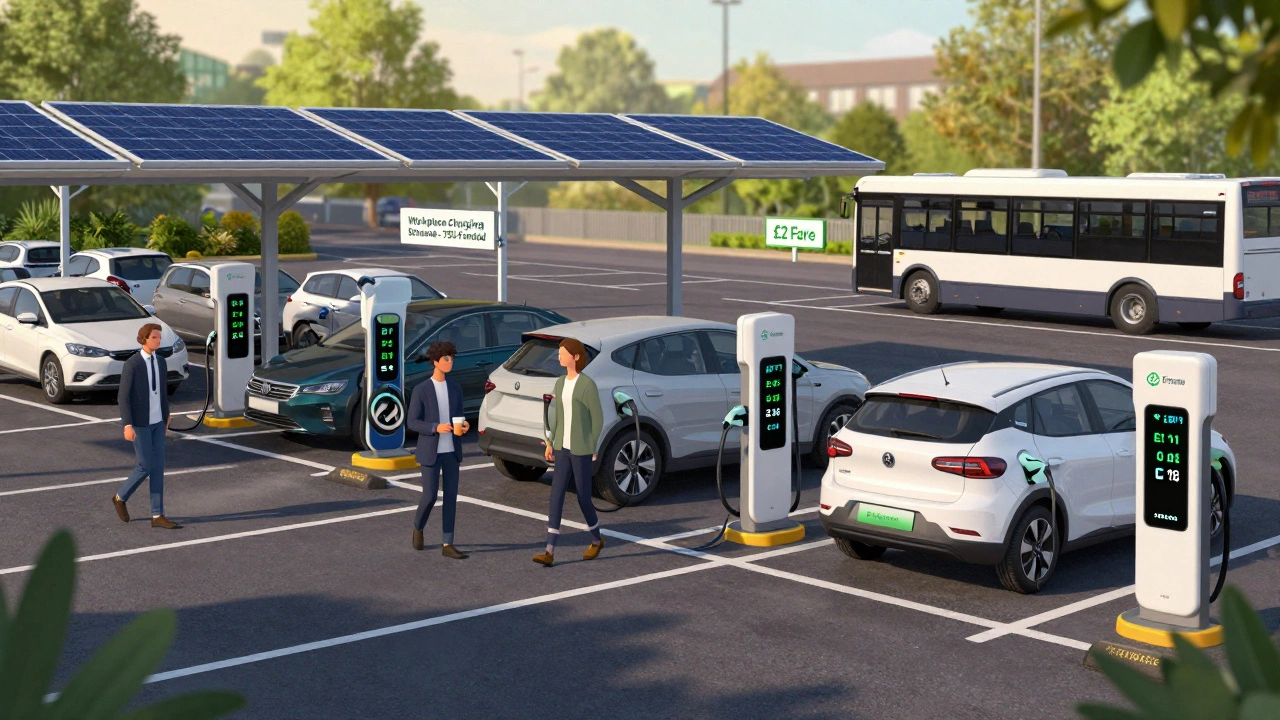
Workplace charging is booming. More than 1 in 5 UK employers now offer EV charging at the office. Some, like Jaguar Land Rover and Nationwide, even give employees free charging. The government’s Workplace Charging Scheme still covers up to 75% of installation costs-up to £350 per socket. That’s why offices in Leeds, Edinburgh, and Cardiff now have rows of chargers where parking spots used to be.
And here’s the kicker: EVs are cheaper to run. Charging at home overnight costs about £8 for 200 miles. Compare that to £25 for the same distance in a petrol car. Maintenance? No oil changes. No spark plugs. Just brakes and tires. Over five years, an EV saves you £5,000-£8,000 in fuel and upkeep.
Public Transport: Back in Style
For years, buses and trains were seen as outdated. That changed when the UK government rolled out the National Bus Strategy in 2022. The goal? Make buses as reliable as trains. By 2025, 92% of bus routes in England now run every 15 minutes or better during peak hours. In cities like Sheffield and Brighton, buses are free for under-25s and over-60s.
The £2 fare cap introduced in 2023 still holds in most areas. A single bus ride in Manchester, Glasgow, or Cardiff costs just £2-even if you travel 10 miles. Train fares? The government capped annual increases at inflation (3.2% in 2025). That’s half the rate of the 2010s.
And digital tools made it easier. The National Rail app now shows real-time delays, seat availability, and even crowding levels. Apps like Citymapper and Moovit integrate buses, trains, bikes, and e-scooters into one trip planner. In 2025, 68% of public transport users said they’d never go back to driving alone.
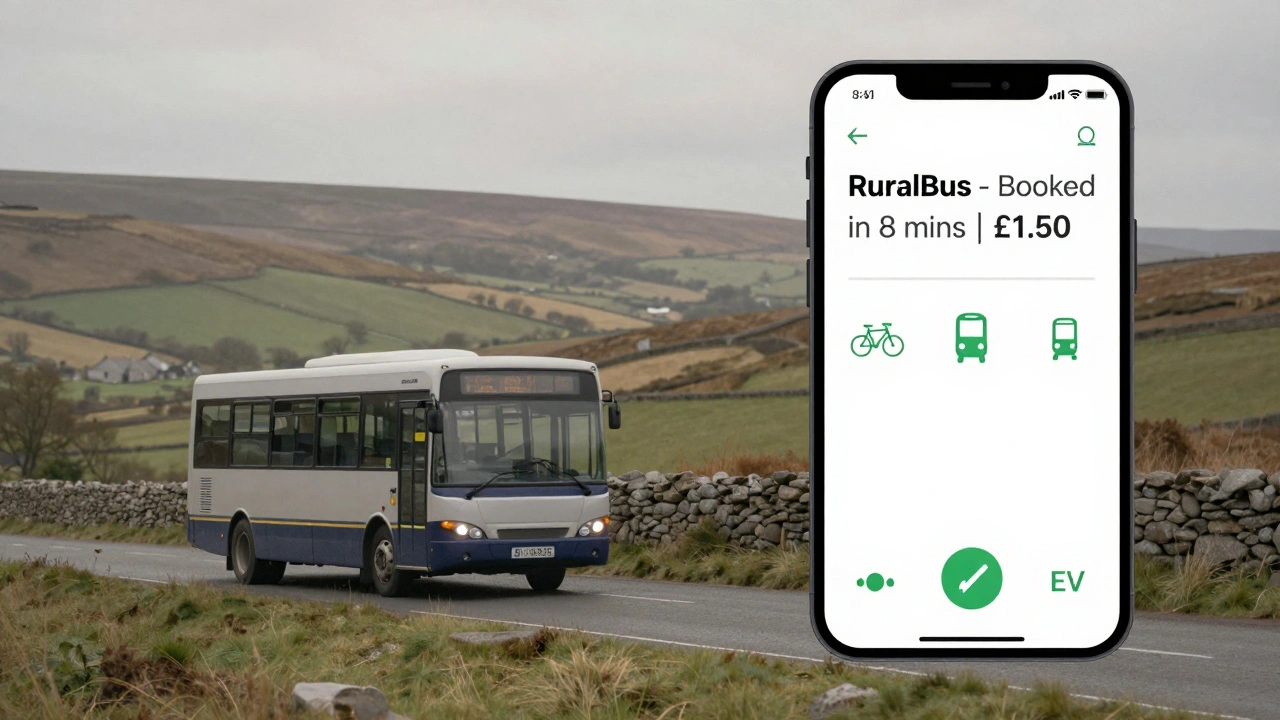
Even rural areas are catching up. In Cornwall and North Yorkshire, demand-responsive transport (DRT) lets you book a minibus via app-like a taxi, but shared and cheaper. Some routes cost as little as £1.50 for a 20-mile trip.
Why This Matters Beyond the Commute
Sustainable commuting isn’t just about personal choice. It’s about systemic change. The UK’s transport sector accounts for 27% of total carbon emissions. If everyone who commutes under 10 miles switched to walking, cycling, or public transport, emissions would drop by 18% in five years.
Companies benefit too. A 2024 study by the University of Leeds found that firms with strong green commuting programs had 31% lower staff turnover. Employees who commute sustainably report higher job satisfaction. One insurance firm in Bristol saw a 22% increase in employee retention after launching a combined bike, EV, and transit subsidy package.
Health costs are falling. The NHS estimates that if 1 million more people cycled to work, it would save £1.7 billion in healthcare costs over a decade. Fewer heart attacks. Fewer cases of type 2 diabetes. Fewer air pollution-related hospital visits.
And let’s not forget the money. The UK government spends £14 billion a year subsidizing road maintenance and parking. Redirecting even 10% of that into cycling infrastructure and public transit could cut congestion by 30% in major cities. That’s fewer delays. Fewer fumes. Fewer headaches.
What’s Holding People Back?
It’s not perfect. Still, 41% of UK workers say they’d switch to sustainable commuting if they had better infrastructure. The biggest barriers? Lack of secure bike storage (38%), no charging at work (34%), and unreliable bus times (29%).
Small businesses struggle to offer EV chargers. Landlords in rented offices often block installations. Rural commuters have fewer options. But solutions are emerging. Community bike hubs are popping up in towns like Huddersfield and Shrewsbury. Local councils are partnering with energy firms to install solar-powered chargers at bus stops.
And employers? They’re starting to get it. The UK’s first Green Commute Standard launched in 2025. It’s a certification for companies that offer at least two of these: bike storage, EV charging, transit subsidies, or flexible hours to avoid rush hour. Over 2,000 firms have applied. Those that pass get a public badge-and a tax break.
The Future Is Already Here
In 2025, the UK’s most sustainable commutes aren’t about perfection. They’re about choice. You don’t need to go fully electric or ride a bike every day. Maybe you cycle twice a week, take the train twice, and charge your EV on weekends. That’s enough.
London’s Mayor said it best: “We’re not asking people to give up their cars. We’re giving them better options.” And that’s the real win. When you make sustainable choices easy, affordable, and rewarding, people choose them.
The data doesn’t lie. More bikes. More EVs. More reliable buses. Less pollution. Healthier people. Happier workers. It’s not a dream. It’s what’s happening right now-in towns, cities, and workplaces across the UK.
Is the Cycle-to-Work scheme still active in 2026?
Yes, the Cycle-to-Work scheme is still active and even expanded in 2025. Employees can now use it for e-bikes, cargo bikes, helmets, locks, and even bike repair subscriptions. The maximum value per bike is £4,000, and savings range from 25% to 42% depending on your tax bracket. Employers must still be registered with the scheme, but it’s now available to part-time workers and those on zero-hour contracts.
Are electric vehicles really cheaper than petrol cars in the long run?
Yes. Even without government grants, EVs save money over five years. Fuel costs are 60-70% lower. Maintenance is 40% cheaper because there’s no engine, transmission, or exhaust system to service. A 2025 study by Which? found that an average EV owner in the UK saved £6,800 over five years compared to a similar petrol car. Insurance is slightly higher, but not enough to offset the savings.
Can I use public transport in rural areas of the UK?
Absolutely. While rural routes are less frequent, demand-responsive transport (DRT) has become widespread since 2023. You book a shared minibus via an app, and it picks you up within 15 minutes. Services like RuralBus in Devon and Connect in Northumberland charge as little as £1.50 per trip. Many councils now fund these routes using transport grants, so they’re more reliable than ever.
Do employers have to provide EV charging?
No, it’s not mandatory-but it’s becoming a competitive advantage. The UK government’s Workplace Charging Scheme still offers up to £350 per socket for installation. Over 1 in 5 UK employers now offer it, especially in tech, finance, and public sector jobs. Companies that don’t offer it are seeing higher staff turnover, especially among younger workers who prioritize sustainability.
What’s the easiest way to start sustainable commuting?
Start with one change. If you live under 5 miles from work, try cycling once a week. Use a free app like CycleStreets to find safe routes. If you drive farther, check if your employer offers transit subsidies or EV charging. If not, ask. Many companies will install chargers if 3+ employees request them. Small steps add up-and they’re easier than you think.
If you’re looking to make your commute greener, the tools are here. The infrastructure is growing. The savings are real. And the UK is proving that sustainable commuting isn’t about sacrifice-it’s about smarter choices.