 by
by SWOT Analysis for UK Companies: Identifying Strengths, Weaknesses, and Opportunities
7 Mar, 2026When a UK business looks at its future, it doesn’t just guess. It looks at what it’s doing well, where it’s falling short, and what’s out there waiting to be grabbed. That’s the heart of a SWOT analysis. It’s not a fancy report buried in a drawer. It’s a simple, practical tool that smart companies use every year to stay ahead. And in a post-Brexit, inflation-hit, tech-driven market, skipping it isn’t an option-it’s a risk.
What SWOT Analysis Actually Does for UK Businesses
SWOT stands for Strengths, Weaknesses, Opportunities, and Threats. It sounds basic, but most companies mess it up by making it too vague. "Our team is great" isn’t a strength. "Our customer retention rate is 87%, 22% higher than the industry average" is. The difference? Specifics. Data. Real numbers.
UK companies that use SWOT well don’t just list ideas. They tie each point to performance. A Manchester-based manufacturing firm might list a strength as "Our ISO 9001 certification reduces production errors by 30%"-not "we have good quality control." That’s the kind of detail that changes decisions.
Strengths: What You’re Doing Right
Strengths are internal. They’re what you control. And they’re not always what you think.
Take a small London-based software firm. They thought their strength was their brilliant developers. But when they dug into their data, they found their real edge: customer support response time. They answered 92% of inquiries under 15 minutes. Competitors averaged 4 hours. That’s not a nice-to-have-it’s a competitive moat.
Common strengths in UK businesses right now include:
- Strong brand reputation (especially in luxury, food, and professional services)
- Access to EU markets through existing supply chains (despite Brexit)
- Highly educated workforce in tech, finance, and green energy sectors
- Efficient logistics networks in England and Scotland
- Government grants for R&D and net-zero transitions (up to £10M per project in 2025)
Don’t assume your strengths are obvious. Ask your customers. Look at your retention rates. Check your profit margins per product line. The answers are there.
Weaknesses: The Hidden Drag
Weaknesses are also internal. But unlike strengths, they’re the things holding you back. And most companies avoid them like bad news.
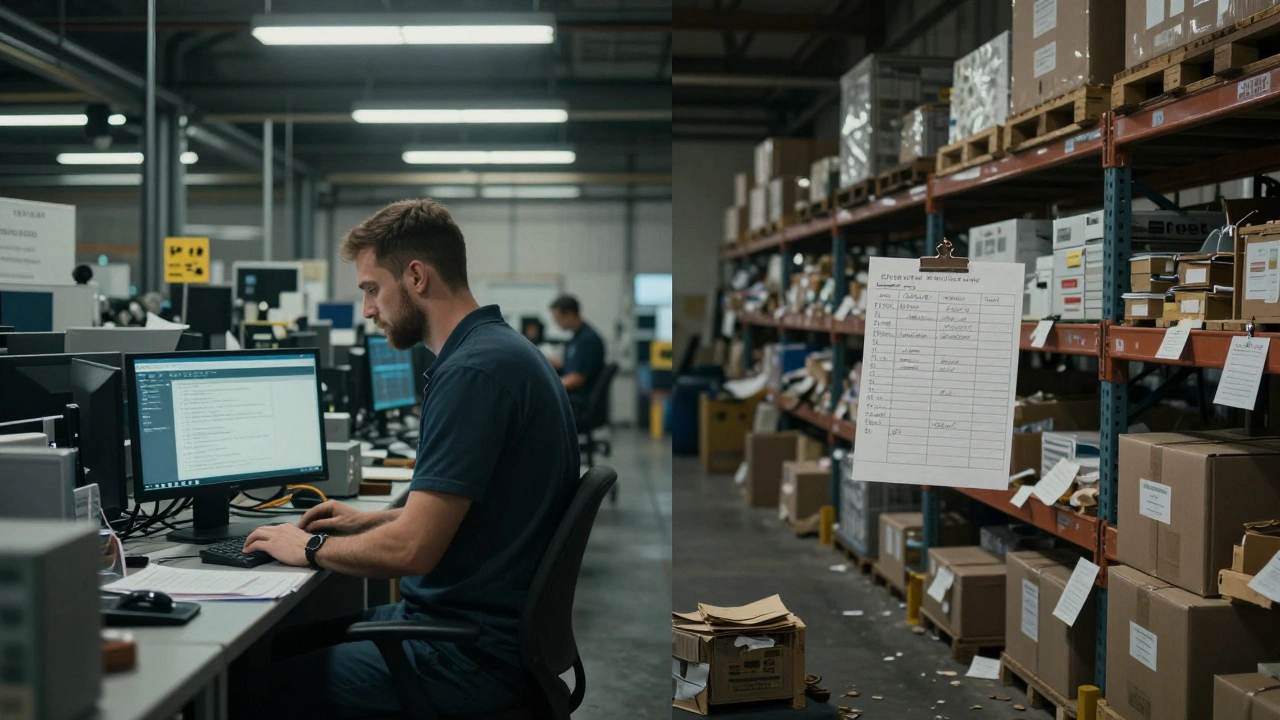
A Birmingham-based retail chain thought they were fine. But their inventory turnover was 40% slower than competitors. Why? Outdated warehouse software. They didn’t realize it was a weakness-they thought it was "just how things are." Once they fixed it, sales jumped 18% in six months.
Common weaknesses in UK businesses today:
- Over-reliance on a single supplier (especially post-Brexit supply chain disruptions)
- Lack of digital skills in middle management
- High employee turnover in entry-level roles (30%+ in hospitality and retail)
- Slow adoption of automation tools
- Weak online customer experience (mobile site load time over 5 seconds)
Don’t ignore these. Talk to your frontline staff. They know what’s broken. Check your churn rates. Look at your IT support tickets. The weakest links aren’t always in the boardroom.
Opportunities: What’s Out There
Opportunities are external. They’re not about what you do-but what you could do.
In 2025, UK businesses have real opportunities:
- Net-zero funding: Over £1.2B in government grants available for SMEs in clean tech, insulation, and renewable energy adoption
- AI adoption in SMEs: Only 14% of UK small businesses use AI tools-massive gap for early movers
- Export growth: UK exports to India and ASEAN rose 22% in 2024
- Remote work hubs: Rural towns like Bath and York now offer tax breaks for businesses relocating from London
- ESG compliance: Investors now require ESG reporting. Companies that start early get better loan terms
Opportunities aren’t dreams. They’re trends with data behind them. Look at ONS reports. Watch industry newsletters. Talk to trade associations. The next big move isn’t hidden-it’s waiting for someone to act.
Threats: The Real Risks
Threats are external too. But unlike opportunities, they’re dangerous.
UK companies are facing real threats right now:
- Interest rate volatility: Business loan rates hit 6.8% in early 2026-up from 4.1% in 2023
- Labour shortages: 1.1 million UK job vacancies remain unfilled, especially in logistics, healthcare, and skilled trades
- Regulatory fragmentation: Different rules in England, Scotland, Wales, and Northern Ireland create compliance headaches
- AI disruption: Chatbots now handle 40% of customer service inquiries-companies without automation are losing customers
- Supply chain shifts: Companies relying on EU suppliers now face 12-18% higher costs due to tariffs and customs delays
Threats don’t wait. They don’t send warning emails. They show up as lost sales, higher costs, or quiet customer attrition. You need to see them before they hit.
How to Do a Real SWOT Analysis (Step by Step)
Forget the PowerPoint template. Here’s how to do it right:
- Gather data, not opinions. Pull sales reports, customer feedback, employee surveys, and financial statements. Don’t rely on gut feelings.
- Use cross-functional teams. Include sales, ops, IT, and frontline staff. A warehouse worker sees different weaknesses than a CEO.
- Score each point. Rate strengths and weaknesses on a scale of 1-5 based on impact. Opportunities and threats? Rate them on likelihood and potential impact.
- Find connections. Does a strength help you grab an opportunity? Does a weakness make you vulnerable to a threat? That’s where strategy lives.
- Turn it into action. Every SWOT should lead to three concrete actions. Example: "Upgrade warehouse software by Q3 to reduce inventory waste (addresses weakness + unlocks opportunity)."
Companies that skip the action step? They waste time. The best SWOTs are living documents. Review them quarterly. Update them after major changes-new leadership, new markets, new regulations.

Real UK Examples That Worked
A Yorkshire-based bakery used SWOT in 2024. Their strength? Handmade sourdough with organic flour. Their weakness? No online sales. Their opportunity? Rising demand for premium baked goods in the North. Their threat? Big supermarkets launching similar products.
They acted. They launched a subscription box. They partnered with local coffee shops. They invested in Instagram ads targeting foodies. In 12 months, revenue jumped 65%. No loan. No investor. Just a solid SWOT and follow-through.
Another example: A Glasgow IT firm. Their weakness? High staff turnover. Their opportunity? Remote work demand. Their solution? They switched to a 4-day week with full pay. Turnover dropped 70%. Productivity rose. They now have 300 applicants per opening.
What Not to Do
Don’t do a SWOT once a year and forget it.
Don’t let HR do it alone.
Don’t list "good customer service" without data.
Don’t ignore threats because they feel "too scary."
And don’t confuse SWOT with a vision statement. SWOT isn’t about where you want to go. It’s about where you are-and what you can do next.
Final Thought: SWOT Is a Mirror, Not a Crystal Ball
It doesn’t predict the future. It shows you the present clearly. And in a market as volatile as the UK’s right now, clarity is the most valuable thing you can have.
Start with your numbers. Talk to your team. Look at your customers. Then act. That’s how UK companies don’t just survive-they grow.
Is SWOT analysis still relevant for small UK businesses in 2026?
Yes-more than ever. Small businesses in the UK face more pressure than ever from inflation, labour shortages, and digital disruption. SWOT helps them focus limited resources on what actually moves the needle. A 2025 survey by the Federation of Small Businesses found that SMEs using SWOT quarterly were 2.3 times more likely to report revenue growth than those who didn’t.
Can SWOT analysis be done remotely or online?
Absolutely. Tools like Miro, Notion, or even Google Sheets work well for remote teams. The key isn’t the tool-it’s the input. Get real data from frontline staff, customers, and financial records. A virtual SWOT session with 8 people from different departments is better than a polished PowerPoint done by one person.
How often should UK companies update their SWOT analysis?
Update it every quarter. Major changes-like a new competitor, a supply chain disruption, or a government policy shift-should trigger an immediate review. Waiting a year is too late. The UK market moves fast: interest rates, regulations, and consumer habits change in months, not years.
What’s the biggest mistake UK businesses make with SWOT?
Treating it like a checklist instead of a strategy tool. Listing "strong brand" without explaining why or how it translates to profit. Or worse-doing it once and forgetting it. SWOT only works if it leads to action. Every point should connect to a task, a deadline, and a person responsible.
Does SWOT analysis work for startups?
Yes-but it’s different. Startups don’t have years of sales data. So they focus on assumptions: What do early customers say? What’s the biggest risk in their business model? What’s one thing they can do better than competitors? A startup SWOT is more about testing hypotheses than analyzing history. It’s a compass, not a map.