 by
by TCFD Reporting in the UK: How UK Businesses Must Disclose Climate Risk
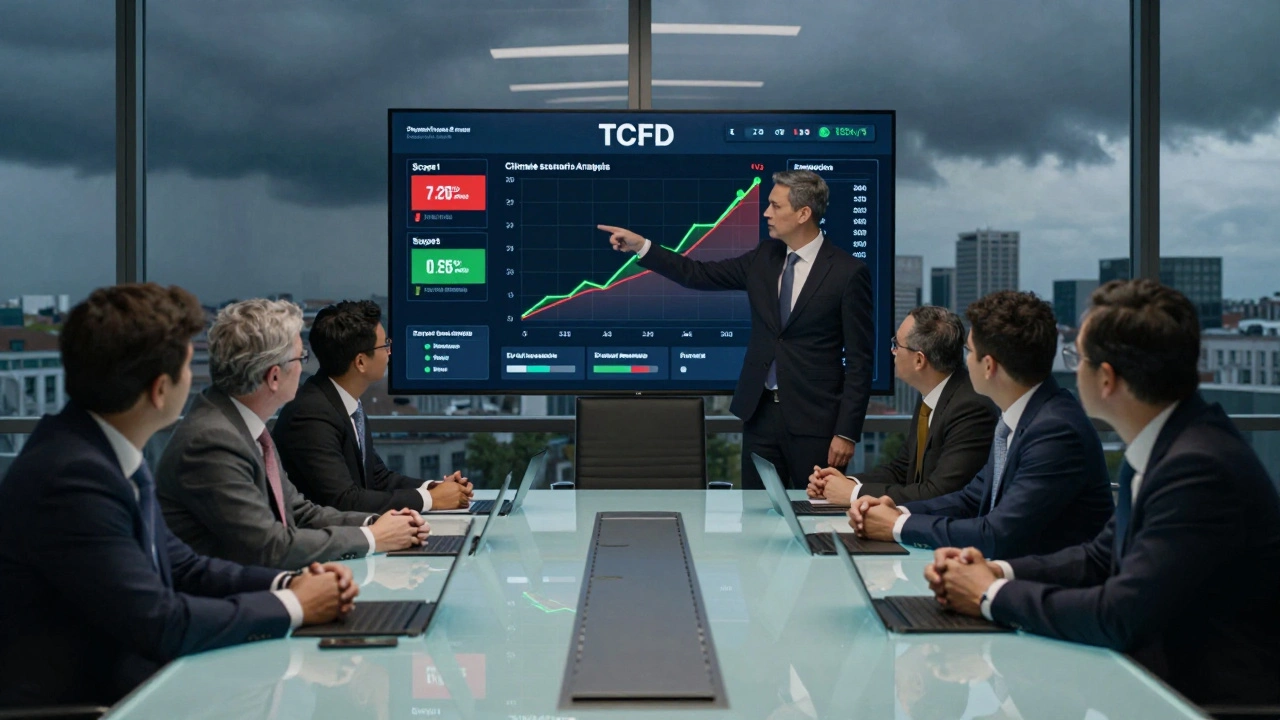
28 Dec, 2025By 2025, every large company in the UK with more than 500 employees and £500 million in turnover is legally required to report climate risks under the TCFD framework. This isn’t optional. It’s not a best practice. It’s the law. If you’re running a business in the UK and you haven’t started this yet, you’re already behind.
What Is TCFD Reporting and Why Does It Matter?
TCFD stands for the Task Force on Climate-related Financial Disclosures an international body created by the Financial Stability Board in 2015 to develop consistent climate risk reporting standards. It’s not a government agency. It’s a group of financial experts who figured out how climate change affects money - and how companies should tell investors about it.
Before TCFD, companies talked about sustainability in vague terms: "We care about the planet," or "We’re going green." Investors couldn’t compare one company’s climate risk to another’s. TCFD changed that. It forced businesses to be specific: What physical risks do you face? How will rising temperatures hurt your supply chain? What happens if carbon taxes go up?
In the UK, the Financial Conduct Authority (FCA) made TCFD mandatory for listed companies in 2022. By April 2025, it expanded to large private companies too. The goal? To stop hiding climate risk behind marketing speak and start treating it like a financial risk - because it is.
The Four Core Pillars of TCFD Reporting
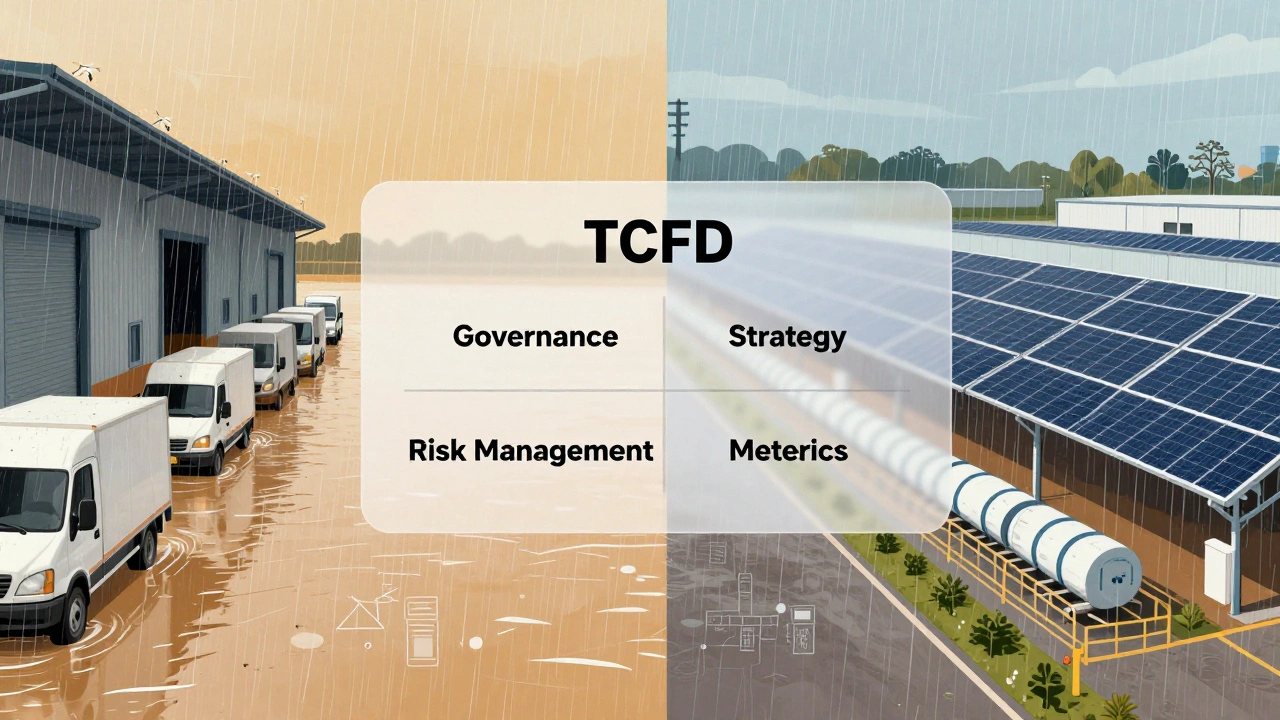
TCFD doesn’t ask for a 100-page report. It asks for answers to four clear questions. If you can’t answer these, you’re not reporting - you’re guessing.
- Governance: Who in your company is responsible for climate risk? Is it the board? The CFO? Is there a committee that meets quarterly to review it?
- Strategy: How does climate change affect your business model? What if global temperatures rise 2°C? 4°C? What’s your plan for transitioning to net zero?
- Risk Management: How do you identify, assess, and manage climate risks? Do you use scenario analysis? Do you track physical risks like flooding or regulatory risks like carbon pricing?
- Metrics and Targets: What are you measuring? Scope 1, 2, and 3 emissions? Water use? Carbon intensity per unit of revenue? Do you have clear, time-bound targets?
Companies that get this right don’t just avoid fines. They attract investors. BlackRock, Vanguard, and Legal & General now screen out companies that don’t disclose TCFD-aligned data. In 2024, UK pension funds managing £1.2 trillion in assets required TCFD reports from all their portfolio companies.
What UK Companies Are Actually Reporting
Not everyone is doing it well. A 2025 review by the UK Green Finance Institute found that 68% of large UK firms publish TCFD reports - but only 29% fully meet the framework’s requirements.
Common mistakes?
- Reporting emissions without explaining how they’ll reduce them.
- Using vague language like "we are committed to sustainability" without metrics.
- Ignoring Scope 3 emissions - the emissions from your suppliers and customers. These often make up 70-90% of a company’s total footprint.
- Not using scenario analysis. Saying "we think climate change is bad" isn’t enough. You need to model what happens if the price of oil doubles or if a flood shuts down your main warehouse.
Companies doing it right? Take Unilever. They don’t just report emissions. They show how heatwaves in India affect their supply of tea and how shifting consumer demand is pushing them to redesign packaging. They tie every risk to financial impact. That’s what investors want.
How to Start TCFD Reporting (Even If You’re Behind)
You don’t need a team of consultants. You need a plan. Here’s how to begin in 30 days.
- Map your value chain. List every supplier, logistics partner, and customer. Where are they located? What climate risks do those regions face?
- Calculate your emissions. Use the Greenhouse Gas Protocol the global standard for measuring corporate emissions, divided into Scope 1, 2, and 3. Start with Scope 1 (fuel you burn) and Scope 2 (electricity you buy). Scope 3 is harder, but you can estimate it using industry averages.
- Run one scenario. Pick one realistic climate scenario - say, a 2°C warming world with a £50/tonne carbon tax. How does that change your costs? Your margins? Your ability to source materials?
- Assign ownership. Pick one person - maybe your CFO or sustainability lead - to own this. They don’t need to be an expert. They just need to be accountable.
- Report once, improve next year. Your first report doesn’t have to be perfect. But it has to exist. The FCA expects you to improve year over year.
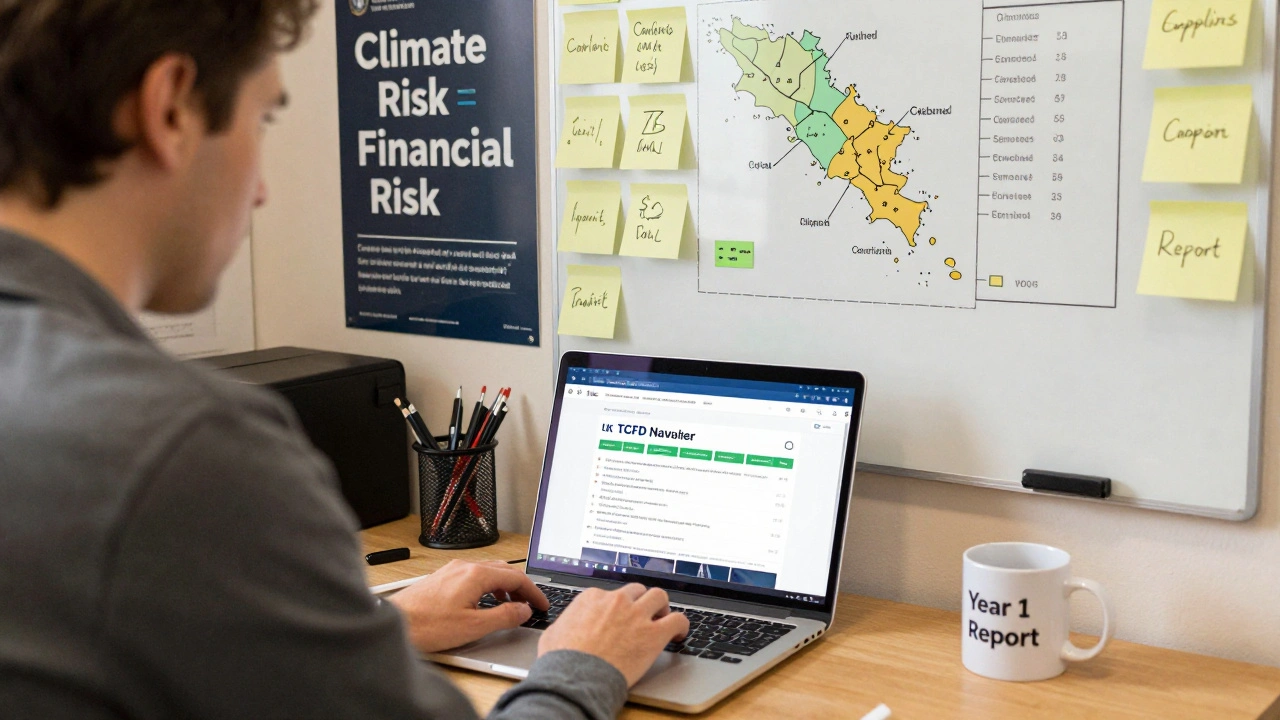
Small businesses can use free tools like the TCFD Navigator a free online tool by the UK government to help companies build their first climate risk disclosure. It walks you through each pillar with templates and examples.
What Happens If You Don’t Report?
The UK government doesn’t fine companies for incomplete TCFD reports - yet. But the real penalties are worse.
- Investor pullout: If you’re not reporting, institutional investors will move your stock to the bottom of their watchlist. In 2024, £18 billion was pulled from UK firms with poor climate disclosures.
- Supply chain exclusion: Big buyers like Tesco, Amazon, and NHS Supply Chain now require TCFD reports from suppliers. No report? No contract.
- Reputation damage: Customers and employees care. 61% of UK consumers say they’d switch brands if a company ignored climate risk (YouGov, 2025).
- Future fines: The FCA has signaled it will introduce financial penalties by 2027. Starting now is cheaper than scrambling later.
How TCFD Fits With Other ESG Standards
There are a lot of ESG frameworks: SASB, GRI, ISSB. Don’t get overwhelmed. TCFD is the financial anchor.
Think of it this way:
- GRI Global Reporting Initiative, a broad sustainability reporting standard used by nonprofits and public sector organizations tells you what to report on social and environmental impact.
- ISSB International Sustainability Standards Board, created in 2021 to unify global ESG reporting, now aligned with TCFD wants global consistency - and it’s built on TCFD.
- TCFD Task Force on Climate-related Financial Disclosures, focused specifically on financial impacts of climate risk asks: How does this affect your balance sheet?
If you’re reporting under ISSB (which most UK firms now do), you’re already meeting TCFD. They’re aligned. But if you’re only doing GRI, you’re missing the financial lens investors care about.
Where UK Businesses Are Still Falling Short
Even companies that report often miss the point.
They focus on carbon reduction - which matters - but ignore physical risks. A brewery in Yorkshire might reduce its emissions by 30%, but if a flood shuts down its main distribution center, that’s a £2 million loss. That’s the risk TCFD wants you to expose.
Another blind spot? Justification. Many reports say: "We’re investing in solar panels." But they don’t say: "This reduces our electricity costs by £120,000/year and cuts our exposure to volatile energy prices." That’s the connection investors need.
And don’t forget climate resilience. If your factory is in a flood zone, what’s your backup plan? Do you have insurance? Alternative suppliers? TCFD expects you to answer that.
What Comes Next After TCFD?
TCFD isn’t the end. It’s the starting line.
By 2027, the UK plans to require all companies to disclose transition plans - not just risks. That means you’ll need to show a clear path to net zero, with milestones, budgets, and accountability.
Also, the EU’s CSRD and the US SEC’s climate rules are pushing global standards closer together. If you’re reporting well under TCFD now, you’ll be ahead when those rules hit UK subsidiaries of multinational firms.
The companies that win are the ones treating climate risk like any other financial risk - tracked, measured, managed, and reported. Not as a PR project. Not as a checkbox. As a core part of how they do business.
If you’re reading this and you haven’t started, today is the day to begin. Not next quarter. Not next year. Today.
Is TCFD reporting mandatory for small businesses in the UK?
No, TCFD reporting is currently mandatory only for large companies - those with more than 500 employees and £500 million in annual turnover. However, many small businesses are choosing to report voluntarily because their customers, suppliers, or lenders require it. If you’re part of a supply chain for a large UK firm, you may be asked to provide TCFD-aligned data even if you’re not legally required to report.
What’s the difference between Scope 1, 2, and 3 emissions?
Scope 1 emissions come from sources you own or control - like company vehicles or boilers. Scope 2 emissions are from the electricity, heat, or steam you buy. Scope 3 emissions are everything else - your suppliers, employee commuting, product use by customers, and waste disposal. Scope 3 often makes up the majority of a company’s footprint, but it’s the hardest to measure. TCFD requires you to report on Scope 3 if it’s material to your business.
Do I need to hire a consultant to do TCFD reporting?
No. Many companies do it internally. You need someone who understands your business, access to your financial and operational data, and a willingness to learn. The UK government’s TCFD Navigator tool is free and guides you step by step. Consultants can help if you’re overwhelmed or need external validation, but they’re not required.
Can I use the same report for both TCFD and investor ESG requests?
Yes - if you structure it right. TCFD is designed to be compatible with other standards like ISSB and SASB. If you cover the four pillars (Governance, Strategy, Risk Management, Metrics and Targets) clearly and link them to financial impacts, most investors will find your report sufficient. Avoid jargon. Focus on how climate risks affect your revenue, costs, and assets.
How often do I need to update my TCFD report?
Annually. The UK requires annual reporting aligned with your financial year. But you should be tracking your metrics and risks continuously. Your report should reflect what happened over the past year - not just what you planned. Update your assumptions, targets, and risk assessments each year based on new data.
What if my business is affected by climate change but I don’t emit much carbon?
TCFD isn’t just about emissions. It’s about risk. A tourism company in Cornwall might have low emissions, but if rising sea levels or extreme heat reduce visitor numbers, that’s a financial risk. A food distributor might have low direct emissions but face supply chain disruption from droughts in Spain or Italy. TCFD wants you to identify and disclose those impacts - no matter how small your carbon footprint is.
Next Steps for UK Businesses
Don’t wait for a regulator to chase you. Start now.
- Download the TCFD Navigator from the UK government website.
- Hold a 90-minute meeting with your finance and operations teams to map your biggest climate risks.
- Set a deadline: your next annual report must include TCFD disclosures.
- Share your progress internally. Employees want to work for companies that take this seriously.
Climate risk isn’t going away. The companies that thrive are the ones that turn disclosure into action - and action into advantage.