 by
by Team Building Activities in the UK: Practical Ideas to Strengthen Workplace Relationships
24 Dec, 2025Teams in the UK don’t just work together-they live together, sometimes for years. But when was the last time your team actually connected? Not just exchanged emails or attended a Zoom call, but laughed, struggled, and solved something real as a group? That’s where team building activities come in-not as a box-ticking HR exercise, but as a way to rebuild trust, spark communication, and turn coworkers into allies.
Why Team Building Matters More in the UK Than You Think
The UK workplace is built on a quiet kind of professionalism. People keep to themselves. Small talk happens at the kettle, not in meetings. That’s not laziness or disengagement-it’s culture. But when remote work became normal after 2020, that quietness turned into silence. Surveys from CIPD in 2024 show that 61% of UK employees feel less connected to colleagues than they did before the pandemic. That’s not just about morale. It’s about performance. Teams with weak bonds miss deadlines, avoid tough conversations, and duplicate work because no one feels safe asking for help.
Team building isn’t about trust falls or awkward icebreakers. It’s about creating moments where people see each other as humans, not job titles. And in the UK, that means activities that feel natural, not forced.
Outdoor Challenges: Get Them Out of the Office
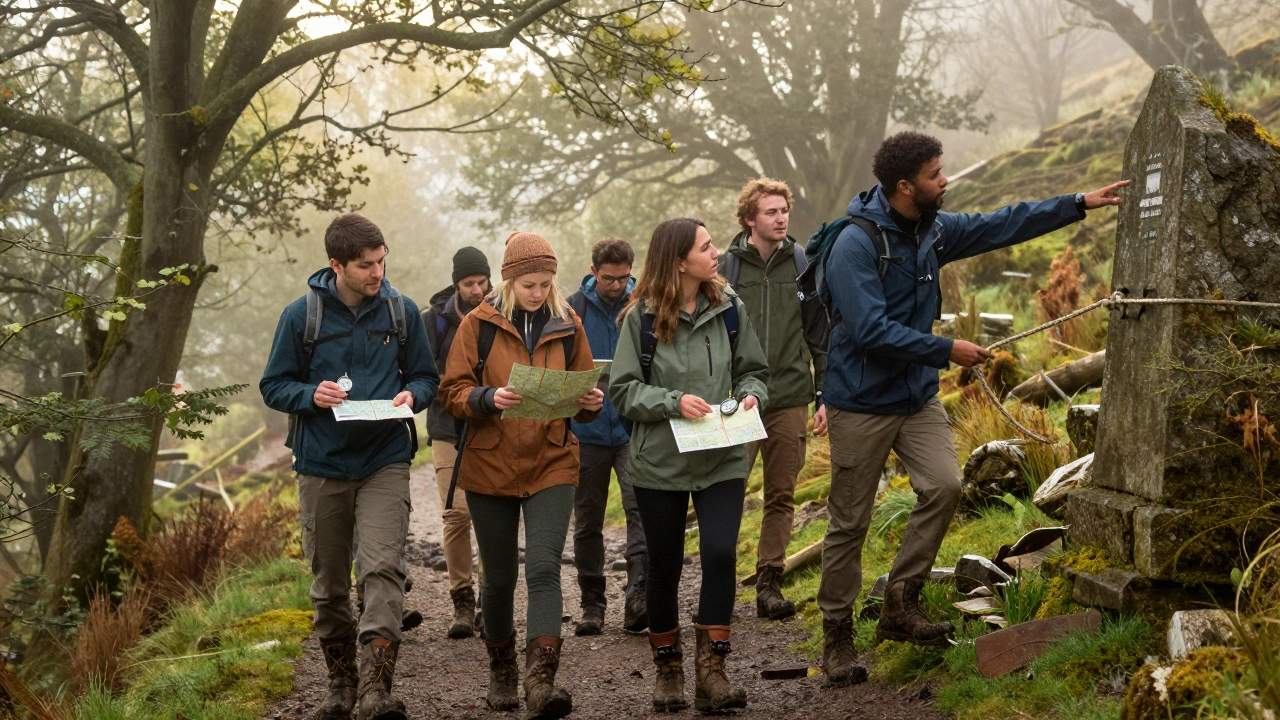
Nothing breaks down hierarchy faster than getting muddy together. Outdoor team challenges work because they’re physical, unpredictable, and require real collaboration. Think less “escape room in a warehouse,” more “orienteering through the Lake District.”
Try a Survival Skills Day in the Peak District. Teams get a map, a compass, and a list of checkpoints. Each checkpoint has a task-build a fire, purify water, navigate using landmarks. No one person has all the skills. Someone knows how to tie knots. Someone else reads terrain. Someone remembers the last time they got lost. They have to share knowledge. No phones allowed. No managers directing. Just people figuring it out.
Or book a coasteering session along the Welsh coast. Jumping off cliffs into the sea isn’t about adrenaline-it’s about trust. You’re holding someone’s life in your hands when you lower them into the water. That kind of responsibility changes how people talk to each other afterward.
Volunteer Days: Build Purpose, Not Just Teams
People don’t remember the team-building trivia night. They remember the day they painted a community center with their boss. Or sorted food parcels at a local food bank with the person who always sits at the back of the meeting.
Organize a volunteer day with a local charity. Choose something hands-on: planting trees with Trees for Cities, helping at a homeless shelter run by Crisis, or refurbishing bikes for kids through Cycle Reborn. These aren’t charity events-they’re team events. You’re not doing it to look good. You’re doing it because the team agreed on the cause.
Companies like Unilever and BT have run these for years. Their internal reports show a 38% increase in cross-department collaboration after just one volunteer day. Why? Because you’re not working for a KPI. You’re working for something bigger than your job description.
Cooking Together: Food Breaks Down Barriers
Food is universal. Even the quietest person will talk if they’re chopping onions next to someone.
Book a team cooking class in London, Manchester, or Edinburgh. Choose a theme-Thai street food, Scottish pies, or Italian pasta. Split into small teams. Give each team a recipe, ingredients, and 90 minutes. The catch? No one can speak in their native language. If you’re from India, you have to explain how to use a spice blend in English. If you’re from Scotland, you have to learn what “coriander” is called in Polish. Language becomes a shared puzzle, not a barrier.
Afterward, you eat together. No hierarchy. No laptops. Just people who just made something delicious, together. A 2023 study by the University of Oxford found that teams who cooked together reported 47% higher levels of psychological safety-the number one predictor of high-performing teams.

Escape Rooms with a Twist: Solve Problems, Not Just Puzzles
Escape rooms are popular, but most are too scripted. They reward speed, not teamwork. The real magic happens when you design your own.
Try a custom-made corporate escape room. Hire a local company to build one based on your company’s history. For example, if you’re a fintech firm, the puzzle could involve tracing a fake fraud case through old client files, decoding encrypted emails, and finding a hidden ledger. Each clue requires input from someone in compliance, IT, sales, and customer service.
Or go simpler: Use a real-world challenge. Lock the team in a room with a broken printer, a half-empty toner cartridge, and no instructions. They have 20 minutes to fix it using only what’s in the room. No IT guy. No manuals. Just them. It’s not about the printer. It’s about who speaks up, who listens, and who takes charge without being asked.
Art & Creativity: Let People Be Themselves
Most teams never see each other outside their professional roles. What if you gave them paint?
Book a team mural workshop in a shared space. Each person paints a section of a large canvas. The theme? “What keeps you going at work?” No right or wrong answers. One person paints their dog. Another paints a sunrise. Someone else paints a spreadsheet with a heart in the corner. Then you hang it in the office.
It’s not about talent. It’s about vulnerability. When your manager paints a picture of a crying cat because “I cry every Monday,” something shifts. People stop seeing each other as roles. They start seeing each other as people.
What Doesn’t Work (And Why)
Not every activity works. And not every team needs the same thing.
Don’t do:
- Trust falls. They’re outdated, physically risky, and feel performative.
- Generic quizzes. “Who knows what Sarah’s favorite color is?” That’s not bonding-it’s gossip.
- Day trips to theme parks. Fun, yes. Meaningful? Rarely. People just ride roller coasters and go back to their phones.
- Forced socials. “Everyone must attend the Christmas party.” That’s compliance, not connection.
The UK workforce values authenticity. They’ll walk out of a forced activity faster than they’ll walk into a meeting. The key is to give them a real challenge, not a performance.

How to Plan an Activity That Actually Sticks
Here’s the simple formula:
- Start with a problem. Is communication broken? Are people siloed? Is trust low?
- Match the activity to the problem. Need better communication? Try cooking. Need trust? Try outdoor navigation.
- Keep it small. 8-12 people max. Big groups dilute interaction.
- Make it optional. If people feel forced, they’ll check out.
- Debrief afterward. Not in a meeting. Over coffee. Ask: “What surprised you about someone today?”
And don’t do it once a year. Do it every quarter. Team building isn’t an event. It’s a habit.
Real Results from Real Teams
At a mid-sized accounting firm in Bristol, they started monthly volunteer days. Within six months, absenteeism dropped by 22%. Why? Because people started showing up-not because they had to, but because they wanted to be with the group.
A tech startup in Brighton ran a coasteering trip. Two weeks later, the sales and engineering teams started sharing client feedback without being asked. One engineer said, “I realized Sarah from sales didn’t just want numbers. She wanted to understand why the code was slow. I never knew she cared that much.”
That’s the point. Team building doesn’t fix everything. But it fixes the quiet gaps-the ones that make people feel alone in a crowded office.
Final Thought: It’s Not About Fun. It’s About Feeling Seen.
The best team building activity doesn’t have a fancy name. It doesn’t cost a fortune. It just gives people a moment where they’re not just employees. They’re part of something. And in the UK, where professionalism often hides loneliness, that’s the most powerful thing you can give a team.
Are team building activities worth the cost?
Yes-if they’re done right. A 2024 report by the Chartered Institute of Personnel and Development found that companies investing in meaningful team activities saw a 30% reduction in staff turnover within 12 months. The cost of replacing one employee in the UK averages £30,000. A £500 team cooking class pays for itself many times over.
Can remote teams do team building in the UK?
Absolutely. Try a virtual cooking class where everyone gets the same ingredients mailed to their homes. Or a national scavenger hunt-teams have to find local landmarks, take photos, and explain why they chose them. The goal isn’t to replicate office life-it’s to create shared experiences that feel real, even from a distance.
What if my team hates activities like this?
Then ask them what they’d prefer. Some teams bond over board games. Others over pub quizzes. The key isn’t the activity-it’s the intention. Give people a voice in choosing it. A team that picks their own challenge will engage more than one forced into a trust fall.
How often should we do team building?
Every 3 months. Too rarely, and the connection fades. Too often, and it becomes another task. Quarterly activities give time for relationships to grow between sessions. Keep it light, keep it real, and keep it consistent.
Do we need an HR person to run this?
Not at all. The best team building happens when it’s led by the team. Pick a volunteer from within to plan the next activity. Give them a budget and a deadline. Let them choose the format. Ownership creates buy-in. HR can help with logistics, but the energy comes from the team.