 by
by Trade Agreements Impacting the UK: How Brexit Changed Global Trade Deals
5 Jan, 2026The UK hasn’t been part of the European Union’s single market since January 31, 2020. But the real shake-up didn’t happen on that day. It unfolded over the next two years as new trade deals were hammered out, old ones were renegotiated, and businesses scrambled to adapt. Today, the UK’s trade landscape looks nothing like it did before Brexit - and the ripple effects are still being felt across Europe, North America, and Asia.
What Brexit Actually Did to UK Trade
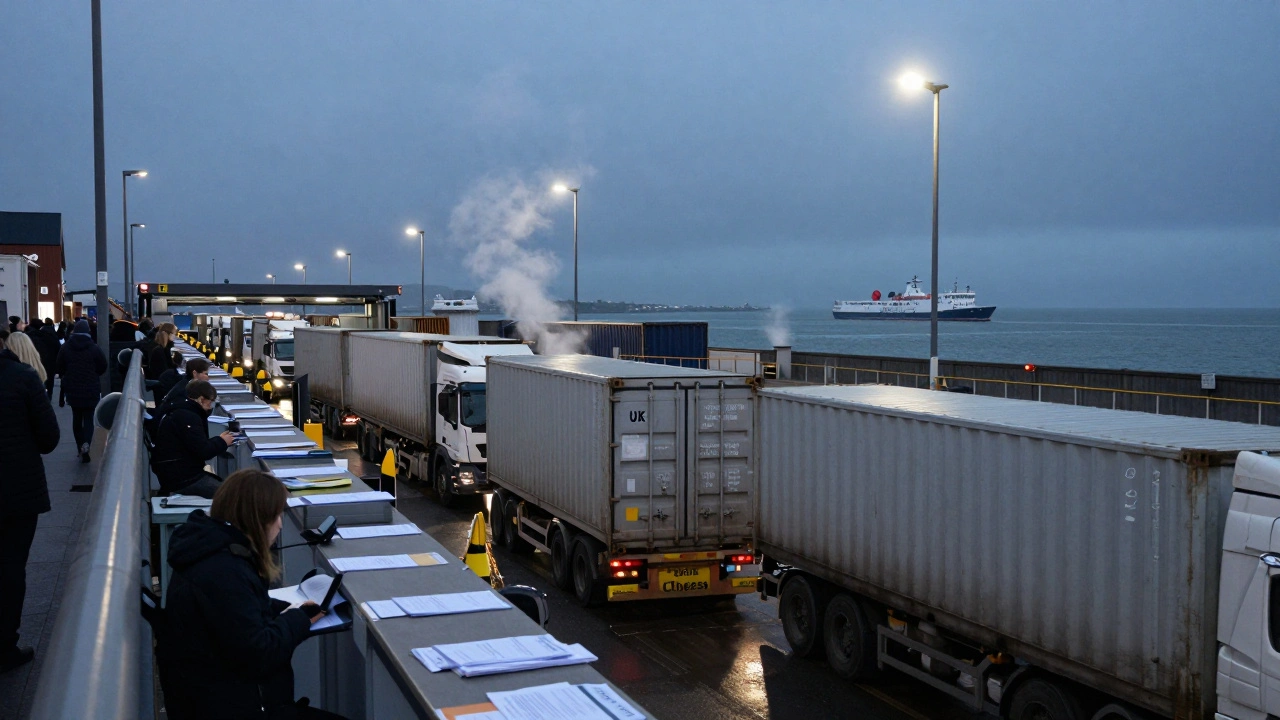
Before Brexit, the UK traded with 27 EU countries as if they were one. No customs checks, no tariffs, no paperwork for goods moving between member states. That changed overnight. Suddenly, a shipment of British cheese going to France needed export health certificates, customs declarations, and safety inspections. Small businesses that had never dealt with international rules found themselves drowning in bureaucracy.
The UK government claimed Brexit would mean freedom to make its own trade deals. But freedom doesn’t come cheap. In 2023, UK exports to the EU dropped by 14% compared to pre-Brexit levels, according to the Office for National Statistics. Imports from the EU fell too, but not as sharply. Why? Because UK consumers still need EU-made parts, medicines, and food - but UK exporters don’t have the same guaranteed access to EU buyers.
The biggest shock wasn’t tariffs - most goods still move tariff-free under the Trade and Cooperation Agreement. It was the red tape. A single truck crossing the Channel now takes 40% longer on average than it did in 2019. That’s not just a delay. It’s money lost on fuel, driver wages, and spoiled perishables.
The New Trade Deals: Who’s the UK Talking To Now?
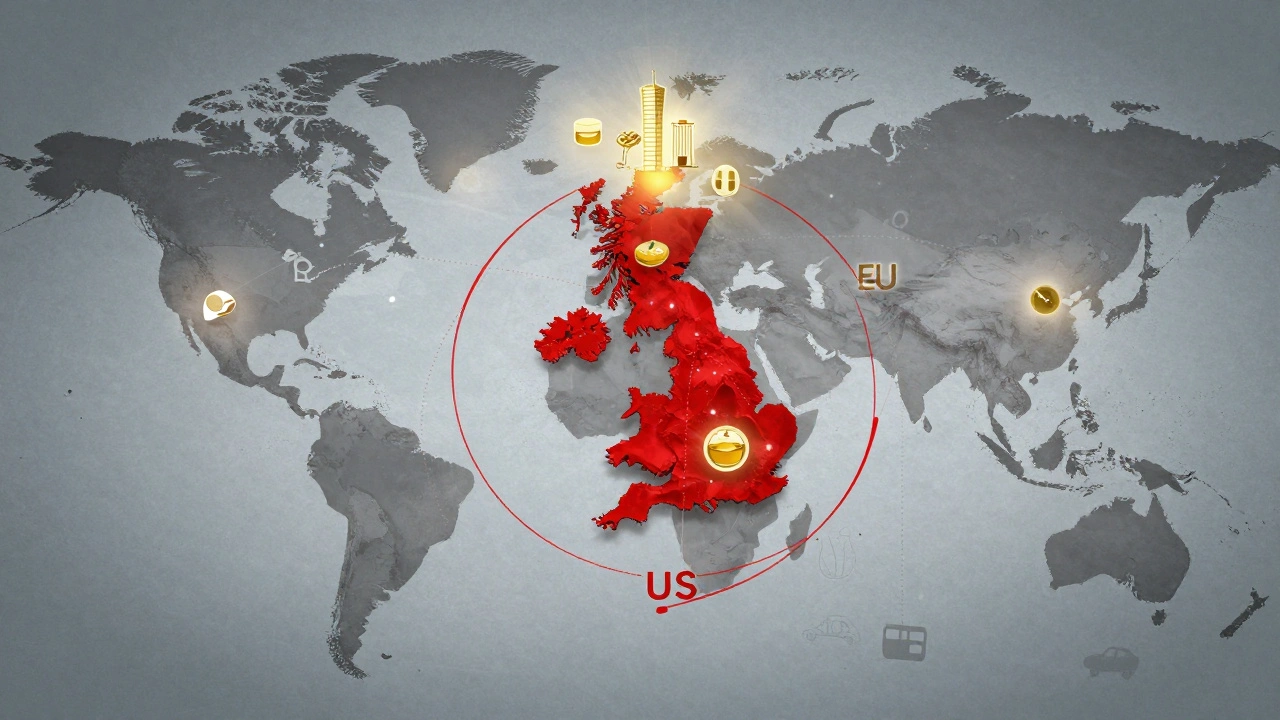
Since leaving the EU, the UK has signed 40 new trade agreements - but most of them are copies of old EU deals. That’s not innovation. That’s rearranging deck chairs. The real wins? A few key deals that actually changed the game.
The UK-Australia free trade agreement, signed in 2022, removed tariffs on 100% of UK exports to Australia. That sounds great - until you realize Australia already had a free trade deal with the EU. British farmers now compete with Australian beef and lamb that’s cheaper to produce and easier to ship. The UK’s agricultural sector saw a 9% drop in beef exports in 2023, even as Australian imports rose by 22%.
Then there’s the UK-CPTPP deal, joining the Comprehensive and Progressive Agreement for Trans-Pacific Partnership. This opened doors to Canada, Japan, Australia, New Zealand, and six other Pacific economies. For UK financial services and whisky makers, it’s a win. For carmakers? Not so much. Japan still imposes a 2.5% tariff on UK-built cars, while South Korea charges 8%. Meanwhile, German and Korean cars get preferential access to the UK market through existing EU agreements.
The UK-India agreement, still under negotiation as of early 2026, could be the biggest wildcard. India wants easier access for its pharmaceuticals and IT services. The UK wants more access for its financial firms and cars. But India’s demand for lower tariffs on dairy and textiles clashes with UK farmers’ fears of being undercut. Talks have stalled over food safety standards and intellectual property rules.
Where the UK Is Falling Behind
One of the biggest myths about Brexit is that the UK is now free to strike better deals. The truth? The UK is negotiating from a weaker position.
Size matters in trade. The EU is a $19 trillion economy. The UK is $3.2 trillion. When the EU negotiates with the US, it can demand big concessions. When the UK tries the same, the US says, “Why not deal with the EU instead?” That’s why the long-promised UK-US trade deal is still nowhere near completion. The Biden administration has made it clear: they won’t touch a deal until the Northern Ireland protocol is fully resolved.
China is another story. The UK has no formal trade deal with China - and likely won’t anytime soon. Political tensions over Hong Kong, Xinjiang, and tech restrictions make deep economic ties risky. Meanwhile, the EU has a Comprehensive Agreement on Investment with China, even if it’s not fully ratified. The UK is left out of the table.
Even within Europe, the UK is losing ground. Norway and Switzerland aren’t in the EU, but they’re part of the European Economic Area or have deep bilateral deals. They still enjoy near-frictionless trade. The UK? It’s treated like a third country. That’s why German manufacturers now route shipments through Poland or the Netherlands to avoid UK border delays.
How Businesses Are Adapting - and Who’s Struggling
Large companies have moved parts of their operations. Unilever shifted its EU headquarters from London to the Netherlands. BMW built a new logistics hub in Germany to handle UK-bound parts. Pfizer now stocks medicines in Belgium for EU distribution, not the UK.
Small businesses? Many just gave up. A 2024 survey by the Federation of Small Businesses found that 38% of UK SMEs stopped exporting to the EU entirely. Why? The cost of compliance - hiring customs agents, paying for certifications, buying insurance - ate up their profit margins. One artisan cheese maker in Cheddar reported spending £1,200 a month just on export paperwork. That’s more than their monthly rent.
Some adapted creatively. A London-based fashion brand started using a warehouse in Belfast to ship goods to the EU as “Northern Ireland exports,” taking advantage of the Windsor Framework. Another tech startup moved its customer support team to Poland to keep EU clients happy. These are survival tactics - not strategic growth.
The Global Ripple Effect
The UK’s trade shift isn’t just about the UK. It’s changing how the world does business.
Canada, once a quiet trade partner, is now a key bridge between the UK and the US. Canadian firms are acting as intermediaries - importing UK goods, repackaging them, and exporting them to the US under the USMCA rules. It’s a workaround, but it’s working.
Meanwhile, the EU is tightening its own rules. In 2025, the EU introduced the Carbon Border Adjustment Mechanism (CBAM). UK steel and cement exports now face carbon taxes when entering the EU. The UK has no equivalent policy, so British producers are at a disadvantage. That’s not just a trade issue - it’s a climate policy mismatch.
And then there’s Africa. The UK inherited 44 trade deals with African nations from the EU. But many of those deals were designed to benefit EU companies. Now, the UK is trying to rewrite them to be more “fair.” But without the leverage of the EU’s collective market, these new deals often offer less. Ghanaian cocoa exporters say UK offers are 15% lower than what they got from the EU.
What’s Next for the UK?
The UK’s trade strategy is stuck between two realities: the dream of global sovereignty and the cold truth of economic scale. It can’t become a Singapore overnight. It doesn’t have the population, the manufacturing base, or the geopolitical weight.
The smartest move now? Double down on what it does best: financial services, legal expertise, pharmaceuticals, and high-end education. These are sectors where the UK still leads. Instead of chasing cheap deals with Australia or India, focus on deepening ties with countries that value quality over price.
Another option: re-engage with the EU on regulatory alignment. Not full membership. But mutual recognition of standards for medicines, food safety, and automotive parts. That would slash compliance costs and bring back some of the lost trade. It’s politically unpopular - but economically rational.
Right now, the UK is paying a high price for ideological purity. The trade deals are there. The paperwork is there. But the confidence? That’s what’s missing. And without confidence, even the best agreement won’t move the needle.
Did Brexit improve the UK’s trade deals?
Not really. The UK signed many new trade agreements, but most just copied existing EU deals. The few new ones - like with Australia or CPTPP - opened markets but didn’t offset the losses from reduced EU trade. The UK lost its biggest trading partner without gaining a better one.
Why hasn’t the UK signed a deal with the US yet?
The US won’t negotiate seriously until the Northern Ireland protocol is fully settled. There are also big disagreements over food standards - like chlorine-washed chicken and hormone-treated beef - which the UK wants to allow, but the US considers unsafe. Political pressure from US farmers and EU allies has stalled progress.
Are UK exports still competitive globally?
Only in niche areas. UK pharmaceuticals, financial services, luxury goods, and Scotch whisky remain strong. But mass-market exports like cars, machinery, and textiles are struggling due to higher costs, border delays, and lack of preferential access compared to EU competitors.
How has Brexit affected small businesses?
Harshly. Many SMEs stopped exporting to the EU because the cost of customs paperwork, certifications, and delays made it unprofitable. A 2024 survey found nearly 4 in 10 small businesses no longer trade with the EU. Those who continue often hire expensive specialists just to file forms.
Can the UK join the EU single market again?
Technically yes - but politically unlikely. The UK government has ruled out rejoining. Even if it wanted to, EU members would demand full adherence to EU rules, including freedom of movement and budget contributions - things the UK explicitly left to avoid. It’s not a simple reversal.