
 by
by UK Childcare Ofsted Registration and Staff Ratios: A Complete Guide
6 May, 2026Starting a nursery in the UK is less about decorating playrooms and more about navigating a dense web of legal requirements. If you get the basics wrong-specifically Ofsted registration and staff-to-child ratios-you risk immediate closure or heavy fines. The system is strict because it protects vulnerable children, but for providers, it represents the biggest barrier to entry.
You need to understand that Ofsted (Office for Standards in Education, Children's Services and Skills) does not just inspect; they regulate compliance with the Early Years Foundation Stage (EYFS). This statutory framework sets the standards for learning, development, and care for children from birth to five. Ignorance of these rules is not a defense. This guide breaks down exactly what you need to do to register and how to manage your staffing legally.
The Reality of Ofsted Registration
Before you open your doors, you must be registered. Operating an unregistered childcare service is a criminal offense under the Childcare Act 2006. The process is not instant; it takes time, money, and patience. You cannot simply apply and start working the next day.
The first step is ensuring your premises are safe. You will need to pass checks on fire safety, food hygiene, and general health and safety. Once your building is compliant, you submit your application to Ofsted. This includes providing detailed information about your proposed setting, your management structure, and your safeguarding policies.
A critical part of this application is the disclosure of all adults who will work in the setting. Every person aged 18 or over who works regularly in your childcare setting must undergo an Enhanced DBS check (Disclosure and Barring Service). This checks for criminal records and ensures no one barred from working with children can enter your facility. Without these checks, Ofsted will reject your application outright.
During the registration phase, an Ofsted inspector will visit your premises. They aren't looking for perfection yet, but they are checking for 'fitness' to provide care. Do they have enough space? Is the outdoor area secure? Are the policies written clearly? If you fail this initial inspection, you won't get your registration certificate, and you cannot operate.
Understanding Mandatory Staff Ratios
Once registered, your daily operations hinge on one number: the ratio. These are not suggestions; they are legal minimums set by the EYFS. Breaching them can lead to urgent action notices or being removed from the Early Years Register entirely.
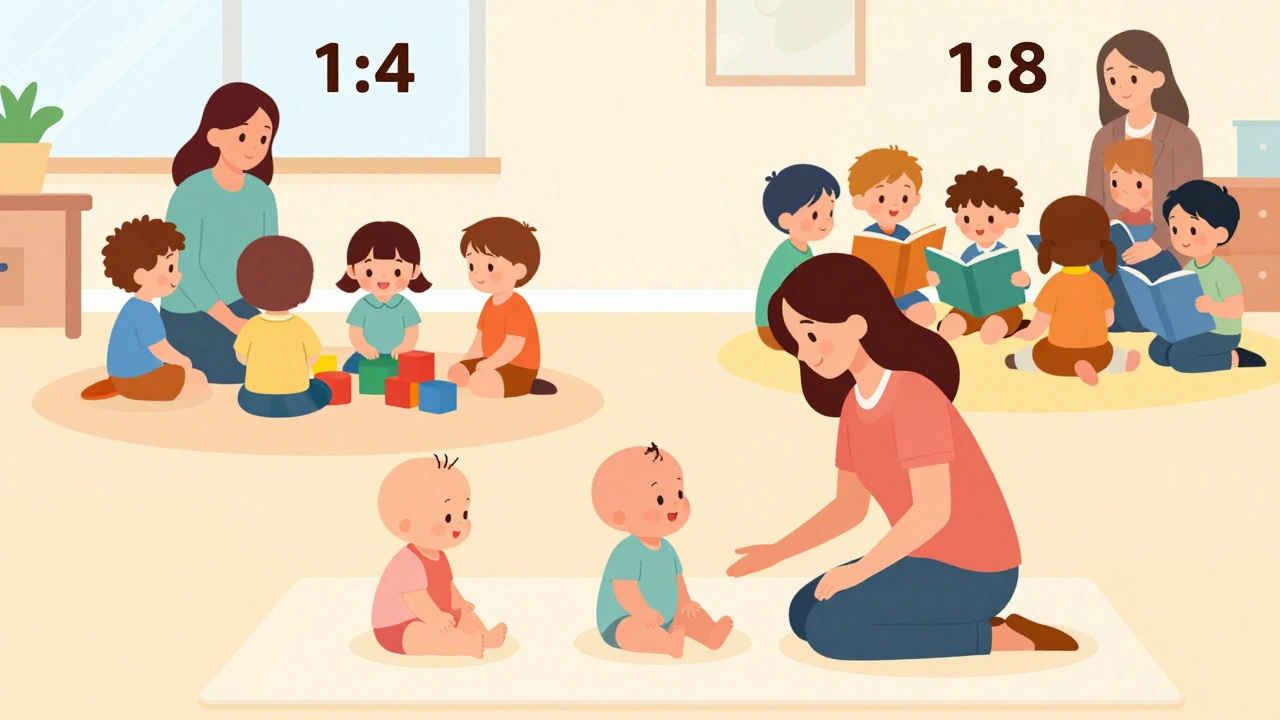
The logic behind ratios is simple: there must always be enough qualified adults to supervise and engage with every child safely. The numbers change based on the age of the children and their specific needs.
| Age Group | Ratio | Key Requirement |
|---|---|---|
| Under 2 years | 1:3 | One adult for every three babies |
| 2 years old | 1:4 | One adult for every four toddlers |
| Over 2 years | 1:8 | One adult for every eight preschoolers |
These ratios assume a standard group size. However, if you have a larger room, the total number of children allowed increases, but the ratio per adult stays the same. For example, in a room with two adults, you could theoretically have up to 16 children over the age of two (2 x 8), provided the room is large enough to accommodate them safely.
The Role of Qualified Staff
Ratios are only half the equation. Who counts towards that ratio matters immensely. Not every employee can be counted as a 'qualified practitioner.' To count towards the mandatory ratios, at least half of the staff in any group must hold a recognized Level 3 qualification in childcare and education.
Common acceptable qualifications include:
- Diploma in Care, Learning and Development (Early Years) at Level 3
- BTEC National Diploma in Childcare
- Foundation Degree in Early Years
If you hire someone without this qualification, they can still work in the nursery, but they cannot be used to meet the legal ratio requirement. This means if you have a 1:8 ratio, you cannot fill that spot with an unqualified assistant. You must ensure that at least one of the adults supervising those eight children has the Level 3 credential. This rule prevents settings from cutting costs by hiring only low-wage, untrained staff while maintaining dangerous supervision levels.
Safeguarding and Welfare Requirements
Beyond ratios, the EYFS mandates strict welfare requirements. These cover everything from nutrition to physical health. You must have a designated Safeguarding Lead within your setting. This person is responsible for handling allegations of abuse, monitoring staff behavior, and liaising with local authority children's services.
Your safeguarding policy must be robust. It should outline clear procedures for reporting concerns, both internally and externally. In recent years, Ofsted has placed greater emphasis on 'child protection culture.' This means it’s not just about having a policy on paper; it’s about ensuring every staff member knows how to recognize signs of neglect, abuse, or radicalization.
Health checks are also vital. You must maintain accurate records of each child's medical history, allergies, and medications. Administering medicine requires specific consent forms signed by parents. Failure to follow medication protocols correctly is a common reason for serious ratings during inspections.
Funding and Financial Sustainability
Running a nursery involves complex funding streams. Many providers rely on Universal Free Hours, where the government funds 15 hours of free childcare for eligible 2-year-olds and 15 or 30 hours for 3- and 4-year-olds. Understanding the funding rates versus your actual cost of provision is crucial.
In 2026, the rollout of extended free hours continues to expand access, but the hourly rates paid by local authorities often do not cover the full cost of high-quality care, especially when adhering to strict staff ratios. Providers must carefully calculate their break-even points. If you rely heavily on funded places, you may need to subsidize with private-pay fees or offer additional services like holiday clubs to remain viable.
Keep in mind that funding is tied to eligibility. You must verify parent employment status or benefit claims accurately. Incorrectly claiming funds for ineligible children can lead to financial penalties and damage your reputation with the local authority.

Inspections and Rating Outcomes
Once you are operational, Ofsted will inspect you periodically. The outcome determines your rating: Outstanding, Good, Requires Improvement, or Inadequate. A 'Good' rating is the target for most sustainable businesses. 'Outstanding' brings prestige and potentially higher fees, but it requires exceptional practice.
An 'Inadequate' rating triggers immediate intervention. You might be required to appoint a special measures manager or face closure. Inspectors look at leadership, quality of interaction, environment, and outcomes for children. They will talk to staff, observe sessions, and review documentation. Preparation for an inspection should be ongoing, not a last-minute scramble.
Transparency is key. Parents increasingly check Ofsted reports before choosing a nursery. Your public report is a marketing tool as much as a regulatory document. Highlighting improvements made since the last inspection shows responsiveness and commitment to quality.
Navigating Local Authority Support
While Ofsted is national, your local authority plays a significant role in support and enforcement. They handle the administrative side of registration and may offer training or guidance documents specific to your region. Building a good relationship with your local Early Years Team can be beneficial. They often provide updates on changes to legislation before they become widely known.
If you are considering opening a new setting, consult with your local planning department early. Zoning laws can restrict where childcare facilities can operate. Residential areas may have different noise and parking restrictions compared to commercial zones. Getting planning permission denied after investing in renovations is a costly mistake.
How long does the Ofsted registration process take?
The timeline varies, but typically it takes between 8 to 12 weeks from submitting your application to receiving your registration certificate. Delays often occur due to incomplete paperwork, slow processing of DBS checks, or issues identified during the initial premises inspection. It is wise to plan your opening date at least three months out to account for these variables.
Can I use volunteers to meet staff ratios?
No. Volunteers cannot be counted towards the mandatory staff-to-child ratios. Only paid employees or individuals formally employed by the setting can contribute to meeting these legal requirements. Volunteers must still undergo DBS checks and supervision, but they do not replace the need for qualified, paid staff.
What happens if I breach the staff ratios temporarily?
Breaching ratios is a serious violation. Even brief periods of non-compliance can result in an urgent notice from Ofsted, requiring you to rectify the situation immediately. Repeated breaches can lead to prosecution, fines, or removal from the register. Always have contingency plans for staff sickness or absences to avoid this.
Do I need separate registration for school-age childcare?
Yes. If you provide care for children over the age of five, you need to register for 'childminding or daycare' rather than just 'early years provision.' The regulations differ slightly, particularly regarding curriculum requirements, which are less prescriptive for older children. Ensure your registration covers the full age range you intend to serve.
How often does Ofsted inspect nurseries?
Settings rated 'Good' or 'Outstanding' are usually inspected every three years. Those rated 'Requires Improvement' are inspected more frequently, often annually, to monitor progress. 'Inadequate' settings are monitored closely with regular visits until improvements are sustained. Unannounced inspections are standard practice.