 by
by UK Ecommerce Shipping Strategy: Balancing Cost and Speed for 2026
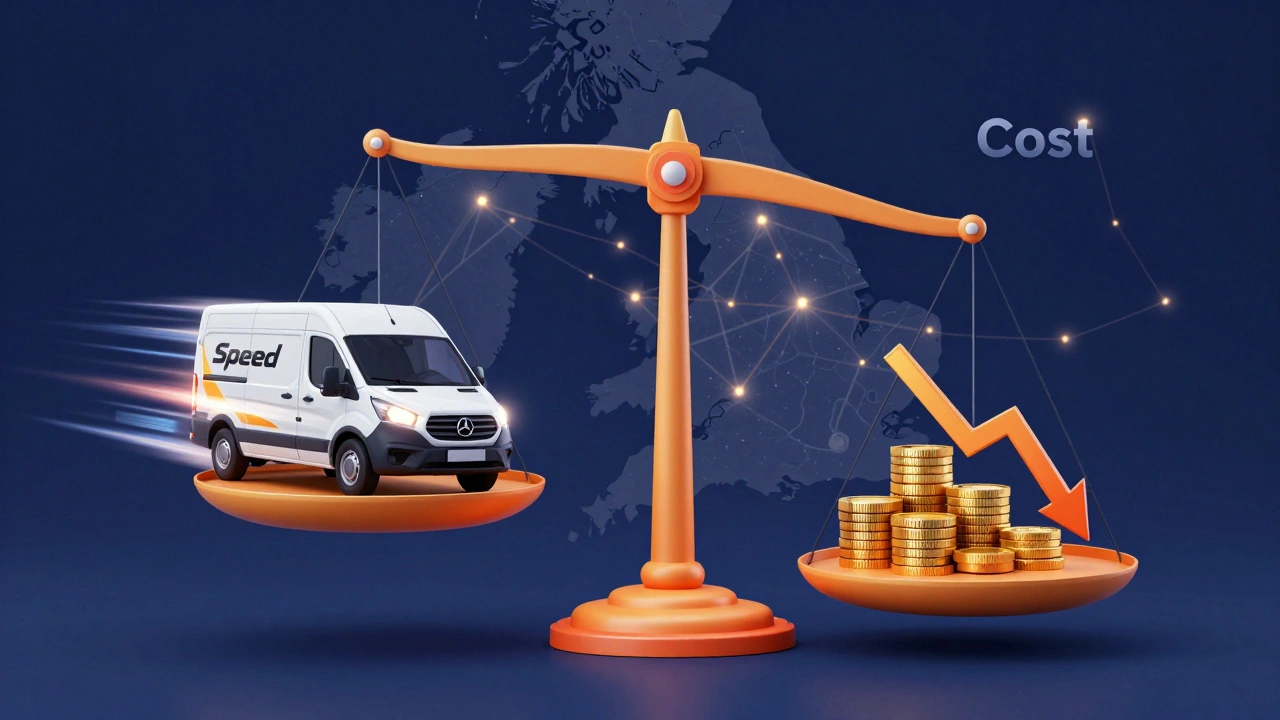
16 May, 2026Running an online store in the UK feels like walking a tightrope. On one side, customers demand next-day or even same-day delivery. On the other, your profit margins are getting squeezed by rising fuel costs and carrier fees. If you ship too slowly, you lose the sale to Amazon. If you ship too fast, you bleed cash on every order. The secret isn't picking the fastest option or the cheapest one. It is building a flexible shipping strategy that adapts to where your customer lives and what they value.
In 2026, the UK logistics landscape has shifted again. With inflation stabilizing but labor shortages persisting in the postal sector, static shipping rates no longer work. You need a dynamic approach that balances cost and speed without sacrificing customer trust.
| Action | Impact |
|---|---|
| Use zone-based pricing | Reduces loss on long-distance orders while keeping local prices competitive |
| Negotiate volume discounts | Lowers per-unit cost as sales scale; requires consistent monthly volume |
| Offer multiple service tiers | Gives customers choice; captures budget shoppers and urgent buyers |
| Implement real-time tracking | Cuts "where is my order" support tickets by up to 40% |
| Optimize packaging | Reduces dimensional weight charges from couriers |
Understanding the UK Delivery Landscape
To build a solid strategy, you first need to understand who moves your packages. The UK market is dominated by two main types of carriers: the national postal service and private couriers. Each has distinct strengths and weaknesses that affect your bottom line.
Royal Mail is the UK's universal postal service provider. For decades, it has been the go-to for small parcels under 2kg. Their network covers every postcode in Britain, including remote areas in Scotland and Wales where private couriers might charge extra. However, Royal Mail has faced significant challenges with industrial action and capacity constraints in recent years. This means reliability can fluctuate, especially during peak seasons like Black Friday or Christmas.
Private couriers like DPD, Evri (formerly Hermes), and Yodel offer more predictable next-day services. They operate larger vans and have dedicated sorting hubs. Evri, for instance, has expanded its coverage significantly and often offers lower rates for standard 2-3 day delivery. DPD is known for higher reliability and better tracking technology, which appeals to premium brands. Yodel, owned by Parcelforce, handles a massive volume of retail returns and deliveries, making them a strong partner for fashion retailers.
The key difference lies in flexibility. Royal Mail is cheaper for lightweight items but slower for guaranteed next-day. Private couriers are faster and more trackable but come at a higher price point. Your strategy should leverage both based on product weight and customer expectations.
Calculating True Shipping Costs
Most ecommerce owners make a critical mistake: they only look at the base rate quoted by the carrier. This ignores hidden fees that eat into profits. To calculate your true cost, you must account for three components: base freight, dimensional weight, and handling.
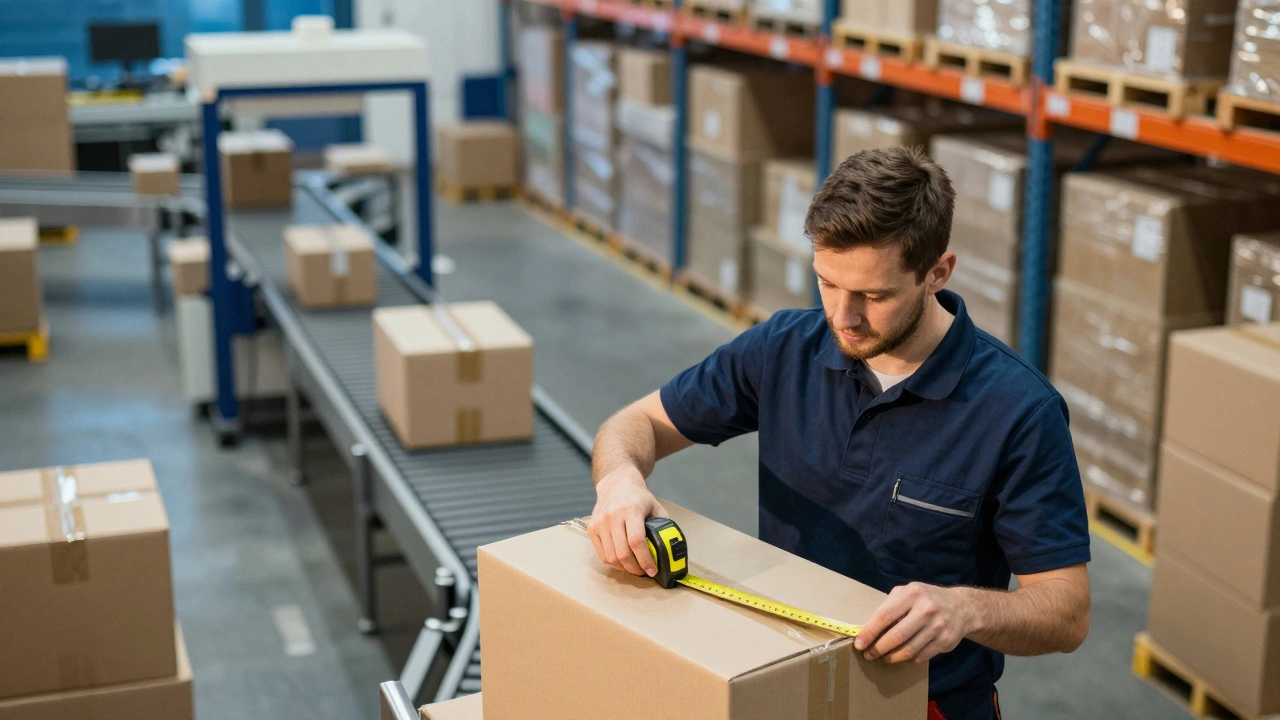
Base freight is the price the carrier charges to move the package from origin to destination. Dimensional weight is where many get burned. Couriers charge based on the space a package occupies, not just its physical weight. A large, light box for a pillow will cost more than a small, heavy box for a book. Always measure length, width, and height accurately. Use the formula: (L x W x H) / Divisor. Most UK couriers use a divisor of 5000 or 6000. Optimizing packaging size can reduce these charges by 15-20%.
Handling costs include packing materials, labor time, and labeling. If you pack orders yourself, factor in your hourly wage. If you outsource, this is built into the fulfillment fee. A common rule of thumb is to add £1-£2 per order for handling unless you have automated systems.
Here is a practical breakdown:
- Small items (under 500g): Royal Mail Large Letter (£1.95) + £0.50 handling = £2.45 total cost.
- Medium parcels (1-2kg): Evri Standard (£3.50) + £1.00 handling = £4.50 total cost.
- Bulky items (over 2kg): DPD Next Day (£8.00) + £1.50 handling = £9.50 total cost.
Knowing these numbers allows you to set accurate shipping rates or absorb costs strategically without losing money.
Designing Service Tiers for Customer Choice
One size does not fit all. Customers have different needs and budgets. By offering multiple shipping tiers, you capture more revenue and reduce cart abandonment. The goal is to guide customers toward the most profitable option while still providing a fast alternative for those willing to pay.
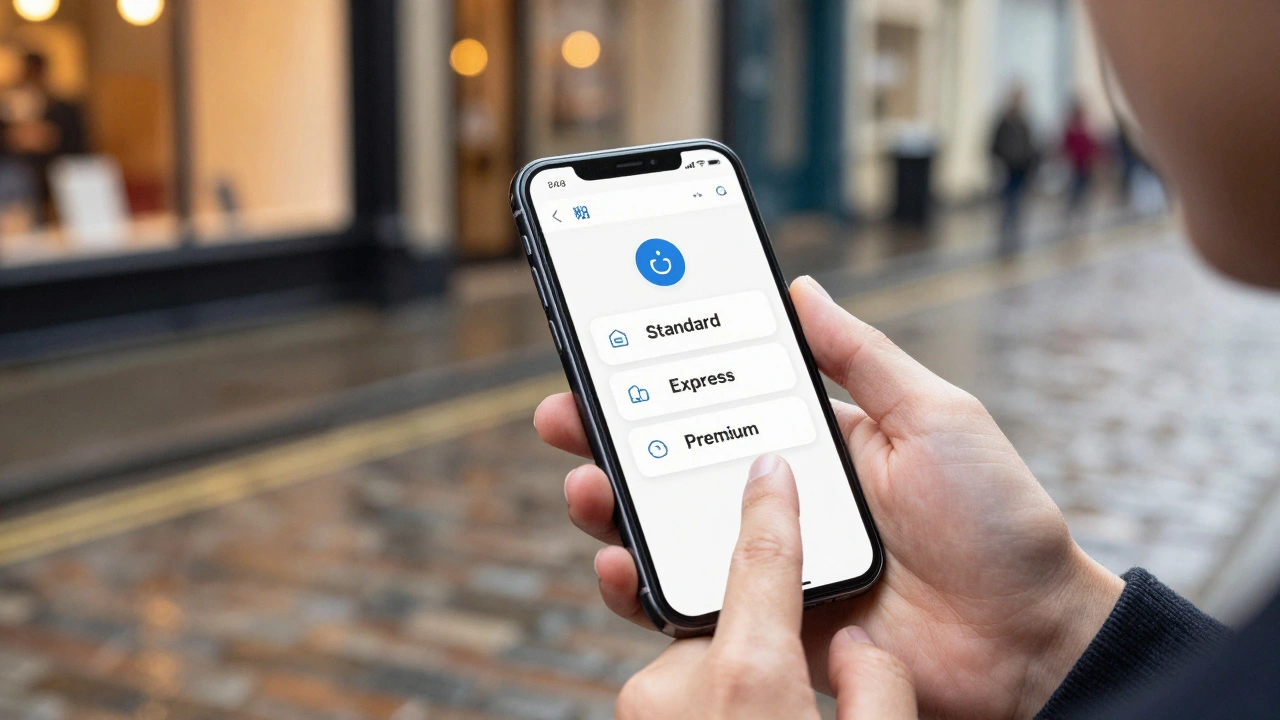
Start with a standard tier. This should be your baseline, typically 3-5 working days via Royal Mail or Evri. Price this competitively, often free over a certain threshold (e.g., £50). This encourages larger basket sizes. Next, offer an express tier. This is next-day or 2-day delivery via DPD or Royal Mail Special Delivery. Charge a premium here, usually £4-£6. Finally, consider a premium tier for high-value items. This includes signature confirmation, insurance, and white-glove handling.
Psychologically, the middle option often looks like the best deal. If you offer Free Standard (£0), Express (£4.99), and Premium (£9.99), many will choose Express because it feels faster than Standard but much cheaper than Premium. This is called the decoy effect. Use it to your advantage by making the Express tier the default selection at checkout.
Also, be transparent about cutoff times. If you promise next-day delivery, specify that orders must be placed before 2 PM. This manages expectations and gives your warehouse time to process orders efficiently.
Leveraging Technology for Automation
Manual shipping processes are error-prone and slow. In 2026, automation is non-negotiable for scaling. You need software that integrates directly with your ecommerce platform (Shopify, WooCommerce, BigCommerce) and connects to multiple carriers.
Shipping platforms like ShipStation or Zoneship allow you to compare rates from different carriers in real-time. They automatically select the cheapest or fastest option based on rules you set. For example, you can configure the system to always use Royal Mail for orders under £30 and DPD for orders over £100.
These tools also generate labels in bulk, print tracking numbers, and update customers automatically. This reduces manual data entry errors, which cause misdeliveries and costly refunds. Tracking integration is crucial. When a customer receives a tracking link, they feel in control. Studies show that proactive tracking updates reduce customer service inquiries by up to 40%. Use email and SMS notifications to keep customers informed at every stage: dispatched, out for delivery, and delivered.
Additionally, use analytics to monitor performance. Track metrics like average delivery time, cost per order, and return rates. If a specific carrier consistently fails in certain postcodes, switch providers for those zones. Data-driven decisions beat guesswork every time.
Managing Returns Efficiently
Returns are inevitable in ecommerce, especially for clothing and footwear. A poor returns experience can turn a one-time buyer into a lost customer forever. Your shipping strategy must include a reverse logistics plan.
Offer prepaid return labels. This removes friction for the customer. Partner with carriers that have easy drop-off points. Evri and Royal Mail have extensive networks of collection points across the UK. Avoid requiring customers to schedule home pickups unless necessary, as this adds complexity and delay.
Consider offering partial refunds for returns to cover restocking fees. Alternatively, incentivize exchanges over refunds. An exchange keeps the revenue within your business and avoids the hassle of re-listing the item. Make the return policy clear and visible on product pages. Highlight phrases like "Free Returns" or "Easy Exchanges" to boost conversion rates.
Finally, analyze return reasons. Is it sizing issues? Product defects? Misleading descriptions? Fixing the root cause reduces future returns and saves money on shipping. High return rates signal deeper problems in your product quality or website content.
Scaling for Peak Seasons
Black Friday, Cyber Monday, and Christmas are make-or-break periods. Traffic spikes can overwhelm your logistics if you aren't prepared. Start planning at least six weeks in advance.
First, secure carrier capacity. Contact your primary and secondary carriers early to negotiate reserved volume. Carriers prioritize partners who commit to volume. Second, increase inventory levels. Stock up on fast-moving SKUs to avoid stockouts during peak demand. Third, hire temporary staff for packing and dispatch. Training them on your packaging standards ensures consistency.
Adjust your shipping cutoff times. During peaks, you may need to cut off dispatch earlier in the day to meet next-day promises. Communicate any delays proactively. If Royal Mail warns of delays due to weather or strikes, notify customers immediately. Transparency builds trust, even when things go wrong.
After the peak season, review performance. Which carriers performed best? Where did bottlenecks occur? Use these insights to refine your strategy for the following year. Continuous improvement is key to long-term success.
What is the cheapest way to ship within the UK?
For small items under 1kg, Royal Mail Large Letter or Parcel services are typically the cheapest. For heavier items, Evri often offers competitive standard rates. Always compare rates using shipping software like ShipStation to find the best deal for each specific order.
How do I handle next-day delivery promises?
Set a strict cutoff time, such as 2 PM, for orders to qualify for next-day delivery. Use reliable couriers like DPD or Royal Mail Special Delivery for these orders. Ensure your warehouse can process and hand over parcels to the carrier before their daily pickup deadline.
Should I offer free shipping?
Yes, but conditionally. Offer free shipping over a minimum order value, such as £50. This increases average order value and offsets the shipping cost. Never offer unconditional free shipping on low-margin items, as it will erode your profits.
How do I reduce shipping costs?
Optimize packaging to minimize dimensional weight. Negotiate volume discounts with carriers as your sales grow. Use shipping software to automate label creation and compare rates. Also, consider using multiple carriers to compete for the best price per zone.
What happens if a package is lost?
If a package is lost, file a claim with the carrier immediately. Provide proof of postage and tracking details. In the meantime, issue a refund or replacement to the customer to maintain satisfaction. Carrier claims can take weeks, so don't wait for resolution before addressing the customer.