 by
by UK Tax Codes Explained: How PAYE Works and Common Adjustments
17 Aug, 2026Ever looked at your payslip and wondered why the tax deducted seems random? Or maybe you got a letter from HMRC the UK's tax authority responsible for collecting income tax, national insurance, and other duties saying your tax code changed, and you had no idea what that meant. If so, you are not alone. Understanding your PAYE code is one of the most practical financial skills you can have in the UK. It directly affects how much money lands in your bank account every month.
Your tax code isn't just a string of numbers and letters. It tells your employer exactly how much of your salary is tax-free before they start deducting Income Tax. Get it wrong, and you might overpay or underpay throughout the year. Let’s break down how these codes work, why they change, and what you can do to make sure yours is correct.
What Is a PAYE Code?
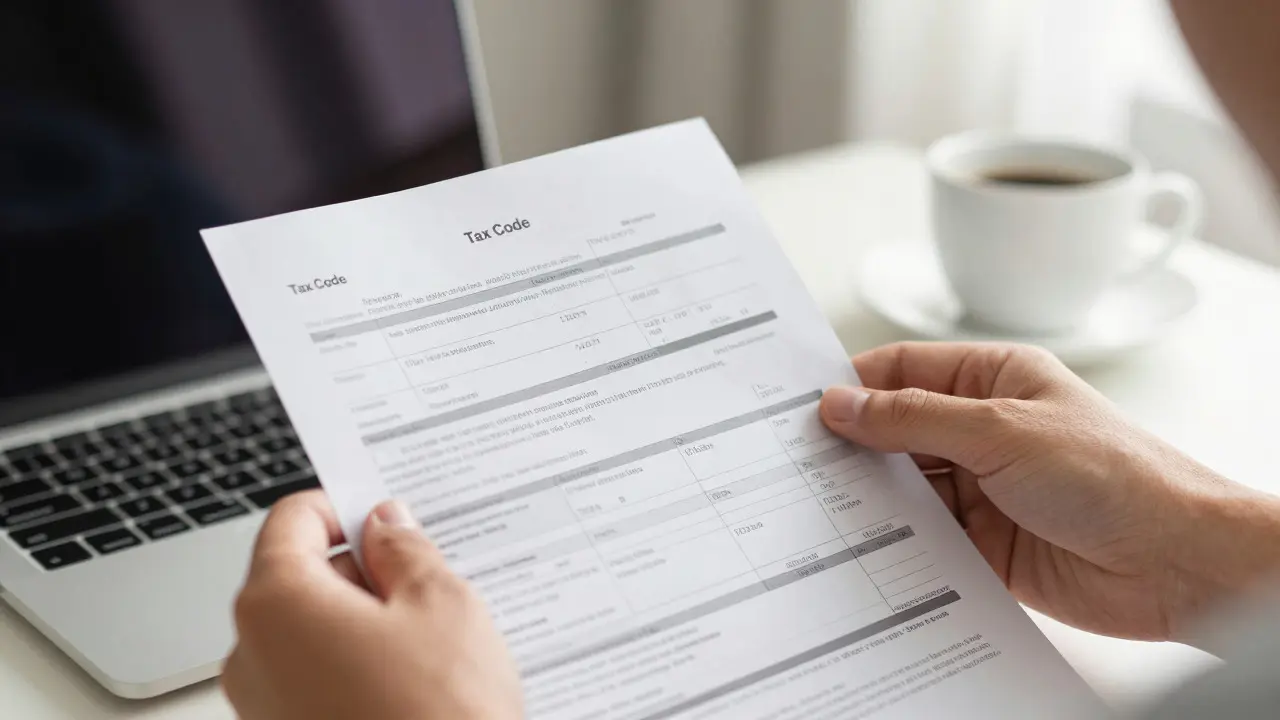
A PAYE code is an alphanumeric identifier assigned by HMRC to determine your annual tax-free allowance based on your Personal Allowance and any other tax adjustments. Most people receive a code starting with the number '1' followed by four digits, ending in the letter 'L'. For example, if your Personal Allowance is £12,570 (the standard rate for many taxpayers in recent years), your code would be 1257L. The number represents the amount of tax-free pay you are entitled to, divided by 10. So, 1257 means £12,570.
The letter suffix indicates specific conditions:
- L: Standard Personal Allowance only.
- K: You have additional taxable income, such as pension contributions made by your employer or previous tax relief claims.
- S: Scottish taxpayer using the standard band.
- B: Basic rate taxpayer in Scotland.
- D: Higher rate taxpayer in Scotland.
- N: Additional rate taxpayer in Scotland.
Understanding this structure helps you verify if your payslip matches what HMRC expects. If you see a 'K' code, don’t panic; it doesn't mean you owe more tax immediately. It just means part of your income is treated differently for calculation purposes.
How Your Tax Code Is Calculated
HMRC calculates your tax code based on several factors. The primary component is your Personal Allowance the amount of income you can earn before paying any Income Tax. This amount can decrease if your total income exceeds £100,000, reducing by £1 for every £2 earned above that threshold until it reaches zero at £125,140.
Other factors include:
- Pension Contributions: Employer pension contributions reduce your tax-free allowance, often resulting in a lower code or a K code.
- Student Loan Repayments: While not directly changing the tax code, they interact with net pay calculations.
- Previous Year Errors: If you underpaid or overpaid last year, HMRC may adjust your current code to correct the balance.
- Benefits in Kind: Company cars, private health insurance, or living away from home allowances add to your taxable income, potentially lowering your effective allowance.
For instance, if you contribute to a workplace pension scheme, your employer reports this to HMRC. HMRC then reduces your Personal Allowance accordingly. A person earning £50,000 with a £5,000 employer pension contribution might see their code drop from 1257L to 757L, reflecting the reduced tax-free limit.
Common Reasons for Tax Code Changes
Tax codes aren't static. They change when your circumstances shift. Here are the most common triggers:
Starting or Changing Jobs
If you switch employers mid-year, your new employer needs to know your remaining tax-free allowance. If you didn't provide a P45 from your previous job, your new employer might initially use a default code like BR (Basic Rate) or 1257L, which could lead to temporary over- or under-payment. Always hand over your P45 to ensure continuity.
Receiving Benefits in Kind
Many employees overlook benefits like company cars or private medical cover. These are considered taxable income. If HMRC receives information about these benefits after your code was set, they will issue a revised code. For example, adding a £5,000 benefit-in-kind value to your income effectively reduces your available Personal Allowance, leading to a lower code number.
Pension Contributions
As mentioned, employer pension contributions are a major factor. If you join a new pension scheme or increase your contributions, expect a code adjustment. Conversely, if you stop contributing, your code may rise later in the year.
Corrections from Previous Years
Sometimes, errors from past tax returns need fixing. Instead of issuing a separate bill, HMRC might adjust your current year's code to recover underpaid tax or refund overpaid amounts through your payroll. This is known as 'adjustment via code.'
How to Check and Update Your Tax Code
You can check your current tax code online through your HMRC online account. Log in, navigate to the 'Income Tax' section, and look for 'Your Tax Code.' This portal also shows your expected take-home pay and any pending adjustments.
If you think your code is wrong, here’s what to do:
- Verify Your Details: Ensure your name, National Insurance number, and employment status are correct in your HMRC profile.
- Review Recent Changes: Did you start a new job, get a company car, or change pension contributions? If yes, the code change might be accurate.
- Contact HMRC: If everything looks right but your take-home pay feels off, call HMRC or send a secure message via your online account. Have your National Insurance number ready.
- Inform Your Employer: Sometimes the error lies with the payroll system. Provide them with your latest tax code confirmation from HMRC.
Acting quickly prevents small discrepancies from becoming large debts or refunds at the end of the tax year.
Special Cases: K Codes and Multiple Jobs
K codes often confuse people because they look like you're losing your allowance. In reality, a K code means you have extra taxable income that wasn't captured in your initial Personal Allowance calculation. For example, if you have two jobs, HMRC usually splits your Personal Allowance between them. If you don't declare the second job, you might end up with a K code on one or both payslips to ensure the total tax paid matches your actual liability.
Similarly, if you claim tax relief on pension contributions or charitable donations, HMRC may assign a K code to reflect that you've already received some tax benefits. This ensures you don't double-dip on deductions.
| Code Suffix | Meaning | Typical Scenario |
|---|---|---|
| L | Standard Personal Allowance | Single job, no special benefits |
| K | Additional taxable income | Multiple jobs, pension contributions, prior year corrections |
| S/B/D/N | Scottish Tax Bands | Residents of Scotland taxed at different rates |
| X | No tax-free allowance | High earners exceeding £125,140 or specific adjustments |

Impact on Take-Home Pay
Your tax code directly influences your monthly net pay. A higher code number means more of your salary is tax-free, resulting in higher take-home pay. Conversely, a lower code or a K code reduces your tax-free portion, increasing the amount deducted for Income Tax and National Insurance.
Consider two scenarios:
- Scenario A: Employee earns £40,000 with code 1257L. Taxable income is £27,430 (£40,000 - £12,570).
- Scenario B: Same employee has a company car worth £3,000, reducing their code to 957L. Taxable income becomes £30,430 (£40,000 - £9,570).
In Scenario B, the employee pays tax on an extra £3,000 of income, significantly impacting their monthly salary. This is why monitoring your code is crucial for budgeting.
Frequently Asked Questions
What does the letter L mean in my tax code?
The letter L indicates that you are receiving the standard Personal Allowance without any special adjustments. It is the most common suffix for employees with a single job and no significant benefits in kind.
Why did my tax code change to a K code?
A K code appears when you have additional taxable income, such as employer pension contributions, multiple jobs, or corrections from previous tax years. It adjusts your tax-free allowance downward to reflect these extra liabilities.
Can I have two different tax codes at two jobs?
Yes. HMRC typically splits your Personal Allowance between your employers. One job might have a standard L code, while the other has a K code or a reduced L code to ensure your total tax paid matches your overall income.
How do I check my current tax code?
Log in to your HMRC online account and navigate to the 'Income Tax' section. Your current tax code and any upcoming changes will be displayed there. You can also find it on your payslip under the 'Tax Code' field.
Does my tax code affect National Insurance?
No, your tax code only affects Income Tax calculations. National Insurance is calculated based on your gross earnings against fixed thresholds, independent of your PAYE code.