
 by
by UK Working Time Regulations: What Employees Must Know and What Employers Must Do
11 Jan, 2026Every year in the UK, thousands of workers are told they can’t take their full rest breaks, are forced to work over 48 hours a week, or are denied paid holiday. And most of them don’t know it’s illegal. The working time regulations aren’t just paperwork-they’re your legal shield. Whether you’re stacking shelves, coding software, or managing a team, these rules exist to protect your health, your time, and your rights. Employers who ignore them risk fines, lawsuits, and reputational damage. This isn’t about theory. It’s about what you can actually demand-and what your boss is legally required to give you.
What the Working Time Regulations Actually Cover
The Working Time Regulations 1998, updated in 2003 and still in force today, are the backbone of UK workplace time rules. They don’t just set limits-they define minimum standards for rest, holidays, and night work. These rules apply to nearly every worker in the UK, from full-time office staff to zero-hours contract cleaners. There are only a few exceptions: self-employed people, family members working in a family business, and some seafarers or transport workers who fall under different rules.
Here’s what’s actually guaranteed:
- At least 11 hours of rest between working days
- A 20-minute break if you work more than 6 hours in a day
- At least 24 hours of uninterrupted rest per week (or 48 hours every two weeks)
- 5.6 weeks of paid holiday per year (that’s 28 days for someone working 5 days a week)
- A maximum average of 48 hours per week over 17 weeks, unless you opt out in writing
- Special protections for night workers-no more than 8 hours of night work in any 24-hour period on average
These aren’t suggestions. They’re enforceable rights under UK law. The Health and Safety Executive (HSE) can investigate complaints and issue penalties. Employers can’t contract out of them-even if you sign a waiver, it’s not valid.
Employee Rights: What You Can Legally Expect
If you’re working in the UK, you’re entitled to more than just a paycheck. You’re entitled to time to recover. That means your employer can’t schedule you back-to-back shifts without the required 11-hour rest break. If you work a 10-hour shift on Monday, your next shift can’t start before 7 AM Tuesday. No exceptions.
Your 20-minute break doesn’t have to be paid, but it must be taken during your shift. You can’t be forced to skip it to finish a task. If you’re on a production line, in a call center, or behind a counter, your employer must give you a real chance to step away. That break can be a coffee, a walk, or a nap-it’s yours.
Holiday pay is another area where employers commonly get it wrong. You’re entitled to 5.6 weeks of paid leave per year, regardless of how many hours you work. A part-timer working 20 hours a week still gets 112 hours of paid holiday annually. And here’s the kicker: your holiday pay must reflect your normal earnings. If you get overtime regularly, that should be included. If you’re on commission, your holiday pay should average your last 52 weeks of earnings. The Supreme Court confirmed this in 2014, and it’s still the law.
And if you work nights? You’re protected. Night work is defined as work between 11 PM and 6 AM. Employers must offer you a free health assessment before you start night shifts-and again if you report health issues linked to night work. You can’t be forced to work more than 8 hours of night work in any 24-hour period, averaged over 17 weeks. That’s not a suggestion-it’s a legal ceiling.
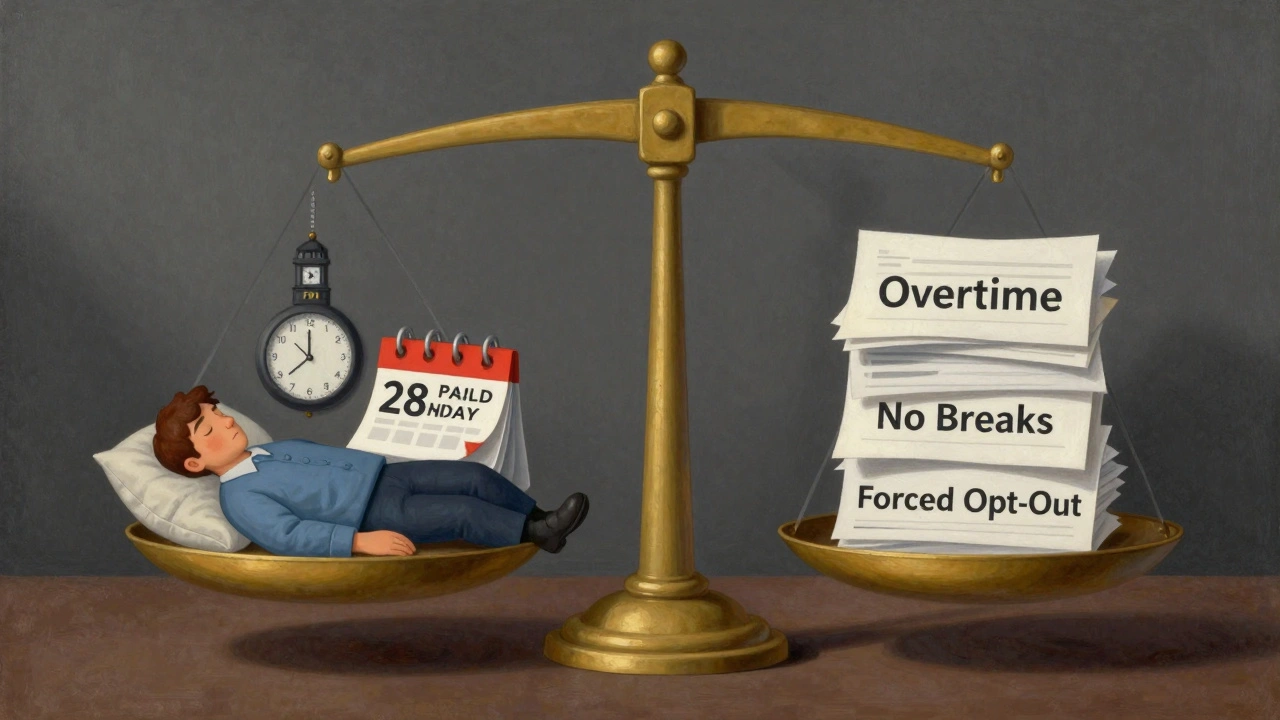
Employer Obligations: What You Must Do to Stay Legal
If you’re an employer, ignoring these rules isn’t negligence-it’s a legal risk. The HSE doesn’t just hand out warnings. In 2024, over 1,200 businesses were fined for breaches of working time rules. Fines range from £1,000 to over £20,000, depending on the severity and whether the breach was repeated or willful.
Here’s what you need to do right now:
- Keep accurate records of working hours for every employee-this includes overtime, on-call time, and travel time if it’s part of the job
- Track rest breaks and ensure they’re taken
- Calculate holiday pay correctly-don’t just use basic salary if overtime or commission is regular
- Get written opt-out agreements if you want employees to work over 48 hours a week
- Offer health assessments to night workers and document them
- Review your rosters every 17 weeks to ensure the 48-hour average isn’t being exceeded
Many employers think they’re safe if they just pay the minimum wage. That’s not true. You can pay someone the legal minimum and still break the Working Time Regulations. For example, if you schedule a worker for 60 hours one week and 30 the next, you’re averaging 45 hours-still under 48. But if you do that for 18 weeks straight, you’ve breached the law. The average must be calculated over 17 weeks, not 20 or 26.
And don’t assume that salaried staff or managers are exempt. Unless they’re truly “senior managers” with full autonomy over their hours, they’re still covered. Courts have ruled that even directors can be protected if they’re not truly in control of their schedule.
Common Violations and How to Spot Them
Here are the top five violations employers make-and how to catch them:
- Skipping rest breaks: Employees told to “just power through” lunch or take their break at the end of the shift. This is illegal. The break must be taken during the work period.
- Unpaid overtime: Workers expected to answer emails after hours or stay late without pay. If you’re required to be available, that time counts as work.
- Incorrect holiday pay: Paying holiday based only on basic salary when commission or bonuses are part of normal earnings. This has led to multiple tribunal claims.
- Forced opt-outs: Employers pressuring staff to sign opt-out agreements to work over 48 hours. This is coercion. The opt-out must be voluntary and in writing.
- No records: Failing to keep any proof of hours worked. If there’s no record, the law assumes the worst-case scenario: the employee worked the maximum allowed.
Employees: If your employer doesn’t let you take breaks, doesn’t pay you properly for holidays, or pressures you to work excessive hours, you have the right to raise it formally. Start with your manager. If that fails, contact ACAS for free advice. You can’t be fired for making a lawful complaint.

What Happens If You Break the Rules?
Penalties aren’t theoretical. In 2023, a London care home was fined £32,000 for forcing staff to work 70-hour weeks without rest breaks. A warehouse in Manchester paid £18,500 after three workers collapsed from exhaustion. These aren’t rare cases-they’re the result of systemic neglect.
Employers who violate these rules face:
- Fines from the HSE (up to £20,000 per breach)
- Compensation claims through employment tribunals (unlimited in some cases)
- Reputational damage-especially if the case goes public
- Increased scrutiny from inspectors
- Loss of contracts if clients require compliance certification
For employees, the consequences of staying silent can be worse: burnout, chronic fatigue, mental health issues, and even long-term physical damage. The law exists to prevent that.
How to Stay Compliant-Step by Step
If you’re an employer, here’s your action plan:
- Download the HSE’s free Working Time Regulations checklist
- Review every employee’s contract and roster
- Set up a digital system to track hours and breaks
- Train managers on the rules-many don’t know them
- Hold quarterly compliance reviews
- Document every opt-out agreement and health assessment
If you’re an employee:
- Keep your own record of your hours, breaks, and holidays taken
- Know your normal pay-especially if you get overtime or commission
- Speak up if you’re being denied rest or forced to work too long
- Contact ACAS if your employer ignores your concerns
- Don’t wait until you’re exhausted to act
Compliance isn’t about fear-it’s about fairness. The rules exist because people got hurt. Don’t be the next statistic.
Can my employer force me to work more than 48 hours a week?
No, not without your written agreement. The 48-hour weekly limit is a legal maximum. Employers can ask you to sign an opt-out form, but you’re under no obligation to agree. If you do sign, you can cancel it at any time with 7 days’ notice. Employers can’t punish you for refusing to opt out.
Do I get paid for my rest breaks?
The law doesn’t require rest breaks to be paid, but your employer can choose to pay them. What’s required is that you actually get the break. If you’re expected to work during your break-like answering calls or covering for someone-that time counts as work and must be paid.
How is holiday pay calculated for shift workers?
Holiday pay for shift workers must reflect their average earnings over the previous 52 weeks, excluding any weeks they didn’t work. If you work irregular hours or get overtime, that’s included. The Supreme Court ruled this in 2014, and it’s been standard practice since. Don’t accept a flat rate if your pay varies.
Can my employer make me work on public holidays?
Yes, unless your contract says otherwise. There’s no legal right to public holidays off in the UK. But your total holiday entitlement-5.6 weeks-includes bank holidays. So if your employer gives you 8 bank holidays as part of your 28 days, they’re meeting the requirement. If they give you fewer, they must make up the difference.
What if I’m on a zero-hours contract?
You still have full rights under the Working Time Regulations. Even if you don’t have guaranteed hours, you’re entitled to rest breaks, paid holiday, and protection from excessive hours. Your holiday pay is calculated based on your average earnings over the past 52 weeks. Employers can’t deny you these rights just because your contract says you’re “on call.”
If you’re unsure about your rights or obligations, visit the UK government’s official page on working time or contact ACAS. Don’t guess. Know.