 by
by Using OSS and IOSS for UK Businesses: EU VAT Compliance for Distance Sales
21 Mar, 2026Since Brexit, UK businesses selling goods to EU customers have faced a maze of VAT rules. One wrong step, and you could be hit with back taxes, penalties, or even blocked from selling. The solution? Two systems built for this exact problem: the OSS and IOSS. These aren’t optional extras-they’re the only legal way for UK sellers to handle EU VAT without setting up a local tax presence in every country.
What OSS and IOSS Actually Do
OSS stands for One Stop Shop. It’s for businesses that sell goods or services across EU borders. If you’re a UK company shipping products to customers in Germany, France, or Spain, OSS lets you file one single VAT return instead of registering in each country. You report all your EU sales in one place, pay the tax due to each country, and the system handles the distribution.
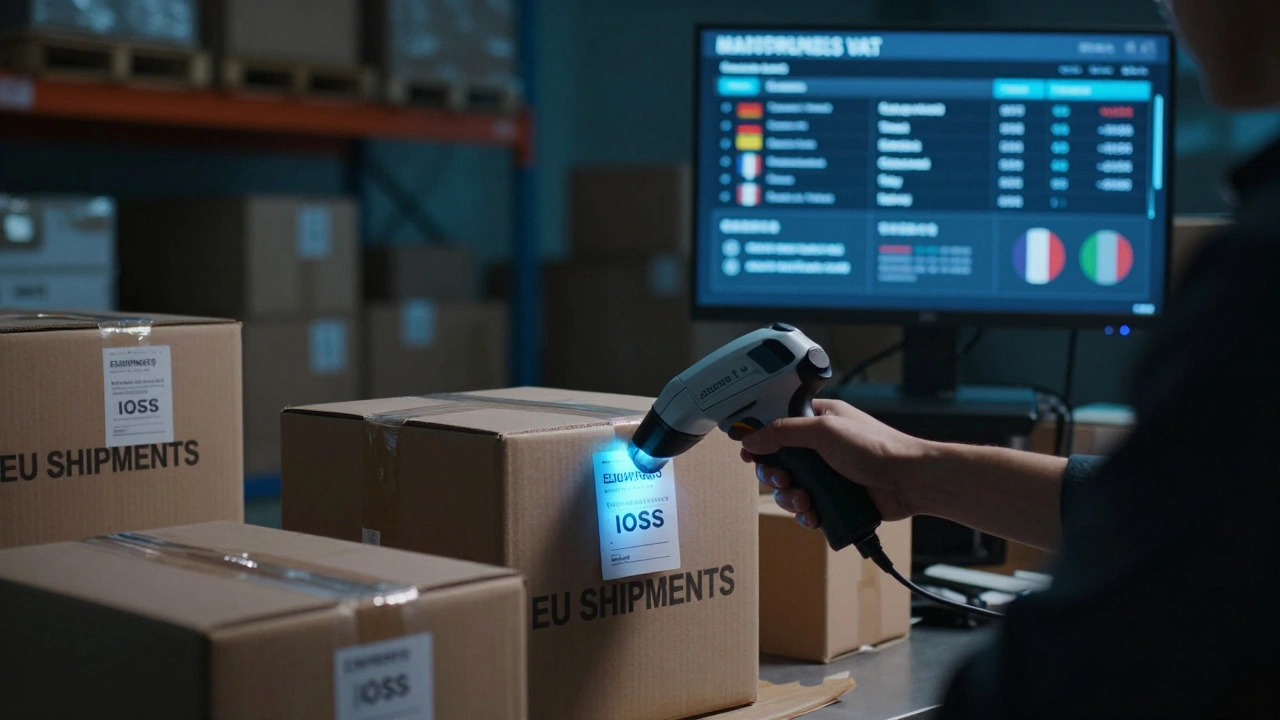
IOSS is the Import One Stop Shop. It’s for goods imported into the EU that cost €150 or less. Before July 2021, these low-value packages were often VAT-free. That changed. Now, every item under €150 must have VAT collected at the point of sale. IOSS lets you collect the VAT upfront when the customer checks out, then file it all through one portal. No more surprise VAT bills at the border.
Here’s the key difference: OSS is for goods already in the EU. IOSS is for goods coming from outside the EU-like from the UK.
Why UK Businesses Can’t Ignore This
Before 2021, UK sellers could ship small packages to EU customers without charging VAT. That loophole is gone. The EU now treats the UK like any other third country. If you sell a £20 T-shirt to someone in Italy, you must charge Italian VAT-unless you’re registered for IOSS.
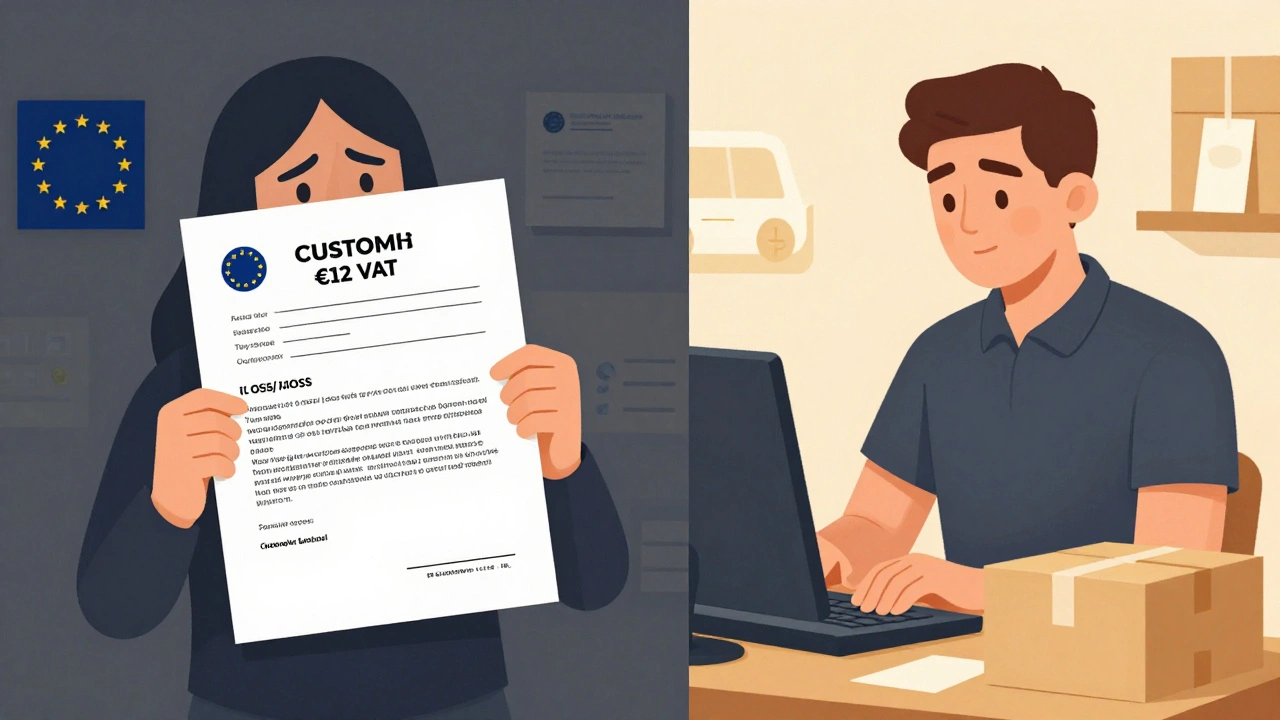
Without IOSS, your package gets stuck at customs. The customer receives a bill for VAT plus handling fees-sometimes over €10 extra. They’re angry. They cancel the order. They never buy from you again.
And it’s not just small shipments. If you ship over €10,000 worth of goods to any single EU country in a calendar year, you’re required to register for OSS. Even if you’re below that, using OSS still saves you time and reduces risk.
How OSS Works for UK Sellers
To use OSS, you need to register in your home country-the UK. HMRC handles OSS registration for UK businesses. Once you’re in, you file one quarterly return covering all your EU sales. You report:
- Total sales to each EU country
- Applicable VAT rate for each
- Total VAT collected
You pay HMRC the full amount. HMRC then sends the correct share to each country. No more dealing with 27 different tax authorities. No more missing deadlines in Polish or Slovakian.
You must use OSS if:
- You sell digital services to EU consumers
- You sell goods from within the EU (e.g., from a warehouse in Poland)
- Your sales to any one EU country exceed €10,000/year
Even if you’re under the €10,000 threshold, you can still choose to use OSS. It’s simpler than registering individually.
How IOSS Works for UK Sellers
IOSS is simpler to understand but trickier to set up. If you’re shipping goods from the UK to EU customers under €150, you must:
- Collect VAT at checkout
- Display the VAT amount clearly
- Use an IOSS number on customs documents
- File monthly IOSS returns via HMRC
Here’s the catch: You can’t just slap on VAT and call it done. You need to register for IOSS through HMRC. Once approved, you get an IOSS number. That number goes on every customs declaration for low-value goods.
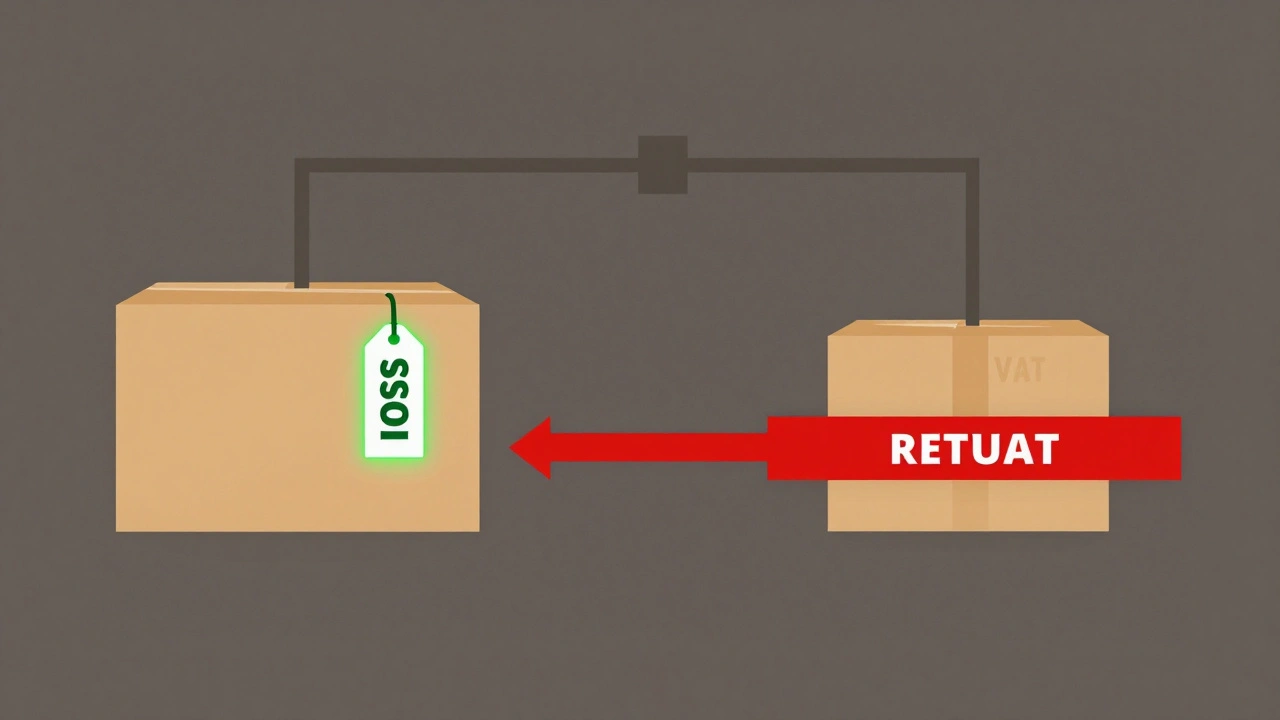
Without an IOSS number, your parcels are held. The courier demands payment from the customer. The customer refuses. Your package gets returned. You lose the sale and the shipping cost.
Example: You sell 500 items a month to France, each priced at £12. That’s €14 per item. You charge 20% French VAT-€2.80. You collect €1,400 in VAT monthly. You file an IOSS return through HMRC. HMRC sends €1,400 to France. Done.
What Happens If You Don’t Register?
Some businesses think they can fly under the radar. They assume EU customs won’t notice. They’re wrong.
Customs authorities across the EU now share data. If you’re shipping 10,000 packages a year to Germany without IOSS, they’ll find you. The penalties start at €500 per shipment. Repeat offenders face fines up to €10,000. Your business could be blacklisted from using major carriers like DHL or FedEx.
Worse, EU countries can retroactively audit your sales. If you’ve been selling since 2022 without paying VAT, they can demand back taxes for three years. That’s not a surprise-it’s a financial bomb.
Step-by-Step: How to Register for OSS and IOSS
Here’s what UK businesses need to do right now:
- Check your sales volume: Are you shipping more than €10,000/year to any single EU country? If yes, OSS is mandatory.
- Are you shipping goods under €150 to EU customers? If yes, IOSS is your only way to avoid customs delays.
- Go to the HMRC website and apply for OSS registration. You’ll need your VAT number, business details, and sales data.
- Apply separately for IOSS. You’ll need to set up a system to capture VAT at checkout and tag shipments with your IOSS number.
- Integrate your e-commerce platform. Shopify, WooCommerce, and BigCommerce all have built-in OSS/IOSS tools. Make sure they’re activated.
- File returns: OSS quarterly, IOSS monthly. Miss one, and your registration can be suspended.
Don’t wait until your first package gets held. Register now. The process takes 5-10 business days.
Common Mistakes UK Sellers Make
- Thinking IOSS applies to goods over €150. It doesn’t. Those go through regular customs with VAT due on arrival.
- Using the same VAT number for OSS and IOSS. They’re separate registrations.
- Forgetting to display VAT on the checkout page. EU law requires clear disclosure.
- Not updating your shipping system. If your carrier doesn’t see your IOSS number, they’ll treat the package as non-compliant.
- Assuming you’re exempt because you’re small. There’s no small seller exemption anymore.
Tools That Help
You don’t need to do this manually. Several platforms automate OSS and IOSS:
- Shopify: Automatically calculates and collects EU VAT, files IOSS returns.
- WooCommerce + VAT Number plugin: Handles VAT rates per country and generates IOSS-compliant customs labels.
- Amazon EU Seller Central: Already handles OSS and IOSS for sellers using FBA in the EU.
- Quaderno and TaxJar: Third-party VAT compliance tools that sync with your store and file returns.
These tools don’t replace registration-they make it manageable. If you’re selling more than 50 items a month to the EU, investing in one of these is cheaper than hiring an accountant.
What’s Next? EU VAT Rules Keep Changing
The EU is tightening rules every year. In 2025, they plan to require real-time sales reporting for all digital services. In 2026, they’re testing a unified digital VAT ID for all sellers.
Right now, OSS and IOSS are your lifeline. But they won’t stay simple forever. The best move? Get registered, automate your reporting, and keep an eye on HMRC updates. Set up a quarterly review with your accountant. Don’t wait for a letter from Brussels.
Do I need to register for both OSS and IOSS?
Yes, if you do both. OSS is for goods already in the EU or digital services. IOSS is for goods shipped from outside the EU (like the UK) under €150. If you sell physical products from the UK to EU customers, you need IOSS. If you also sell digital services or have stock in the EU, you need OSS too. They’re separate registrations.
Can I use a third-party to handle my OSS/IOSS filings?
Yes. Many e-commerce platforms and VAT compliance services (like TaxJar, Quaderno, or Avalara) can file your returns for you. You still need to register with HMRC, but they handle the reporting, data entry, and payments. This is the easiest option for most small and medium businesses.
What if I sell both goods and services to the EU?
You’ll need to separate them. Goods from the UK under €150 go through IOSS. Goods over €150 or services (like software, subscriptions, or consulting) go through OSS. You can’t mix them in one return. Keep accurate records of what you’re selling and where.
Do I need to charge VAT on sales to EU businesses?
No. If your customer is a business with a valid EU VAT number, you don’t charge VAT. You reverse-charge: they report the VAT in their own country. But if they’re a private consumer, you must charge VAT using OSS or IOSS.
What happens if I miss an IOSS return?
HMRC can suspend your IOSS registration. Your shipments will be held at EU borders until you fix it. You may also face fines of up to €100 per missing return. It’s not worth the risk. Set up calendar reminders or use an automated service.