
 by
by Vendor Risk Management in the UK: A Practical Guide to Third-Party Due Diligence
17 Aug, 2026Imagine this: your biggest client just paused a contract because one of your subcontractors had a data breach. It wasn't your fault, not directly, but in the eyes of the regulator and the market, it is. In the UK, Vendor Risk Management is the systematic process of identifying, assessing, and monitoring risks associated with external suppliers and service providers. It is no longer just an IT checkbox; it is a core legal and operational requirement for any business handling sensitive data or operating in regulated sectors.
The landscape has shifted dramatically since the implementation of the UK GDPR and the tightening of rules by the Financial Conduct Authority (FCA). You are responsible for your vendors' actions as much as your own. If they fail, you fail. This guide breaks down exactly how to build a robust third-party due diligence framework that protects your bottom line without slowing down your procurement team.
Why the UK Regulatory Environment Has Changed
Gone are the days when signing a standard service level agreement was enough. The UK GDPR requires organizations to ensure that their processors (vendors) provide "sufficient guarantees" regarding data protection. Meanwhile, the FCA has issued specific guidance on outsourcing, expecting firms to maintain oversight over critical functions delegated to third parties. For non-financial businesses, the Cyber Essentials Plus certification has become a de facto standard for proving basic cyber hygiene to potential clients.
The key shift here is accountability. Under the UK GDPR, if a vendor processes personal data on your behalf, you must have a Data Processing Agreement (DPA) in place. But a paper DPA doesn't stop a hack. Regulators now look at whether you actually monitored the vendor's security posture. This means your risk management strategy needs to move from static documentation to dynamic monitoring.
Building Your Vendor Risk Assessment Framework
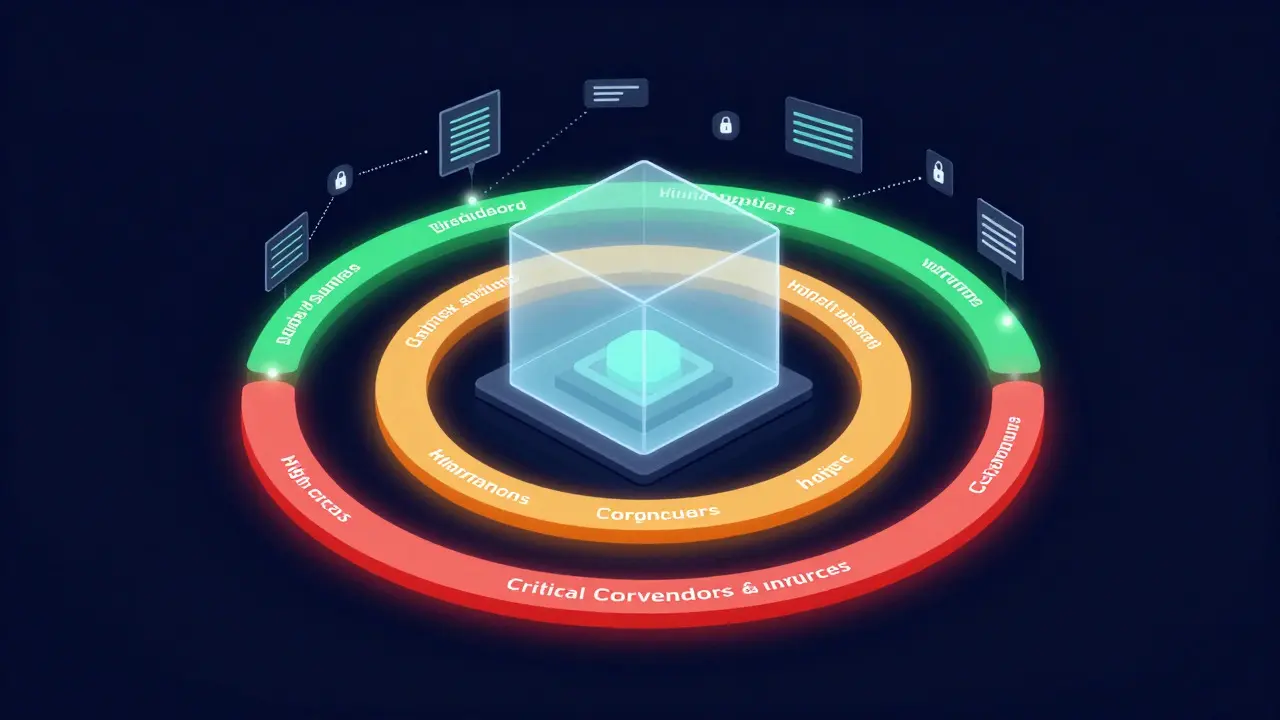
You cannot treat every supplier the same. The office coffee machine provider poses a different risk profile than the cloud infrastructure host. To manage this effectively, you need a tiered approach based on impact and likelihood.
- Critical Vendors: These entities hold core IP, process large volumes of personal data, or run mission-critical operations. They require deep technical audits, annual reviews, and real-time monitoring.
- High-Risk Vendors: These partners handle significant data or financial transactions but have redundant alternatives. They need quarterly checks and strong contractual SLAs.
- Standard Vendors: Low-risk administrative services. A simple questionnaire and annual certificate of insurance may suffice.
This tiering saves resources. If you spend 40 hours auditing a print shop, you’re wasting time that should go toward scrutinizing your SaaS providers. Use a scoring matrix to automate this initial classification. Factors like data volume, industry sector, and geographic location should drive the score.
Third-Party Due Diligence: What to Actually Check
Due diligence isn't just about asking "Are you safe?" It’s about verifying claims with evidence. When conducting pre-contract assessments, focus on these four pillars:
- Financial Stability: A bankrupt vendor can halt your operations overnight. Check credit ratings and years in business. Look for signs of cash flow issues, such as delayed payments to their own suppliers.
- Cybersecurity Posture: Don't rely solely on self-reported questionnaires. Ask for recent penetration test reports, SOC 2 Type II reports, or ISO 27001 certifications. If they don’t have them, ask for their incident response plan.
- Data Protection Compliance: Verify they have appointed a Data Protection Officer (if required) and that their privacy policy aligns with your DPA requirements. Check where data is stored-data residency matters for UK compliance.
- Operational Resilience: How do they handle disasters? Ask about their Business Continuity Plan (BCP). Do they have backup facilities? What is their Recovery Time Objective (RTO)?
A common mistake is accepting a "Yes" to every question without digging deeper. If a vendor says they encrypt all data, ask which encryption standards they use (AES-256 is the gold standard) and how keys are managed. Specificity reveals truth.
Ongoing Monitoring vs. One-Off Audits
Risk is not static. A vendor who passed your audit six months ago might have changed leadership, suffered a breach, or gone out of business today. Static annual reviews are often too slow. Modern Vendor Risk Management relies on continuous monitoring tools.
These platforms scan public records, news feeds, and security databases to flag changes in real-time. For example, if a critical vendor appears in a list of companies affected by a ransomware attack, you want to know before they tell you. This proactive stance allows you to trigger contingency plans immediately rather than reacting after damage is done.
| Method | Frequency | Cost | Best For |
|---|---|---|---|
| Manual Questionnaires | Annual | Low | Low-risk, non-critical vendors |
| On-Site Audits | Every 2-3 Years | High | Critical, high-volume data processors |
| Automated Continuous Monitoring | Real-Time | Medium-High | Critical and High-risk digital vendors |
Contractual Protections That Matter
Your contracts are your safety net. Ensure they include specific clauses that protect you legally and operationally. Generic templates often miss the nuances required for UK compliance.
- Right to Audit: You must have the legal right to inspect the vendor’s premises and systems, either directly or via a third party, upon reasonable notice.
- Indemnification: Who pays if the vendor causes a breach? Ensure they indemnify you against regulatory fines and third-party claims resulting from their negligence.
- Exit Strategy: What happens if you fire them? Define data return formats, transition support periods, and termination fees clearly. Ambiguity here leads to expensive legal battles.
- Change of Control: If the vendor is acquired by another company, does the contract survive? You may want approval rights to prevent your data moving to an unknown entity.
Negotiate these terms before signing. It is far easier to agree on exit procedures when both parties are happy than during a crisis.

Common Pitfalls to Avoid
Even experienced teams make mistakes. Here are the most frequent errors we see in UK organizations:
- Shadow IT: Employees sign up for SaaS tools without IT approval. These unvetted vendors become blind spots. Implement software discovery tools to catch this early.
- Over-Reliance on Certifications: An ISO 27001 certificate is a snapshot in time. It doesn’t guarantee current security. Combine certificates with ongoing performance metrics.
- Siloed Departments: Procurement buys, IT secures, Legal contracts. If they don’t talk, risks slip through. Create a cross-functional vendor risk committee that meets regularly.
- Ignoring Sub-Vendors: Your main vendor uses sub-processors. Are they vetted? Your DPA should require transparency on sub-processor lists and allow you to object to new ones.
Next Steps for Implementation
Start small. Pick your top five critical vendors and apply the full due diligence process outlined above. Document everything. Then, expand to your high-risk tier. As you build momentum, integrate automated monitoring tools to reduce manual effort. Remember, the goal isn’t perfection; it’s visibility. Knowing where your risks lie is half the battle won. Keep your documentation up to date, review your risk appetite annually, and stay informed on regulatory updates from the ICO and FCA. Your future self will thank you when the next audit comes around.
What is the difference between vendor risk management and supply chain risk?
Supply chain risk focuses on the flow of goods and logistics, including delays and physical disruptions. Vendor risk management is broader, encompassing cybersecurity, financial stability, legal compliance, and reputational risks associated with any third-party service provider, whether they deliver goods or software.
How often should I re-assess my critical vendors?
For critical vendors, conduct a full formal assessment annually. However, use continuous monitoring tools to check for red flags in real-time. Trigger an immediate ad-hoc review if there is a change in ownership, a reported breach, or significant negative news coverage.
Do I need to audit every vendor I work with?
No. Auditing every vendor is inefficient and costly. Use a risk-based approach. Only perform deep-dive audits on critical and high-risk vendors. For low-risk vendors, a simple questionnaire and verification of insurance and tax status is usually sufficient.
What are the penalties for poor vendor oversight under UK GDPR?
If a breach occurs due to inadequate oversight of a processor, the controller (you) can be fined up to £17.5 million or 4% of global annual turnover, whichever is higher. Additionally, you face direct liability for damages claimed by data subjects.
How do I handle a vendor that refuses to sign a strict DPA?
Be cautious. If they refuse standard protections, it may indicate weak internal governance. Consider negotiating a compromise where they accept your DPA but add specific exclusions for their proprietary technology. If they remain inflexible, evaluate whether the risk outweighs the benefit of using their service.