 by
by Warehouse Pick and Pack for UK Ecommerce: Efficient Processes and Layouts That Work
18 Dec, 2025When you order a pair of shoes from an online store in Manchester and get it delivered by noon the next day, you’re not just seeing good logistics-you’re seeing a well-oiled warehouse pick and pack system at work. For UK ecommerce businesses, getting orders out fast and accurate isn’t optional anymore. It’s the baseline. Miss it, and customers leave for competitors who can deliver faster, cheaper, and without mistakes.
What Exactly Is Pick and Pack?
Pick and pack is the core of any warehouse operation. It’s the process of pulling the right items from storage (picking), putting them in the right box or bag (packing), and preparing them for shipping. Sounds simple? It’s not. One wrong item, one torn box, one late shipment-these all add up to lost trust and lost sales.
In the UK, where customers expect next-day delivery from giants like Amazon and expect the same from small brands, your warehouse has to run like a precision machine. A study by the UK Ecommerce Association found that 68% of shoppers will abandon a cart if delivery times aren’t clear, and 41% will switch brands after just one delayed order. That’s why how you pick and pack matters more than you think.
The Core Steps: From Click to Courier
Every order goes through the same five stages, no matter the size of your business:
- Order receipt - Your system gets the order from Shopify, Amazon, or your own website. It’s instantly sent to the warehouse management system (WMS).
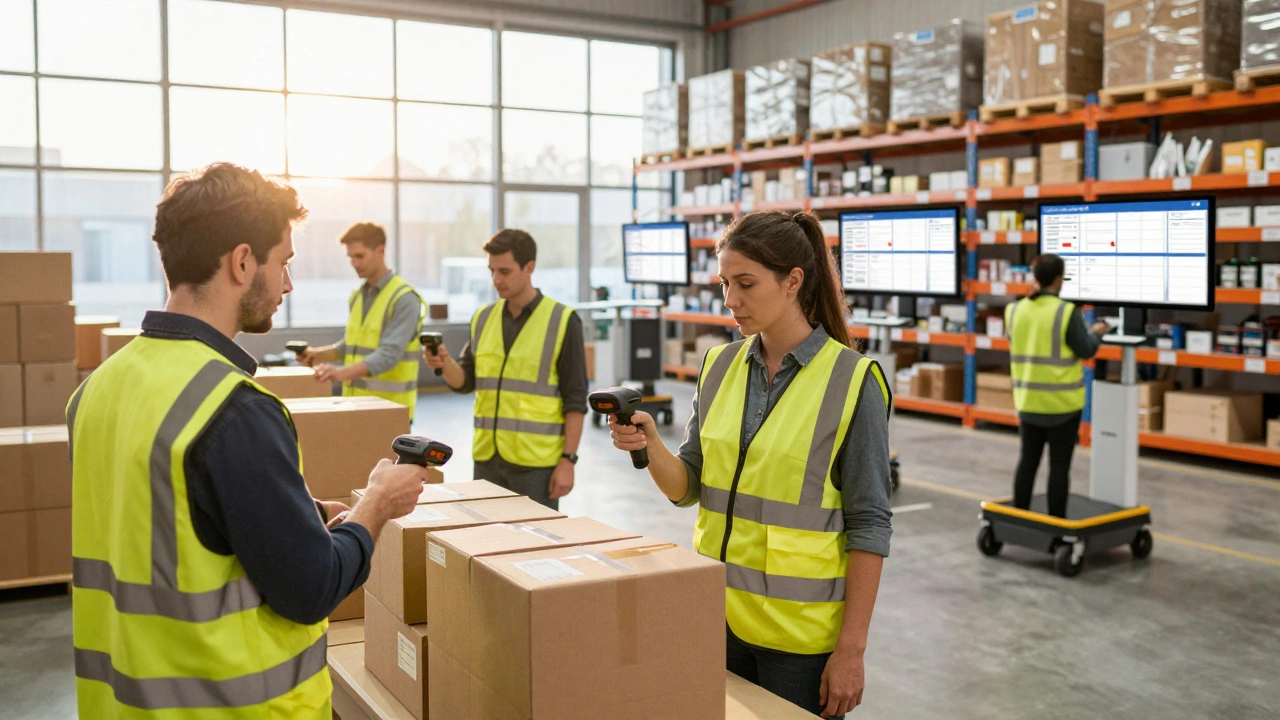
- Picking - A worker or robot goes to the shelf, scans the barcode, and grabs the exact item. No guesswork. No duplicates.
- Verification - The item is scanned again at a checkpoint. If it doesn’t match the order, the system flags it immediately.
- Packing - The item goes into a box with the right cushioning, label, and invoice. Too much padding? Wastes space and money. Too little? Items break. There’s a balance.
- Shipping - The box is weighed, labeled with the correct carrier (Royal Mail, DPD, Evri), and queued for pickup. Timing here affects delivery promises.
Each step needs to be fast, but accuracy beats speed every time. A 2024 survey of 300 UK small ecommerce businesses showed that those who automated verification reduced returns by 57% in six months.
Warehouse Layouts That Actually Move Orders Faster
Your warehouse layout isn’t just about space-it’s about flow. A bad layout means staff walk miles a day just to pick one order. A good one cuts travel time by half.
Here are the three most common layouts used by UK ecommerce warehouses in 2025:
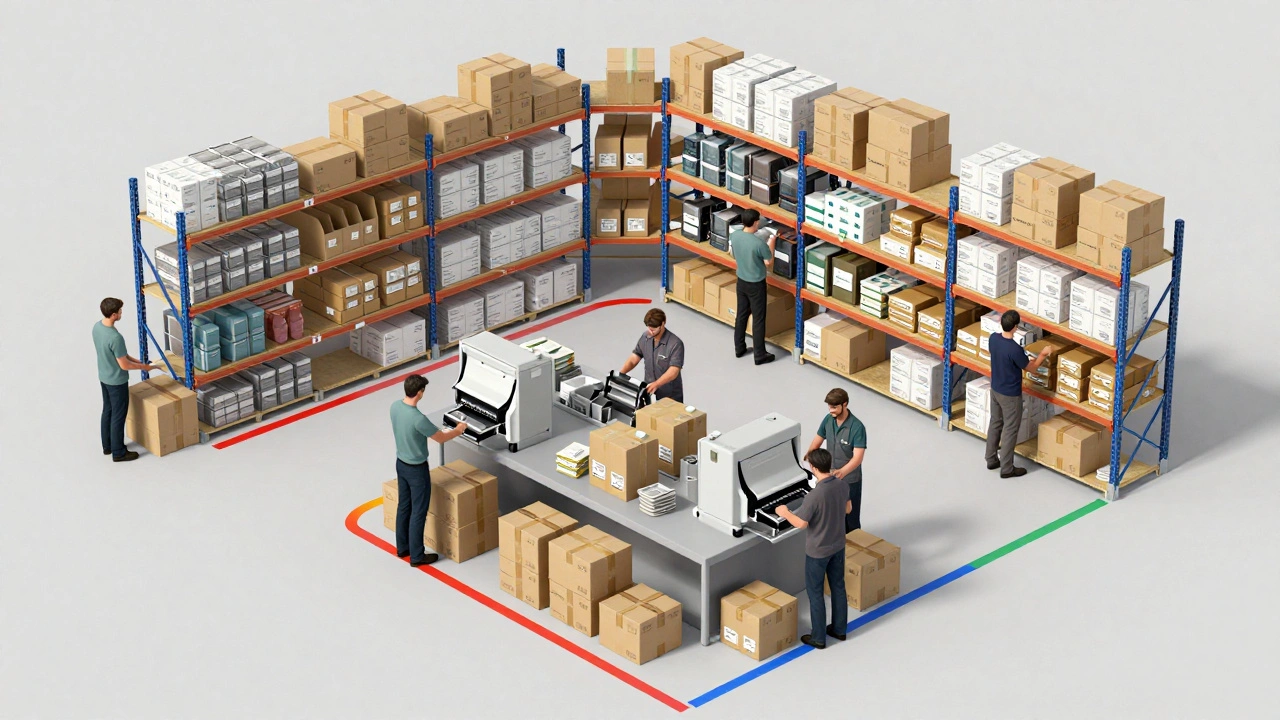
- Zone Picking - The warehouse is split into zones (e.g., small items, heavy items, high-turnover). Pickers stay in their zone. Orders are passed along like a relay race. Best for businesses with over 500 SKUs. Reduces walking by up to 60%.
- Batch Picking - One picker grabs items for 5-10 orders at once. For example, if five customers ordered the same phone case, the picker grabs five and drops them into separate bins. Saves time on repetitive trips. Works best for high-volume, low-variety items.
- Wave Picking - Orders are grouped by shipping cutoff times. All orders due for same-day delivery are picked together in one wave, then packed and shipped in a batch. Ideal for businesses with strict delivery windows like Amazon Prime or DPD Next Day.
Most mid-sized UK ecommerce firms use a mix of zone and batch picking. A warehouse in Birmingham cut average pick time from 8 minutes to 3 minutes per order after switching from random picking to zone-based routing.
Technology That Makes a Real Difference
You don’t need a robot army to compete. But you do need the right tools.
- Warehouse Management System (WMS) - This is your brain. It tells pickers where to go, checks inventory in real time, and routes orders efficiently. Popular UK options include Fishbowl, NetSuite, and Zoho Inventory. Avoid paper lists. They’re slow and error-prone.
- Barcode Scanners - Every item and every box should be scanned at least twice. A single scan isn’t enough. Double verification cuts mis-picks by 90%.
- RFID Tags - Used by larger warehouses, these let you track items without scanning. Great for high-value items or when staff are overwhelmed. Not necessary for small operations.
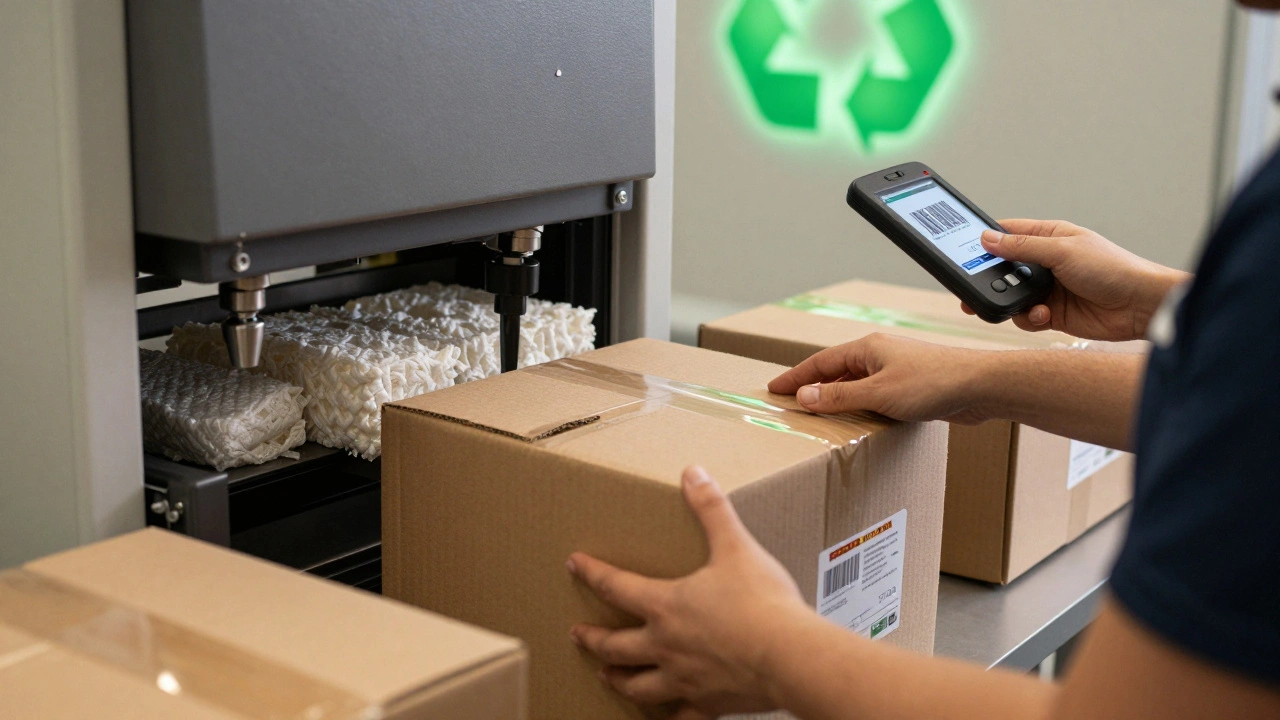
- Automated Packing Stations - Machines that size boxes, seal them, and print labels. One UK company saved £12,000 a year in labor and packaging waste after installing one.
Even small businesses can start with a basic WMS and barcode scanners. The upfront cost? Around £1,500-£3,000. The payoff? Fewer returns, happier customers, and less stress.
Common Mistakes UK Ecommerce Warehouses Make
Here’s what goes wrong-and how to fix it:
- Misplaced inventory - Items stored far from the packing area. Solution: Use ABC analysis. A-items (fastest sellers) go closest to packing. B-items in the middle. C-items (slow movers) go to the back or higher shelves.
- No training - Staff pick based on memory, not system instructions. Solution: Daily 10-minute huddles. Show the top 3 mis-picked items from yesterday. Fix them today.
- Overpacking - Using huge boxes for small items. This wastes space, increases shipping costs, and hurts the environment. Solution: Use box-sizing software. It recommends the smallest box that fits the item.
- Ignoring returns - Returns aren’t just a cost-they’re a data source. Track why items are returned. Is it the product? The description? The packaging? Fix the root cause.
A Manchester-based beauty brand noticed 30% of returns were for broken bottles. They switched from bubble wrap to molded pulp inserts. Returns dropped to 8% in two months.
Scaling Up Without Losing Control
When you go from 50 orders a day to 500, your old system breaks. That’s when you need to plan ahead.
Start with these three rules:
- Don’t expand your space until you’ve optimized your current layout. More square footage doesn’t fix bad flow.
- Automate one thing at a time. Pick a bottleneck-say, labeling-and fix it before moving to packing.
- Track your KPIs: Pick accuracy rate, average pick time, order cycle time, and return rate. If pick accuracy drops below 98%, something’s wrong.
One Leeds-based gadget store scaled from 200 to 1,200 orders daily by sticking to these rules. They didn’t hire more staff. They just redesigned their picking zones and added a second scanner station.
What’s Next for UK Ecommerce Warehousing?
AI is coming. Not to replace people, but to make them better. Systems now predict which items will sell next week and auto-reposition them near packing stations. Some warehouses use smart lighting to guide pickers-green lights show the next location, red means stop.
Also, sustainability is no longer optional. The UK government’s Extended Producer Responsibility (EPR) rules now require ecommerce sellers to pay for packaging recycling. Use recyclable materials. Reduce excess. Customers notice-and they reward it.
By 2026, the most successful UK ecommerce brands won’t be the ones with the biggest warehouses. They’ll be the ones with the smartest, leanest, most accurate pick and pack systems.
Frequently Asked Questions
How long should it take to pick and pack one order?
For a well-run UK ecommerce warehouse, the average pick and pack time should be under 5 minutes per order. Smaller items and simple orders can be done in 2-3 minutes. If your average is over 7 minutes, look at your layout or training. Slow pick times often mean items are misplaced or staff aren’t using a WMS properly.
Do I need a warehouse management system (WMS) for a small business?
Yes-even if you only do 50 orders a week. A basic WMS like Zoho Inventory or Sortly costs under £50/month and prevents costly mistakes. Without it, you’re relying on spreadsheets or memory, which leads to wrong shipments, stockouts, and unhappy customers. The time saved and errors prevented pay for the tool in weeks.
What’s the best warehouse layout for a startup with limited space?
Use a U-shaped layout with your packing station in the center. Keep your top 20% of selling items (A-items) within arm’s reach. Store slow-movers on high shelves or in a separate corner. Avoid wide aisles-tight spacing forces efficiency. Many UK startups run successfully in 1,000-2,000 sq ft spaces using this setup.
Can I outsource pick and pack instead of running my own warehouse?
Absolutely. Fulfillment centers like ShipBob, Amazon FBA, or UK-based providers like Fulfillment by Yodel offer pay-per-order services. You save on space, staff, and equipment. But check their accuracy rates and delivery times. Some charge extra for weekend shipping or have minimum order requirements. Test them with a small batch first.
How do I reduce packaging waste without hurting product safety?
Use box-sizing software that matches the item to the smallest possible box. Swap plastic bubble wrap for molded pulp or paper cushioning. Reuse boxes from returns (cleaned and reinforced). Many UK customers now prefer eco-friendly packaging-some even leave reviews praising it. You’ll cut costs and build brand loyalty at the same time.