 by
by Waste Reduction for UK Businesses: Practical Steps to Minimise Environmental Impact
3 Feb, 2026UK businesses generate over 45 million tonnes of waste every year. That’s more than the weight of 1,000 Airbus A380s. And while many companies talk about sustainability, few take real action. The good news? Cutting waste isn’t just good for the planet-it’s good for your bottom line. Less waste means lower disposal costs, fewer raw material purchases, and stronger customer loyalty. This isn’t theory. It’s happening right now in factories, offices, and shops across the UK.
Start with a Waste Audit
You can’t fix what you don’t measure. A waste audit sounds boring, but it’s the first step most businesses skip. Look at what you throw away. Not just bins-everything. Paper, plastic, food scraps, packaging, old electronics, even broken furniture. Separate it by type and weigh it. Do this for one week. You’ll be shocked.
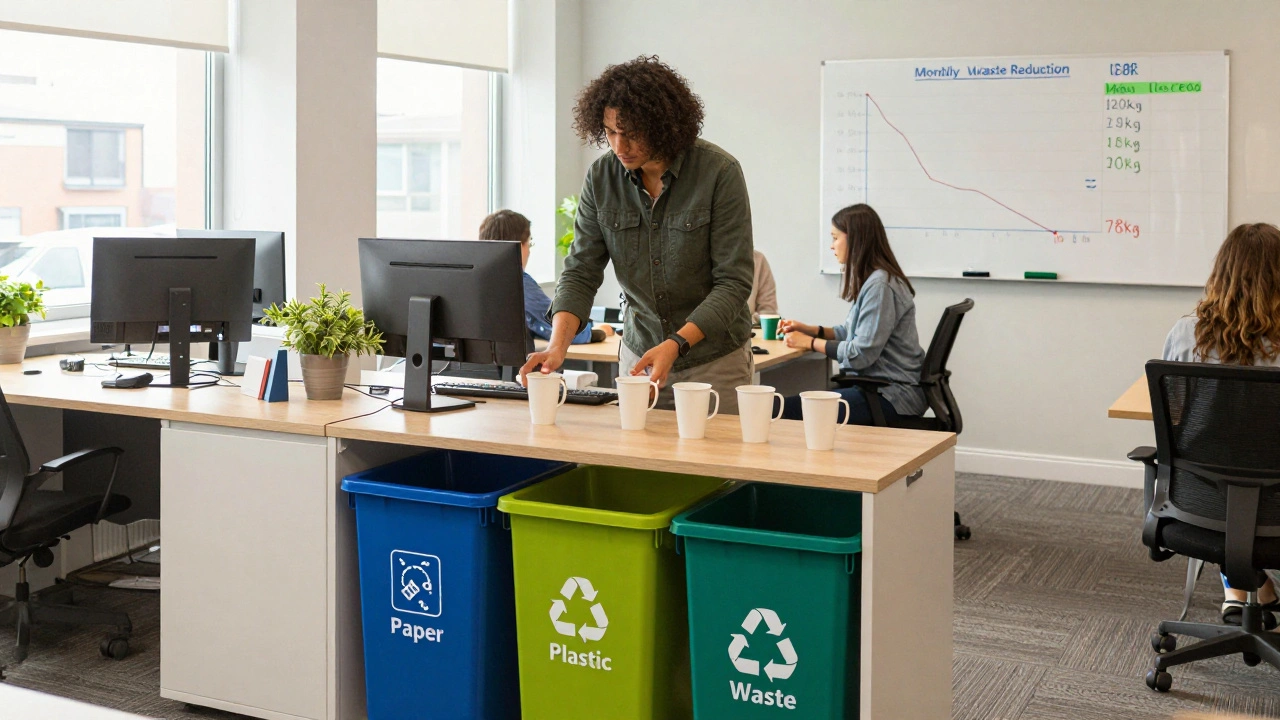
Take a London-based printing company. They thought their biggest waste was paper. Turns out, 40% of their landfill waste was single-use coffee cups and food containers from staff. Once they installed a dishwasher and offered reusable mugs, they cut waste by 35% in three months. No fancy tech. Just better habits.
Use the Environment Agency the UK government body responsible for environmental protection and regulation’s free waste tracking templates. They’re designed for small and medium businesses. Record where waste comes from, how often, and who’s responsible. That’s your baseline.
Switch to Reusable and Refillable
Single-use items are expensive. Not just in environmental cost, but in cash. Think about your office: bottled water, paper towels, disposable cutlery, printer cartridges. Each one gets thrown away after one use. That’s money down the drain.
Companies like Unilever a British multinational consumer goods company with major operations in the UK and BT Group a British telecommunications company headquartered in London have switched to bulk refill stations for cleaning supplies and toiletries. One retail chain in Manchester replaced 200,000 plastic bags a year with reusable tote bags-saving £12,000 annually.
Start small. Replace paper towels with cloth rags. Install a water filter instead of buying bottled water. Use refillable ink cartridges. These changes pay for themselves in under a year. And employees notice. They feel proud to work somewhere that cares.
Redesign Packaging
If your business ships products, packaging is likely a huge part of your waste. The average UK e-commerce order uses 2.5 times more packaging than needed. That’s not just plastic-it’s cardboard, bubble wrap, tape, void fill.
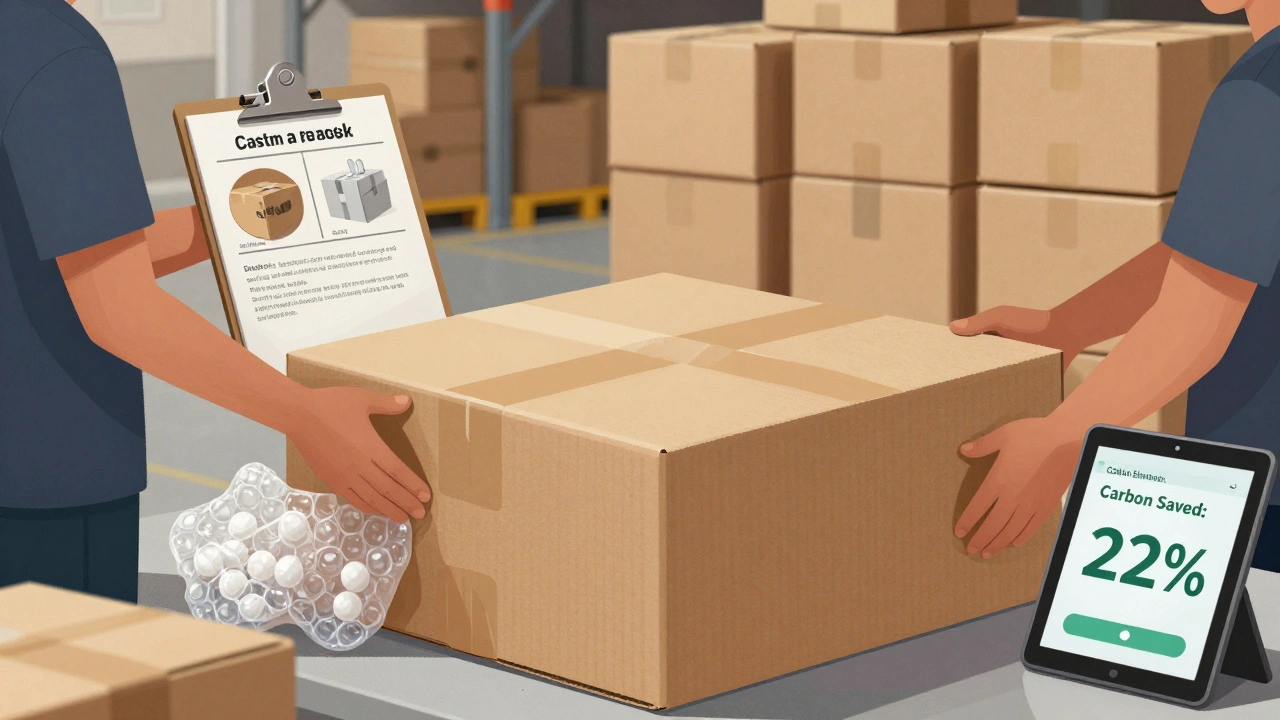
A Sussex-based online furniture seller redesigned their packaging using Corrugated cardboard a layered material made of fluted paper and flat liners, widely used for shipping that folds into custom shapes. They eliminated foam peanuts, reduced box size by 30%, and cut shipping costs because lighter packages cost less to send. Their carbon emissions dropped by 22%.
You don’t need a design team. Use the Waste and Resources Action Programme (WRAP) a UK-based nonprofit that works with businesses to reduce waste and improve resource efficiency’s packaging guidelines. They show you how to measure, reduce, and choose materials that are recyclable or compostable. Even small changes-like using less tape or eliminating plastic windows on envelopes-add up.
Train Your Team
Waste reduction fails when it’s top-down. Employees need to know why it matters and how to help. A survey by Environmental Services Association a UK trade association representing waste management and recycling companies found that 68% of staff would change their habits if their employer gave clear guidance.
One Birmingham-based logistics firm held a 20-minute weekly meeting for six weeks. They showed videos of landfill sites, shared cost savings from reduced waste, and let staff suggest ideas. One worker noticed that the kitchen used 120 plastic forks a day. They switched to stainless steel ones. The company saved £800 a year. That employee got a £100 bonus.
Make it easy. Put clear labels on bins. Show pictures of what goes where. Reward ideas. Create a "Waste Warrior" role-rotating weekly. People care when they’re involved.
Partner with the Right Recyclers
Not all recycling services are equal. Some claim to recycle but end up shipping waste overseas. Others mix materials and contaminate entire batches. The UK’s recycling system is messy. You need to vet your provider.
Ask for their Waste Carrier Licence a legal requirement in the UK for any company that transports waste. Check if they’re registered with the Environment Agency the UK government body responsible for environmental protection and regulation. Ask where your waste goes. Get a report showing what percentage is actually recycled versus landfilled.
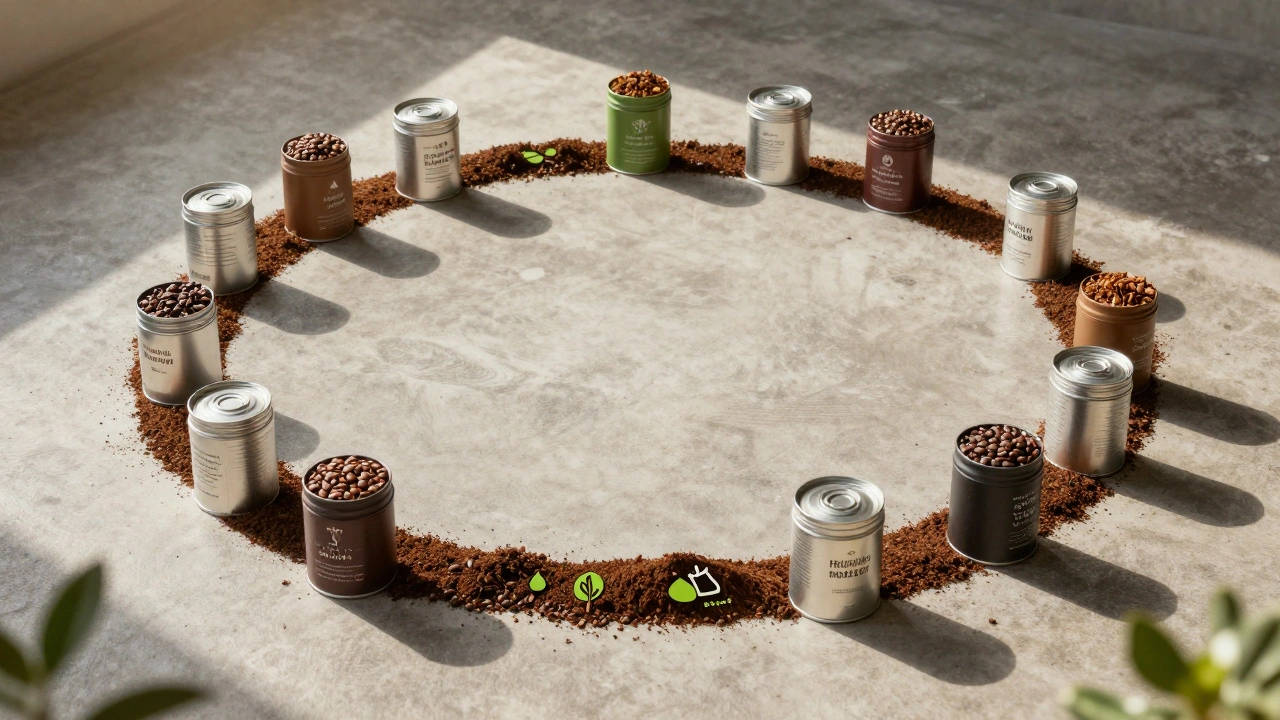
Some companies now offer closed-loop recycling. For example, a Leeds-based coffee shop partners with a local roaster who takes back used coffee grounds and turns them into biofuel. The roaster then delivers fresh beans in reusable tins. It’s a loop. No waste. No transport emissions.
Track Progress with Real Numbers
Don’t guess. Measure. Record your waste monthly. Track weight, cost, and disposal method. Compare it to last year. Show the numbers to your team. Celebrate drops. If waste went down 15%, say it out loud.
One Sheffield manufacturing plant reduced waste by 53% in 18 months. They didn’t buy new machines. They just started tracking. They found that 30% of their scrap metal came from a single machine. They fixed it. The repair cost £1,200. The savings? £18,000 a year.
Use simple tools: a spreadsheet, a scale, a notebook. You don’t need software. Just consistency. And make it public. Post a chart in the breakroom. Let everyone see it.
Connect Waste Reduction to ESG
ESG-Environmental, Social, Governance-isn’t just a buzzword. Investors, lenders, and customers now demand it. A 2025 report from the UK Sustainable Investment and Finance Association a UK organisation promoting sustainable finance and investment found that 71% of UK businesses with strong waste reduction programs saw improved access to green financing.
When you reduce waste, you’re not just being green. You’re lowering risk. Fewer regulatory fines. Better insurance rates. Stronger brand trust. And if you’re applying for government grants or tenders, waste data is now part of the scoring.
One Kent-based food producer cut food waste by 40% and got a £50,000 grant from the Department for Environment, Food and Rural Affairs (Defra) the UK government department responsible for environmental policy and rural affairs. They used the money to install a composting system. Now they sell the compost to local farms. It’s a profit center.
What Not to Do
Don’t buy "eco-friendly" products just because they’re labeled that way. Many are greenwashed. A "biodegradable" plastic bag might need industrial composting to break down-and most UK towns don’t have those facilities.
Don’t outsource your waste problems. Hiring a consultant to "solve" your waste without changing operations doesn’t work. Real change happens when people on the ground adjust how they work.
Don’t wait for perfection. Start with one area. One bin. One product. One supplier. Get results. Then expand.
Final Thought
Waste reduction isn’t about being perfect. It’s about being consistent. It’s about choosing to do better-even if it’s small. The UK government’s 2030 zero-waste target won’t be met by big corporations alone. It’ll be met by thousands of small businesses making smarter choices every day.
What’s one thing you can stop throwing away tomorrow? Start there. The planet-and your profits-will thank you.
Is waste reduction expensive for small UK businesses?
Not necessarily. Many waste reduction steps cost little or nothing. Switching to reusable items, training staff, and auditing waste often require time, not money. In fact, businesses that cut waste typically save money within months. One study by WRAP found that SMEs saved an average of £1,500 per year by reducing packaging and improving recycling habits.
Can UK businesses get financial support for waste reduction?
Yes. The UK government offers grants through Defra, the Environment Agency, and regional development funds. Programs like the Business Energy Efficiency Programme (BEEP) and the Circular Economy Fund provide funding for equipment, training, and audits. Local councils also offer free waste assessments for small businesses.
What’s the biggest mistake UK businesses make with waste?
Assuming recycling is enough. Recycling doesn’t solve the problem-it just moves it. The real win is reducing waste at the source. That means using less material, reusing items, and designing products that last. Many businesses focus on sorting bins while ignoring the root cause: overconsumption.
How does waste reduction affect customer perception?
It improves it. A 2025 survey by YouGov found that 64% of UK consumers are more likely to buy from a business that actively reduces waste. Even simple actions-like offering discounts for bringing your own container-build trust. Customers notice when brands walk the talk.
Do I need to comply with any UK laws on business waste?
Yes. Under the Environmental Protection Act 1990, businesses must store, transport, and dispose of waste responsibly. You must use a licensed waste carrier, keep waste transfer notes, and not mix hazardous waste with general waste. Fines for non-compliance can reach £50,000. Waste reduction helps you stay compliant while cutting costs.