UK Customs Transit: Rules, Processes, and What You Need to Know
When you move goods into, out of, or through the UK, UK customs transit, the system that tracks and controls the movement of goods across borders under customs supervision. Also known as customs transit procedures, it’s not just paperwork—it’s the backbone of every international shipment that doesn’t stop at the border. If you’re shipping from Europe, exporting to the US, or even just moving goods between Northern Ireland and Great Britain, you’re dealing with customs transit rules. And if you get it wrong, your goods sit at the port, you pay penalties, or worse—you lose them entirely.
It’s not just about filling out forms. Customs clearance UK, the process of getting goods approved by HMRC for entry or exit is tied directly to how you handle transit. You need the right documents—T1, T2, C88, EORI numbers—and you need to know who’s responsible for what. Is it you paying duties? Or the buyer? That’s where Incoterms, standardized trade terms that define who pays for shipping, insurance, and customs come in. If you’re using DAP or DDP, you’re already making choices that affect your customs transit obligations. And after Brexit, those choices matter more than ever. A simple mix-up between a T1 and T2 document can hold up a £50,000 shipment for days.
Most small businesses don’t realise how much of their logistics chain depends on smooth customs transit. It’s not just freight forwarders handling it behind the scenes. You’re still responsible for accuracy. One wrong commodity code, one missing EORI number, one late declaration—and HMRC flags your account. That means future shipments get checked more often. More delays. More cost. And if you’re exporting food, pharmaceuticals, or tech products, the rules get even tighter. The UK doesn’t just care about taxes—it cares about safety, security, and compliance.
You’ll find posts here that break down how to choose the right Incoterms, how to avoid common customs errors, and how to prepare your documentation before you even load the truck. You’ll see real examples from UK exporters who lost time and money because they assumed their carrier had it covered. You’ll learn how to use the UK’s free government tools, what to look for in a customs agent, and how to spot red flags before they become problems. This isn’t theory. It’s what works for businesses moving goods right now—whether you’re shipping one pallet or a full container.
Transit Procedures and T1 for UK Trade: Moving Goods Under Customs Control
3 Dec, 2025
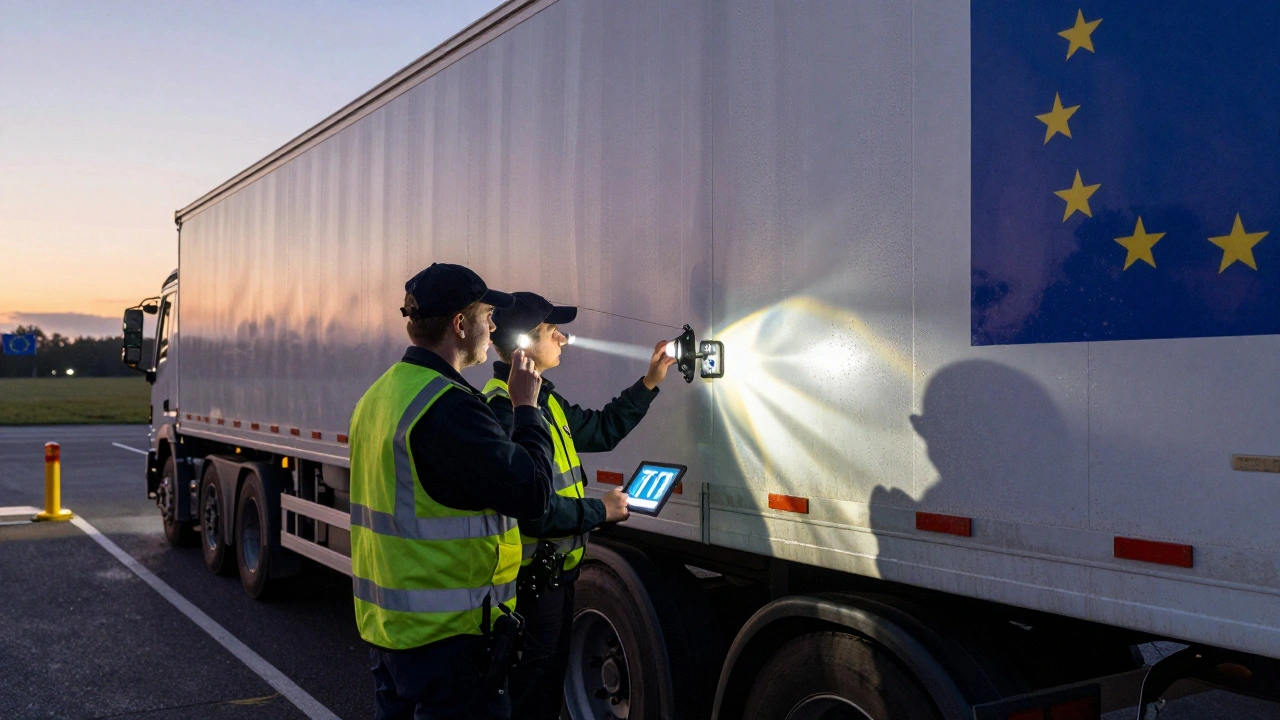
Learn how the T1 transit procedure works for moving goods between the UK and EU under customs control. Avoid delays, fines, and seizures with clear steps, common mistakes, and best practices.
 by
by